 ProMapRanker
Best Tai Chi Walking Apps in 2026


Dedicated tai chi walking routines · Pricing starts at: Free
Key takeaways
- The closest match to the name is the Tai Chi Walking App, followed by Tai Chi Walking and Chair Yoga, because both put tai chi walking routines at the centre.
- Lasta is the strongest all-round choice when you also want indoor walking, chair work and a structured plan in one app.
- Most of these apps are gentle by design, so they suit beginners, older adults and people returning to movement, not people chasing intense training.
- Check balance, joint pain and any medical advice with a clinician before starting, and stop if a movement causes sharp pain.
Quick comparison
| Pick | Great for | Pricing starts at | Free tier | |
|---|---|---|---|---|
| Tai Chi Walking App | Dedicated tai chi walking routines | Free | Yes | Visit |
 Tai Chi Walking and Chair Yoga | Tai chi walking plus seated options | Free | Yes | Visit |
 Tai Chi for Seniors and Beginners | First-time tai chi practice | Free | Yes | Visit |
 Lasta | Structured low-impact plans with tai chi and walking | See website | No | Visit |
 Reverse Health | Guided tai chi for beginners | See website | No | Visit |
 MadMuscles | Personalised gentle workouts including tai chi walking | See website | No | Visit |
 SilverSneakers GO | Eligible members who want class-based movement | Free | Yes | Visit |
 Tai Chi Qigong | Traditional tai chi and qigong instruction | See website | No | Visit |
The best tai chi walking apps
We compared official app pages, developer listings and public feature descriptions for the apps below. Our pick for most people is Lasta for structure, with the Tai Chi Walking App as the most focused choice for this exact practice. This is general wellness information, not medical advice.
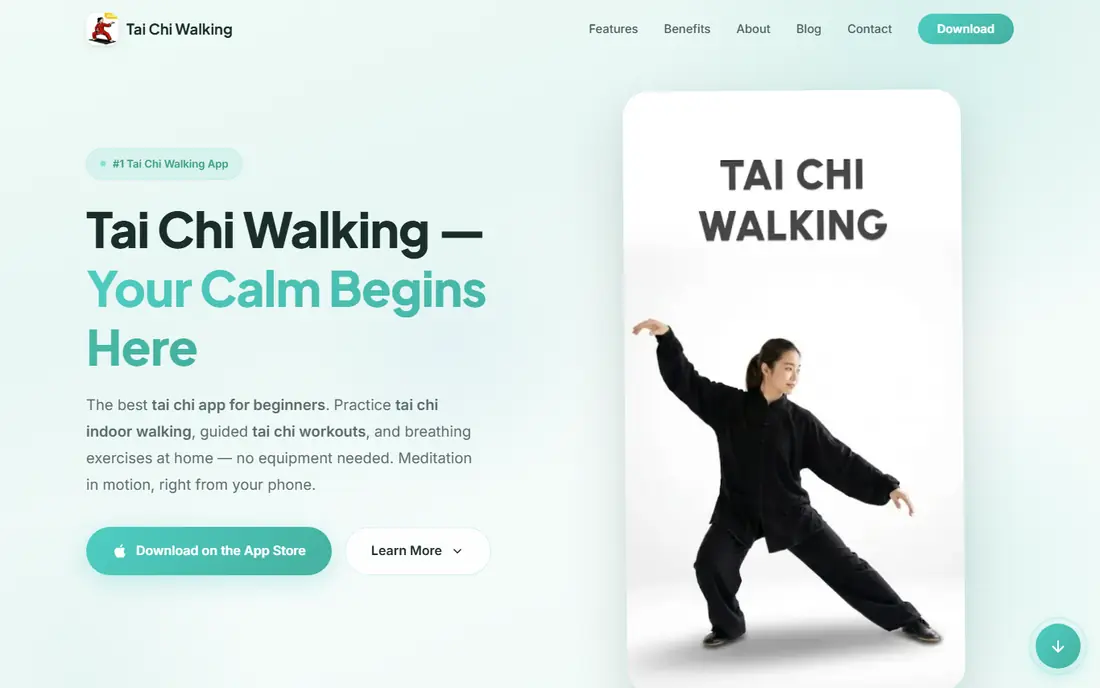
This app does exactly what the search term asks for, which is rare in this niche. It centres on slow, steady walking steps paired with tai chi style arm movement and breathing, and it tracks consistency without turning practice into a competition. Sessions are short, which helps a new habit survive a busy day.
The trade-off is scale. A small team cannot match the library size of a general fitness platform, and some users may want more variety after a few months. If your main goal is a calm daily walking practice rather than a broad workout library, that focus is a strength, not a flaw.
- Focused on tai chi walking
- Simple progress tracking
- Short daily sessions
- Small independent team, so content depth is narrower than a large fitness app
- Paid features may apply
Tai Chi Walking and Chair Yoga
Great for: Tai chi walking plus seated options
This app pairs tai chi walking with chair yoga, which makes it a good fit for people who want a seated fallback on days when standing practice feels hard. The indoor walking challenges give a clear daily target, and the guided videos keep the pace calm and easy to follow at home.
The honest catch is the free model. Downloading is free, but fuller access uses in-app purchases, so check what is included before you settle into a routine. The pace will also feel gentle to anyone already active, but for beginners and older adults, that gentleness is the point.
- Indoor walking challenges
- Chair yoga alongside tai chi
- Free to download
- Some features sit behind in-app purchases
- Pacing may feel slow for fitter users
Tai Chi for Seniors and Beginners
Great for: First-time tai chi practice
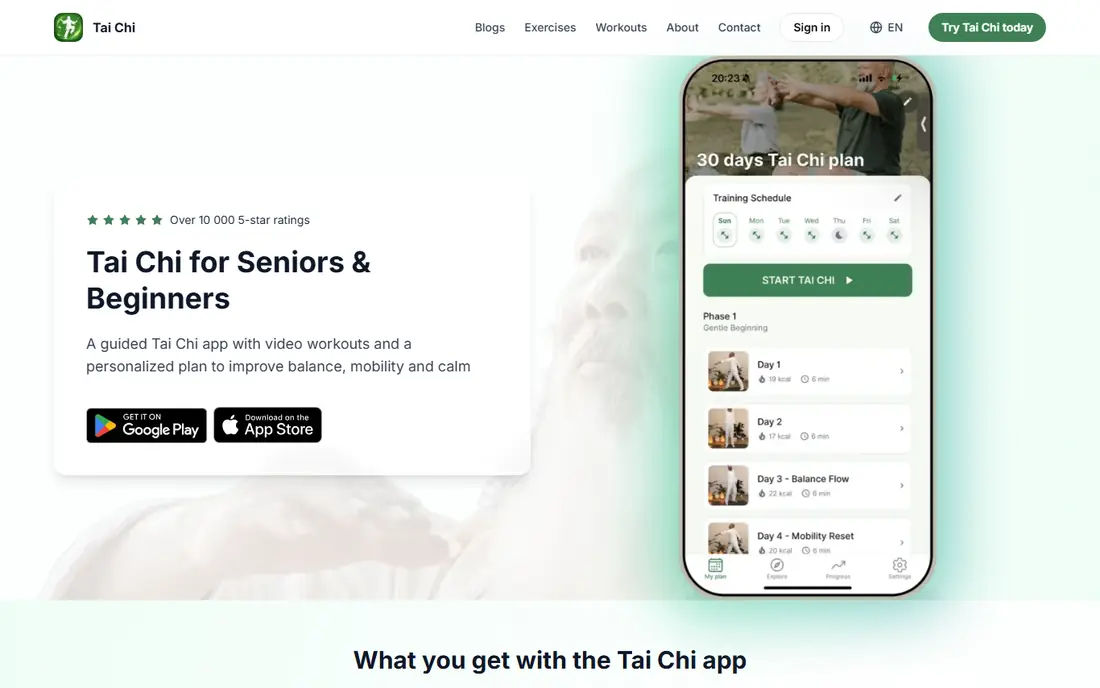
This app is built around a simple idea: short, clear lessons that a complete beginner can follow without feeling lost. It includes chair sessions for limited mobility, calm flows for relaxation, and tai chi walking routines for steady steps and coordination. Progress tracking helps a user see that a short daily session is adding up.
Video instruction has a natural limit. No app can correct your posture in real time, so a user with balance problems should practise near a sturdy chair or wall and consider an in-person class for form checks. Used with that care, it is one of the most welcoming starting points here.
- Step-by-step beginner lessons
- Chair tai chi options
- Tai chi walking routines included
- Not a substitute for in-person instruction
- Form feedback is limited to video cues
Lasta stands out because tai chi and indoor walking sit inside a wider low-impact programme, rather than as a single video. After a short quiz, it suggests a plan based on goals, fitness level and limits, and it adds chair yoga, wall pilates and functional movement for variety. Reminders and challenges help with the hardest part, which is doing it again tomorrow.
Pricing needs care. The app is free to download, but workouts require a subscription, and prices vary by plan length and region. Check the renewal price and billing period before subscribing, and cancel from account settings if the plan stops fitting your routine.
- Tai chi and indoor walking in one plan
- Personalised quiz-based programmes
- Challenges and reminders
- No free plan for workouts
- Pricing varies by plan and region, so check renewal terms
Reverse Health is known for gentle, beginner-friendly movement, and its tai chi content follows that pattern with slow pacing and clear explanations of why each movement matters. Short flows fit a morning routine, and the calm style suits users who found faster fitness apps discouraging.
The limit is focus. Reverse Health covers a wider fitness world than tai chi alone, so a user who wants only tai chi walking may pay for content they never open. Check the current plan details and what tai chi content is included before subscribing.
- Gentle beginner flows
- Clear instructor explanations
- Short daily sessions
- Paid access
- Broader fitness content may distract from pure tai chi practice
MadMuscles builds a personalised plan from a quiz and includes tai chi walking among its gentle workout options, alongside strength and mobility work. That mix suits a user who wants tai chi walking as one part of a broader, low-impact routine rather than the only activity.
We include a clear warning here. Public reviews raise concerns about pricing clarity and renewal charges, so read the full plan price, renewal rate and cancellation steps before paying. If the billing terms are not clear on the screen in front of you, do not subscribe until they are.
- Personalised plans from a quiz
- Includes tai chi walking content
- Progress tracking
- Pricing is shown after a quiz and varies
- Billing complaints appear in public reviews, so read terms closely
SilverSneakers GO is the best value option for people who already qualify through a Medicare Advantage or other participating health plan. It offers live and on-demand classes, including gentle movement and tai chi style classes, plus walking and fitness content that pairs well with a tai chi walking habit.
Eligibility is the catch. If your plan does not include SilverSneakers, this app is not a direct substitute for the dedicated apps above. Check eligibility on the SilverSneakers site first, since that single check decides whether this is free or not available at all.
- Free for eligible members through many health plans
- Class-based tai chi and walking content
- No equipment needed
- Access depends on health plan eligibility
- Tai chi walking is part of a wider class library, not the sole focus
Tai Chi Qigong, from the YMAA publishing stable, suits a learner who wants to understand the form behind the walking practice. Its structured lessons cover posture, breathing and sequence in more depth than a short daily flow app, which helps once the basic steps feel comfortable.
That depth comes with a different pace. It is less of a quick daily walking companion and more of a study resource, and some lessons are paid. We would pair it with a walking-focused app at first, then use it to deepen form once a daily habit is in place.
- Established publisher with structured forms
- Detailed video instruction
- Good for learners who want depth
- More traditional and less walking-focused than the top picks
- Some content is paid
How we picked these
We compared official app pages, developer listings and public feature descriptions, and we kept only apps that are live in October 2026 and that offer tai chi, tai chi walking, indoor walking or a close gentle-movement equivalent. We favoured apps that state their session style, pace and equipment needs clearly, and we noted where pricing sits behind a quiz or paywall rather than repeating an unverified figure. This is general wellness information, not medical advice, and no app here replaces guidance from a clinician for balance, joint or heart conditions.
How to choose the right app for you
Start with your body and your schedule, not with the longest feature list. A short session you repeat beats a long programme you abandon.
Match the pace to your balance
If balance is a concern, choose an app with chair options and slow pacing, practise near support, and wear flat, stable shoes. Stop if you feel dizzy or unsteady, and ask a clinician or physiotherapist about safe starting points.
Decide how much structure you want
A dedicated tai chi walking app gives focus, while Lasta or MadMuscles give a full plan with reminders. If you already follow a routine well, focus may be enough. If you need prompts and variety, a structured plan is worth paying for, provided the billing terms are clear.
Check the price before you commit
Free download does not always mean free workouts. Read the plan price, renewal price and cancellation method before paying, and test the free content first where it exists. A subscription that renews at a higher rate can turn a gentle habit into an unwelcome bill.
Pair walking with form work
Use a walking-focused app for daily steps and a form-focused resource, such as Tai Chi Qigong, for posture and breathing when you want more depth. Keep sessions short at first, then lengthen them only when the shorter version feels easy.
Frequently asked questions
What is the best app for tai chi walking?
For this exact practice, the Tai Chi Walking App is the most focused choice, while Lasta is the strongest all-round pick for people who also want indoor walking and chair work. Beginners who want the gentlest start should look at Tai Chi for Seniors and Beginners.
Can tai chi walking help balance?
Slow weight shifts and steady stepping are used in many balance programmes, and these apps present that style of movement in short, guided sessions. Results vary by person, and anyone with a fall history or a medical condition should check with a clinician before starting.
Do I need equipment for tai chi walking?
No. A clear floor area, flat shoes and, for safety, a nearby chair or wall are enough for most routines in this list. No weights, mats or special clothing are required, though comfortable clothing helps.
How long should a session last?
Most apps in this list use sessions of about ten minutes, which is a realistic daily target for beginners. Start shorter if needed, and build up only when the current length feels comfortable and steady.
Are these apps free?
Some are free to download with in-app purchases, some are free for eligible SilverSneakers members, and others require a subscription. Check the price and renewal terms on the official site or store listing before subscribing.
Sources
See where you really rank - block by block
ProMapRanker scans Google Maps across a grid of your service area. Simple monthly plans from $19, white-label on every plan.
Start freeKeep reading
 zscaler alternatives
Best Zscaler Alternatives in 2026
Looking for zscaler alternatives? We compare 9 SASE and zero trust platforms on architecture, data protection, pricing, and fit for your network and team.
Read → zapier alternatives free
Best Zapier Alternatives Free in 2026
Nine automation tools for zapier alternatives free in 2026, all with genuinely free tiers, plus free plan limits, starting prices and upgrade paths explained.
Read → which platform is best for online reputation
Which Platform Is Best for Online Reputation in 2026
Wondering which platform is best for online reputation? We compare 8 review, listing, and response tools for small and multi-location businesses and agencies.
Read →