 ProMapRanker
Best Supply Chain Visibility Software in 2026


Multimodal visibility with predictive ETAs · Pricing starts at: See website
Key takeaways
- The best supply chain visibility platform depends on your main transport modes, carrier mix, and how much of your freight is ocean, road, rail, or air.
- Predictive ETAs are only useful when carrier data is timely and complete, so carrier onboarding matters as much as the dashboard.
- Enterprise platforms often price by shipment volume or custom quote, while lighter ocean tools can suit smaller teams with a narrower need.
- Exception alerts, shared tracking links, and system integrations decide daily value more than a long feature list.
- A trial or pilot on your own lanes, with your own carriers, will tell you more than a sales demo on sample data.
Quick comparison
| Pick | Great for | Pricing starts at | Free tier | |
|---|---|---|---|---|
| FourKites | Multimodal visibility with predictive ETAs | See website | No | Visit |
 project44 | Broad carrier network and multimodal tracking | See website | No | Visit |
 Descartes MacroPoint | Road freight visibility for shippers and brokers | See website | No | Visit |
 Shippeo | Multimodal visibility for European and global lanes | See website | No | Visit |
 Overhaul | Visibility with cargo risk and security insight | See website | No | Visit |
 Tive | Sensor based in transit condition tracking | See website | No | Visit |
 GoComet | Ocean visibility with a customer tracking portal | See website | No | Visit |
 Terminal49 | Ocean container tracking with a free tier | See website | Yes | Visit |
 Vizion | Ocean container data through an API | See website | No | Visit |
The best supply chain visibility platforms
We compared platforms on transport mode cover, carrier network depth, ETA quality, exception handling, integrations, and pricing transparency. The nine tools below all provide supply chain visibility today, though their strengths sit in different modes and company sizes.
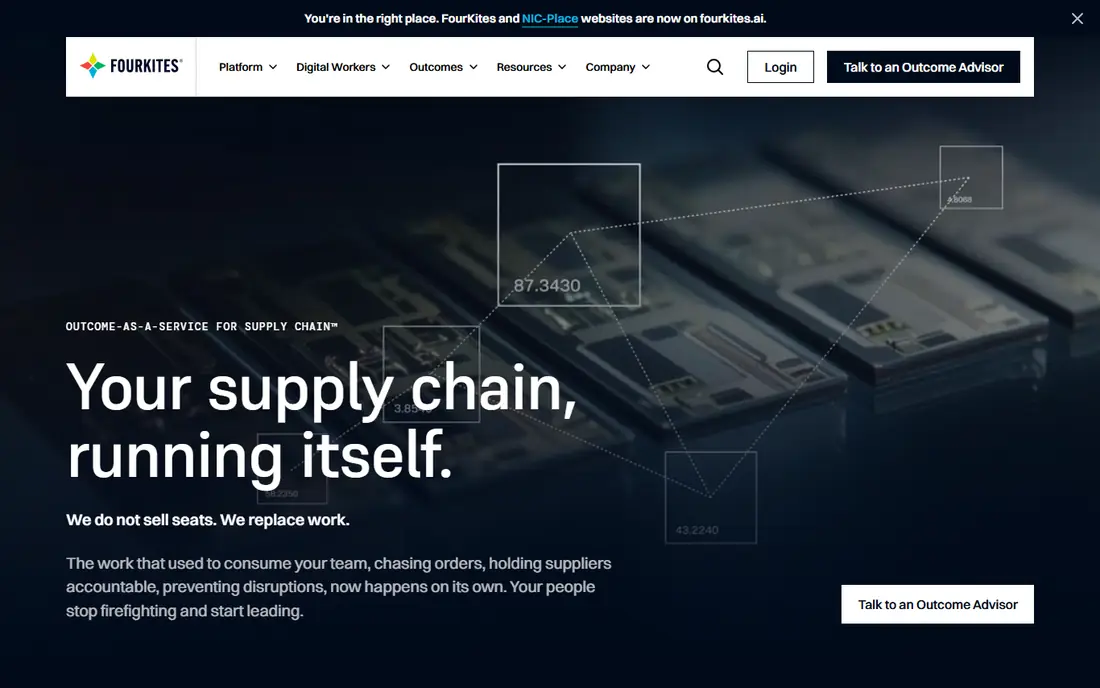
FourKites suits large shippers and logistics providers who move freight across several modes and need one view of it all. Its platform pulls carrier, GPS, and telematics data into live shipment tracking, then uses that data to predict arrival times and flag delays. Yard management and order level visibility add value when freight moves through distribution centres as well as on the road.
The honest limit is cost and effort. FourKites is priced for enterprise use, and onboarding a large carrier base takes planning and IT time. Smaller shippers with only ocean freight may get better value from a lighter tool. For a complex, multimodal network, though, FourKites is a strong first pilot.
- Broad road, rail, ocean, and air tracking
- Predictive ETAs and exception alerts
- Yard and inventory visibility options
- Enterprise pricing is custom and can be high for smaller shippers
- Setup can take time across many carriers
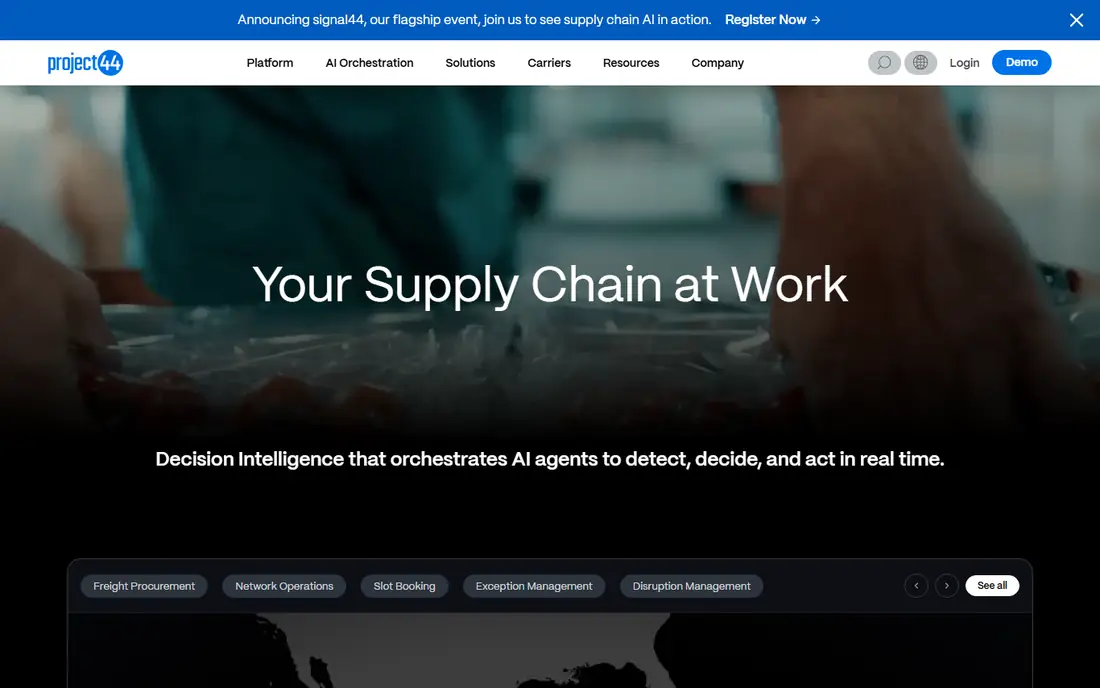
project44 is the other enterprise leader in this list, and it suits shippers who need deep carrier cover across road, ocean, rail, air, and parcel. Its network approach means many carriers are already connected, which can shorten onboarding on common lanes. Predictive ETAs, exception alerts, and shared tracking views help teams act on delays before customers ask about them.
The trade-off is similar to FourKites. Pricing is custom, and the platform is built for scale, so a small team may pay for breadth it does not need. If your freight spans many modes and carriers, project44 deserves a pilot. If your need is ocean only, compare a lighter tool first and check the cost gap.
- Large carrier network across modes
- Strong ETA and exception tools
- Integrations with transport and enterprise systems
- Custom pricing can be hard to compare
- Smaller teams may not use the full platform
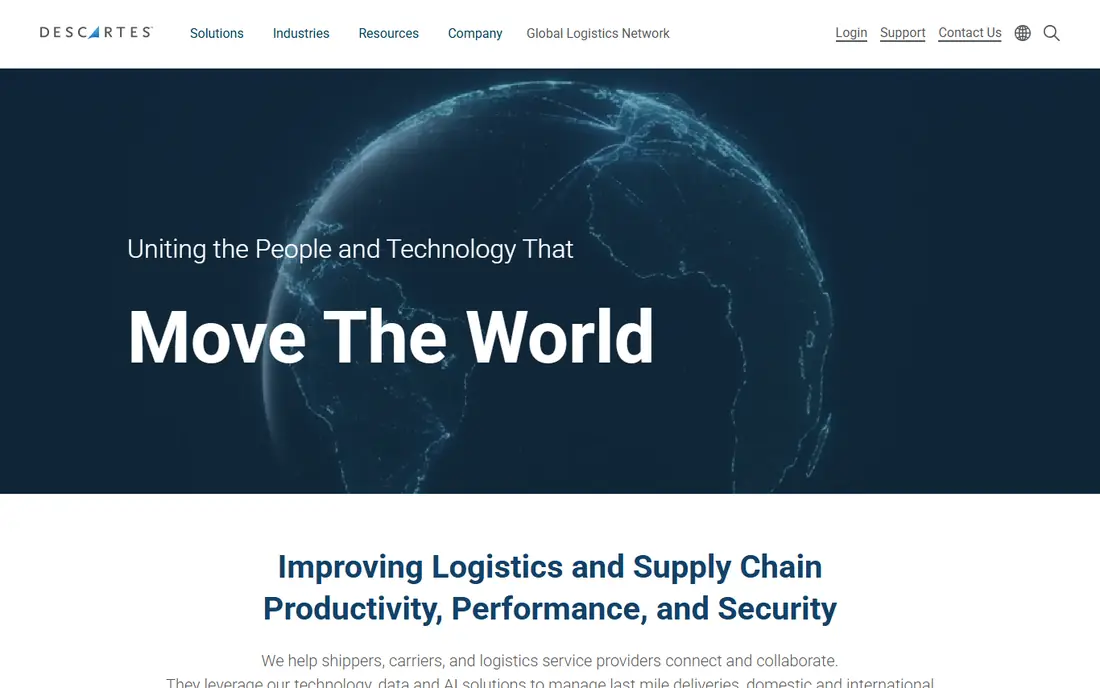
Descartes MacroPoint suits shippers, brokers, and third party logistics firms with a heavy road freight focus. It tracks truckload and less than truckload shipments using carrier GPS, electronic logging devices, and mobile tracking, and it offers options that reduce the need for constant check calls. As part of Descartes, it can sit alongside customs, routing, and transport management tools.
The limit is mode breadth. MacroPoint is strongest on the road, while FourKites and project44 cover ocean, rail, and air in more depth. If most of your freight moves by truck, that focus is a plus, not a flaw. If ocean is a large share, pair it with an ocean tool or choose a multimodal platform instead.
- Strong road and truckload tracking
- Carrier friendly tracking options
- Part of a wider Descartes transport suite
- Ocean and air cover is less central than road
- Pricing is custom
Shippeo suits companies with European lanes, or global lanes that run through Europe, who need road, ocean, rail, and air visibility in one platform. Its carrier network is strong in Europe, and its platform includes predictive ETAs, exception alerts, and carbon reporting for shipments. Customer facing tracking views help teams share status without building a portal themselves.
The honest check is geography. Shippeo has grown globally, but carrier depth still varies by lane, so a North American heavy shipper should test its own lanes before signing. Ask for carrier cover on your top twenty lanes, not only a global carrier count. For European focused networks, Shippeo is a strong contender.
- Multimodal tracking with a strong European carrier base
- Predictive ETAs and carbon reporting
- Customer facing tracking views
- North American carrier depth should be checked lane by lane
- Enterprise pricing is custom
Overhaul suits shippers of high value, sensitive, or theft prone freight, where visibility alone is not enough. Its platform combines shipment tracking with risk insight, such as route and location risk context, so teams can act on security concerns as well as delays. That combination is useful for pharmaceuticals, electronics, and other high value goods.
The trade-off is fit. A shipper of low value, low risk freight may not need the risk layer and may prefer a simpler, cheaper visibility tool. Overhaul pricing is custom, so the value case depends on your cargo risk and your current loss or delay costs. Run a pilot on your highest risk lanes to judge whether the extra insight pays.
- Real time tracking plus risk and security context
- Exception tools for high value freight
- Integrations with transport systems
- Risk features may be more than a standard shipper needs
- Pricing is custom
Tive suits cold chain, pharmaceutical, food, and sensitive goods shippers who need to know condition, not only location. Its small trackers travel with a shipment and report location plus temperature, shock, tilt, and light exposure to a cloud platform. Alerts can flag a temperature excursion or a shock event while the shipment is still in transit, when action is still possible.
The honest limit is hardware. Trackers cost money, need to be attached and recovered or reused, and add a logistics step that a pure software platform does not have. For standard dry freight, that cost may not be justified. For goods where a temperature break or a shock can ruin a load, Tive gives evidence that a carrier GPS ping alone cannot provide.
- Trackers report location, temperature, shock, and light exposure
- Cloud platform for alerts and reporting
- Useful for cold chain freight
- Hardware cost sits on top of software
- Trackers need return or reuse planning
GoComet suits freight forwarders, importers, and exporters who need ocean visibility plus a clean way to share tracking with customers. Its platform tracks containers, predicts arrival times, and offers a white label portal so customers can check status without calling your team. That portal can cut status emails and improve customer trust on long ocean lanes.
The limit is mode focus. GoComet is strongest on ocean, while road and rail tracking are less central. If your business is ocean heavy, that focus is an advantage. If you need deep road visibility as well, compare a multimodal platform or pair GoComet with a road tool. Check container event depth on your main trade lanes during a trial.
- Ocean tracking with predictive ETAs
- White label customer portal
- Freight rate and shipment tools in one place
- Road and rail depth is less central than ocean
- Pricing is custom
Terminal49 suits smaller importers, brokers, and logistics teams who need ocean container tracking without an enterprise contract. Its platform follows containers through terminals, flags demurrage and detention risk, and lets teams share tracking links with customers. A free tier makes it easy to test on a small number of containers before paying.
The honest limit is scope. Terminal49 is ocean focused, so it will not replace a road or rail visibility platform. Free tier limits also mean larger teams will need a paid plan. For an ocean heavy team that wants a fast start and clear terminal insight, Terminal49 is a practical pick, and it pairs well with a road tool if needed.
- Container tracking with terminal and demurrage insight
- Free tier for small scale use
- Shared tracking links
- Ocean only, so road and rail need another tool
- Free tier limits suit small volumes
Vizion suits teams with developers who want raw ocean container tracking data inside their own system, rather than a separate dashboard. Its API delivers container events, vessel data, and milestone updates that can feed a transport management system, a customer portal, or an internal dashboard. That flexibility is valuable for forwarders and software teams building their own visibility layer.
The catch is that Vizion is not a plug and play dashboard for a non technical team. You need development time to build views, alerts, and customer sharing on top of the API. If your team lacks that capacity, Terminal49 or GoComet will be faster to use. If you already build on APIs, Vizion gives control that a closed dashboard cannot match.
- API first ocean container event data
- Broad carrier and terminal event cover
- Fits custom dashboards and systems
- No ready made shipper dashboard for non technical teams
- API pricing needs volume planning
How we picked these
We compared official vendor pages, mode cover, carrier network claims, ETA and exception features, integration options, and pricing models, and we checked public reviews for patterns in data timeliness and onboarding effort. We gave weight to real carrier data, clear exception handling, and usable customer sharing, and we left out general transport systems that only offer tracking as a minor add-on. Where pricing was custom or not published, we wrote See website rather than copying a third party estimate.
What to check before you buy visibility software
Start with your top lanes and your top carriers, not with a global feature list. Ask each vendor for carrier cover on those lanes, event timeliness, and how long onboarding takes for carriers that are not already connected. A platform that covers ninety percent of your freight on day one is more useful than a platform with more modes but weak cover on your main routes.
ETAs, alerts, and integrations
Test predictive ETAs against your own history, and check how alerts reach the team that can act on them. An alert that sits in a dashboard no one watches will not prevent a missed delivery. Confirm integrations with your transport management system, enterprise system, and customer portal, and ask whether tracking links can be shared without a login. Data quality, alert routing, and integration depth decide daily value.
Pricing and pilot terms
Enterprise visibility pricing is often based on shipment volume, modes, and features, so get a quote for your actual volume and lane mix. Agree a pilot scope, success measures, and exit terms before a long contract. Measure ETA accuracy, exception response time, carrier onboarding speed, and customer status contacts during the pilot, and compare those results across vendors on the same lanes.
Frequently asked questions
What is the best supply chain visibility platform?
FourKites and project44 lead for large multimodal networks, while Shippeo suits European focused lanes and Terminal49 suits smaller ocean teams. The best platform depends on your modes, carrier mix, and company size. Pilot two options on your own lanes before you sign a long contract.
What are the top supply chain visibility software options for ocean freight?
Terminal49, GoComet, and Vizion are strong ocean options, with FourKites, project44, and Shippeo also covering ocean within a multimodal platform. Terminal49 suits small teams, GoComet suits customer portals, and Vizion suits API based builds. Check terminal event depth and demurrage insight on your main trade lanes.
What are the best supply chain visibility tools for road freight?
Descartes MacroPoint is a strong road focused choice, while FourKites and project44 cover road within a wider multimodal platform. Road visibility depends on carrier GPS and electronic logging device data, so carrier onboarding matters. Test your top road lanes and ask how check calls fall after onboarding.
How do predictive ETAs work in visibility software?
Predictive ETAs combine live location data, carrier history, route data, and traffic or port conditions to estimate arrival time. Accuracy improves when carrier data is timely and when the vendor has history on your lanes. Treat vendor accuracy claims as a starting point, and measure ETA error on your own lanes during a pilot.
Does supply chain visibility software replace a transport management system?
No, in most cases it adds a data layer on top of a transport system. A transport management system plans and books freight, while visibility software tracks it live and flags exceptions. Many teams use both, with visibility data feeding the transport system and customer updates. Some platforms bundle both, but check which job each tool does best.
How long does it take to set up visibility software?
Setup time varies from days for a light ocean tool to months for an enterprise multimodal rollout across many carriers. Carrier onboarding is usually the longest step, especially for carriers that are not already connected. Ask for a clear onboarding plan, a named contact, and a pilot timeline before you commit.
Sources
See where you really rank - block by block
ProMapRanker scans Google Maps across a grid of your service area. Simple monthly plans from $19, white-label on every plan.
Start freeKeep reading
 zoho inventory alternatives
6 Alternatives to Zoho Inventory, Compared on Price and Fit
Zoho Inventory alternatives: 6 tools compared on price, free plans and fit. Katana leads the list for manufacturers. Fit and flaws are laid out for each entry.
Read → zoho crm alternatives
Best Zoho CRM Alternatives (2026)
Need Zoho CRM alternatives? We compare 7 tools on cost, free access and who each suits. Every pick gets a straight assessment. Built for quick decisions.
Read → zelle alternatives
Best Zelle Alternatives in 2026
Compare the best Zelle alternatives for sending money to friends, paying sellers and moving funds abroad, with honest notes on fees, speed and safety in 2026.
Read →