 ProMapRanker
Best Supply Chain Planning Software in 2026


SAP-centric global planning · Pricing starts at: See website
Key takeaways
- SAP Integrated Business Planning, Oracle SCM and Blue Yonder lead enterprise planning, and all are priced by quote with implementations measured in months.
- Kinaxis is known for concurrent planning, where a change in one area updates related plans in near real time.
- o9 Solutions focuses on AI forecasting and digital twin models that link commercial, operational and financial decisions.
- Anaplan and E2open offer more flexible or network-based planning, with Anaplan suited to connected financial and operational models.
- The best supply chain planning software depends on your ERP, your planning horizon and whether you need network visibility or deep factory and inventory optimization.
Quick comparison
| Pick | Great for | Pricing starts at | Free tier | |
|---|---|---|---|---|
| SAP Integrated Business Planning | SAP-centric global planning | See website | No | Visit |
 Oracle SCM | Multi-regional end-to-end operations | See website | No | Visit |
 Kinaxis | Concurrent scenario planning | See website | No | Visit |
 Blue Yonder | Retail and manufacturing planning | See website | No | Visit |
 o9 Solutions | AI forecasting with digital twin models | See website | No | Visit |
 Anaplan | Connected financial and operational planning | See website | No | Visit |
 E2open | Multi-enterprise network visibility | See website | No | Visit |
 Coupa | Supply chain design and planning | See website | No | Visit |
 Manhattan Associates | Warehouse and distribution planning | See website | No | Visit |
The best supply chain planning software
We compared planning tools on demand forecasting, inventory optimization, production planning, scenario modeling and network visibility. Most enterprise tools here are quote-based, so the guide focuses on fit, implementation effort and planning strengths rather than headline prices alone.
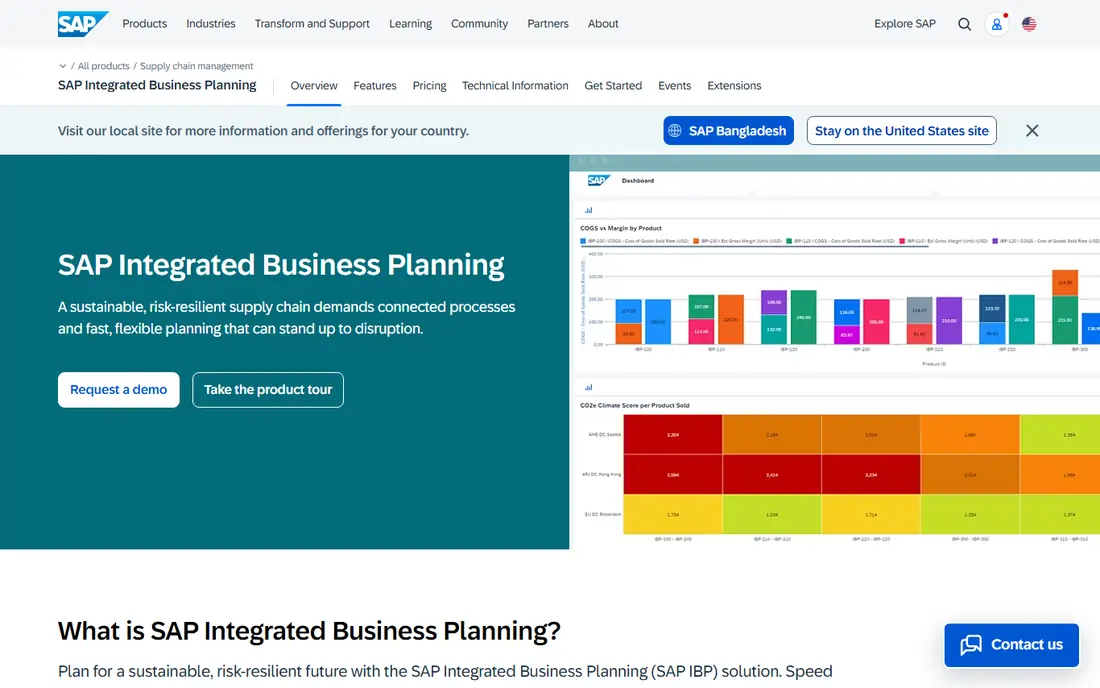
SAP Integrated Business Planning, often called SAP IBP, suits large firms already running SAP. It connects demand planning, inventory optimization, supply planning and sales and operations planning, with data flowing from SAP S/4HANA. That shared data model reduces manual reconciliation between finance, sales and operations.
The cost and complexity are real. SAP does not publish production pricing, and licenses, tenants and add-ons are quoted separately. Firms should budget for implementation partners and internal SAP expertise. For a non-SAP firm, that overhead may outweigh the benefits, but for an SAP firm, IBP is the natural planning layer.
- Native link to SAP S/4HANA
- Demand and supply planning in one suite
- Scenario tools
- Quote-based production pricing
- Licensing is complex
- Implementation needs SAP skills
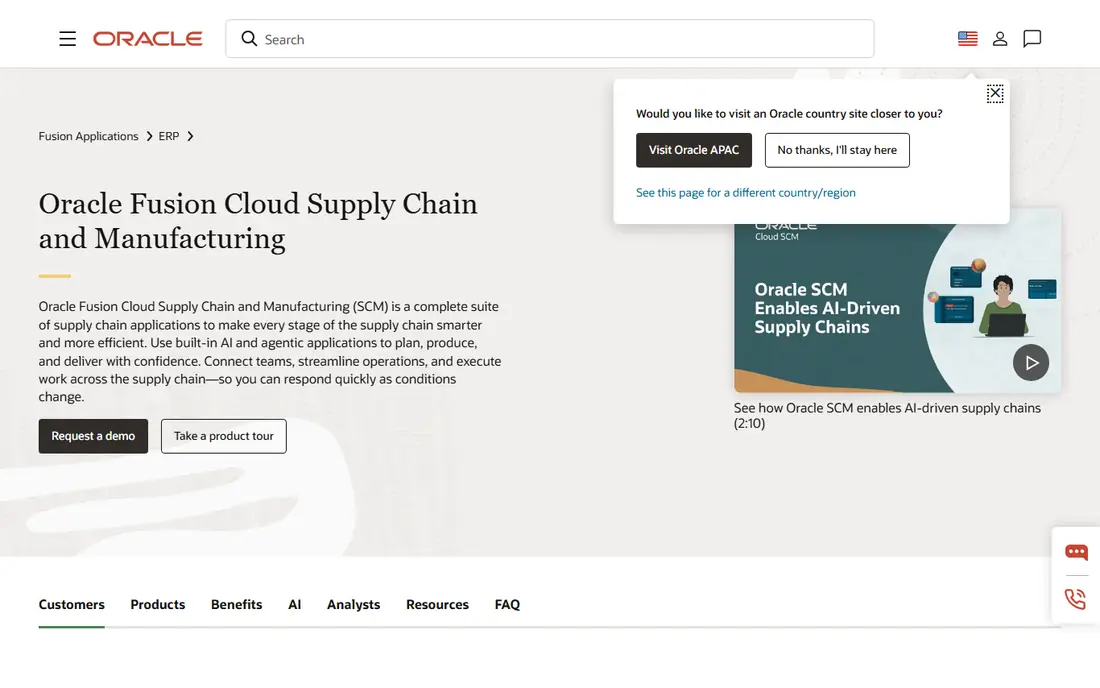
Oracle SCM covers supply chain planning alongside procurement, manufacturing, logistics and order management. Its planning tools include demand management, supply planning and sales and operations planning, with AI-based demand sensing for short-term shifts. For a firm already on Oracle ERP, that integration keeps planning close to execution and finance.
The suite breadth is also a drawback. A firm that only needs demand forecasting may find Oracle SCM larger than needed, with a longer rollout. Quote-based pricing means early budgeting needs a vendor discussion. For multi-regional operations that want planning and execution together, Oracle is a strong enterprise choice.
- Full planning and execution suite
- Demand sensing
- Link to Oracle ERP and finance
- Quote-based pricing
- Broad suite can be heavy for a single planning need
Kinaxis is built around concurrent planning, meaning demand, supply, inventory and capacity plans update together when an input changes. Planners can test a disruption, such as a supplier delay, and see the effect across the network without waiting for separate batch runs. That speed helps firms in volatile markets make decisions before a problem spreads.
Kinaxis is an enterprise tool with quote-based pricing and a serious implementation effort. It also depends on good data: poor forecast inputs or messy bills of material will limit any planning tool, including this one. For manufacturers and global firms that live on scenarios, Kinaxis is a leading option.
- Concurrent planning across functions
- Fast scenario comparison
- Familiar spreadsheet-style view
- Quote-based pricing
- Enterprise focus
- Needs clean planning data to work well
Blue Yonder, formerly JDA, serves retailers, consumer goods firms and manufacturers with planning across demand, inventory, fulfillment and replenishment. Its multi-echelon inventory optimization helps firms place stock where it is most likely to sell, rather than spreading it evenly. The Luminate platform adds visibility and what-if analysis across the network.
Buyers should expect a large project. Implementations are commonly measured in months, and users report a steep learning curve. Pricing is quote-based, with published third-party estimates starting around $100,000 per year for larger deployments. For complex retail and manufacturing networks, that investment can pay back through better availability and lower excess stock.
- Strong inventory optimization
- Retail and omnichannel planning
- Scenario tools
- Quote-based pricing
- Long implementations reported
- Learning curve is steep
o9 Solutions uses an Enterprise Knowledge Graph and AI models to link demand, supply, pricing and financial plans. Its digital twin approach lets planners model the supply chain as a connected system, then test decisions such as promotions, capacity changes or supplier shifts. That link between commercial choices and operational cost is its main selling point.
Pricing is modular and quote-based, so the total depends on which planning modules and data volumes a firm needs. Implementation also needs clear ownership of data and planning processes. For large multinationals that want AI forecasting tied to financial outcomes, o9 is a credible and modern choice.
- AI forecasting
- Digital twin modeling
- Links commercial and financial planning
- Quote-based pricing
- Modular pricing can grow
- Needs strong data governance
Anaplan is a planning platform rather than a single supply chain app. Teams build connected models for demand, supply, inventory and finance, so a change in a sales forecast can flow into production and cash plans. Its Hyperblock engine handles large, multidimensional calculations, and PlanIQ adds predictive forecasting tools.
That flexibility requires skill. Firms need planners who can design and maintain models, or they will need partner help. Pricing is quote-based and scales with use. For firms that want one connected planning model across departments, Anaplan offers more freedom than a fixed supply chain suite.
- Flexible multidimensional models
- Connects finance, sales and supply
- Strong scenario tools
- Quote-based pricing
- Model building needs skilled planners
- Cost grows with model size
E2open focuses on the multi-enterprise network: suppliers, manufacturers, logistics providers and customers sharing data on one platform. That visibility helps firms spot delays, track shipments and align forecasts with partner capacity. It also covers demand planning, inventory and global trade tools for firms with complex partner networks.
The network effect is also the challenge. Value grows as more partners join and share data, which takes onboarding effort. Pricing depends on network size and modules, so buyers should scope partner count early. For firms whose supply chain problems sit between companies, not inside one factory, E2open is a strong fit.
- Network visibility across partners
- Logistics and trade tools
- Demand sensing
- Network onboarding takes time
- Pricing varies by scope
- Interface can feel dense
Coupa is best known for procurement and spend management, but its supply chain design tools, gained through the LLamasoft acquisition, add network design and planning. Teams can model where to place plants, warehouses and suppliers, then test cost, service and risk trade-offs. That design view complements daily demand and inventory planning.
Buyers should be clear about which Coupa product they need, since procurement, payments and supply chain design are separate areas. Pricing is quote-based. For firms redesigning a network or linking sourcing decisions to supply planning, Coupa offers a useful and integrated path.
- AI-based supply chain design
- Link to procurement and spend
- Scenario modeling
- Quote-based pricing
- Design tools are distinct from daily planning
- Suite scope is broad
Manhattan Associates is the distribution specialist in this list. Its strengths sit in warehouse management, order management and inventory placement, which matter most when fulfillment speed and accuracy drive service. For retailers and distributors, planning that connects cleanly to warehouse execution reduces the gap between a plan and a shipped order.
It is less of a general factory planning suite than SAP, Oracle or Kinaxis. Firms whose main problem is production scheduling may need a different lead tool. For distribution-led networks, Manhattan brings execution depth that pure planning tools often lack.
- Strong warehouse and distribution execution
- Inventory and order tools
- Retail depth
- Quote-based pricing
- Planning depth is tied to distribution
- Implementation is enterprise-scale
How we picked these
We compared official product pages, planning documentation and public reviews for tools that cover demand planning, supply planning or network design. We kept only tools that are live in October 2026 and that serve supply chain planning, not only warehouse execution or procurement alone. Where vendors do not publish pricing, we marked the price as See website rather than using a third-party estimate as fact.
We also weighed ERP fit, since planning tools work best when they share clean data with ERP and execution systems. A technically strong tool on the wrong ERP can cost more in integration than it saves in forecasting accuracy.
What to check before you buy
Start with the planning problem you must fix first. Is it forecast accuracy, inventory excess, capacity clashes, supplier visibility or network design. Each tool here leads in a different area, and buying the broadest suite for a narrow problem often leads to a long project with low early value. Pick a tool that solves the first problem well, with a path to the second.
Next, audit your data. Planning tools need clean product hierarchies, lead times, bills of material and sales history. Run a data check before signing, and ask the vendor to show a pilot on your own data, not only a polished demo. A pilot will reveal gaps in forecast inputs and integration far earlier than a full rollout.
Implementation and total cost
Enterprise planning projects are measured in months, not weeks. Ask for a written scope that covers licenses, implementation, integration, training and support for the first year. Also ask who owns the planning model after go-live. If only the vendor can change it, every future scenario will carry a service cost.
Demand planning versus supply planning
Demand planning forecasts what customers will buy. Supply planning decides what to make, buy and move to meet that demand. Some tools lead on forecasting, others on inventory and capacity. If your firm already forecasts well but struggles with supply, prioritize inventory optimization and scenario speed. If forecasts are the weak point, prioritize demand sensing and AI forecasting tools such as o9 and Kinaxis.
Frequently asked questions
What is the best demand planning software?
For SAP firms, SAP Integrated Business Planning is the natural pick. For concurrent scenario work, Kinaxis is strong. For AI-led forecasting linked to finance, o9 Solutions is a leading option. The best demand planning software depends on your ERP, data quality and whether you need short-term sensing or long-range planning.
What is the best supply chain optimization software?
Blue Yonder and Coupa are strong optimization picks, with Blue Yonder leading on inventory and retail fulfillment and Coupa leading on network design. Kinaxis also supports optimization through scenario comparison. Compare them on your network shape, since retail, manufacturing and distribution networks optimize in different ways.
What is the top supply chain planning software for small firms?
Most tools here are enterprise-grade and quote-based, which makes them a poor fit for a very small firm. Smaller firms often start with ERP planning modules, inventory tools or Anaplan models sized to their needs, then move to enterprise planning as volume and complexity grow. Do not buy an enterprise suite before your data and planning team are ready.
How long does supply chain planning software take to implement?
Enterprise implementations commonly take several months, depending on data, integrations and planning scope. A single demand planning module may go live faster than a full suite covering demand, supply, inventory and finance. Ask for a phased plan with a pilot, so early value arrives before the full rollout ends.
Is supply chain planning software priced per user?
Pricing varies. Some vendors price by user, others by revenue block, data volume, network size or module. That is why most enterprise tools here show See website rather than a single price. Get a quote that states the pricing basis, so you can forecast cost as headcount or volume grows.
Sources
See where you really rank - block by block
ProMapRanker scans Google Maps across a grid of your service area. Simple monthly plans from $19, white-label on every plan.
Start freeKeep reading
 who is the best seo company
Who Is the Best SEO Company in 2026
Compare who is the best SEO company in the USA, from full service agencies to SEO only specialists, with fit and service notes Compare features, pricing,.
Read → top bi software
Top BI Software in 2026: 9 Tools Compared
Compare the top BI software in 2026, with dashboards, reporting, data links, sharing, pricing and free plans for small teams, analysts and large companies.
Read → spyfu alternatives
SpyFu Alternatives in 2026: 9 Tools Compared
Compare the best spyfu alternatives in 2026, from Semrush and Ahrefs to SE Ranking, Moz, and Mangools, for competitor and keyword research work. for teams
Read →