 ProMapRanker
Best Supply Chain Management Companies in 2026

Key takeaways
- SAP and Oracle suit companies that already run their ERP systems, while specialist firms often fit a single planning or warehouse problem better.
- Kinaxis and o9 Solutions stand out for fast scenario planning when demand, supply or transport conditions change at short notice.
- Manhattan Associates is the clearest pick for warehouse and fulfilment work, and E2open fits firms that must connect many outside partners.
- Almost every enterprise option here is priced by quote, so budget planning should start with a demo and a written scope, not a headline price.
Quick comparison
| Pick | Great for | Pricing starts at | Free tier | |
|---|---|---|---|---|
 SAP Supply Chain | SAP-based global planning | See website | No | Visit |
 Oracle Fusion Cloud SCM | Oracle-based end-to-end operations | See website | Free trial | Visit |
 Blue Yonder | Retail and manufacturing forecasting | See website | No | Visit |
 Kinaxis Maestro | Fast scenario planning | See website | No | Visit |
 Manhattan Associates | Warehouse and fulfilment execution | See website | No | Visit |
 o9 Solutions | AI planning and digital twin models | See website | No | Visit |
 Infor Nexus | Multi-party supplier networks | See website | No | Visit |
 E2open | Multi-enterprise visibility | See website | No | Visit |
 Coupa | Supply chain design and spending control | See website | No | Visit |
The best supply chain management companies
We looked at official product pages, pricing pages and public documentation to compare coverage, fit and buying effort. The list below mixes broad suites with focused specialists, because few companies need every module at once.
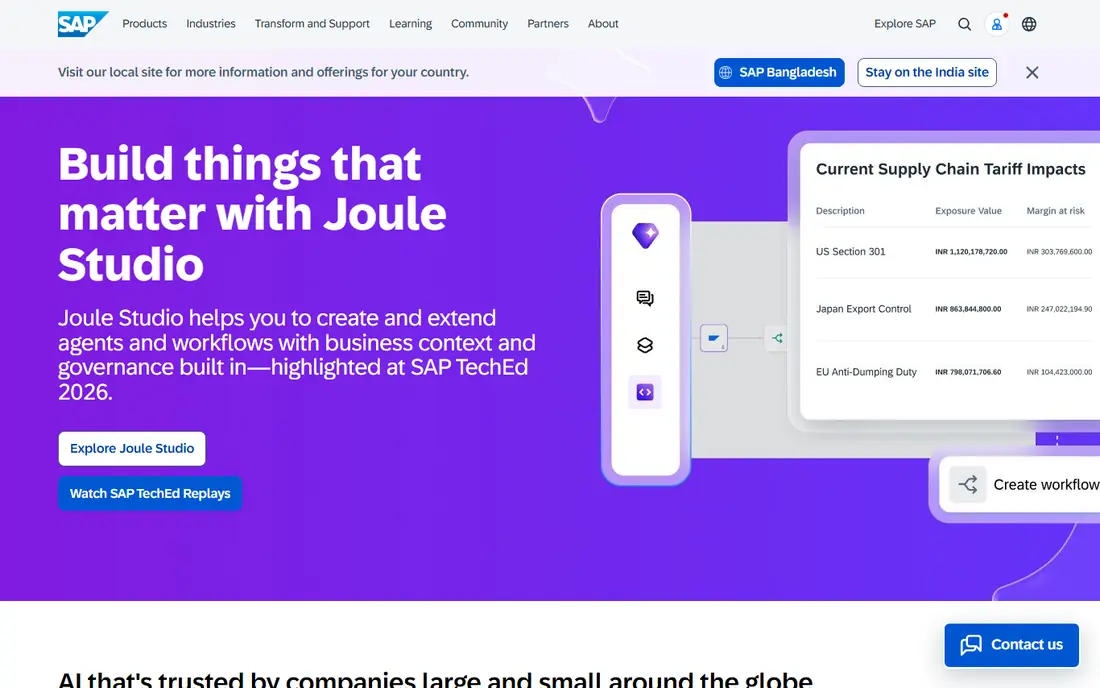
SAP is the natural starting point for a company that already runs SAP for finance, procurement or manufacturing. Its supply chain tools cover demand planning, inventory, production and logistics in one connected set, which reduces the need to stitch together separate systems. The trade-off is commitment. A SAP rollout rewards clean master data, clear ownership of planning decisions and patience during implementation.
We would shortlist SAP when the business is large, operates across countries and wants one vendor for most of the chain. It is less attractive for a small team that only needs better forecasting or a better warehouse system. Ask for a phased plan, a named implementation partner and a realistic timeline before signing.
- Deep planning, logistics and manufacturing coverage
- Strong fit with SAP S/4HANA
- Broad partner and support network
- Implementation can be long and costly
- Smaller firms may find the scope larger than they need
Oracle Fusion Cloud SCM suits firms that already use Oracle Cloud ERP or want planning, sourcing, manufacturing and logistics from one cloud suite. The breadth helps when finance and operations must share the same numbers, and the cloud model removes some of the upgrade work that came with older on-premise systems. Public documentation shows a wide module list, so buyers should focus on the modules they will actually use in year one.
The catch is the same as with any broad suite. Breadth can mean a longer setup, more training and more internal change than a focused tool. We would ask Oracle for a trial or demo using your own planning data, and for a clear list of what is included in the quote.
- Broad planning, manufacturing and logistics coverage
- Cloud updates arrive on a regular cycle
- Strong reporting and control tools
- Pricing is quote based
- Configuration and change management need skilled staff
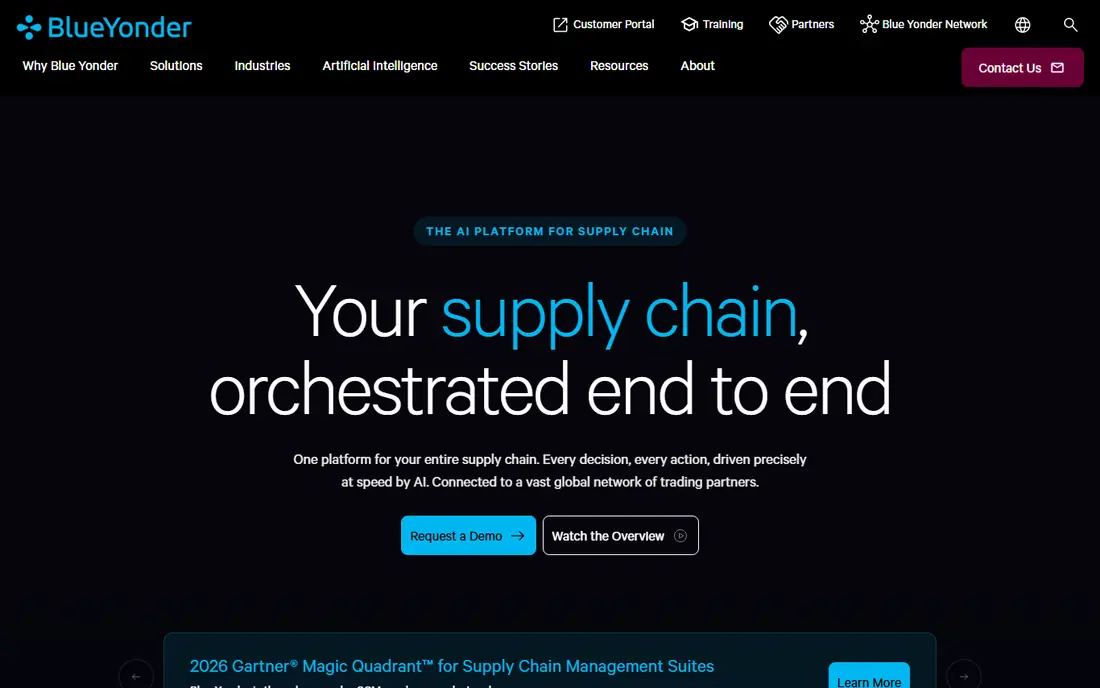
Blue Yonder built its name on forecasting for retailers, grocers and manufacturers, where small errors in demand can mean empty shelves or excess stock. Its planning tools help teams balance service levels against inventory cost, and its logistics tools extend that thinking into transport and warehouse work. For a retailer with many stores or a manufacturer with seasonal demand, that focus matters more than a generic planning module.
The downside is effort. Blue Yonder projects often need data cleanup and training, and buyers should expect a structured implementation rather than a quick install. We would put it at the top of a shortlist for forecasting-led buying, and lower down for a firm that only needs basic stock control.
- Strong demand forecasting and inventory optimisation
- Well known in retail and grocery
- Planning and execution tools in one family
- Quote-based pricing
- The interface and setup can feel complex for new users
Kinaxis Maestro, formerly known under the RapidResponse name, is built for speed. Planners can change a supplier, a plant or a demand figure and see the knock-on effects across the plan, rather than waiting for a batch run. That makes it a good fit for electronics, life sciences, automotive and other sectors where supply changes often and late decisions are costly.
Speed still needs control. Without agreed rules for which scenario becomes the official plan, teams can argue over versions instead of acting. We would choose Kinaxis when scenario work is a daily need, and pair the purchase with a clear planning cadence and one owner for the final plan.
- Concurrent planning lets teams test changes quickly
- Strong scenario comparison
- Useful when supply is volatile
- Quote-based pricing
- Needs disciplined governance so scenarios stay consistent
Manhattan Associates is the execution specialist in this list. Where SAP and Oracle plan the chain, Manhattan helps run the warehouse, manage labour, allocate orders and fulfil them across stores and online channels. That focus shows in its product design, which is built around distribution centres, order flows and fulfilment promises rather than high-level strategy alone.
For a retailer or distributor whose main pain is picking, packing and shipping accurately, Manhattan deserves a close look. It is not the cheapest route to a simple stock list, and configuration takes skill. We would shortlist it when warehouse performance, not just planning, is the deciding factor.
- Strong warehouse, labour and order management tools
- Cloud platform with regular updates
- Proven in omnichannel retail
- Quote-based pricing
- Technical setup needs experienced staff or a partner
o9 Solutions positions itself as an integrated business planning platform, linking commercial, supply and financial plans so teams work from shared assumptions. Its digital twin idea is simple in practice. A model of the chain lets planners test price changes, capacity limits or supplier problems before they commit in the real world. That is valuable for large firms with long lead times and many product lines.
The honest catch is scale. o9 is an enterprise purchase, with enterprise implementation effort to match. Smaller firms will likely get more value from a narrower forecasting or inventory tool. We would consider o9 when planning is spread across departments and the cost of a wrong plan is high.
- Integrated planning across demand, supply and finance
- Digital twin modelling for what-if analysis
- Modern cloud design
- Quote-based pricing
- Enterprise focus means it is not a small-business tool
Infor Nexus is different from a standalone planning tool because it is built around a network. Orders, shipments, invoices and documents move between buyers, suppliers, carriers and banks in a shared system, which can cut down on email chasing and manual status checks. For firms that source across many countries, that shared view is often more useful than another internal dashboard.
The work lies in onboarding partners. A network only pays off when suppliers and carriers actually use it, so buyers should plan time for training and support. We would pick Infor Nexus when partner visibility and document flow are the main problem, rather than internal forecasting alone.
- Connects buyers, suppliers and logistics partners on one network
- Good global shipment visibility
- Industry depth from Infor
- Quote-based pricing
- Network rollouts need partner onboarding time
E2open covers a broad set of supply chain tasks, from demand and supply planning to logistics, trade and channel data. Its strength is connection. A company can link its own plans to supplier, carrier and channel partner data, which helps when a delay in one part of the chain affects orders elsewhere. That breadth makes it a contender for global manufacturers and distributors.
Breadth also brings a scoping risk. Buyers should resist buying every module at once and instead start with the visibility or planning problem that hurts most. We would ask for a module-by-module quote and a phased rollout, so the first phase can prove value before the next phase starts.
- Wide network of trading partners and applications
- Planning, logistics and trade tools in one family
- Strong global coverage
- Quote-based pricing
- Choosing the right modules takes careful scoping
Coupa is best known for procurement and spend management, and its supply chain design tools build on that strength. Teams can model networks, test footprint changes and link design choices to cost, service and risk. For a firm that is opening or closing sites, changing suppliers or rethinking transport routes, that modelling view is practical and direct.
Coupa is not a warehouse execution tool, so it should not be judged on that test. Its value shows when design and spending decisions are made together. We would shortlist Coupa for network design and cost control, and pair it with an execution tool where warehouse work is also a priority.
- Supply chain design and modelling alongside procurement
- Clear spending and supplier controls
- Useful for cost-focused teams
- Quote-based pricing
- Design work needs good cost and network data
How we picked these
We compared official product and pricing pages, public documentation and the scope each vendor publishes for planning, execution and network work. We favoured vendors that are active in 2026, cover a clear part of the chain and publish enough detail for a buyer to judge fit. We left out vendors with only a narrow point tool and vendors whose pricing or product status we could not confirm from an official source.
What to check before you buy
Start with the problem, not the suite. Write down the one decision that costs you most today, such as a stockout, a late shipment or a warehouse backlog, and judge every vendor on that decision first. A broad suite can look impressive in a demo and still fail if it does not fix that specific pain.
Scope and data
Ask what data the tool needs on day one, who cleans it and how long setup takes. Planning tools fail most often on poor master data, missing lead times and unclear ownership, not on missing features. A short pilot with your own data tells you more than a polished sales demo.
Cost and rollout
Get a written quote that separates licences, implementation, training and support. Ask for a phased plan with a clear first milestone, and check what happens if you add sites, users or modules later. For quote-based enterprise tools, the total cost in year two matters more than the first-year headline.
Fit for your team
Check who will use the tool daily, how much training they need and how it connects to your ERP, warehouse and finance systems. A tool that only planners understand will not help warehouse or sales teams. Pick the option your team can run after the implementation partner leaves.
Frequently asked questions
What is the company with best supply chain management?
There is no single winner for every firm. SAP and Oracle lead for broad ERP-based operations, Blue Yonder leads for forecasting-led retail and manufacturing, and Manhattan leads for warehouse execution. The best fit depends on your size, your current systems and the problem you need to fix first.
What are the best companies to work for in supply chain?
Large employers in this list, including SAP, Oracle, Blue Yonder, Kinaxis and Manhattan Associates, all hire planners, engineers, consultants and support staff. Job quality varies by role, team and location, so check current openings, team reviews and the specific job description rather than judging by brand alone.
What are the best companies for supply chain jobs?
Software vendors, logistics providers, retailers and manufacturers all offer supply chain roles, from planning and procurement to warehouse operations and data analysis. Vendors on this list suit people who want to build and implement planning systems, while retailers and manufacturers suit people who want to run a chain day to day.
How much does supply chain management software cost?
Most enterprise options here are priced by quote, based on users, modules, sites and implementation scope. That is why we list starting price as See website for these vendors. Ask for a written quote and a phased plan before comparing totals.
Do I need a full suite or a specialist tool?
A specialist tool often wins when one problem dominates, such as forecasting or warehouse work. A full suite wins when planning, finance and execution must share the same data and process. Start with the dominant problem and expand only when the first phase works.
How long does implementation take?
Timelines vary widely by scope, data quality and partner experience, and enterprise rollouts often run for months. A focused pilot, clean data and a named internal owner shorten the timeline more than any feature list.
Sources
See where you really rank - block by block
ProMapRanker scans Google Maps across a grid of your service area. Simple monthly plans from $19, white-label on every plan.
Start freeKeep reading
 zscaler alternatives
Best Zscaler Alternatives in 2026
Looking for zscaler alternatives? We compare 9 SASE and zero trust platforms on architecture, data protection, pricing, and fit for your network and team.
Read → zapier alternatives free
Best Zapier Alternatives Free in 2026
Nine automation tools for zapier alternatives free in 2026, all with genuinely free tiers, plus free plan limits, starting prices and upgrade paths explained.
Read → which platform is best for online reputation
Which Platform Is Best for Online Reputation in 2026
Wondering which platform is best for online reputation? We compare 8 review, listing, and response tools for small and multi-location businesses and agencies.
Read →