 ProMapRanker
Best Supplier Risk Management Software in 2026

Key takeaways
- Prewave and Resilinc are our top picks for supply chain disruption monitoring, because they track events and supplier networks in real time.
- UpGuard, BitSight, and SecurityScorecard suit teams whose main supplier risk is cyber risk and vendor security posture.
- Coupa Risk Aware and SAP Ariba Supplier Risk suit buyers who want risk inside the procurement system they already use.
- Avetta, EcoVadis, and Sphera suit compliance, safety, and sustainability screening across large supplier bases.
- A risk score that never reaches purchasing decisions is useless. Check ERP and procurement integrations before you buy.
Quick comparison
| Pick | Great for | Pricing starts at | Free tier | |
|---|---|---|---|---|
 Prewave | Supply chain risk monitoring | See website | No | Visit |
 Resilinc | Supply chain disruption and mapping | See website | No | Visit |
 UpGuard | Vendor cyber risk monitoring | See website | No | Visit |
 BitSight | Third-party security ratings | See website | No | Visit |
 SecurityScorecard | Vendor security ratings | See website | Yes | Visit |
 Coupa Risk Aware | Risk inside spend management | See website | No | Visit |
 SAP Ariba Supplier Risk | Risk inside SAP procurement | See website | No | Visit |
 Avetta | Contractor compliance and safety | See website | No | Visit |
 EcoVadis | Supplier sustainability ratings | See website | No | Visit |
 Sphera | Supply chain and compliance risk | See website | No | Visit |
The best supplier risk management software
Supplier risk spans financial health, cyber posture, compliance, safety, sustainability, and disruption from events such as factory closures, port delays, and geopolitical change. No single tool covers all of those risks equally well, so the list below groups tools by their strength and notes where a second tool may still be needed.

Prewave monitors supply chain risk in real time, tracking news, events, and risk signals linked to suppliers, sites, and sub-tier suppliers. That multi-tier view matters, because many disruptions start with a supplier you do not buy from directly, such as a component maker two tiers down. Alerts can be tied to specific suppliers and locations, which helps buyers act on a relevant event rather than sifting through general news.
The honest limit is scope and cost. Pricing is quote-based, and Prewave suits companies with complex supply chains where a disruption can halt production. A company with a small, local supplier base may find a simpler compliance tool enough. For manufacturers with global, multi-tier chains, Prewave is a leading shortlist option for disruption monitoring.
- Real-time monitoring of supply chain events and risks
- Supplier network mapping beyond direct suppliers
- Alerts tied to specific suppliers and sites
- Quote-based pricing
- Best suited to manufacturers and companies with complex, multi-tier supply chains
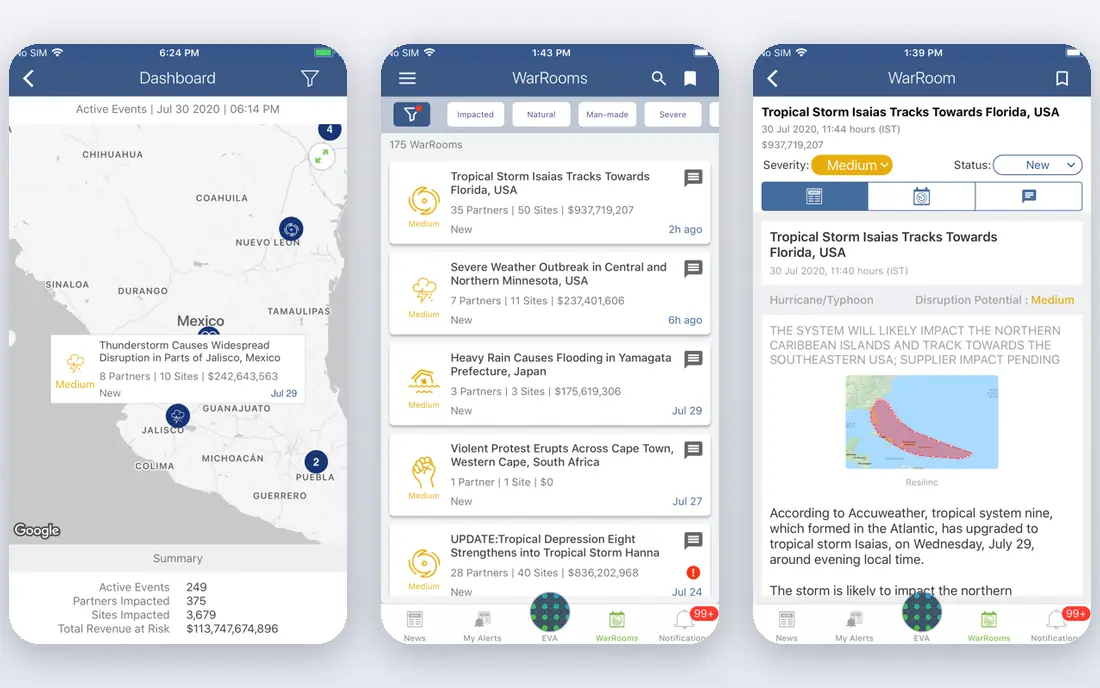
Resilinc helps companies map their supply chains, monitor disruption events, and coordinate a response when a supplier, site, or region is affected. Mapping matters because a buyer cannot protect a part they cannot trace, and Resilinc links suppliers, sites, parts, and risk events in one view. When an event occurs, teams can assess which products and orders are affected and work through contingency options in the platform.
Resilinc pricing is quote-based, and the platform suits larger supply chain and procurement teams with the staff to maintain mapping data. Small teams may struggle to keep multi-tier data current, which limits the value of any mapping tool. For large manufacturers and life sciences companies, Resilinc is a strong choice for disruption readiness.
- Supply chain mapping and disruption event monitoring
- Risk scoring across suppliers and parts
- Collaboration tools for response
- Quote-based pricing
- Implementation effort suits larger supply chain teams

UpGuard is a cyber risk platform that monitors vendors continuously, using external signals, breach data, and attack surface information to score supplier security posture. Security and procurement teams can track rating changes, send questionnaires, and manage remediation in one workflow, rather than relying on an annual point-in-time assessment. That continuous view is the main advantage over a questionnaire-only process.
The limit is risk type. UpGuard covers cyber risk well, but it does not replace financial monitoring, compliance screening, or supply chain disruption tools. Teams that need all three should pair UpGuard with a tool such as Prewave or Sphera, or choose a broader governance platform. For cyber-led supplier risk, UpGuard is a leading choice, and it is widely used by security teams for vendor monitoring.
- Continuous vendor security monitoring
- Breach and attack surface signals
- Questionnaire automation and remediation workflows
- Quote-based pricing
- Cyber focus means financial and operational supplier risks need another tool
BitSight provides security ratings for organisations based on externally observed data, and supplier risk teams use those ratings to monitor vendors continuously. When a supplier rating moves, teams can open a remediation case, ask for evidence, and track improvement over time. That rating-led workflow helps procurement and security teams prioritise a large vendor list, because attention goes to suppliers whose posture is worsening, not just to those due for a routine review.
Ratings have limits. An external rating is a signal, not a full audit, and high-risk suppliers still need questionnaires, evidence, and contract controls. BitSight suits security teams that run continuous third-party governance across many vendors and want a consistent external measure. Pair it with internal assessments for your most critical suppliers.
- Externally driven security ratings for suppliers
- Alerting on rating movement
- Remediation workflows tied to rating changes
- Quote-based pricing
- Ratings are external signals and should be paired with internal assessments for high-risk suppliers
SecurityScorecard rates the security posture of organisations from externally observed signals, and teams use it to monitor suppliers, compare vendors, and track their own score. A free plan covers your own organisation, which lets a team see the rating method before paying for vendor monitoring. Continuous monitoring and alerts help teams respond when a supplier rating drops, rather than learning about a problem at renewal time.
Vendor monitoring plans are quote-based, so budget requires a sales conversation. As with BitSight, ratings are one input, not a complete risk assessment, and financial, compliance, and disruption risks need other tools. SecurityScorecard fits teams that want a clear, comparable security rating for many vendors and a low-cost way to start with their own score.
- Security ratings for vendors and your own organisation
- A free view of your own score
- Continuous monitoring and alerting
- Full vendor monitoring plans are quote-based
- Ratings alone do not cover financial or operational risk
Coupa Risk Aware brings supplier risk into the Coupa spend management platform, so risk signals sit next to sourcing, onboarding, and purchasing workflows. That placement matters, because a risk alert that appears inside the buying process is more likely to change a decision than a score in a separate dashboard. Teams can run onboarding checks, monitor suppliers, and apply risk controls during procurement, not after a contract is signed.
The catch is platform fit. Coupa Risk Aware delivers most value to organisations already using Coupa for spend management, and its risk depth is narrower than a specialist such as Prewave or UpGuard. For Coupa customers, it is a practical way to add risk without a new standalone system. For non-Coupa buyers, a specialist tool may be a better first purchase.
- Supplier risk inside the Coupa spend platform
- Risk signals linked to purchasing workflows
- Onboarding and compliance checks
- Best value for organisations already using Coupa
- Standalone risk depth is narrower than specialist monitors
SAP Ariba Supplier Risk adds risk assessment and monitoring to the SAP Ariba procurement suite, linking risk data to supplier onboarding, qualification, and sourcing. For SAP customers, that integration avoids duplicate supplier records and keeps risk information close to purchasing decisions. Risk signals can inform supplier qualification, so a high-risk supplier faces extra checks before approval.
As with Coupa, the value depends on platform fit. Organisations not running SAP Ariba will find a specialist tool simpler and often cheaper. SAP Ariba Supplier Risk suits large SAP estates that want risk governance inside their existing procurement system, with consistent supplier data across sourcing, contracts, and payments.
- Supplier risk inside SAP Ariba procurement
- Risk data linked to supplier lifecycle and sourcing
- Strong fit for SAP estates
- Quote-based enterprise pricing
- Best suited to organisations already running SAP
Avetta focuses on contractor and supplier prequalification, with emphasis on safety, insurance, and compliance documentation. Companies in construction, energy, manufacturing, and facilities use Avetta to verify that contractors meet safety and insurance requirements before they start work on site. Document checks, audits, and compliance tracking help hiring companies reduce the risk of unqualified contractors on high-risk sites.
Avetta does not replace cyber monitoring or supply chain disruption tools, so teams with those risks need additional coverage. It fits organisations where contractor safety and compliance are the main supplier risk, and where site access should depend on verified documentation. Check pricing by supplier count and modules, as Avetta quotes vary by program size.
- Contractor prequalification, safety, and compliance checks
- Document and insurance verification
- Suitable for high-risk work sites
- Quote-based pricing
- Focus on contractor compliance rather than cyber or financial risk monitoring
EcoVadis rates suppliers on sustainability topics, including environment, labour and human rights, ethics, and sustainable procurement. Buyers can request scorecards, track supplier improvement, and use ratings in due diligence for supply chain laws and customer reporting. Because many suppliers already hold an EcoVadis scorecard, buyers can often reuse an existing rating instead of sending a new questionnaire.
The limit is scope. EcoVadis covers sustainability risk well, but it does not monitor cyber posture, financial health, or disruption events in real time. It fits procurement and sustainability teams that must assess environmental and social risk across a large supplier base. Pair it with a cyber or disruption tool when those risks are also material.
- Sustainability ratings covering environment, labour, ethics, and procurement
- A large supplier network with shared scorecards
- Useful for due diligence laws
- Quote-based pricing
- Sustainability focus means cyber and financial risks need other tools
Sphera, which includes the former riskmethods supply chain risk platform, covers supply chain risk monitoring alongside broader EHS, compliance, and sustainability tools. Teams can monitor supplier risk events, assess compliance exposure, and link risk data to broader governance processes. That breadth suits large enterprises that want supply chain risk inside a wider risk and compliance program, rather than as a standalone feed.
Breadth needs scoping. Sphera pricing is quote-based and enterprise-scale, and buyers should define which risk types, regions, and supplier tiers they need before signing, to avoid paying for modules they will not use. For large enterprises with complex compliance and supply chain duties, Sphera is a credible shortlist option alongside Prewave and Resilinc.
- Supply chain risk monitoring with compliance and sustainability coverage
- Risk data from the former riskmethods platform
- Suitable for large enterprises
- Quote-based enterprise pricing
- Breadth requires scoping to avoid paying for modules you will not use
How we picked these
We reviewed vendor homepages, current supplier risk guides, and product categories in October 2026, and favoured tools that are actively maintained, monitor or assess supplier risk continuously rather than only at onboarding, and serve a clear risk type. We included supply chain monitors, cyber rating platforms, procurement-embedded risk tools, and compliance and sustainability platforms, and we noted where pricing is quote-based rather than publishing a number we could not verify.
How to choose supplier risk software
Start by naming your top three supplier risks. If disruption is the main risk, shortlist Prewave, Resilinc, or Sphera. If cyber risk dominates, shortlist UpGuard, BitSight, or SecurityScorecard. If contractor safety dominates, shortlist Avetta. If sustainability due diligence dominates, shortlist EcoVadis. If you already run Coupa or SAP Ariba, check the embedded risk module first, because integration may matter more than a specialist feature.
Next, test integration and action. Ask how a risk alert reaches a buyer, whether it can pause or flag a purchase order, and how remediation is tracked to closure. A score that only lives in a dashboard will not change buying behaviour. Finally, pilot with your most critical suppliers, not your easiest ones. Track alert quality, false positives, and time to remediation for a month, and compare that pilot result across two tools before committing to a company-wide rollout.
Frequently asked questions
What is the best supplier risk management software overall?
There is no single best tool for every risk type. Prewave and Resilinc lead for supply chain disruption, UpGuard and BitSight lead for cyber risk, and Coupa Risk Aware leads for risk inside Coupa spend management. Choose by your top risk type, not by a general ranking.
What are the best supplier risk management tools for cyber risk?
UpGuard, BitSight, and SecurityScorecard are strong choices for cyber supplier risk, because they monitor vendor security posture continuously and alert on rating changes. Pair ratings with questionnaires and contract controls for your most critical suppliers.
How much does supplier risk management software cost?
Most leading tools use quote-based pricing, based on supplier count, modules, and risk coverage. SecurityScorecard offers a free view of your own organisation score, while full vendor monitoring plans require a quote. Ask for pricing by supplier tier, because costs rise with the number of monitored suppliers.
What is the difference between supplier risk and third-party risk software?
Supplier risk software focuses on suppliers in your supply chain, including disruption, quality, and delivery risk, while third-party risk software covers a wider set of vendors, including IT and service providers, with emphasis on cyber and compliance risk. Many tools overlap, so check coverage by risk type rather than by category label.
Do small companies need supplier risk software?
Small companies with a few local suppliers may manage risk with contracts, insurance checks, and direct supplier contact. Supplier risk software becomes valuable when supplier count, geographic spread, or regulatory duties make manual monitoring unreliable, or when a single supplier failure would halt operations.
How often should supplier risk be monitored?
Continuous monitoring suits high-risk and critical suppliers, because financial, cyber, and disruption signals change between annual reviews. Lower-risk suppliers can be reviewed on a scheduled cycle, with event alerts for serious incidents. Set monitoring frequency by supplier criticality, not by a single company-wide rule.
Sources
See where you really rank - block by block
ProMapRanker scans Google Maps across a grid of your service area. Simple monthly plans from $19, white-label on every plan.
Start freeKeep reading
 zscaler alternatives
Best Zscaler Alternatives in 2026
Looking for zscaler alternatives? We compare 9 SASE and zero trust platforms on architecture, data protection, pricing, and fit for your network and team.
Read → zapier alternatives free
Best Zapier Alternatives Free in 2026
Nine automation tools for zapier alternatives free in 2026, all with genuinely free tiers, plus free plan limits, starting prices and upgrade paths explained.
Read → which platform is best for online reputation
Which Platform Is Best for Online Reputation in 2026
Wondering which platform is best for online reputation? We compare 8 review, listing, and response tools for small and multi-location businesses and agencies.
Read →