 ProMapRanker
Best Subscription Payment Service in 2026


Stripe-native SaaS teams · Pricing starts at: 0.7% of billing volume
Key takeaways
- Stripe Billing is our pick for teams already processing payments on Stripe, with pay-as-you-go billing at 0.7 percent of billing volume.
- Chargebee suits SaaS teams that need complex plans, trials, and multi-gateway billing without building it in-house.
- Paddle and Lemon Squeezy suit small global sellers who want tax and compliance handled as merchant of record.
- Zoho Billing is the low-cost starting point for early-stage teams, while Maxio and Zuora-style depth suits finance-led companies.
- Compare total cost, not just the headline fee, because processing, billing, and tax fees stack up.
Quick comparison
| Pick | Great for | Pricing starts at | Free tier | |
|---|---|---|---|---|
| Stripe Billing | Stripe-native SaaS teams | 0.7% of billing volume | No | Visit |
 Chargebee | Complex SaaS plans and trials | 0.80% of billing volume | No | Visit |
 Recurly | Churn recovery and dunning | $249 per month | No | Visit |
 Paddle | Global sales with tax handled | 5% + $0.50 per transaction | No | Visit |
 Zoho Billing | Early-stage teams on a budget | $39 per month | No | Visit |
 FastSpring | Global software sales | See website | No | Visit |
 Maxio | B2B SaaS finance teams | $599 per month | No | Visit |
 Lemon Squeezy | Creators and small software sellers | 5% + $0.50 per transaction | No | Visit |
The best subscription payment services
This is not financial advice, and fees change, so confirm the current pricing page before you commit. The right service depends on your volume, your tax exposure, and how much billing logic you want to build yourself.

Stripe Billing is the default choice for teams already on Stripe, and for good reason. You get flexible subscription logic, customer portals, invoicing, and usage-based billing in the same system that moves the money. If your engineers already know Stripe, setup is faster than learning a separate billing layer.
The catch is total cost. The 0.7 percent billing fee is separate from the standard card processing fee, so a low headline rate can still add up at scale. Stripe Billing also expects your team to handle tax, accounting, and revenue recognition choices, unless you add those products.
- Deep API control
- Tight link to Stripe payments
- Strong support for trials, proration, and usage billing
- Billing fee sits on top of standard card processing fees
- Advanced revenue tools cost extra
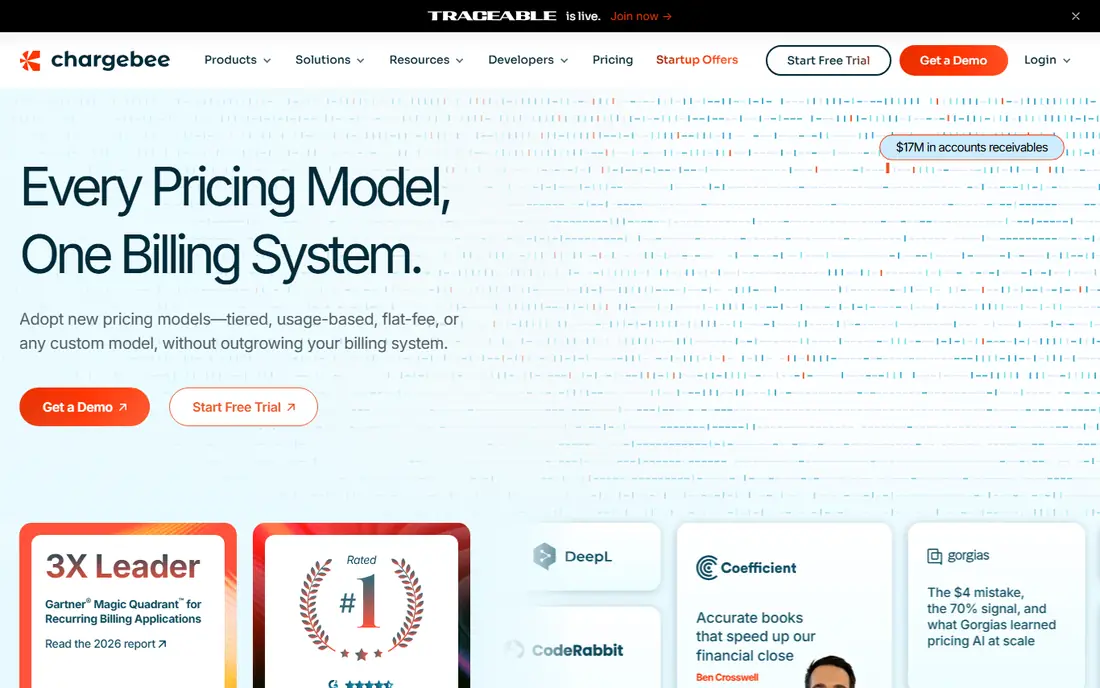
Chargebee is a billing layer that sits above your payment gateway, which gives SaaS teams room to change gateways without rebuilding subscription logic. It handles plan changes, proration, trials, dunning, and multi-currency billing, and it suits teams with several pricing models at once. Finance teams also like the cleaner subscription data for reporting.
The downside is complexity and cost structure. Revenue recognition and other advanced modules are separate products, so the full stack costs more than the entry billing rate suggests. Small teams with one simple plan may find Chargebee more tool than they need.
- Handles complex pricing, coupons, and trials
- Works with multiple payment gateways
- Revenue recognition available as an add-on
- Add-on modules are priced separately
- Setup takes longer than a simple checkout tool

Recurly has long focused on keeping subscribers, not just billing them. Its dunning workflows, retry logic, and churn tools help recover failed payments without manual work, which matters when a few percent of revenue leaks each month. It also connects to many gateways, so you are not locked to one processor.
The price is the main barrier for small teams. A $249 monthly base fee, plus a volume fee above a threshold, makes sense once billing volume is steady. Early-stage teams with low revenue should compare Recurly against pay-as-you-go options before signing.
- Strong failed-payment recovery and dunning
- Works with many gateways
- Built for high-volume subscription businesses
- Monthly base fee suits larger teams better
- Revenue recognition is an add-on
Paddle suits software sellers who want to sell worldwide without building a tax team. As merchant of record, Paddle handles checkout, billing, sales tax, VAT, and compliance in many regions, and it pays you out after fees. For a small team, that removes a large amount of legal and accounting work.
The trade-off is the 5 percent plus $0.50 fee on every transaction, which bundles processing, tax, and fraud protection. At low volume that simplicity is worth it. At high volume, a direct gateway plus a billing layer may cost less, even after you pay for tax help separately.
- Acts as merchant of record
- Handles sales tax and VAT
- Checkout, billing, and fraud tools in one place
- Percentage fee is high at large volume
- Less control than a direct gateway setup
Zoho Billing is the budget pick for teams that need clean recurring billing without enterprise pricing. It covers subscriptions, invoices, payment links, and customer management, and it connects well if you already use Zoho CRM, Books, or other Zoho apps. For a team under $1 million in annual billings, that simplicity is a real advantage.
The limit shows up as pricing gets complex. Heavy usage-based billing, advanced revenue recognition, and multi-entity setups are not Zoho Billing's strength. If your pricing model is simple and your team is small, it is a strong value. If it grows complex, plan for a move.
- Low monthly price
- Fits inside the wider Zoho suite
- Simple subscription and invoice workflows
- Less depth for complex usage billing
- Advanced revenue features sit in higher editions
FastSpring, like Paddle, acts as merchant of record for software and digital goods, so it takes on tax collection and compliance in the regions where you sell. That makes it attractive for teams selling downloads, licenses, and SaaS worldwide without a local entity in each market. It also supports subscriptions, trials, and localized checkout.
The main drawback is pricing clarity. FastSpring uses a revenue-share model that varies by case, so you need a quote to compare it fairly against Paddle or a direct setup. Ask for a full cost example at your volume, including refunds and chargeback handling, before you choose.
- Merchant-of-record model for global sales
- Handles tax and compliance
- Checkout and subscription tools for software sellers
- No single published list price for all cases
- Percentage cost can be high at scale
Maxio is built for finance-led B2B SaaS teams that need billing and SaaS metrics in one system. It handles subscriptions, usage, contracts, and revenue reporting, and it gives finance a clearer view of growth, churn, and expansion than a checkout-only tool. If your board asks for clean MRR and ARR numbers, Maxio helps produce them.
The cost puts it out of reach for early teams. At $599 per month for the Grow tier, plus a cap on monthly billings, you should only choose Maxio when billing volume and reporting needs justify it. Smaller teams get most of the billing value elsewhere for far less.
- Billing tied to SaaS metrics like MRR and ARR
- Strong for B2B contracts
- Born from Chargify and SaaSOptics
- High starting price
- Entry tier caps monthly billings before a custom quote is needed
Lemon Squeezy is the light merchant-of-record option for creators, indie developers, and small software sellers. You can set up a store, sell licenses or subscriptions, and let Lemon Squeezy handle tax and payouts, without building a billing system. That low setup burden is why many solo sellers start here.
The limit is scale and complexity. Lemon Squeezy is not built for complex B2B contracts, multi-entity billing, or deep revenue recognition. When volume grows, compare its 5 percent fee against Stripe Billing or Chargebee plus a tax tool, and move if the math favors a direct setup.
- Simple merchant-of-record setup
- Handles tax for digital sales
- Easy checkout for creators and indie sellers
- Limited depth for complex B2B billing
- Fee is high once volume grows
How we picked these
We compared official pricing pages, billing models, tax handling, dunning features, and gateway support, and we favored services that are live and widely used in October 2026. We checked whether each service is a billing layer, a payment processor, or a merchant of record, because that choice changes who handles tax and refunds. We did not claim hands-on testing, and we used vendor pricing pages and current comparison sources for the fees shown.
How to compare total subscription cost
Start by modeling one month at your real volume, not just the headline rate. Add card processing, the billing platform fee, tax tool or merchant-of-record fees, and any revenue recognition add-on. Then check dunning, because a service that recovers even 2 percent more failed payments can outweigh a lower fee. Test the customer portal, plan-change flow, and refund process before you migrate, since those touch paying customers directly.
Also check tax exposure early. If you sell to consumers in many states or countries, a merchant-of-record service may save more in compliance work than it costs in fees. If you sell only to US businesses in a few states, a direct gateway plus a billing layer may be cheaper. Finally, confirm data export and contract terms, so you can leave without losing subscription history if your needs change.
Frequently asked questions
What is the difference between a billing layer and a merchant of record?
A billing layer manages subscriptions, trials, and invoices, but you still use your own payment gateway and handle tax. A merchant of record sells on your behalf, handles tax and compliance, and pays you out. The second model is simpler, but it usually costs a higher percentage per sale.
Is Stripe Billing cheaper than Chargebee?
It depends on volume and setup. Stripe Billing charges a percentage on top of card processing, while Chargebee charges a percentage plus gateway fees. At low volume, Stripe Billing is often simpler and cheaper. At higher volume, compare both at your actual monthly billings, including any add-ons you need.
Do I need a separate tax tool with Stripe or Chargebee?
Often yes, unless you add a tax product or use a merchant of record. Stripe and Chargebee handle billing, but sales tax and VAT rules vary by location and product type. If you sell globally to consumers, a merchant of record or a dedicated tax tool reduces compliance risk.
How does dunning help subscription revenue?
Dunning is the automated retry and customer outreach flow for failed payments. Cards expire, banks decline charges, and customers miss updates. Good dunning retries at smart times, prompts customers to update payment details, and recovers revenue that would otherwise churn without any action from your team.
Can I switch subscription payment services later?
Yes, but migration takes planning. You need to move subscription records, payment methods, and billing history, and you must handle active trials and proration carefully. Check export tools and migration support before you sign, and run the new service in parallel for a small group first.
What should small sellers start with?
Start with the simplest option that handles tax for your markets. Solo creators and indie sellers often start with Lemon Squeezy or Paddle. SaaS teams with US-only sales and an engineering team often start with Stripe Billing. Move to Chargebee, Recurly, or Maxio when pricing or reporting complexity grows.
Sources
See where you really rank - block by block
ProMapRanker scans Google Maps across a grid of your service area. Simple monthly plans from $19, white-label on every plan.
Start freeKeep reading
 zscaler alternatives
Best Zscaler Alternatives in 2026
Looking for zscaler alternatives? We compare 9 SASE and zero trust platforms on architecture, data protection, pricing, and fit for your network and team.
Read → zapier alternatives free
Best Zapier Alternatives Free in 2026
Nine automation tools for zapier alternatives free in 2026, all with genuinely free tiers, plus free plan limits, starting prices and upgrade paths explained.
Read → which platform is best for online reputation
Which Platform Is Best for Online Reputation in 2026
Wondering which platform is best for online reputation? We compare 8 review, listing, and response tools for small and multi-location businesses and agencies.
Read →