 ProMapRanker
Best Subscription Billing Software in 2026


Developer led startups on Stripe · Pricing starts at: 0.7% of billing volume
Key takeaways
- Stripe Billing is the lowest friction start for teams already processing payments on Stripe.
- Chargebee is the most flexible general engine for hybrid seat plus usage pricing across many gateways.
- Recurly stands out for dunning and involuntary churn recovery, while Maxio suits finance led B2B teams.
- Paddle and FastSpring suit global sellers who would rather hand sales tax to a merchant of record.
Quick comparison
| Pick | Great for | Pricing starts at | Free tier | |
|---|---|---|---|---|
| Stripe Billing | Developer led startups on Stripe | 0.7% of billing volume | No | Visit |
 Chargebee | Hybrid SaaS pricing | 0.8% of billing volume | Free trial | Visit |
 Recurly | Retention and dunning | $249 per month | Free trial | Visit |
 Zuora | Large enterprise contracts | See website | No | Visit |
 Paddle | Global tax handled for you | 5% plus $0.50 per transaction | No | Visit |
 Maxio | Finance led B2B SaaS | $599 per month | Free trial | Visit |
 Zoho Billing | Small businesses in Zoho | $59 per month | Free trial | Visit |
 FastSpring | Global digital goods sales | See website | No | Visit |
 Lago | Open source usage billing | Free | Yes | Visit |
The best subscription billing software
Subscription billing software does more than charge a card each month. It handles trials, upgrades, prorations, failed payments, tax, and revenue reports, and the wrong pick shows up as churn, refund requests, and month-end manual work. The platforms below cover that full job, and we compared them on pricing model, gateway choice, dunning, and fit for team size.
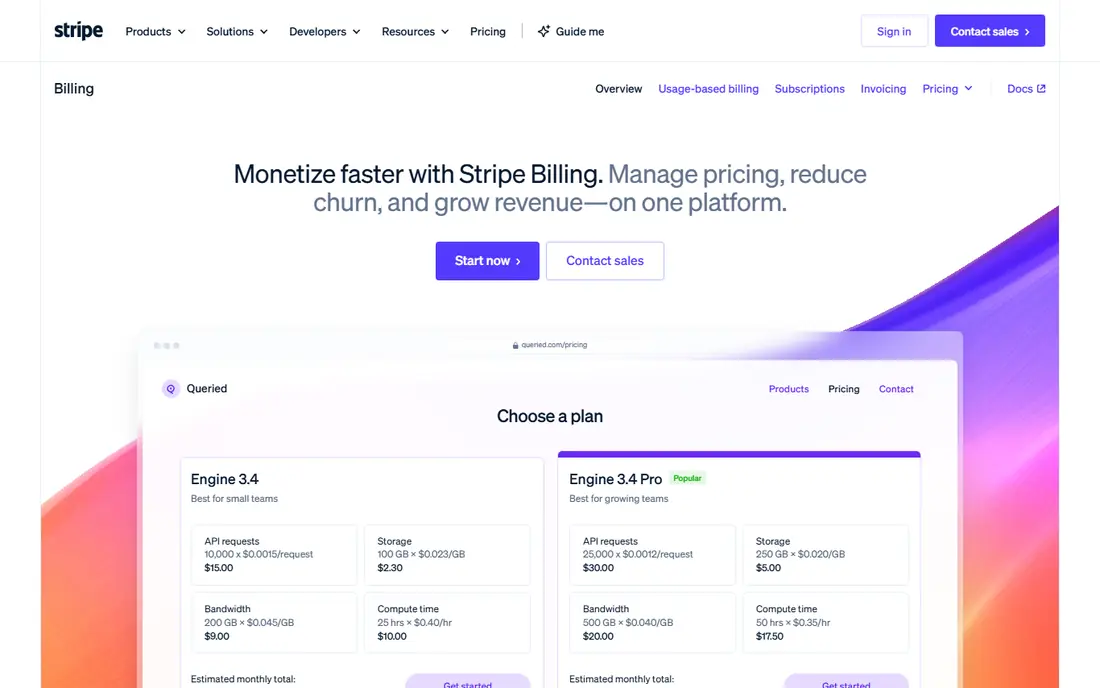
Stripe Billing is the default for a reason. If you already process payments on Stripe, billing adds subscriptions, trials, coupons, and invoicing without a second processor or a long migration. The pay-as-you-go fee of 0.7 percent of billing volume, plus standard processing fees, keeps early costs tied to revenue rather than a fixed monthly bill.
The limit is lock-in. Stripe Billing works only with Stripe payments, so teams that need multiple gateways or regional processors will feel constrained. Complex usage pricing has improved, including through the Metronome product Stripe acquired, but heavy usage models still need engineering time. For a developer led startup with simple to medium pricing, it is hard to beat.
- Fast to launch for Stripe users
- Strong API and docs
- Usage billing support plus revenue recognition add-ons
- Stripe only, with no multi-gateway choice
- Billing fee adds up at high volume
- Finance features need add-ons
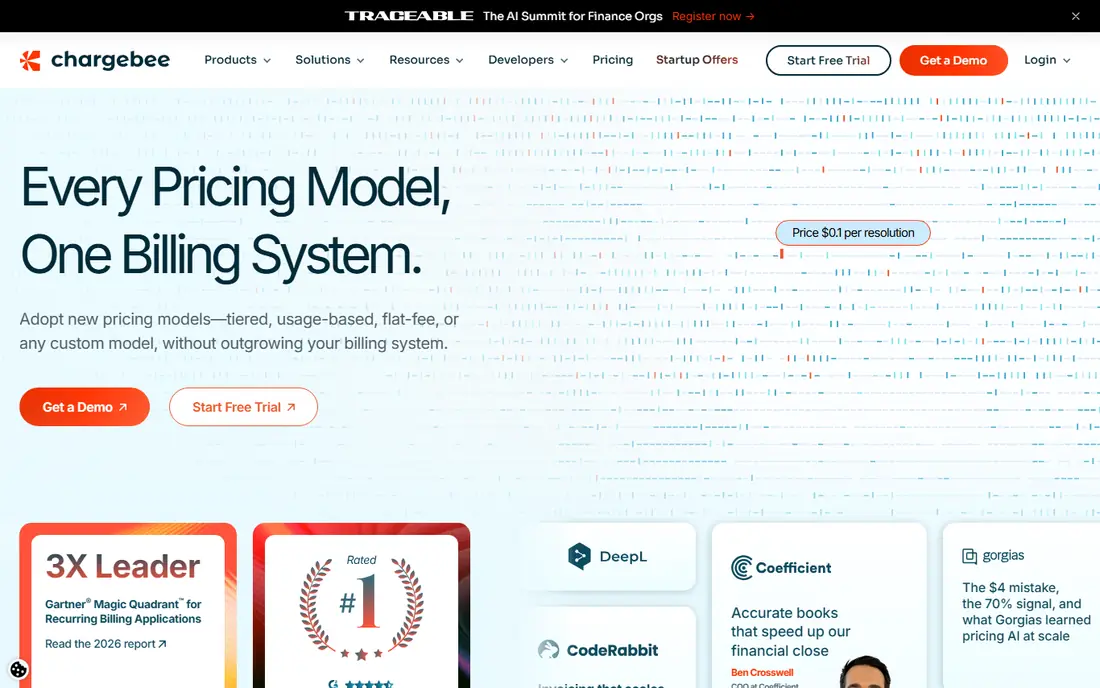
Chargebee is the most flexible general engine here for teams that sell a mix of seats, usage, and add-ons. It supports many gateways, so you are not tied to one processor, and it handles trials, upgrades, prorations, and dunning in a single workflow. Integrations with accounting, CRM, and analytics tools reduce manual reconciliation at month end.
Pricing needs care. Public comparisons in 2026 show a pay-as-you-go model around 0.8 percent of billing volume, with higher tiers at fixed monthly prices plus volume fees, and revenue recognition sold separately. Read the tier that matches your monthly billings, not just the headline rate. For growth stage SaaS with complex pricing, Chargebee is our all-round pick.
- Works with 40 plus payment gateways
- Strong hybrid seat plus usage support
- Broad integrations with accounting and CRM tools
- Pricing changes at scale need careful reading
- Revenue recognition is a separate product
- Setup takes longer than Stripe

Recurly earns its place on retention. Its dunning workflows, retry logic, and churn tools focus on saving failed payments, which is where many subscription businesses lose revenue quietly each month. It is gateway agnostic, so you can keep your existing processor, and its analytics cover churn, lifetime value, and plan mix in plain reports.
The entry price of 249 dollars per month plus volume fees above a threshold means Recurly fits growing teams better than a pre-revenue startup. Small teams may get similar basic billing cheaper from Stripe or Zoho. If involuntary churn is already a visible problem, Recurly often pays for itself through recovered payments.
- Strong dunning and churn recovery tools
- Gateway agnostic
- Good reporting for subscription metrics
- Fixed monthly price suits larger teams better
- Implementation needs planning for complex catalogs
Zuora remains the enterprise default for companies with complex contracts, negotiated pricing, and multi-entity revenue rules. It covers quoting, ordering, billing, and revenue recognition in one system, with controls that finance teams need for audits. For a large B2B seller with sales led deals, that breadth matters more than a low entry price.
Do not pick Zuora for a simple SaaS launch. Pricing is quote based, implementation takes time, and the learning curve is steep. It suits teams that have outgrown mid-market tools because their contracts, currencies, or recognition rules no longer fit a simpler engine.
- Deep quote to cash and contract support
- Strong revenue recognition
- Multi-entity and complex pricing support
- Enterprise pricing and implementation time
- More tool than most small teams need
Paddle is a different model: it acts as merchant of record, so it sells your product, collects payment, and handles global sales tax and compliance for you. That removes a major headache for small teams selling software worldwide, where tax rules vary by country and change often. The fee is 5 percent plus 50 cents per transaction in public comparisons.
The trade is cost and control. Five percent is more than Stripe processing plus a billing fee, and you give up some checkout and tax customization. For a lean team that values compliance handled over the lowest fee, Paddle is a strong pick. For a large seller with a finance team, a separate billing engine plus your own tax tool may cost less.
- Merchant of record handles global sales tax and compliance
- Simple checkout for digital products
- Fraud and payment handling included
- Higher all-in fee than processor plus billing
- Less control over checkout and tax settings
Maxio, formed from Chargify and SaaSOptics, is built for B2B SaaS teams where finance leads the buying decision. Its Grow plan starts at 599 dollars per month for billings up to 100,000 dollars per month in public comparisons, and it bundles billing with revenue recognition and SaaS metrics. That pairing saves a separate revenue tool and gives controllers cleaner month-end schedules.
Smaller teams will find the price hard to justify before they need audited recognition or multi-entity support. Maxio is a step up from Chargebee or Recurly when contracts get complex, usage is heavy, and finance needs one source of truth. If your billing is simple, start cheaper and move to Maxio when finance asks for it.
- Billing plus GAAP revenue recognition in one platform
- Strong B2B contract and usage support
- SaaS metrics included
- High entry price
- Best value only for teams with real finance needs
Zoho Billing suits small businesses already using Zoho tools. It covers subscriptions, trials, coupons, invoicing, and payment links at a starting price around 59 dollars per month, and it syncs with Zoho CRM and Zoho Books without extra middleware. Setup is quick, and the interface will feel familiar to Zoho users.
Complex usage pricing and large enterprise contracts are not its strength. Teams with hybrid metered models or many gateways will outgrow it. For a small service business, a consultancy, or a Zoho based startup, Zoho Billing gives clean recurring billing at a price that does not need a finance case to approve.
- Low price for small teams
- Fits Zoho CRM, Books, and other Zoho apps
- Simple subscription setup
- Less depth for complex usage pricing
- Fewer gateway options than Chargebee
FastSpring, like Paddle, acts as merchant of record for digital goods sellers. It handles checkout, global tax, compliance, and licensing, which suits indie software makers and digital product sellers who sell worldwide from a small team. You avoid building tax logic for dozens of countries, and customers get local payment options.
Pricing is not always published as a single rate, so get a quote for your volume and product type before you compare it with Paddle. FastSpring fits product sales better than negotiated B2B contracts. If your main need is subscription billing for enterprise deals, Chargebee, Maxio, or Zuora will fit better.
- Merchant of record for digital goods
- Global tax and compliance handled
- Checkout and licensing support
- Pricing is quote based in many cases
- Less suited to complex B2B contract billing
Lago is the pick for engineering teams that want usage billing they can control. It is open source, event based, and built for metered pricing, so you can send usage events and bill from them without forcing a seat model onto a usage product. Self-hosting is free, and paid cloud tiers exist for teams that prefer hosted service.
The trade is effort. Self-hosting, metering setup, and integrations need developer time, and Lago does not match Recurly on dunning or Maxio on revenue recognition out of the box. Choose Lago when usage is your core pricing model and your team wants code level control. Choose a commercial suite when you want billing, dunning, and finance reports ready on day one.
- Open source and self-hostable
- Event based metering for usage pricing
- Cloud tiers for teams that prefer hosted billing
- Engineering effort needed for self-hosted setup
- Less out-of-box dunning and finance depth than commercial suites
How we picked these
We compared official pricing and feature pages, plus recent 2026 billing comparisons, for platforms that handle recurring subscriptions today. We kept only platforms with real subscription billing, not payment links alone, and we favored a mix of processor based billing, gateway agnostic engines, merchant of record options, and open source usage billing. We did not claim hands-on testing we did not do, and where pricing was quote based we wrote See website.
What to check before you switch billing tools
Map your pricing model first. Seat pricing, usage pricing, hybrid pricing, and negotiated contracts each favor a different engine. List your gateways, currencies, tax needs, and revenue recognition rules before you shortlist, because a tool that looks cheap can cost more once add-ons appear. Also check migration: plan history, open trials, and failed payment retries all need a clean move, or you will lose revenue during the switch.
Test dunning with real failed cards, not just a demo. Retry timing, customer emails, and grace periods decide how much revenue you recover. Check reporting too: churn, monthly recurring revenue, and lifetime value should match your accounting view, or finance will maintain a second spreadsheet. Finally, confirm contract terms, volume thresholds, and what happens to pricing when you cross them.
A short buying checklist
First, confirm gateway and currency support for your top three markets. Second, run your hardest pricing rule through a trial, such as a mid-cycle upgrade with usage overage. Third, check tax handling for global sales, including whether you need a merchant of record. Fourth, ask finance what revenue reports they need at month end. A tool that passes those four checks will serve you longer than one chosen on headline price alone.
Frequently asked questions
What is the best subscription billing software for a small SaaS startup?
Stripe Billing is our pick for most small startups already on Stripe, because it launches fast and costs scale with revenue. Zoho Billing is a good low price option for small teams in the Zoho system. Move to Chargebee or Recurly when pricing gets complex or churn recovery becomes a priority.
What is the best subscription billing platform for global sales tax?
Paddle and FastSpring are the merchant of record options here, and both handle global sales tax and compliance for you. Paddle publishes a 5 percent plus 50 cent fee in public comparisons, while FastSpring pricing is often quote based. Compare total fees, payout timing, and checkout control before you choose.
What is the top subscription management software for B2B SaaS?
Chargebee is the strongest general pick for mid-market B2B SaaS with hybrid pricing. Maxio suits finance led teams that need revenue recognition in the same platform, and Zuora suits large enterprises with complex contracts. The right pick depends on contract complexity and finance requirements, not on brand alone.
How much does subscription billing software cost?
Costs vary widely, from volume fees such as Stripe at 0.7 percent of billing volume, to fixed plans such as Recurly from 249 dollars per month and Maxio from 599 dollars per month. Merchant of record fees are higher per transaction but include tax handling. Always model total cost at your current and next year volume.
Do I need separate revenue recognition software?
Not always. Maxio and Zuora bundle revenue recognition, while Stripe and Chargebee offer it as an add-on or separate product. Small teams with simple monthly plans can often manage with billing reports plus accounting software. Larger B2B teams with annual contracts and complex terms usually need built-in recognition.
Can I switch billing providers without losing subscribers?
Yes, with planning. Most platforms support importing customers, plans, and payment methods, often with help from the vendor. Plan the move around billing dates, test failed payment handling, and keep old invoices accessible. A rushed migration is a common cause of lost renewals, so allow time for testing.
Sources
See where you really rank - block by block
ProMapRanker scans Google Maps across a grid of your service area. Simple monthly plans from $19, white-label on every plan.
Start freeKeep reading
 best website platform for seo
Best Website Platform for SEO in 2026
Compare the best website platform for SEO in 2026, from WordPress and Webflow to Wix, Squarespace and Shopify, judged on SEO control, speed and ease today.
Read → best website hosting services
Best Website Hosting Services in 2026
We compared the best website hosting services for small business, blogs and stores, with starting prices, renewal traps, free domains and support trade-offs.
Read → best web analytics tools
Best Web Analytics Tools in 2026
Compare the best web analytics tools for traffic, privacy, and product insights, including Google Analytics, Matomo, Plausible, Fathom, and Mixpanel for 2026.
Read →