 ProMapRanker
Best Studio Management Software in 2026


Larger studios wanting a marketplace · Pricing starts at: From $79 per month
Key takeaways
- Mindbody remains the default for larger studios that want a consumer marketplace, point of sale, and deep feature set in one system.
- Smaller studios on a tight budget should look at Gymdesk, Arketa, and TeamUp, which publish clearer entry prices than quote-only rivals.
- Momence offers a free basic tier, which makes it a low-risk starting point for a solo teacher or a very small studio.
- Vagaro and WellnessLiving suit studios that also sell services, retail, or loyalty perks alongside classes.
- Check what counts toward each plan limit, such as active members, locations, or staff seats, because that limit usually drives the real monthly cost.
Quick comparison
| Pick | Great for | Pricing starts at | Free tier | |
|---|---|---|---|---|
| Mindbody | Larger studios wanting a marketplace | From $79 per month | No | Visit |
 Vagaro | Studios selling services and retail | See website | No | Visit |
 WellnessLiving | Studios wanting loyalty and marketing | From $69 per month | No | Visit |
 Momence | Solo teachers and small studios | Free | Yes | Visit |
 TeamUp | Class-based studios with simple pricing | From $119 per month | Free trial | Visit |
 Gymdesk | Studios wanting full features at entry level | From $75 per month | Free trial | Visit |
 Arketa | Independent teachers selling on-demand | From $49 per month | Free trial | Visit |
 ABC Glofox | Boutique studios and franchises | See website | No | Visit |
 FitBudd | Studios plus personal training services | From $149 per month | Free trial | Visit |
The best studio management software
Studio management software runs class schedules, memberships, class packs, bookings, payments, and client records for fitness, yoga, Pilates, dance, and similar studios. We compared official pricing pages, feature pages, and public documentation for tools that serve class-based studios today.
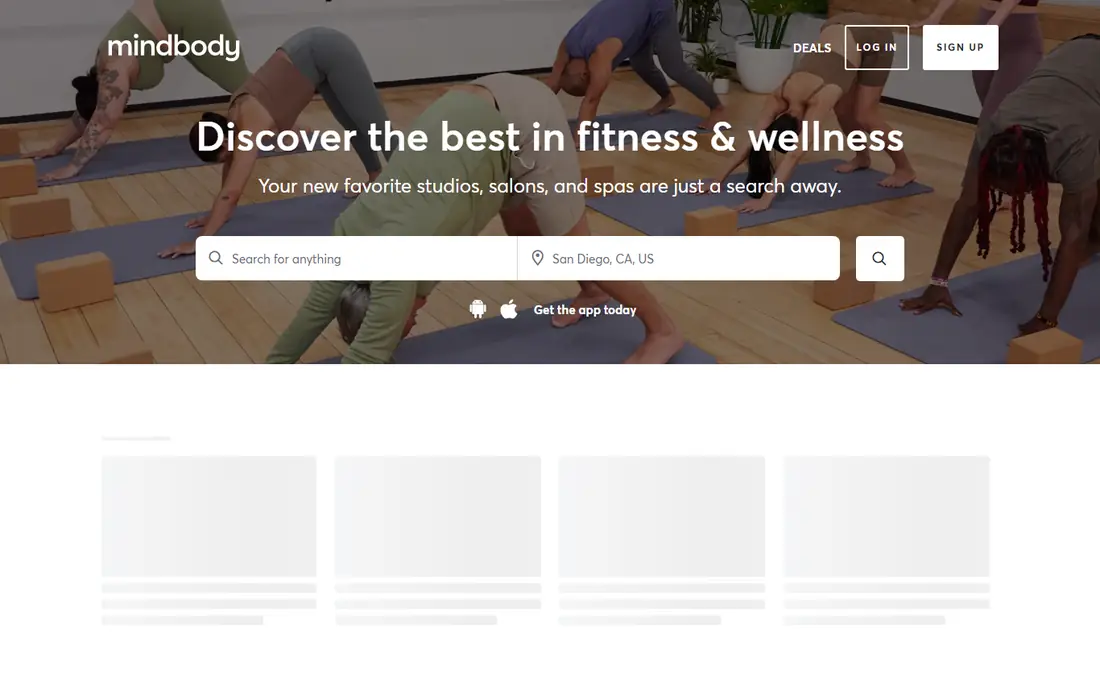
Mindbody is the longest-standing name in studio software, and its breadth is the reason many larger studios stay with it. Class scheduling, appointments, memberships, point of sale, staff management, and reporting sit in one system, and the Mindbody consumer app can bring new clients to a studio that lists there. For a multi-location brand with dedicated operations staff, that combination is hard to replace.
The catch is total cost. Entry pricing starts around 79 dollars per month per location, while higher tiers, a branded app, and advanced marketing automation require upgrades or quotes. Smaller studios often pay for features they never use. If discovery through the marketplace matters and the budget covers the higher tiers, Mindbody is the safe pick. If not, a leaner rival usually fits better.
- Consumer marketplace for discovery
- Broad feature set including point of sale
- Large integrator and app ecosystem
- Higher plans are quote-only
- Branded app and advanced marketing cost extra
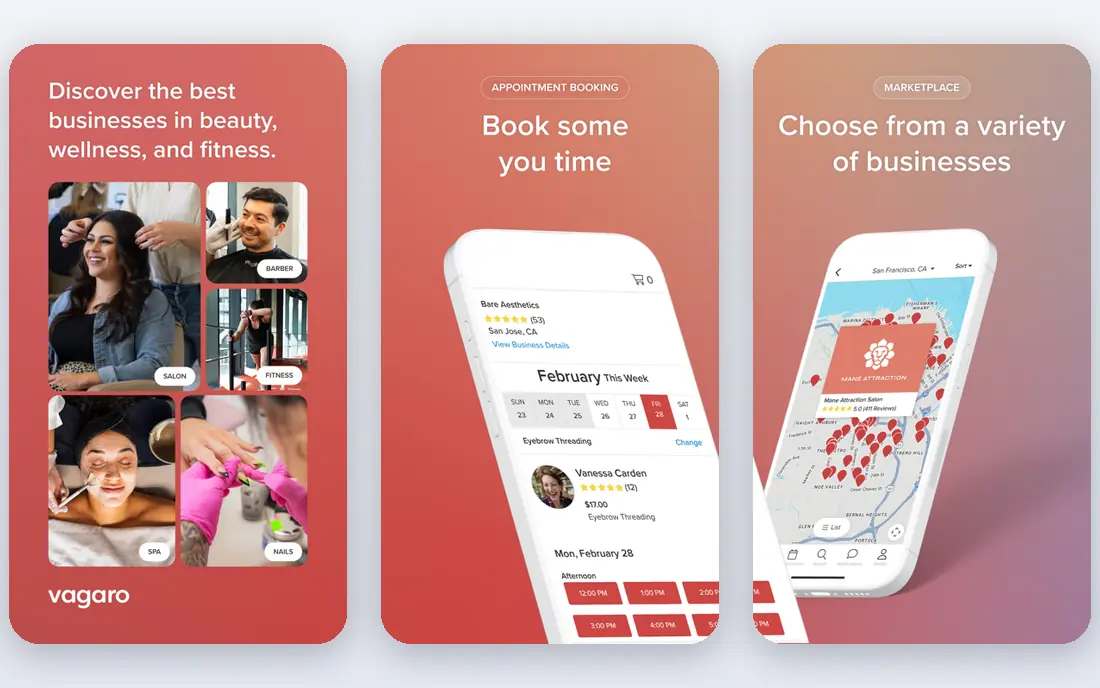
Vagaro serves salons, spas, fitness studios, and other appointment businesses with online booking, client management, payments, and marketing. Studios that mix classes with one-to-one services, such as personal training or treatments, benefit from one calendar for both. The Vagaro marketplace also helps new clients find a studio, which matters for a new location.
Pricing is the weak point for comparison shoppers. Vagaro does not publish one simple price list, and costs vary by calendars, features, and add-ons such as forms or payroll. Buyers should request a written quote for their exact setup before comparing it with a published-price rival. For a studio that wants booking, services, and discovery in one place, Vagaro remains a strong default.
- Online booking plus marketplace
- Client management and marketing tools
- Broad service-business coverage
- Pricing is not published in a simple form
- Add-ons can raise the total
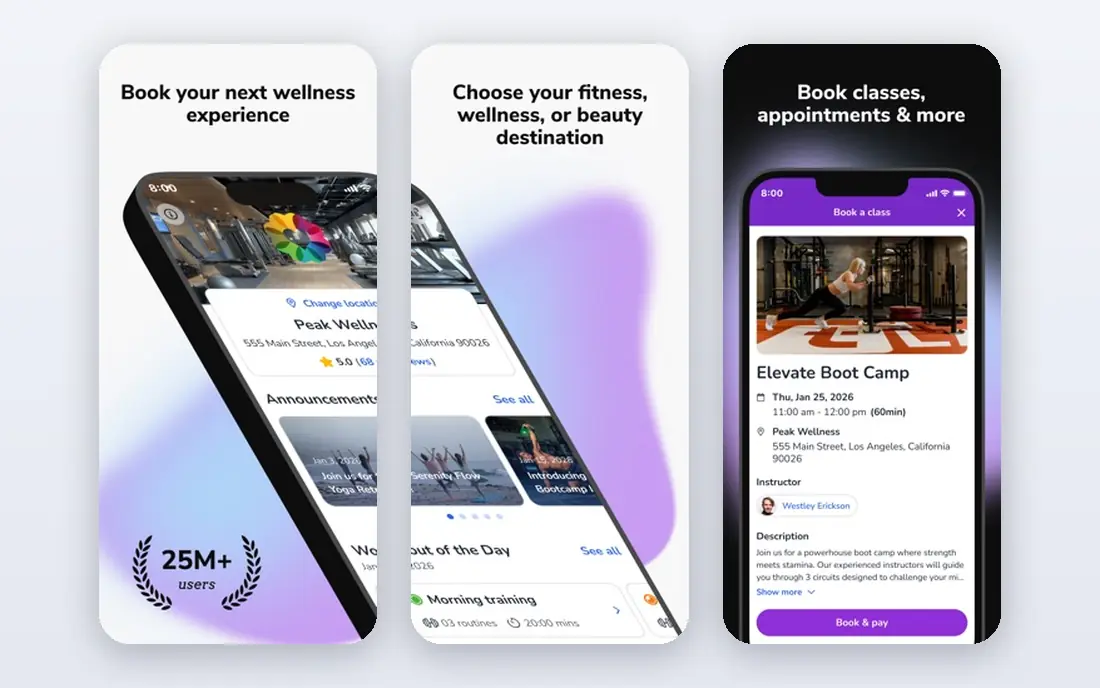
WellnessLiving combines class scheduling, memberships, and payments with rewards, loyalty, and marketing tools that many rivals sell separately. Studios that run challenges, referral rewards, or points programs will find those features built in rather than bolted on. Reporting and client management are solid, and the platform suits studios that treat retention as a core job.
Entry pricing starts around 69 dollars per month, with business tiers rising to 199 dollars and above for larger feature sets. A branded app sits on higher plans, so studios that want their own app should budget for that step. The sales process is demo-led for higher tiers, which means less instant price clarity. For loyalty-led studios, the built-in tools justify a closer look.
- Built-in rewards and loyalty tools
- Strong marketing features
- Branded app on higher plans
- Branded app costs extra
- Demo-led sales process for higher tiers
Momence grew from yoga and Pilates scheduling into a broader studio platform with classes, memberships, on-demand video, and livestream options. The free basic tier lets a solo teacher or tiny studio start without a monthly fee, which is rare in this category. Paid Pro plans add lower payment percentages and deeper features for growing studios.
The trade-off on the free tier is payment share. Momence takes a percentage from the studio and from the client on basic plans, so a busy studio can outgrow free quickly. Still, the path from free to paid is clear, and the platform is easy to set up. For a new teacher testing demand, Momence is the lowest-risk place to start.
- Free basic tier to start
- Good fit for yoga and class-based studios
- On-demand and livestream options
- Free tier takes a percentage of payments
- Pro pricing rises with the feature set
TeamUp focuses on class-based businesses such as CrossFit boxes, martial arts schools, and fitness studios. Scheduling, memberships, class packs, and payments are the core, and the pricing is published plainly by active customer count. That clarity helps a studio forecast costs as it grows, since the tier steps are easy to read.
The entry price of about 119 dollars per month for up to 100 active customers is higher than some leaner rivals. TeamUp does not offer a consumer marketplace on the scale of Mindbody, so discovery depends more on the studio's own marketing. For a class studio that values straightforward scheduling and honest pricing over marketplace reach, TeamUp is a dependable choice.
- Clear per-tier pricing
- Strong class scheduling
- Good fit for boxes and class studios
- Higher entry price than some rivals
- Marketplace features are limited
Gymdesk positions itself as the studio platform where the entry tier already includes most features, rather than holding core tools behind higher plans. Entry pricing starts around 75 dollars per month with its own payments option, for up to 50 active members at one location. Studios can also connect their own payment processor for a small surcharge, which keeps flexibility.
The 30-day trial without a card makes it easy to test with real classes and members. The main limits are brand scale and per-location pricing, which matters for multi-site operators. For a single studio that wants a full feature set without climbing pricing tiers, Gymdesk is one of the fairest deals in this list.
- Features included at the entry tier
- Flexible payment processor choice
- 30-day trial without a card
- Smaller brand than Mindbody
- Per-location pricing adds up for chains
Arketa, formerly FitGrid and related studio tools, serves independent teachers and small studios that sell live classes, on-demand video, and memberships. Individual pricing starts around 49 dollars per month billed annually, which makes it one of the cheaper paid starting points here. Setup is quick, and the platform handles bookings, payments, and video delivery in one place.
The catch is fees. Arketa charges a platform percentage in addition to standard payment processing fees, so studios should model total cost at their real sales volume. Large chains with complex multi-location needs may also find it light. For a teacher building an online and in-person mix, Arketa balances price, video, and simplicity well.
- Strong on-demand video and livestream tools
- Simple setup for independent teachers
- Published individual pricing
- Platform fee applies on top of payment processing
- Less suited to large multi-site chains
ABC Glofox targets boutique fitness studios and franchises with class scheduling, memberships, payments, and a branded member app. Its franchise tools help multi-location brands keep schedules, pricing, and reporting consistent across sites. Boutique studios that want a polished member app often shortlist Glofox for that reason.
The drawback is price transparency. Glofox does not publish entry pricing, and buyers go through a sales-led quote process. That makes direct comparison harder and means total cost only becomes clear late in the process. Studios comfortable with a sales-led purchase and a premium positioning should ask for a full written quote, including app fees, before deciding.
- Branded app included in the concept
- Franchise and multi-location tools
- Strong boutique studio focus
- Pricing is quote-only
- Sales-led process with no published entry price
FitBudd serves studios that also sell personal training, with class scheduling, coaching, and a branded app included in the package. That combination suits hybrid businesses that run group classes and one-to-one coaching side by side. Payments run through Stripe or PayPal without an added FitBudd commission, which helps at higher volumes.
Entry pricing starts around 149 dollars per month, which is higher than Gymdesk or Arketa. A solo teacher with only group classes may not need the coaching depth. For a studio-plus-training business that wants one branded app and one system for both sides, FitBudd covers more ground than a class-only tool.
- Branded app included
- Combines studio classes with personal training
- No commission on payments through connected processors
- Higher entry price than leaner rivals
- More than a tiny studio may need
How we picked these
We compared official pricing pages, feature pages, and public documentation for studio platforms serving class-based businesses in October 2026. We favored tools with current pricing or a clear quote process, real studio deployments, and coverage of scheduling, memberships, and payments. We left out generic website builders and booking tools with no studio-specific membership or class-pack features.
How to choose studio software without overpaying
Start with your timetable, not the feature list. Count weekly classes, active members, locations, and staff seats, then check each plan limit against those numbers. A cheap plan that caps active members below your real count will force an upgrade in the first month. A premium plan with a marketplace and branded app may be wasted if most clients already come from your own website and referrals.
Next, test the member journey yourself. Book a class as a new client, buy a pack, cancel a booking, and check in at the door. Friction in that flow costs real bookings, and it shows up only when you try it. Also confirm payment terms: who holds the money, what the processing fees are, whether the platform adds its own percentage, and how payouts work. Those details matter more over a year than a small monthly fee difference.
Questions to ask on a demo
Ask whether contracts lock you in, whether you can export client and payment data, and what happens to your schedule if you leave. Ask how waitlists, no-shows, and late cancellations work, since those rules shape daily operations. Finally, ask for total first-year cost in writing, including app fees, payment percentages, and any onboarding charges, before you compare two quotes.
Frequently asked questions
What does studio management software do?
It runs class schedules, bookings, memberships, class packs, payments, and client records for a studio. Many tools also add marketing, waitlists, check-in, staff scheduling, and reporting. The goal is to replace spreadsheets, paper sign-ups, and separate payment tools with one system.
How much does studio management software cost?
Entry prices in this list run from free on Momence basic to about 149 dollars per month for FitBudd, with several quote-only platforms above that. Total cost also includes payment processing fees and, on some platforms, an added platform percentage. Always model cost at your real member count and sales volume.
Do I need a branded app for my studio?
Not always. A mobile-friendly booking page works well for many small studios, and members can book from a browser without downloading anything. A branded app helps larger studios with retention, push reminders, and a polished member experience, but it usually costs extra or sits on a higher tier.
Can studio software handle on-demand video?
Some tools, such as Arketa and Momence, include on-demand and livestream options. Others focus on in-person classes and need a separate video platform. If online classes are core to your income, check video hosting, playback, and access control before you buy.
Is Mindbody worth it for a small studio?
Mindbody fits larger studios that benefit from its marketplace and broad feature set. A small studio with a simple timetable often gets the same core scheduling and payments for less from Gymdesk, Arketa, or Momence. Compare total cost and marketplace value, not just the monthly fee.
Can I switch studio software later?
Yes, but migration takes planning. Export client lists, memberships, class packs, and payment records before cancelling, and check whether the new tool imports them. Run both systems briefly during the switch so active packs and bookings carry over without gaps.
Sources
See where you really rank - block by block
ProMapRanker scans Google Maps across a grid of your service area. Simple monthly plans from $19, white-label on every plan.
Start freeKeep reading
 zoro.to alternatives
Best Zoro.to Alternatives in 2026
We compare the best zoro.to alternatives in 2026, listing only legal licensed anime streaming services, from Crunchyroll to free options for fans today.
Read → zip alternatives
Best Zip Alternatives in 2026
We compare the best zip alternatives for buy now, pay later in 2026, covering pay-in-4 plans, fees, spending limits, and credit reporting options today.
Read → yesware alternatives
Best Yesware Alternatives in 2026
Compare the best yesware alternatives for sales email tracking, templates, and sequences, with current pricing and honest tradeoffs for small sales teams.
Read →