 ProMapRanker
Best Stock Trading Companies in 2026

Key takeaways
- The best stock trading companies now mostly charge $0 commission on US stocks and ETFs, so research, tools, cash handling, and service matter more than headline commission.
- Fidelity and Charles Schwab suit most investors, thanks to broad accounts, research, and retirement support.
- Robinhood, Webull, and SoFi suit mobile-first beginners, while Interactive Brokers and TradeStation suit active and global traders.
- This article is general information only, not financial advice, and trading carries risk, including possible loss of money.
- Check options fees, cash sweep terms, fund costs, and account minimums, since those details change the true cost of a platform.
Quick comparison
| Pick | Great for | Pricing starts at | Free tier | |
|---|---|---|---|---|
 Fidelity | Best overall for most investors | $0 per trade | Yes | Visit |
 Charles Schwab | Active traders and retirement | $0 per trade | Yes | Visit |
 Robinhood | Simple mobile trading | $0 per trade | Yes | Visit |
 Interactive Brokers | Global and advanced trading | $0 per trade | Yes | Visit |
 E*TRADE | Education and options tools | $0 per trade | Yes | Visit |
 Vanguard | Long-term index investing | $0 per trade | Yes | Visit |
 Webull | Low-cost active trading | $0 per trade | Yes | Visit |
 SoFi Invest | Banking plus investing | $0 per trade | Yes | Visit |
 Merrill Edge | Bank of America customers | $0 per trade | Yes | Visit |
 TradeStation | Serious active traders | $0 per trade | Yes | Visit |
The best stock trading companies
These ten brokerages offer US stock and ETF trading with $0 commission on most online trades in public pricing material, though options contracts, bonds, and assisted trades may carry fees. We compared their public commission pages, account types, research, and tools, and we note where a platform suits beginners, retirement savers, or active traders. This is general information only, not financial advice, and no platform can promise returns.
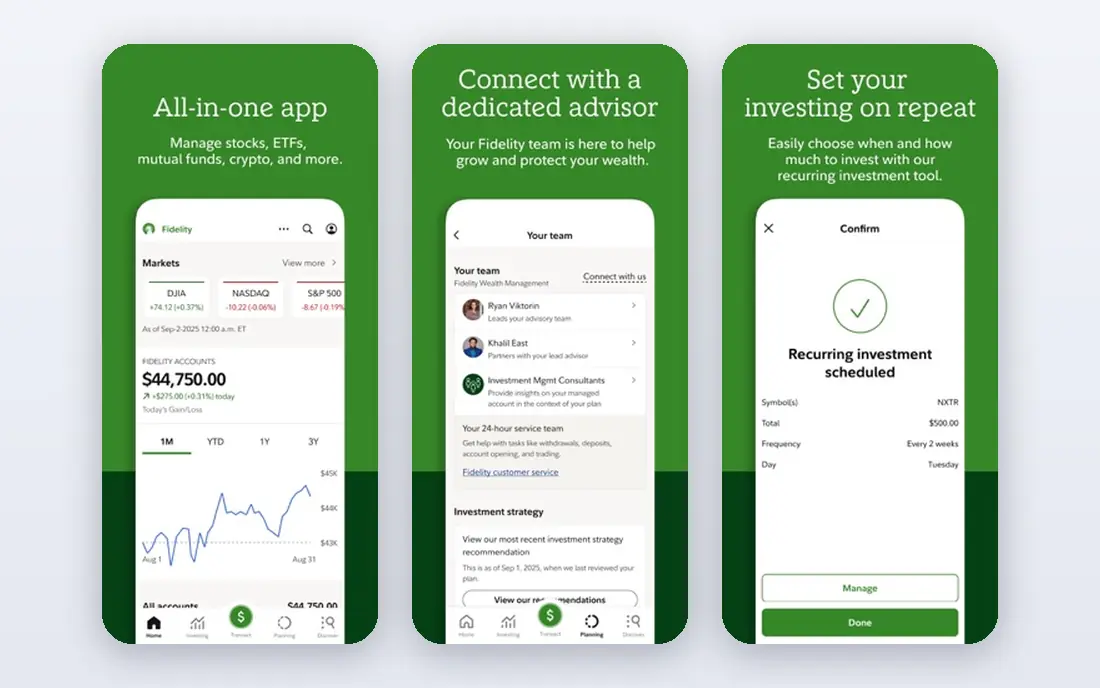
Fidelity is our pick for most people, since it combines $0 stock and ETF trades, no account minimum in public pricing material, fractional shares from $1, and retirement accounts that range from IRAs to workplace plans. Its research library, education content, and customer service give beginners a clear path, while active traders can use more advanced tools as they learn. Zero-expense-ratio index funds in its own fund range also help long-term savers keep costs low.
The honest catch is that not everything is free. Options contracts carry a per-contract fee in public pricing, and broker-assisted trades cost far more than online trades. Beginners should also start with the simpler app or web view, since the full research library can feel large at first. For a single account that can grow from a first trade to a retirement plan, Fidelity is hard to beat.
- $0 stock and ETF trades
- Deep research from many providers
- Strong retirement accounts and fractional shares
- Options contracts cost extra
- Broker-assisted trades carry high fees
- Platform choice can overwhelm beginners
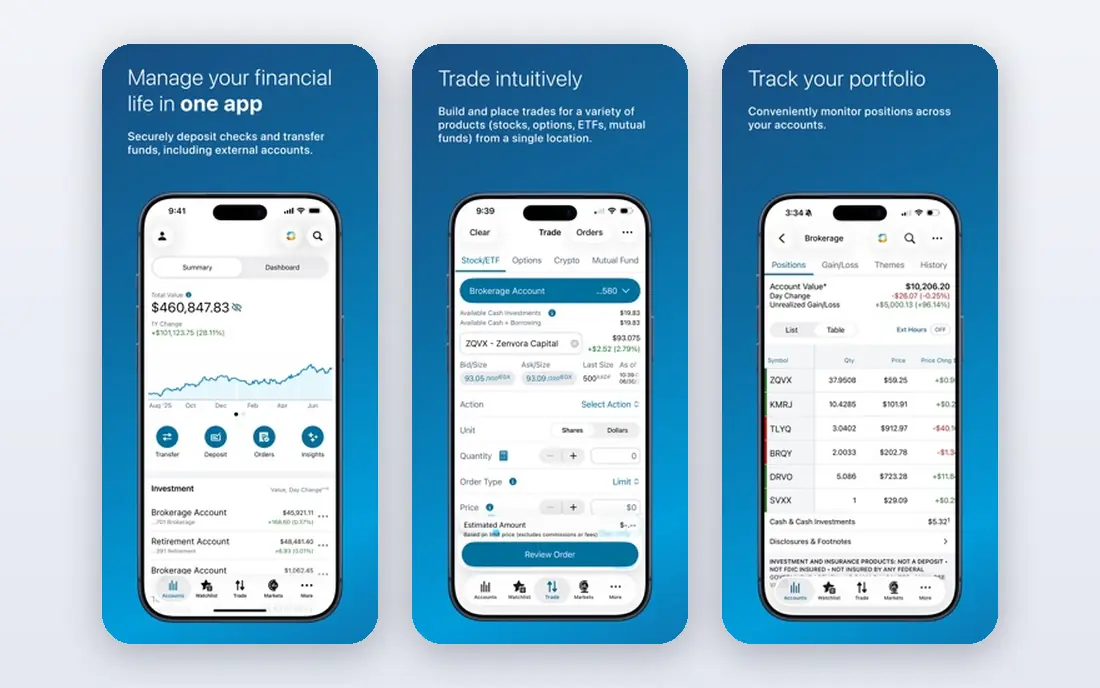
Charles Schwab suits investors who want a full-service brokerage plus a serious trading platform. Its $0 stock and ETF trades cover most online trades, and thinkorswim, inherited from TD Ameritrade, offers charting, screeners, paper trading, and options tools for active traders. Schwab also offers IRAs, banking, and branch support, which helps households that want investing and banking in one place.
The trade-off is cash handling. Public comparisons note that Schwab default cash sweep yields can be far lower than a money market fund yield unless you proactively choose a higher-yield option, so check where uninvested cash sits. Options contracts also carry a per-contract fee. If you trade actively or want thinkorswim, Schwab is a top choice. If you hold a lot of cash, ask about sweep options before you open an account.
- $0 stock and ETF trades
- Thinkorswim platform for active traders
- Strong IRA and banking integration
- Options contracts cost extra
- Default cash sweep yields can be low
- Platform depth can overwhelm new investors
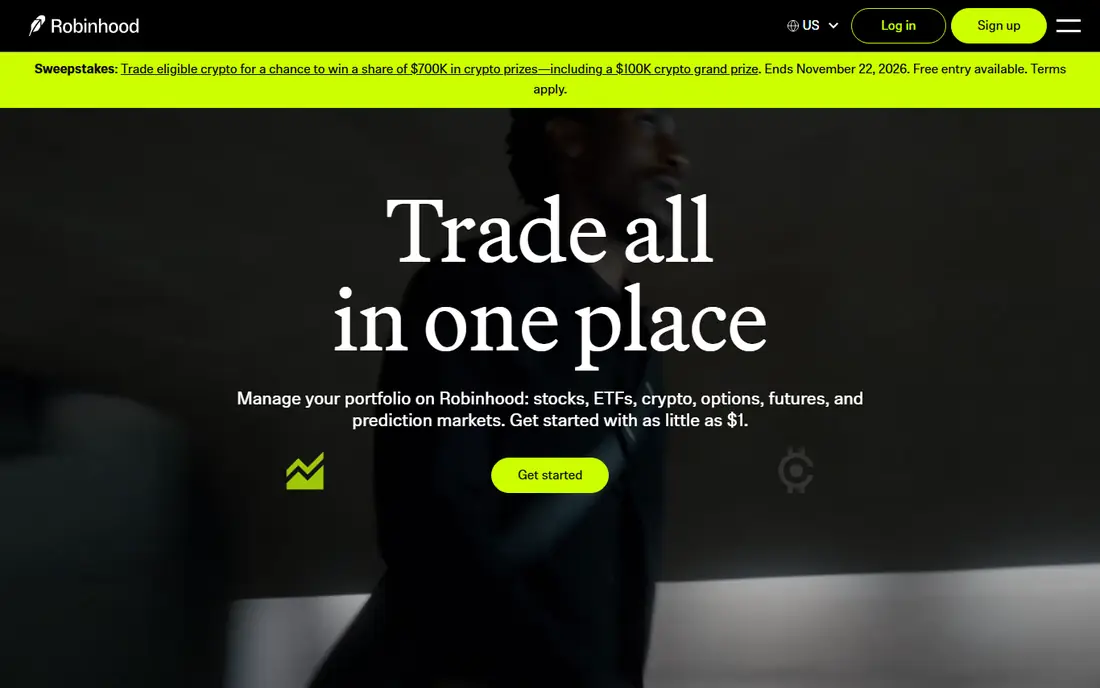
Robinhood suits beginners who want the simplest possible start. Its mobile app makes buying a stock, ETF, or fractional share quick, and its $0 commission model covers stocks, ETFs, and options in public pricing. The app also offers crypto trading and an IRA with a contribution match that is higher for Gold subscribers than for standard users, with Gold priced at $5 per month in public material.
The limits matter. Robinhood does not offer mutual funds or individual bonds, so a long-term saver who wants those products will need another account. Its history includes outages during high-volatility events, which is a real risk for active traders. Use Robinhood as a simple starting point, and move to a broader brokerage when you need funds, bonds, or deeper research.
- Simple mobile app
- $0 stock, ETF, and options trades in public pricing
- Fractional shares and crypto in the app
- No mutual funds or individual bonds
- Past outages during volatile markets
- Gold subscription needed for higher IRA match
Interactive Brokers suits advanced and global traders who need markets, currencies, and order types that retail apps do not offer. Its Lite plan offers $0 US stock and ETF trades in public pricing, while its Pro plan uses a tiered commission model that can suit high-volume traders. Public comparisons cite access to more than 100 global markets and competitive margin rates as strengths.
For a beginner, Interactive Brokers can feel like a professional terminal, with many settings and a steep learning curve. Pricing also needs care, since Lite and Pro differ, and market data subscriptions can add cost. If you trade internationally, use margin, or need advanced tools, Interactive Brokers is a leading choice. If you are buying your first ETF, start with Fidelity or Schwab instead.
- Access to many global markets
- Low margin rates in public comparisons
- Advanced tools for professionals
- Platform complexity for beginners
- Pricing tiers need careful reading
- Customer service is less hand-holding than rivals
ETRADE, part of Morgan Stanley, suits intermediate investors who want education, research, and options tools in one place. Its $0 stock and ETF trades cover most online trades, and its education library, webinars, and paper trading help investors learn before they risk real money. Power ETRADE gives options traders charting and strategy tools that a simple app does not offer.
Options contracts still carry a per-contract fee, and the full platform can feel busy for a first-time investor. E*TRADE is a good middle ground between a simple app and a professional terminal, especially if you want to learn options or use research without paying for a separate service. Compare its fund and bond offerings with Fidelity if you plan to hold those products long term.
- $0 stock and ETF trades
- Strong education and webinars
- Power E*TRADE platform for options traders
- Options contracts cost extra
- Part of Morgan Stanley, so some features tie to that ecosystem
- Mobile app is less simple than Robinhood
Vanguard suits buy-and-hold investors who want low-cost index funds and a retirement-focused account. Its $0 stock and ETF trades cover online trades, and its own index funds are known for low expense ratios in public comparisons. That combination helps a saver who invests regularly, reinvests dividends, and holds for years, since small fee differences compound over time.
The trade-off is trading tools. Vanguard mobile and web tools are less polished for active trading than Fidelity, Schwab, or Webull, and its service experience can be slower. If you trade often, check charts, or need advanced order types, another platform will feel better. If you invest monthly in index funds and rarely trade, Vanguard remains a strong, low-cost home.
- $0 stock and ETF trades
- Low-cost index funds
- Strong fit for buy-and-hold retirement savers
- App and web tools trail rivals for active trading
- Options contracts cost extra
- Service can be slower than competitors
Webull suits active, mobile-first traders who want charting, extended hours trading, and low options costs. Its $0 stock and ETF trades cover most online trades, and public comparisons note $0 options contract fees in many cases, which changes the math for frequent options traders. The app offers technical charts, screeners, and paper trading for practice.
The limits are product range and research. Webull does not offer mutual funds, and its research library is thinner than Fidelity or Schwab, so a long-term fund investor will need another account. Customer service is also digital-first, which can frustrate investors who want phone or branch help. For active stock and options trading on a phone, Webull is a strong, low-cost pick.
- $0 stock and ETF trades
- $0 options contract fees in many cases
- Strong mobile charting and extended hours trading
- No mutual funds
- Research depth is thinner than Fidelity or Schwab
- Customer service is digital-first
SoFi Invest suits beginners who already use SoFi for banking or loans and want investing in the same app. Its $0 stock and ETF trades cover most online trades, and its simple interface makes a first investment easy to understand. Automated investing options also help savers who prefer a managed portfolio over picking stocks themselves.
The trade-off is depth. SoFi research, charting, and advanced trading tools are basic compared with Schwab, Fidelity, or Interactive Brokers, and its fund range is narrower. That is fine for a first account or a side portfolio, but active traders and long-term fund investors will likely need a broader brokerage later. Use SoFi for simplicity, and move on when your needs grow.
- $0 stock and ETF trades
- Banking, lending, and investing in one app
- Simple interface for beginners
- Research and trading tools are basic
- No mutual fund depth of larger brokers
- Some advanced traders will outgrow it
Merrill Edge suits Bank of America customers who want investing and banking linked in one view. Its $0 stock and ETF trades cover most online trades, and its research includes Merrill insights plus third-party reports. Relationship tiers can add benefits, such as credit card rewards boosts, for customers who hold qualifying Bank of America balances.
If you do not bank with Bank of America, Merrill Edge loses part of its edge, and its platform can feel more bank-led than trader-led. Options contracts also carry a per-contract fee. For a Bank of America household that wants a single login for cash and investments, Merrill Edge is a practical choice. For a standalone brokerage, Fidelity or Schwab may offer a broader toolset.
- $0 stock and ETF trades
- Integration with Bank of America banking
- Research from Merrill and third parties
- Best value ties to Bank of America relationship tiers
- Platform can feel bank-led rather than trader-led
- Options contracts cost extra
TradeStation suits serious active traders who want charting, backtesting, and strategy automation that simple apps do not offer. Its $0 stock and ETF trades cover most online trades in public pricing, and its desktop platform is built for traders who watch many symbols, test ideas, and manage risk with detailed orders. Futures and options support adds to that depth.
For a beginner or a retirement saver, TradeStation is more platform than needed, and its learning curve can slow a first investment. Some advanced features also sit on paid plans, so check the tier that matches your trading style. If you trade actively and want to test strategies, TradeStation is a strong specialist pick. If you invest monthly in funds, choose Vanguard, Fidelity, or Schwab instead.
- Powerful charting and strategy tools
- $0 stock and ETF trades in public pricing
- Futures and options support
- Platform complexity for beginners
- Some advanced features sit on paid plans
- Less suited to simple retirement saving
How we picked these
We compared official commission pages, account types, research, and trading tools for brokerages with current US stock and ETF offerings, and we kept only firms with $0 online stock and ETF trades in public pricing material. We favored a mix of all-around, beginner, retirement, and active trader platforms, so readers can match a platform to their experience level. We did not claim hands-on testing, and we did not promise returns or treat any platform as financial advice.
How to choose a stock trading platform
Start with your investing style, not the app with the most features. A monthly index fund saver needs low fund costs, automatic investing, and a good IRA, while an active trader needs charting, fast orders, and low options fees. A beginner needs education, simple orders, and clear fee terms. Write down how often you plan to trade, what you plan to buy, and how much cash you will hold, since those answers point to different platforms.
Next, check the full fee picture. Online stock and ETF trades may be $0, but options contracts, bonds, mutual fund transaction fees, assisted trades, and wire fees can still apply. Also check cash sweep terms, since uninvested cash can earn very different yields across brokers, and check fund expense ratios, since those costs apply every year you hold a fund. A platform that looks free can still cost more through those channels.
Finally, test the platform with a small amount before you move a large portfolio. Check order placement, research, mobile and web tools, and customer service response, and confirm that account transfers, tax documents, and beneficiary settings work as you expect. Keep your investing plan simple, diversify, and avoid trading on margin or with money you cannot afford to lose unless you fully understand those risks.
Frequently asked questions
What is the best stock trade platform for beginners?
For beginners, Fidelity and Schwab offer the best balance of $0 trades, education, research, and retirement accounts, while Robinhood offers the simplest mobile start. Choose Fidelity or Schwab if you want an account that can grow with you, and Robinhood if you want the simplest first trades.
What are the best companies for stock trading for retirement?
For retirement, Fidelity, Schwab, and Vanguard stand out, thanks to IRAs, low-cost funds, and long-term investing tools. Compare IRA types, fund costs, and customer service, and check whether a platform offers Roth, traditional, SEP, or rollover IRAs that match your needs.
Is $0 commission really free?
Online US stock and ETF trades are $0 at most major brokers in public pricing, but other fees still apply. Options contracts, bonds, assisted trades, and fund transaction fees can cost extra, and cash sweep yields and fund expense ratios also affect your total cost, so read the full fee schedule.
What is the best company for stock trading for active traders?
Active traders often choose Schwab for thinkorswim, Interactive Brokers for global markets and margin rates, TradeStation for strategy tools, or Webull for low-cost mobile options trading. The best pick depends on whether you trade stocks, options, futures, or global markets, and how much platform depth you need.
How much money do I need to start trading stocks?
Most major brokers in this guide have a $0 account minimum in public pricing material, and fractional shares let you start with $1 at some firms. That said, start with an amount you can afford to lose, learn the platform with small trades, and build a diversified plan rather than betting a large sum on a single stock.
Sources
See where you really rank - block by block
ProMapRanker scans Google Maps across a grid of your service area. Simple monthly plans from $19, white-label on every plan.
Start freeKeep reading
 zscaler alternatives
Best Zscaler Alternatives in 2026
Looking for zscaler alternatives? We compare 9 SASE and zero trust platforms on architecture, data protection, pricing, and fit for your network and team.
Read → zapier alternatives free
Best Zapier Alternatives Free in 2026
Nine automation tools for zapier alternatives free in 2026, all with genuinely free tiers, plus free plan limits, starting prices and upgrade paths explained.
Read → which platform is best for online reputation
Which Platform Is Best for Online Reputation in 2026
Wondering which platform is best for online reputation? We compare 8 review, listing, and response tools for small and multi-location businesses and agencies.
Read →