 ProMapRanker
Best Stock Trading Apps US in 2026

Key takeaways
- Most major US brokers now charge no commission on online stock and ETF trades, so the real differences are in options fees, research, account types and cash terms.
- Fidelity and Charles Schwab are the strongest all round choices for long term investors who want retirement accounts and research in one place.
- Robinhood and Webull suit mobile first traders, while Interactive Brokers suits traders who want broad market access and advanced tools.
- Fractional shares let you start with small dollar amounts, but they do not remove market risk, and this article is not financial advice.
Quick comparison
| Pick | Great for | Pricing starts at | Free tier | |
|---|---|---|---|---|
 Fidelity | All round investing and retirement | Free | Yes | Visit |
 Charles Schwab | Education and full service depth | Free | Yes | Visit |
 Robinhood | Simple mobile trading | Free | Yes | Visit |
 Webull | Charts and active trading | Free | Yes | Visit |
 E*TRADE | Balanced research and tools | Free | Yes | Visit |
 SoFi Invest | Simple investing plus automated options | Free | Yes | Visit |
 Interactive Brokers | Global and advanced trading | Free | Yes | Visit |
 Public | Simple multi asset investing | Free | Yes | Visit |
 Moomoo | Data rich active trading | Free | Yes | Visit |
The best stock trading apps us
We compared official commission schedules, account types, fractional share rules and research tools, and we kept the focus on brokers available to US investors in October 2026.
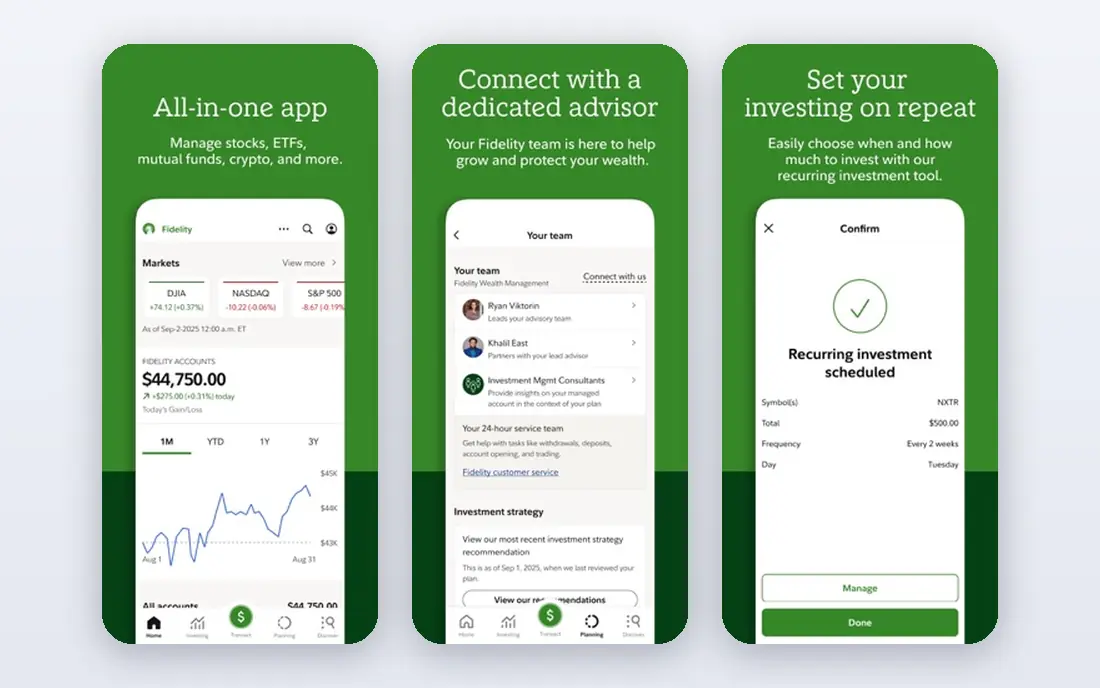
Fidelity is our pick for most people because it covers the whole job well rather than excelling at one narrow feature. You can hold a brokerage account and an IRA in the same place, buy fractional shares, and use research that explains a company in plain terms as well as in numbers. That breadth matters when a beginner later wants retirement planning, not only a first stock purchase.
The main drawback is choice overload. Fidelity offers many account types, order types and research screens, and a new investor may need time to find the simple path through them. Start with a basic brokerage or IRA account, a broad fund or a small list of stocks you understand, and ignore the advanced tools until you need them.
- No commission on online US stock and ETF trades
- Fractional shares from small amounts
- Strong research and retirement accounts
- The full website can feel large for a first time investor
- Advanced trading tools sit in a separate platform
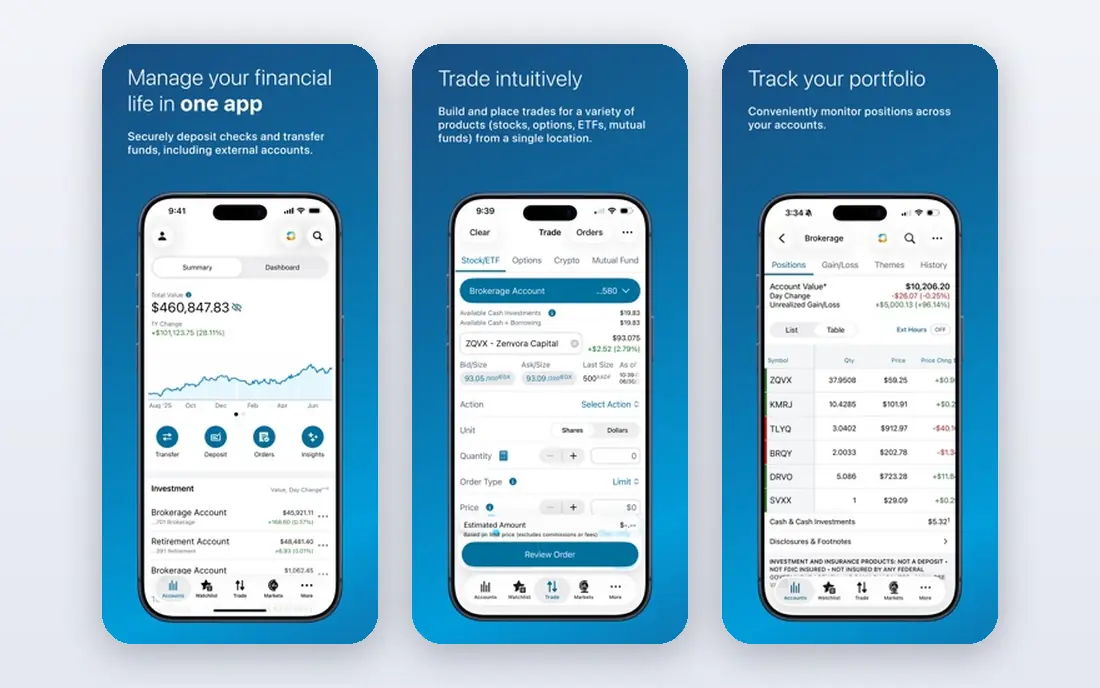
Schwab pairs a full service broker with no commission trading, which is a useful combination for investors who want help and low costs. Its education library is clear, its retirement accounts are well covered, and thinkorswim gives active traders charts, paper trading and analysis without needing a second broker. For many households, Schwab can be the only broker they need.
Fractional shares are the one area to check, because Schwab's program works differently from Fidelity's dollar based approach and has minimums for some orders. If you plan to invest small amounts each week into many different stocks, compare that detail before you choose. For most long term investors, the difference will not matter as much as account service and research.
- No commission on online listed stock and ETF trades
- Strong education
- Thinkorswim platform for serious traders
- Fractional share rules are more limited than some rivals
- The product range can feel complex at first
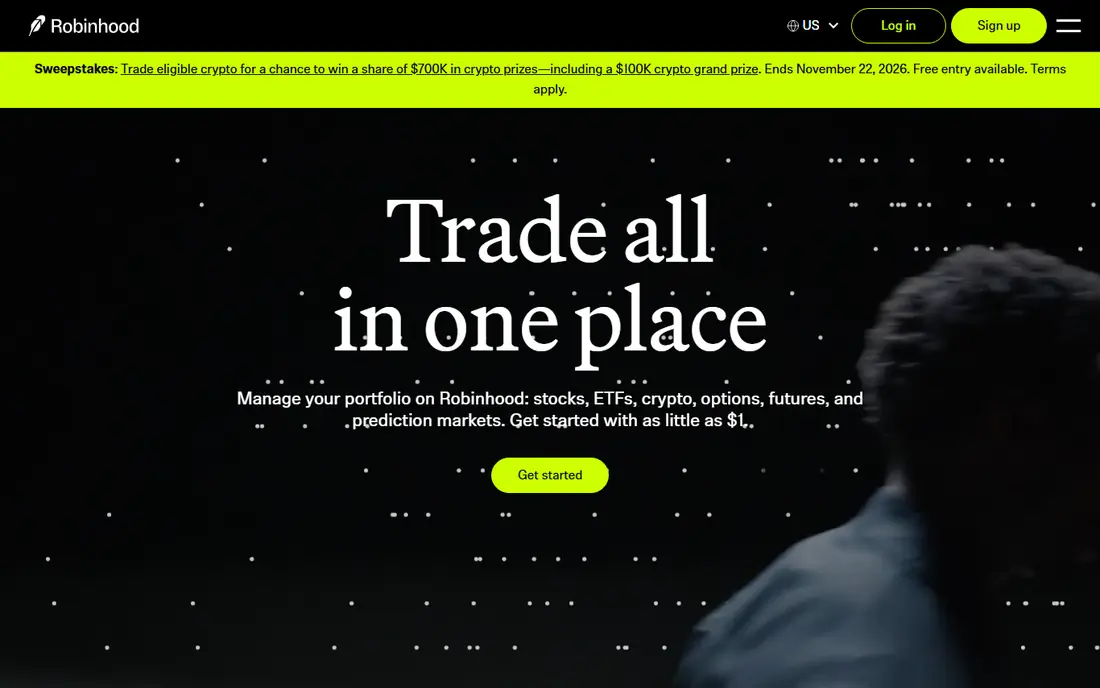
Robinhood is the easiest app in this list to open and use on a phone. Trades take a few taps, fractional shares let you start with small amounts, and recurring investments help you build a habit without thinking about each order. For a first time investor who wants to learn by doing, that low friction is a genuine advantage.
The catch is that simplicity cuts both ways. Research tools are thinner than those at full service brokers, and an app that makes trading feel instant can also make impulsive trades feel easy. Use a plan before you open the app, such as a monthly amount and a short list of investments, and check options and transfer fees on the official fee schedule if you plan to trade options or move accounts later.
- Very simple mobile app
- No commission on stock and ETF trades
- Fractional shares and recurring investments
- Research is lighter than Fidelity or Schwab
- A simple interface can encourage frequent trading
Webull suits investors who want to study charts, test ideas with paper trading, and trade outside regular market hours. The desktop and mobile platforms give you indicators, screeners and order types that beginner apps leave out, and paper trading lets you practise without risking real money. That makes it a good second step after a simple starter app.
It is less appealing as a quiet retirement account, because the design rewards activity and attention. If your plan is to buy a broad fund each month and leave it alone, Fidelity or Schwab will feel calmer. If you enjoy following price action and want to learn technical analysis, Webull gives you the tools without charging stock commissions.
- No commission on stock and ETF trades
- Strong charts and paper trading
- Extended hours trading for many stocks
- Less suited to a simple retirement only plan
- Research and education are geared to active traders
ETRADE sits in the middle of this list for a reason: it is neither the simplest app nor the most advanced, but it covers research, options tools and account types in a balanced way. Power ETRADE is a useful step up for options traders, while the main app handles ordinary stock and ETF investing without fuss. It is a sensible choice for an investor who wants room to grow.
Options fees are the detail to note, since a per contract fee applies on top of the usual regulatory fees. That does not matter if you never trade options, but it adds up for frequent options traders. Compare that fee with Webull and Robinhood if options are a core part of your plan.
- No commission on online US stock and ETF trades
- Power E*TRADE for options
- Solid research and education
- Options contract fees apply
- The two platform approach can confuse new users
SoFi Invest is a good fit for people who want investing to sit beside banking and other money tasks in one app. You can pick stocks yourself or use automated investing, and fractional shares keep the starting amount low. For someone who wants to set up a simple plan and check it rarely, that combination is appealing.
The trade off is depth. If you later want advanced charting, detailed analyst research or complex options strategies, you may outgrow SoFi and move to Fidelity, Schwab or Webull. That is not a failure: many investors start simple and move when their needs change, and SoFi is a low cost place to start.
- No commission on stock trades
- Active and automated investing in one app
- Fractional investing from small amounts
- Research and trading tools are lighter than specialist brokers
- The wider SoFi product set can distract
Interactive Brokers is the choice for traders who need more than the US market or who want professional grade tools. Its Lite plan gives eligible clients no commission US stock and ETF trades, while the Pro plan and wider platform cover global markets, more order types and deeper data. Serious traders often end up here after outgrowing a simpler app.
Beginners should be honest about that learning curve. The platform assumes you know order types, market structure and risk controls, and the interface reflects that. If you are starting out, learn on a simpler broker first, and move to Interactive Brokers when you have a clear reason to need its range.
- Very broad market access
- IBKR Lite offers no commission US stock and ETF trades
- Powerful professional tools
- Steep learning curve
- The platform can overwhelm beginners
Public keeps investing simple while covering more than stocks alone. You can build a recurring plan, hold ETFs and Treasuries, and follow company news in a clean interface. For an investor who wants a tidy, modern app without the noise of a trading focused platform, that is a real strength.
Check the fee details for any premium plan or asset type you plan to use, because not every feature in the app is free. Public is best judged as a simple, well designed broker for steady investing, not as a replacement for a full research platform.
- No commission on stock and ETF trades
- Stocks, ETFs, bonds and Treasuries in one place
- Recurring plans
- Some plans and asset types carry separate fees
- Research is lighter than full service brokers
Moomoo appeals to traders who like data in front of them: quotes, charts, screeners and market news in one workspace. Paper trading lets you test strategies, and the mobile app carries much of the desktop depth with it. If Webull feels close but you want a different data layout, Moomoo is worth a direct comparison.
The same depth is the drawback for a casual investor. A first time buyer may find the screens busy and the settings numerous. Moomoo is best for people who already know they want to follow the market closely, rather than for someone buying a first fund and checking once a month.
- No commission on US stock trades for many accounts
- Rich market data and screeners
- Paper trading included
- The data heavy interface can overwhelm beginners
- Some advanced data features are paid
How we picked these
We compared official commission schedules, account minimums, fractional share rules and platform features, and we kept only brokers that serve US investors and charge no commission on online US stock and ETF trades in the usual case. We excluded brokers that are not available in the United States and platforms that focus only on social copy trading. We weighted cost clarity, account choice, research, and how easy each platform is for its intended user, not only headline commissions.
How to choose a stock trading app
Start with your investing style. A long term investor should prioritise retirement accounts, low ongoing costs, fractional shares and research, while an active trader should prioritise charts, order types, options fees and extended hours access. Then check the fees that apply to your actual trades, including options contracts, transfer out fees and cash sweep terms, because those are where no commission brokers differ.
Open only one account at first, fund it with an amount you can afford to leave invested, and learn the platform with small orders. This article is general information only and is not financial advice. Trading carries risk, including the risk of losing money, and past performance does not predict future results. Consider speaking with a qualified adviser before making investment decisions.
Frequently asked questions
What is the best stock trading app in the US?
There is no single best app for every investor. Fidelity is our all round pick for long term investors, Schwab is close for education and service, and Robinhood is the simplest first app. Compare them on account types and fees for the trades you will actually make.
What is the best stock trading platform in the US?
A platform is more than an app: it includes research, charting, order types and account support. Fidelity, Schwab and Interactive Brokers offer the deepest platforms, while Robinhood and Public offer the simplest mobile experience.
Are stock trading apps free?
Most major US brokers charge no commission on online stock and ETF trades, but that does not mean every service is free. Options contracts, data subscriptions, margin interest and transfer fees can still apply, so read the official fee schedule.
What is the best stock trading app US review for beginners?
Beginner reviews tend to favour Fidelity for its research and retirement accounts, Schwab for education, and Robinhood for simplicity. A good beginner test is to open an account, place a small fractional order, and see how clear the fees and statements feel.
Can I trade stocks with a small amount of money?
Yes, fractional shares at several brokers let you invest small dollar amounts in a stock or ETF. That lowers the entry cost, but it does not lower market risk, so only invest money you can afford to keep invested for the long term.
Is my money safe in a trading app?
US brokers are regulated and customer securities are generally protected up to limits by SIPC if a broker fails, but SIPC does not protect against market losses. Check that a broker is a registered broker dealer, use strong account security, and read its disclosures before funding an account.
Sources
See where you really rank - block by block
ProMapRanker scans Google Maps across a grid of your service area. Simple monthly plans from $19, white-label on every plan.
Start freeKeep reading
 zscaler alternatives
Best Zscaler Alternatives in 2026
Looking for zscaler alternatives? We compare 9 SASE and zero trust platforms on architecture, data protection, pricing, and fit for your network and team.
Read → zapier alternatives free
Best Zapier Alternatives Free in 2026
Nine automation tools for zapier alternatives free in 2026, all with genuinely free tiers, plus free plan limits, starting prices and upgrade paths explained.
Read → which platform is best for online reputation
Which Platform Is Best for Online Reputation in 2026
Wondering which platform is best for online reputation? We compare 8 review, listing, and response tools for small and multi-location businesses and agencies.
Read →