 ProMapRanker
Best Stock Trading Apps in India in 2026

Key takeaways
- Zerodha and Dhan offer zero brokerage on equity delivery, while Groww charges up to Rs. 20 per delivery order.
- Most discount brokers charge Rs. 20 or a small percentage per intraday or options order, so check the cap for small orders.
- Groww is simplest for beginners, Zerodha is strongest for learning and stability, and Dhan suits active traders.
- This is not financial advice. Trading carries risk, and you should verify SEBI registration and charges before opening an account.
Quick comparison
| Pick | Great for | Pricing starts at | Free tier | |
|---|---|---|---|---|
 Zerodha Kite | Active investors and learners | Free | Yes | Visit |
 Groww | Beginners and SIP investors | Free | Yes | Visit |
 Upstox | Fast mobile trading | Free | Yes | Visit |
 Angel One | Research and full-service features | Free | Yes | Visit |
 Dhan | Active and options traders | Free | Yes | Visit |
 ICICI Direct | Bank-linked 3-in-1 investing | See website | Yes | Visit |
 HDFC Securities | Bank-linked investing | See website | Yes | Visit |
 Kotak Neo | Low-cost active trading | See website | Yes | Visit |
 5paisa | Low-cost trading and research | See website | Yes | Visit |
The best stock trading apps in India
The best stock trading app in India depends on how you invest: long-term delivery, intraday trades, options, or mutual funds. The platforms below are SEBI-registered brokers or bank-linked brokers with live Indian apps in October 2026. Charges change, so confirm the live schedule on each broker site before you trade.
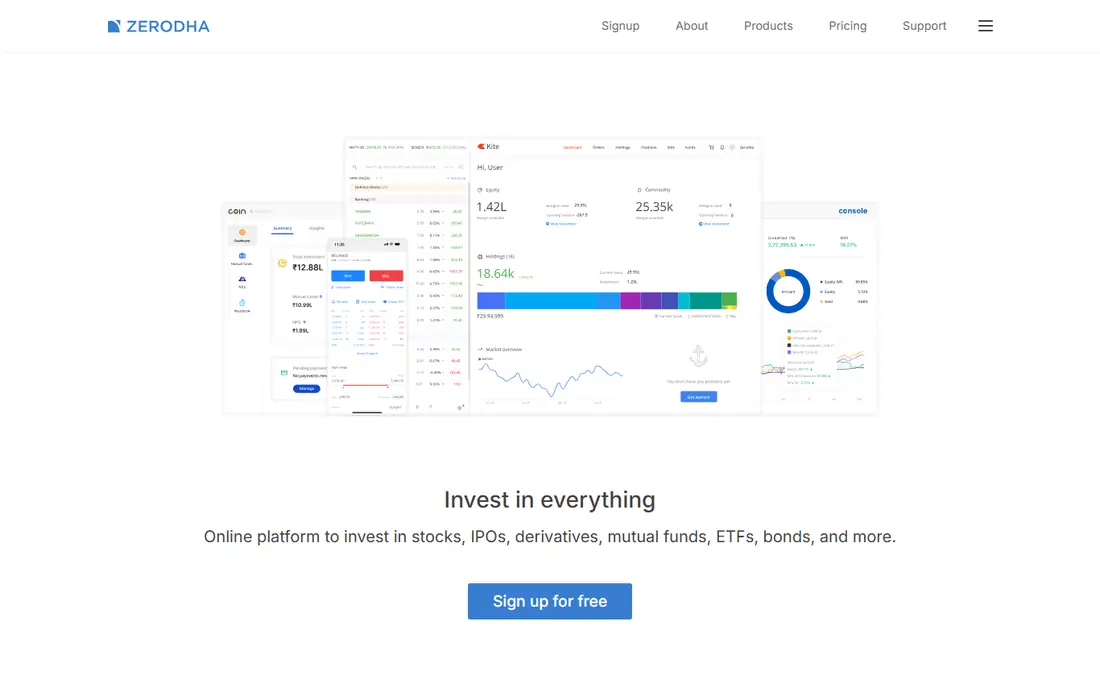
Zerodha Kite is a good all-round pick for Indian investors who want a stable app and low delivery cost. Equity delivery brokerage is Rs. 0, while intraday and futures cost Rs. 20 or 0.03 percent per executed order, whichever is lower. The Coin app handles direct mutual funds, and Varsity offers free learning material for beginners.
The main costs are the demat AMC of Rs. 300 per year plus GST and the one-time account opening fee. Support can be slow during volatile sessions, which is a common complaint across brokers. For a mix of investing and occasional trading, Zerodha remains a strong default.
- Zero delivery brokerage
- Stable Kite app
- Varsity learning content
- Demat AMC of Rs. 300 per year plus GST
- Account opening fee applies
Groww is the simplest app here for a first-time investor. Opening an account is free, demat AMC is Rs. 0, and the app covers stocks, direct mutual funds, ETFs, and F&O in one clean interface. SIP setup and mutual fund tracking feel straightforward, which helps new investors stay consistent.
Delivery is not free. Recent charge tables list equity delivery at Rs. 20 or 0.1 percent per order, with a minimum, and intraday and F&O at Rs. 20 per order. That cost adds up for frequent small delivery trades, though it matters less for SIP investors. For beginners, Groww is our pick for ease of use.
- Clean interface
- Zero AMC
- Stocks, mutual funds, and F&O in one app
- Delivery brokerage up to Rs. 20 per order
- Advanced charting is basic
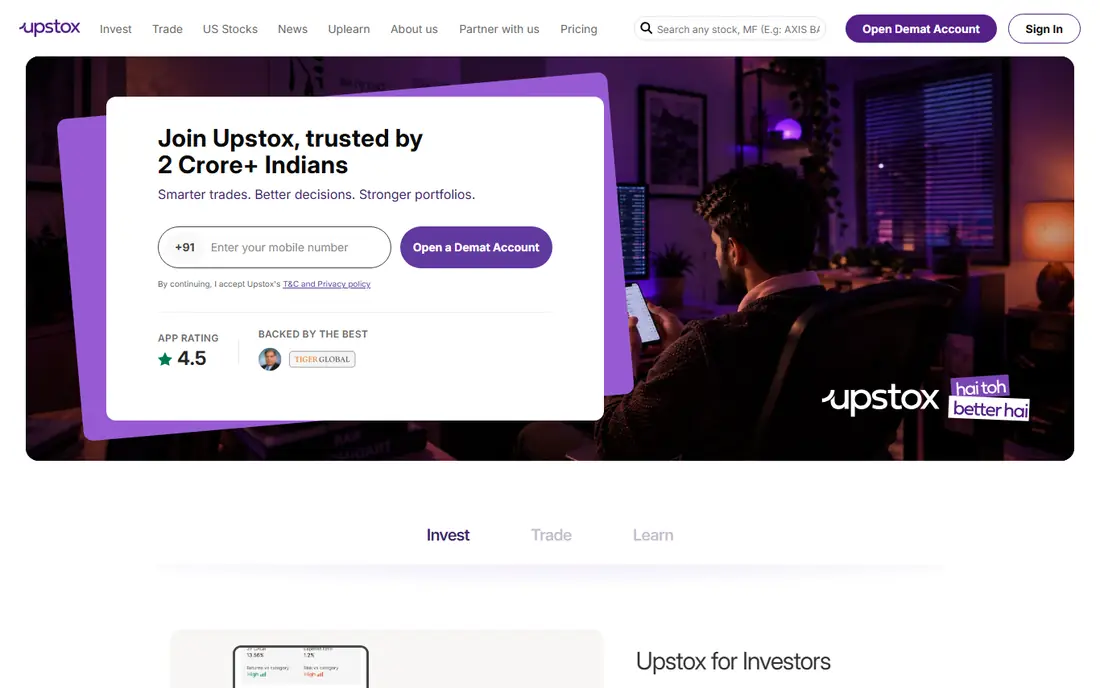
Upstox suits mobile traders who value speed and a clean order flow. The app offers advanced charts, option chains, and quick order placement, with account opening free in recent guides. Intraday and F&O brokerage is capped at Rs. 20 per order on standard plans, which keeps active trading costs predictable.
Delivery brokerage is charged on standard plans, at Rs. 20 per order in recent tables, so buy-and-hold investors should compare it with Zerodha or Dhan. AMC terms have varied over time, so check the current schedule before opening. For fast mobile trading, Upstox is a solid pick.
- Fast app and option chains
- Free account opening
- Direct mutual funds
- Delivery brokerage applies on standard plans
- AMC terms have varied
Angel One blends discount pricing with full-service research. It offers stock recommendations, ARQ advisory tools, mutual funds, IPOs, and a developer API, plus branch support for users who want human help. That mix suits investors who want research alongside low headline brokerage.
Pricing needs attention. Recent tables list delivery at Rs. 20 or 0.1 percent per order after intro periods, with intraday and F&O at Rs. 20 per order, and AMC of Rs. 60 per quarter plus GST after the first year. The app can feel crowded with offers, so take time to learn the layout. For research-led investing, Angel One is a good fit.
- Research, advisory tools, and branch support
- Broad product range
- SmartAPI
- Delivery charges after intro offers
- AMC after the first year
- App can feel busy
Dhan is a strong pick for active traders who want low fixed costs. Equity delivery brokerage is Rs. 0, demat AMC is Rs. 0 for life in recent guides, and intraday and F&O cost Rs. 20 or 0.03 percent per order. TradingView charts, deep order customization, and an open API suit traders who build their own workflows.
Beginners may find the app denser than Groww, since it assumes some trading knowledge. Brand presence and branch support are smaller than bank brokers, though the app itself is well regarded. For active and options traders, Dhan offers one of the best cost profiles here.
- Zero delivery brokerage
- Lifetime zero AMC
- TradingView charts and fast orders
- Less suited to absolute beginners
- Advanced features can feel dense
ICICI Direct suits investors who already bank with ICICI and want a linked 3-in-1 account. Funds move between bank, trading, and demat accounts without a separate transfer step, and the platform offers research, IPOs, mutual funds, bonds, and portfolio tools. That integration is convenient for long-term investors who value one relationship.
Brokerage is higher than discount brokers, with plan-based pricing that varies by segment and trade size. Check the current plan on the vendor site, since headline rates do not tell the full story. For bank-linked convenience and research, ICICI Direct is a credible choice.
- 3-in-1 bank, trading, and demat account
- Research and advisory
- Broad products
- Brokerage is higher than discount brokers
- Pricing plans vary by segment
HDFC Securities offers a similar bank-linked model for HDFC Bank customers, with a 3-in-1 account, research reports, and access to stocks, mutual funds, IPOs, and bonds. For investors who keep most banking with HDFC, the linked setup reduces friction when funding trades or tracking holdings.
As with ICICI Direct, brokerage is higher than discount brokers, and charges depend on the plan you choose. The app and web platforms serve different needs, so test both before committing. For HDFC customers who want research and a linked account, it is a practical pick.
- 3-in-1 account for HDFC customers
- Research and advisory
- Stable platform
- Higher brokerage than discount brokers
- App experience varies by product
Kotak Neo is Kotak Securities trading app for active users, with plan-dependent pricing that can be very low for F&O. Recent comparisons list F&O at Rs. 10 per order on some plans, with delivery pricing that depends on the plan chosen. Advanced charts, market depth, and a Trade API suit traders who want more than a basic app.
Plan choice matters. A plan that suits frequent options traders may not suit a buy-and-hold investor, so compare delivery, intraday, and AMC terms together. For active traders, especially Kotak customers, Neo is worth shortlisting.
- Low F&O pricing on some plans
- Advanced charts
- Trade API
- Delivery and plan pricing vary
- Bank link matters most for Kotak customers
5paisa offers flat-rate trading with research, advisory, and portfolio tools, plus mutual funds and international investing options on some plans. It suits cost-conscious traders who also want research without paying full-service brokerage. Account opening is often free, with plan-based charges for trading.
Fees vary by plan, and platform or subscription charges can apply, so read the full charge schedule, not just the headline brokerage. For a low-cost app with research tools, 5paisa is a reasonable addition to a shortlist.
- Flat low brokerage on many plans
- Research and advisory
- Mutual funds and US stocks
- Pricing plans and platform fees vary
- App can feel busy
How we picked these
We compared broker charge tables and 2026 India trading guides for SEBI-registered platforms with live apps, demat accounts, and direct mutual fund support where offered. We kept platforms with clear headline brokerage and a usable mobile app, and we marked bank-linked pricing as plan-dependent where it varies. This article is educational only, not financial advice, and charges should be verified on each broker site.
How to choose a trading platform in India
Start with your trade type
Delivery investors should weight delivery brokerage and AMC most, while intraday and options traders should weight the per-order cap and platform speed. A broker that is cheapest for delivery may not be cheapest for options, and the reverse is also true. List your usual trade size and frequency before you compare.
Check the full charge list
Brokerage is only part of the cost. Add DP charges on delivery sales, exchange charges, STT, SEBI fees, stamp duty, and GST, since those apply at every broker. Read the AMC, account opening, and platform fee terms as well, since a low brokerage plan can carry other charges.
Test the app with small trades
Open an account, place a small trade, and check order speed, charts, and support response during market hours. A platform that feels slow or confusing during a volatile session will cost more than a small brokerage saving. Keep your first trades small while you learn the app.
Frequently asked questions
What is the best stock trading app in India for beginners?
Groww is best for beginners, thanks to its clean interface, zero AMC, and simple SIP setup. Zerodha is also good for beginners who want learning content and free delivery brokerage. The best stock trading app in India for a beginner depends on whether simplicity or low delivery cost matters more.
What are the best stock trading platforms in India for active traders?
Dhan, Zerodha, Upstox, and Kotak Neo are strong for active traders, with Rs. 20 or lower caps on many intraday and options orders. Dhan adds zero delivery brokerage and zero AMC, while Kotak Neo can be cheaper for F&O on some plans. Compare the plan that matches your trade type.
Is Zerodha better than Groww?
Zerodha is better for free equity delivery and learning, while Groww is simpler for beginners and SIP investors. Zerodha charges Rs. 300 per year plus GST in AMC, while Groww charges Rs. 0 AMC but up to Rs. 20 per delivery order. Choose by how often you buy for delivery.
Are these platforms SEBI-registered?
The brokers listed here are SEBI-registered brokers or bank-linked brokers operating in India, but you should verify registration on sebi.gov.in before transferring money. Shares sit in your own demat account, not with the app company. Keep records of your account and charge schedule.
Is stock trading risky?
Yes. Prices can fall, intraday and options trades can lose money fast, and borrowed funds increase risk. This article is not financial advice, and past performance does not predict future results. Invest only money you can afford to risk, and consider independent advice for large decisions.
Sources
- https://www.zerodha.com
- https://www.groww.in
- https://www.upstox.com
- https://www.angelone.in
- https://www.dhan.co
- https://www.icicidirect.com
- https://www.hdfcsec.com
- https://www.kotakneo.com
- https://www.5paisa.com
- https://techilu.com/best-investment-app-in-india/
- https://www.thebeststockbroker.com/best-trading-platform-in-india/
- https://tradeprofy.com/blog/zerodha-groww-upstox-angel-one-charges.html
See where you really rank - block by block
ProMapRanker scans Google Maps across a grid of your service area. Simple monthly plans from $19, white-label on every plan.
Start freeKeep reading
 zscaler alternatives
Best Zscaler Alternatives in 2026
Looking for zscaler alternatives? We compare 9 SASE and zero trust platforms on architecture, data protection, pricing, and fit for your network and team.
Read → zapier alternatives free
Best Zapier Alternatives Free in 2026
Nine automation tools for zapier alternatives free in 2026, all with genuinely free tiers, plus free plan limits, starting prices and upgrade paths explained.
Read → which platform is best for online reputation
Which Platform Is Best for Online Reputation in 2026
Wondering which platform is best for online reputation? We compare 8 review, listing, and response tools for small and multi-location businesses and agencies.
Read →