 ProMapRanker
Best Stock Companies in 2026

Key takeaways
- This article covers stock brokerage companies for buying stocks, not companies chosen for strong share price performance.
- Most major US brokers now charge $0 commission on US stocks and ETFs, so research, fractional shares, and account types matter more.
- Fidelity and Charles Schwab suit most long-term investors, while Robinhood and Webull suit mobile-first traders.
- Check options fees, transfer-out fees, cash interest, and margin rates, because those costs differ even when stock trades are free.
- This is not financial advice. Stock prices can fall, and you can lose money, including money you invest for retirement.
Quick comparison
| Pick | Great for | Pricing starts at | Free tier | |
|---|---|---|---|---|
 Fidelity | Most investors overall | Free | Yes | Visit |
 Charles Schwab | Research and branch support | Free | Yes | Visit |
 Vanguard | Low-cost index investing | Free | Yes | Visit |
 Robinhood | Simple mobile investing | Free | Yes | Visit |
 E*TRADE | Education and trading tools | Free | Yes | Visit |
 Webull | Active mobile traders | Free | Yes | Visit |
 Interactive Brokers | Advanced and global traders | Free | Yes | Visit |
 SoFi Invest | Beginners who want one app | Free | Yes | Visit |
 Public | Simple investing with bonds | Free | Yes | Visit |
 moomoo | Active traders who want charts | Free | Yes | Visit |
The best stock companies
We focused on US brokerage companies that let ordinary investors buy stocks and ETFs, with attention to commissions, fractional shares, retirement accounts, research, and support. Read the disclaimer above before you open any account, and check each broker's current fee schedule before you trade.
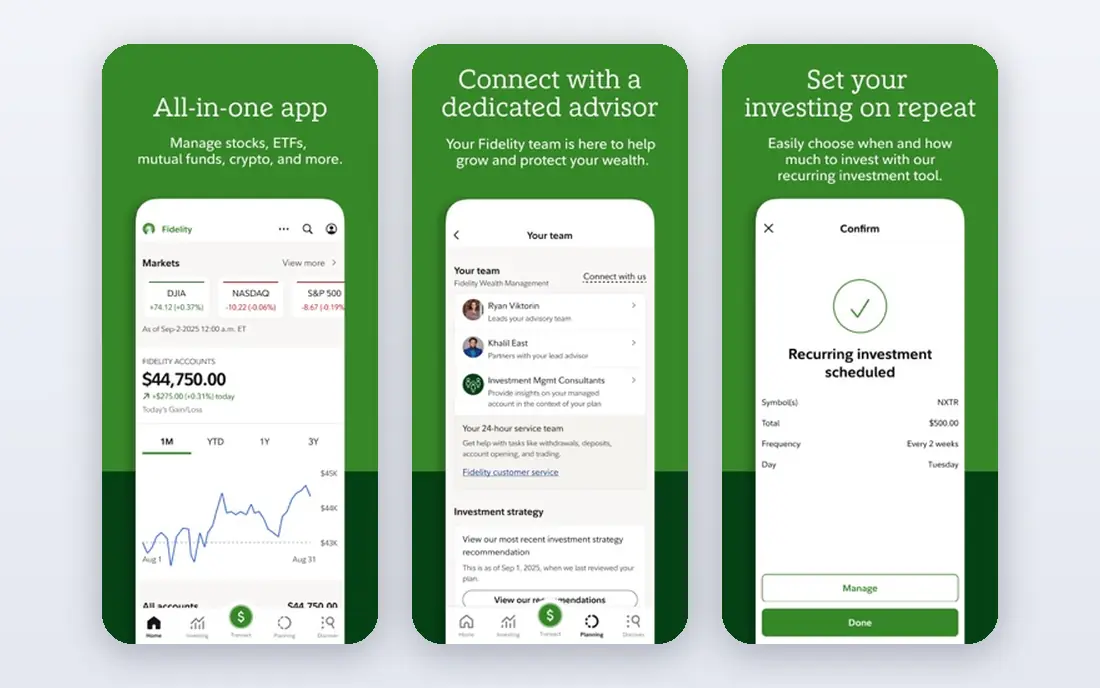
Fidelity is our pick for most people because it covers the basics well and grows with you. You can open a taxable account or an IRA, buy fractional shares from $1, and use research from Fidelity and third-party providers. Its zero-expense-ratio index funds are also a useful option for long-term investors who want low fund costs.
The main drawback is choice overload. Fidelity offers many account types, tools, and fund options, and a new investor may need time to find the simple path. Start with one account type, a broad index fund or a small list of stocks you understand, and use its learning content before adding options or margin. Customer support by phone, chat, and branch is a real help here.
- $0 commission on US stocks and ETFs
- Fractional shares from $1
- Broad research and retirement accounts
- The platform has many features, which can feel busy at first
- Some advanced tools take time to learn
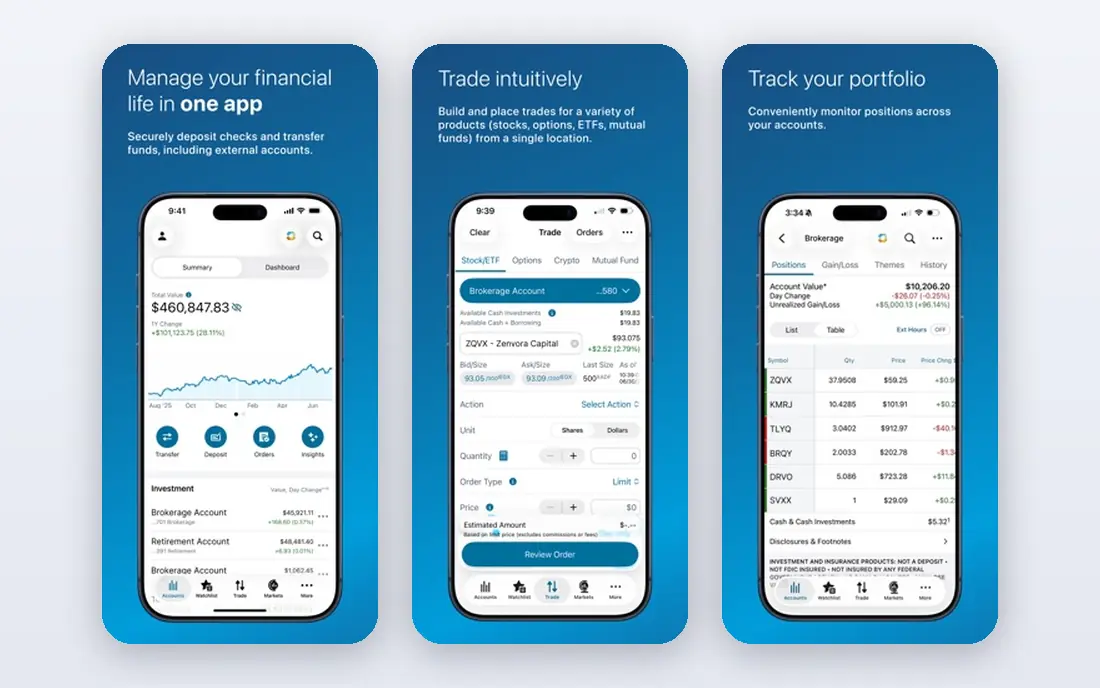
Charles Schwab suits investors who want strong research and a person to talk to. Its thinkorswim platform, gained from TD Ameritrade, gives active traders charts, screeners, and paper trading, while its branch network helps investors who prefer in-person help. Retirement accounts, banking, and education content sit in the same ecosystem.
Watch the cash sweep. Uninvested cash may earn little in a default sweep account, so check your cash options and move money to a higher-yield money market fund if that fits your plan. Schwab is still a strong all-round broker, but that one setting is worth checking in your first week.
- $0 commission on US stocks and ETFs
- Thinkorswim trading platform
- Branch network and strong support
- Default cash sweep interest can be low unless you choose another option
- Fractional shares cover S&P 500 stocks
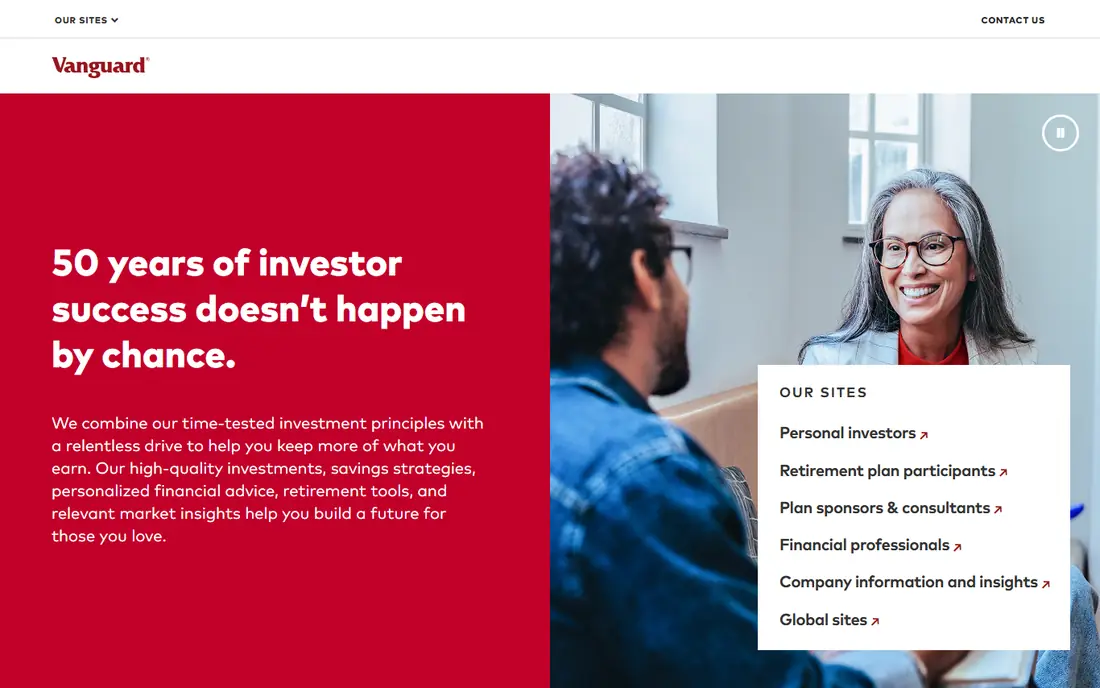
Vanguard is the broker for investors who mainly want low-cost index funds and plan to hold them for years. Its fund costs are among the lowest in the industry, and its ownership structure is built around fund investors rather than shareholders. If your plan is steady contributions to broad funds, Vanguard keeps costs and noise low.
The trade-off is the experience. Its app and website trail Fidelity and Schwab for usability, and active traders will miss some charting and screening depth. Vanguard is not the best pick for frequent stock picking. It is a strong pick for a retirement investor who values low fund fees over a polished trading app.
- $0 commission on US stocks and ETFs
- Very low-cost proprietary funds
- Strong fit for buy-and-hold investing
- App and website feel less modern than rivals
- Single-stock fractional trading is more limited
Robinhood remains the simplest way to start buying stocks on a phone. The app is clean, account opening is quick, and fractional shares from $1 let you start with small amounts. Its Gold subscription adds a higher cash yield and an IRA match, which can suit investors who max out retirement contributions.
The limits matter. Robinhood offers no mutual funds, its research is thinner, and its simple design can make frequent trading feel too easy. Set a plan before you open the app, use limit orders for less liquid stocks, and avoid margin unless you fully understand the interest cost and the risk of a margin call. Robinhood is good for learning, not a shortcut to returns.
- $0 commission on US stocks, ETFs, and options
- Fractional shares from $1
- Very simple mobile app
- No mutual funds
- Research is thinner than Fidelity or Schwab
- Gold subscription costs $5 per month
ETRADE, part of Morgan Stanley, suits investors who want education alongside trading tools. Its web and mobile platforms are clear, Power ETRADE adds deeper charting for active traders, and its webinars and paper trading help new investors practice without risking cash. Retirement accounts and a wide fund range round out the offer.
The catch is that you should confirm which tools and fees apply under current Morgan Stanley branding, because integrations change over time. E*TRADE is still a strong middle ground between a simple app and a professional platform. If you want to learn while you trade, its education library is a genuine advantage.
- $0 commission on US stocks and ETFs
- Power E*TRADE platform
- Strong education and paper trading
- Now part of Morgan Stanley, so some branding and tools have changed
- Mutual fund choices need checking
Webull suits active traders who want professional charts on a phone without paying stock commissions. Its app includes technical indicators, screeners, extended-hours trading, and paper trading, which lets you test a strategy with fake money first. Fractional shares from $1 also help small accounts diversify.
The risk is behavioral. A powerful mobile app makes it easy to trade often, and frequent trading can raise costs through spreads and taxes even when commissions are $0. Webull is best when you have a written plan, a watchlist, and a rule for how often you will trade. Use paper trading first if you are new to charting tools.
- $0 commission on US stocks, ETFs, and options
- Fractional shares from $1
- Strong mobile charts and paper trading
- No mutual funds
- Customer support is mainly digital
- Advanced features can tempt overtrading
Interactive Brokers is the broker for traders who outgrow simple apps. It offers access to many global markets and currencies, advanced order types, and margin rates that are often lower than rivals. IBKR Lite gives $0 US stock commissions for casual traders, while IBKR Pro suits professionals who want direct market access.
Beginners should be cautious. The main platform, Trader Workstation, is powerful but dense, and the choice between Lite and Pro affects fees. Start with Lite, learn one market at a time, and only move to Pro when you understand its commission schedule. For global and advanced traders, few rivals match this breadth.
- $0 commission on US stocks through IBKR Lite
- Access to many global markets
- Low margin rates
- Platform is complex for beginners
- Pro pricing uses a different commission model
- Support is less hand-holding
SoFi Invest suits a beginner who already uses SoFi for banking or loans and wants investing in the same app. You can buy stocks and ETFs, set up automated investing, and open an IRA without learning a separate platform. Its simple design lowers the barrier for a first account.
The limits are research depth and product range. SoFi is not the best pick for an investor who wants deep stock research, bonds, or advanced trading tools. It is a good first broker for a long-term investor who wants to automate contributions and check in rarely. Keep your plan simple and review fees on options and transfers before you trade.
- $0 commission on US stocks and ETFs
- Fractional shares from $5
- Banking, lending, and automated investing in one app
- Research is thinner than Fidelity or Schwab
- No bonds listed in some comparisons
- Support for investing is limited
Public suits investors who want stocks, bonds, and ETFs in a clean app without a complex trading platform. Its design is approachable, its fractional shares start at $5, and its bond and treasury options give savers more choice than a stock-only app. That range helps a beginner build a mixed portfolio in one place.
The trade-offs are support and research. Public lacks mutual funds and some of the deep research found at Fidelity or Schwab, and investors who want phone help should check current support options. Public is a good fit for a self-directed investor with a simple plan, not for someone who wants hand-holding or professional-grade screeners.
- $0 commission on US stocks and ETFs
- Stocks, bonds, ETFs, and crypto in one app
- Fractional shares from $5
- No mutual funds
- No phone support in some comparisons
- Research tools are lighter than large brokers
moomoo suits active traders who want detailed charts, level-two data, and screeners on mobile and desktop. Its $0 stock and ETF commissions match rivals, and its data tools are stronger than most simple apps. For a trader who studies price action and volume, moomoo offers a lot without a monthly platform fee.
The account limits are the catch. Some comparisons note no IRA or joint accounts, and no mutual funds or bonds, so moomoo may not suit a retirement-focused investor. Check current account types on its site before you open one. If you want a trading-focused app and already hold retirement accounts elsewhere, moomoo is a strong second broker.
- $0 commission on US stocks and ETFs
- Strong charting and data tools
- Fractional shares from $5
- No IRA or joint accounts in some comparisons
- No mutual funds or bonds listed
- Research is geared to active trading
How we picked these
We compared official broker fee schedules, account types, fractional share minimums, and platform features, and we favored brokers that are SIPC members and publish clear $0 stock commission terms. We did not claim hands-on testing, and we did not promise returns. Where a fee or account type differed across sources, we described the common pattern and urged readers to confirm the current schedule on the broker site.
How to choose a stock brokerage
Start with your goal. A retirement investor needs IRAs, low fund costs, and automatic contributions, while an active trader needs charts, order types, and low options fees. Check the full fee schedule, including options contracts, transfer-out fees, margin rates, and cash interest, because $0 stock trades do not mean $0 total cost.
Open one account first, fund it with an amount you can afford to lose, and use fractional shares to diversify. Use limit orders for thinly traded stocks, keep a record of trades for tax, and avoid margin and borrowed-money products until you understand the added risk. If you are unsure about taxes or retirement planning, talk to a qualified financial adviser before you invest.
Frequently asked questions
What is the best company for stocks for a beginner?
Fidelity is a strong default for most beginners, thanks to $0 stock commissions, fractional shares from $1, IRAs, and strong support. Charles Schwab is a close alternative, while Robinhood suits a beginner who wants the simplest mobile app. Choose the broker whose account types and research match your plan.
What is the best stock company overall?
There is no single best broker for every investor, because goals differ. Fidelity and Schwab lead for all-round investing, Vanguard leads for low-cost index funds, and Interactive Brokers leads for global and advanced trading. Compare fees, account types, and tools for your goal, not only advertising.
Do all these brokers charge $0 for stocks?
Most major US brokers listed here charge $0 commission on US stocks and ETFs, but options, margin, transfers, and regulatory fees can still apply. Read the current fee schedule on the broker site, and check cash interest and fund expense ratios, which affect long-run returns.
Are my investments protected if a broker fails?
If a broker is a SIPC member and fails, SIPC protects cash and securities up to $500,000, including a $250,000 limit for cash. SIPC does not protect you against a fall in the value of your investments. That market risk stays with you at every broker.
Is this financial advice?
No. This article is general information only, not financial advice, and it does not promise returns. Stock prices can fall, and you can lose money. Consider your goals and risk tolerance, and talk to a qualified adviser if you need personal advice.
Sources
See where you really rank - block by block
ProMapRanker scans Google Maps across a grid of your service area. Simple monthly plans from $19, white-label on every plan.
Start freeKeep reading
 zscaler alternatives
Best Zscaler Alternatives in 2026
Looking for zscaler alternatives? We compare 9 SASE and zero trust platforms on architecture, data protection, pricing, and fit for your network and team.
Read → zapier alternatives free
Best Zapier Alternatives Free in 2026
Nine automation tools for zapier alternatives free in 2026, all with genuinely free tiers, plus free plan limits, starting prices and upgrade paths explained.
Read → which platform is best for online reputation
Which Platform Is Best for Online Reputation in 2026
Wondering which platform is best for online reputation? We compare 8 review, listing, and response tools for small and multi-location businesses and agencies.
Read →