 ProMapRanker
Best Staffing Software in 2026


Large and growing agencies · Pricing starts at: $99 per user per month
Key takeaways
- Bullhorn is the most complete choice for agencies that need ATS, CRM, and back-office work in one system, but its full CRM sits on higher tiers.
- Manatal and Zoho Recruit give small agencies the lowest published starting prices on this list, at $15 and $25 per user per month.
- Vincere, Avionte, and TempWorks suit agencies where pay, billing, timesheets, or compliance matter as much as candidate tracking.
- Most vendors in this category quote larger plans, so ask for renewal terms, seat rules, and migration help before signing.
Quick comparison
| Pick | Great for | Pricing starts at | Free tier | |
|---|---|---|---|---|
| Bullhorn | Large and growing agencies | $99 per user per month | No | Visit |
 Vincere | Agencies needing CRM, ATS, and pay and bill | See website | No | Visit |
 Zoho Recruit | Small agencies in the Zoho ecosystem | $25 per user per month | Yes | Visit |
 Manatal | Budget-conscious small agencies | $15 per user per month | Free trial | Visit |
 Recruit CRM | Small and mid-sized agencies | See website | Free trial | Visit |
 Loxo | Agencies that want sourcing built in | $149 per user per month | Free trial | Visit |
 Crelate | Relationship-driven search firms | See website | Free trial | Visit |
 JobAdder | Cloud-first growing teams | See website | Free trial | Visit |
 Avionte | High-volume staffing with back-office needs | See website | No | Visit |
 TempWorks | Temporary staffing operations | See website | No | Visit |
The best staffing software
These tools help staffing and recruitment agencies track candidates and clients, manage placements, and keep follow-up from slipping. We compared published pricing, feature pages, and app listings, and we left out general HR tools that do not serve agency workflows.
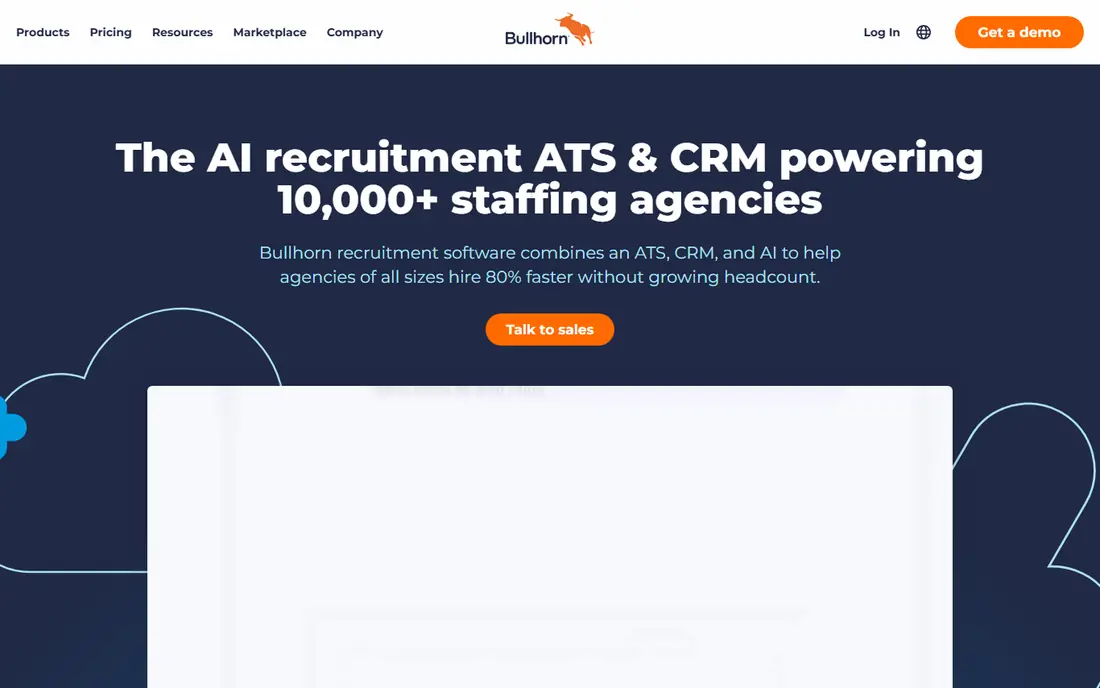
Bullhorn is the reference point most agencies compare against, and for good reason. Its small-agency plans start with applicant tracking, resume parsing, client management, and job posting, while Core adds the app marketplace, custom workflows, and LinkedIn integration. That tiered path lets a small team start narrow and grow without changing systems.
The catch is cost and complexity. The published Starter price is $99 per user per month and Core is $165 per user per month, and the full recruitment CRM sits higher. We would pick Bullhorn when placement volume, vendor management work, or back-office depth justifies a dedicated administrator, and we would look elsewhere for a very small desk that needs a simple tool.
- Deep staffing features
- Large integration marketplace
- ATS, CRM, and back-office options in one family
- Full CRM is on higher tiers
- Can be complex to administer
- Price rises fast with add-ons
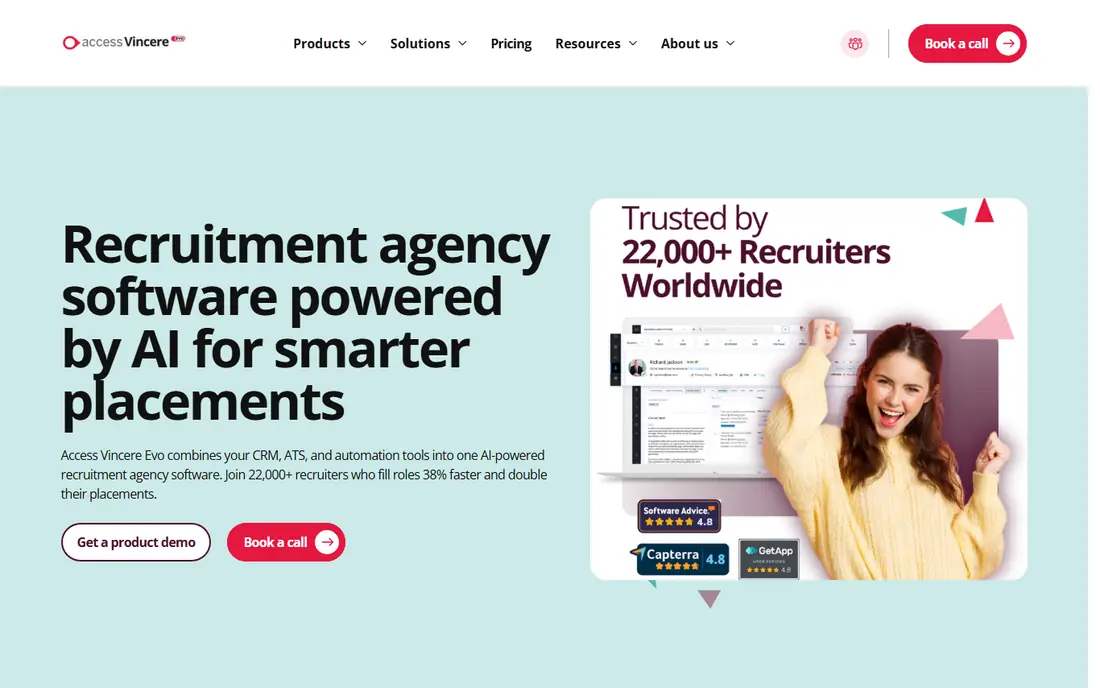
Vincere, now part of Access Group, is built around the full agency cycle rather than hiring alone. It connects candidate tracking with business development, compliance, automation, and pay-and-bill work, which matters for contract and temporary staffing. Leaders get reporting that follows a placement from first contact through payment.
That breadth is also its trade-off. Vincere is best for agencies that will actually use the back-office side, not for a solo recruiter who only needs a pipeline. Ask for a clear quote, a demo with your own placement types, and a migration plan before committing.
- Agency-focused CRM and ATS
- Compliance and pay-and-bill workflows
- Reporting built for agency leaders
- Pricing is quote-based in many regions
- Implementation takes planning
- Smaller teams may not need the back-office depth
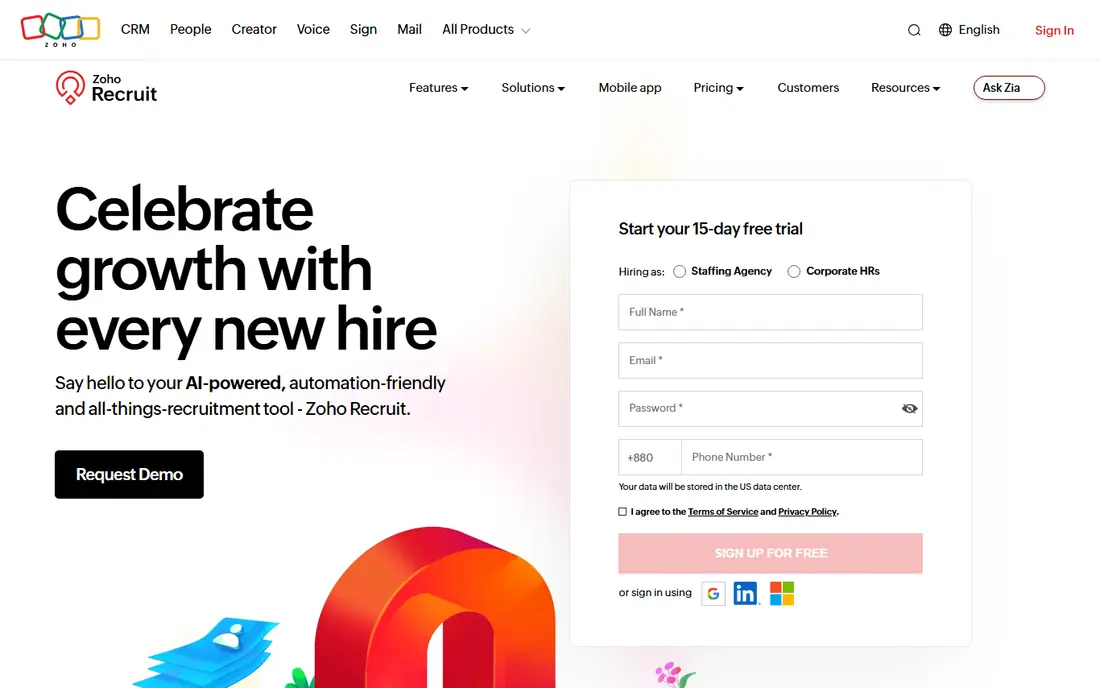
Zoho Recruit is the practical pick when budget matters more than agency-specific back-office depth. It covers job posting, candidate tracking, automation, and client communication, and it fits naturally when a team already uses Zoho Mail, Zoho CRM, or Zoho Books. The free plan lets a tiny agency test the basics before paying.
The limit shows up at scale. Zoho Recruit is a strong general ATS with agency features, not a full staffing back-office system. We would shortlist it for small permanent-placement desks and for teams that value published pricing over a sales-led quote.
- Low published starting price
- Free plan available
- Automation and client portals
- Wide Zoho integrations
- Agency-specific depth is thinner than Bullhorn or Vincere
- Advanced features sit on higher tiers
- Support quality can vary by plan
Manatal stands out on price alone, starting at $15 per user per month when billed annually. It adds AI matching, candidate enrichment, and customizable pipelines, which gives a small agency more than a basic spreadsheet or a generic CRM. Setup is also faster than the enterprise options on this list.
Manatal is not a replacement for Bullhorn or Avionte when timesheets, pay, and billing drive the business. It is best for permanent and contract desks that need strong sourcing and pipeline tracking at a low monthly cost, with a trial to check whether its matching fits your roles.
- Low starting price
- AI candidate matching
- Social enrichment
- Clean cloud interface
- Back-office and payroll features are limited
- Larger agencies may outgrow it
- Some advanced features need higher tiers
Recruit CRM is made for agencies that want candidate and client work in one place without enterprise complexity. Recruiters can source from LinkedIn with its extension, move candidates through visual pipelines, and track client activity in the same record. That combination suits small and mid-sized teams well.
We would not pick it as a payroll or timesheet system, because that is not its job. Pair it with separate back-office tools when needed, and use the trial to test how well its sourcing and email features fit your daily workflow.
- Combined ATS and CRM
- Chrome extension for sourcing
- Simple drag-and-drop pipelines
- Published pricing on its site
- Back-office depth is limited
- Pricing varies by billing term
- Very large agencies may need more control
Loxo tries to remove a common agency cost: separate sourcing software. It combines an ATS and CRM with candidate sourcing, multi-channel outreach, and AI matching, so recruiters can find and contact candidates without switching tools. That matters for perm and executive search desks that live on outreach.
The price reflects that breadth, starting at $149 per user per month when billed annually in published comparisons. Before buying, add up what you would cancel elsewhere, and check whether its sourcing database covers your industries and regions.
- Built-in sourcing and outreach
- Combined ATS and CRM
- AI tools for matching and engagement
- Higher starting price
- May duplicate tools you already pay for
- Smaller desks may find it more than they need
Crelate suits recruiters who win work through relationships rather than high-volume job board traffic. It tracks candidates and clients together, keeps hiring history visible, and supports a sales pipeline for business development. Boutique and executive search firms often value that balance more than raw automation.
Crelate is less convincing for high-volume temporary staffing, where timesheets and payroll dominate. Use the trial to test its search, email integration, and reporting, and confirm the full price for your seat count before deciding.
- Strong talent relationship tracking
- Sales pipeline CRM
- Flexible configuration
- Good fit for boutique firms
- Pricing is not always clear at a glance
- Back-office features are limited
- Reporting depth varies by plan
JobAdder is a cloud-first option for agencies that want recruiters working from anywhere. It combines candidate tracking with client management, job board posting, and mobile access, which helps teams that recruit on the move or across offices. Its integration options also help it sit beside payroll and accounting tools.
The main drawback is pricing transparency, since plans are quoted rather than published in a single simple table. That makes a direct comparison harder, so request a written quote that covers seats, add-ons, and renewal terms.
- Cloud ATS and CRM
- Mobile access
- Job board distribution
- Broad integration options
- Pricing is quote-based
- Back-office depth is limited
- Some features need third-party tools
Avionte is for agencies where the hard work starts after the placement. It pairs applicant tracking with onboarding, payroll, compliance, and back-office tools, which suits high-volume contract and temporary staffing. When timesheets and pay rules matter, that depth is a real advantage over a pipeline-only tool.
Avionte is not a light first system. Expect a sales process, implementation work, and a price that depends on volume and modules. It earns its place here for larger operations, not for a two-person perm desk.
- ATS plus onboarding, payroll, and compliance
- Built for high-volume staffing
- Strong back-office depth
- Quote-based pricing
- Implementation can be heavy
- Smaller agencies may find it too much system
TempWorks focuses on the daily reality of temporary staffing: filling shifts, tracking time, paying workers, and billing clients. Its scheduling, timesheet, payroll support, and invoicing features are designed for that cycle, rather than added as an afterthought. Agencies with large temp pools will feel the difference quickly.
TempWorks is a poor fit for a firm that only does permanent executive search. It also requires a quoted price and careful setup, so demo it with your actual shift, pay, and billing patterns before committing.
- Built for temporary staffing
- Scheduling, timesheets, payroll support, and invoicing
- Staffing-specific workflows
- Quote-based pricing
- Less suited to pure executive search
- Setup needs care for complex pay rules
How we picked these
We compared official feature pages, published pricing, and public comparisons for agency-focused tools, and we kept only products that serve staffing and recruitment agencies rather than general employers. We favored tools with a clear ATS and CRM combination, agency workflows, and current availability in October 2026. Where pricing was quote-based, we wrote See website instead of repeating a review-site figure as fact.
What to check before you buy staffing software
Start with your placement mix. Permanent desks need sourcing, pipelines, and client tracking. Contract and temporary desks need timesheets, compliance, onboarding, and pay and bill tools, and a pipeline-only product will leave gaps. Write down the three workflows your team repeats every week, then test each shortlisted tool against those workflows in a trial.
Next, price the whole system, not just the seat. Add sourcing tools, job boards, payroll, and any integration work that a cheaper tool forces you to keep. Ask how seats are counted, what happens when a recruiter leaves, and how you can export candidates, clients, notes, and placement history if you leave. A clean export matters more than a discount in year one.
Finally, plan the migration. Import a sample of messy, real records, not a clean test file, and check duplicate handling, resume parsing, and email sync. Confirm who owns implementation, how long training takes, and what support is included after launch. The best tool here is the one your recruiters actually use every day.
Frequently asked questions
What is the best staffing software for agencies?
There is no single winner, because placement type decides the fit. Bullhorn and Avionte suit larger or high-volume operations, while Manatal, Zoho Recruit, and Recruit CRM suit smaller desks. Pick by placement mix, back-office needs, and total cost, not by brand alone.
What is the best recruitment software for agencies on a budget?
Manatal, starting at $15 per user per month, and Zoho Recruit, starting at $25 per user per month, are the lowest published starting prices on this list. Both offer trials or a free plan, so test candidate matching and pipelines before paying. Add any sourcing or payroll tools you still need to the total.
What is the difference between staffing software and a general ATS?
Staffing software serves agencies that place candidates with clients, so it tracks clients, fees, placements, and business development alongside candidates. A general ATS usually serves one employer hiring its own staff. That agency focus is why tools like Bullhorn, Vincere, and Avionte include CRM and back-office features.
Is Bullhorn worth it for a small agency?
Bullhorn can be worth it when a small agency expects fast growth or complex contract work, because its tiered plans let a team grow without migrating. For a very small perm desk, Manatal or Zoho Recruit may deliver enough at a lower cost. Compare the full price, including seats and add-ons, before deciding.
Can I migrate my candidate database to new staffing software?
Most vendors offer migration help, but the quality varies, so test it early. Import a sample of real records, check for duplicates and lost notes, and confirm that you can export full records later. Ask for the migration scope in writing, including who cleans the data and what happens to documents and history.
Sources
See where you really rank - block by block
ProMapRanker scans Google Maps across a grid of your service area. Simple monthly plans from $19, white-label on every plan.
Start freeKeep reading
 zoho inventory alternatives
6 Alternatives to Zoho Inventory, Compared on Price and Fit
Zoho Inventory alternatives: 6 tools compared on price, free plans and fit. Katana leads the list for manufacturers. Fit and flaws are laid out for each entry.
Read → zoho crm alternatives
Best Zoho CRM Alternatives (2026)
Need Zoho CRM alternatives? We compare 7 tools on cost, free access and who each suits. Every pick gets a straight assessment. Built for quick decisions.
Read → zelle alternatives
Best Zelle Alternatives in 2026
Compare the best Zelle alternatives for sending money to friends, paying sellers and moving funds abroad, with honest notes on fees, speed and safety in 2026.
Read →