 ProMapRanker
Best Sports Analytics Tools for Player Data in 2026

Key takeaways
- Player data splits into physical tracking, video and tactical analysis, and scouting data, and most teams need more than one type.
- Catapult and STATSports lead on wearable GPS workload data, while Hudl and Second Spectrum lead on video-linked analysis.
- Most pro-level tools are priced by quote, so budget for hardware, onboarding, and staff time, not just the software fee.
- Small teams get more value from one tool they use every week than from a full pro stack they rarely open.
Quick comparison
| Pick | Great for | Pricing starts at | Free tier | |
|---|---|---|---|---|
 Catapult | Wearable GPS workload tracking | See website | No | Visit |
 Hudl | Video analysis linked to stats | See website | No | Visit |
 Stats Perform | Pro match and scouting data | See website | No | Visit |
 STATSports | Sprint and conditioning metrics | See website | No | Visit |
 KINEXON | Real-time indoor and outdoor tracking | See website | No | Visit |
 SkillCorner | Computer vision tracking for soccer | See website | No | Visit |
 Second Spectrum | Optical tracking and tactical insight | See website | No | Visit |
 Sportlogiq | Detailed game analytics with video | See website | No | Visit |
The best sports analytics tools for player data
We compared physical tracking, video analysis, and scouting platforms to find tools that turn raw player data into coaching decisions.
Catapult is the default name in wearable athlete monitoring, and for good reason. Players wear a small GPS unit, and coaches get speed, distance, accelerations, and workload trends that help shape training loads and return-to-play plans. The value shows up over weeks, as staff spot fatigue patterns before they become injuries.
The trade-off is scope and cost. Catapult fits clubs with performance staff who will review the data daily. A small team without an analyst may collect more numbers than it can act on, so start with a clear question, such as managing sprint load across a busy fixture stretch.
- Deep workload and sprint metrics
- Used across pro teams
- Pairs tracking data with video and wellness inputs
- Enterprise pricing and hardware costs
- Setup and staff training take real time
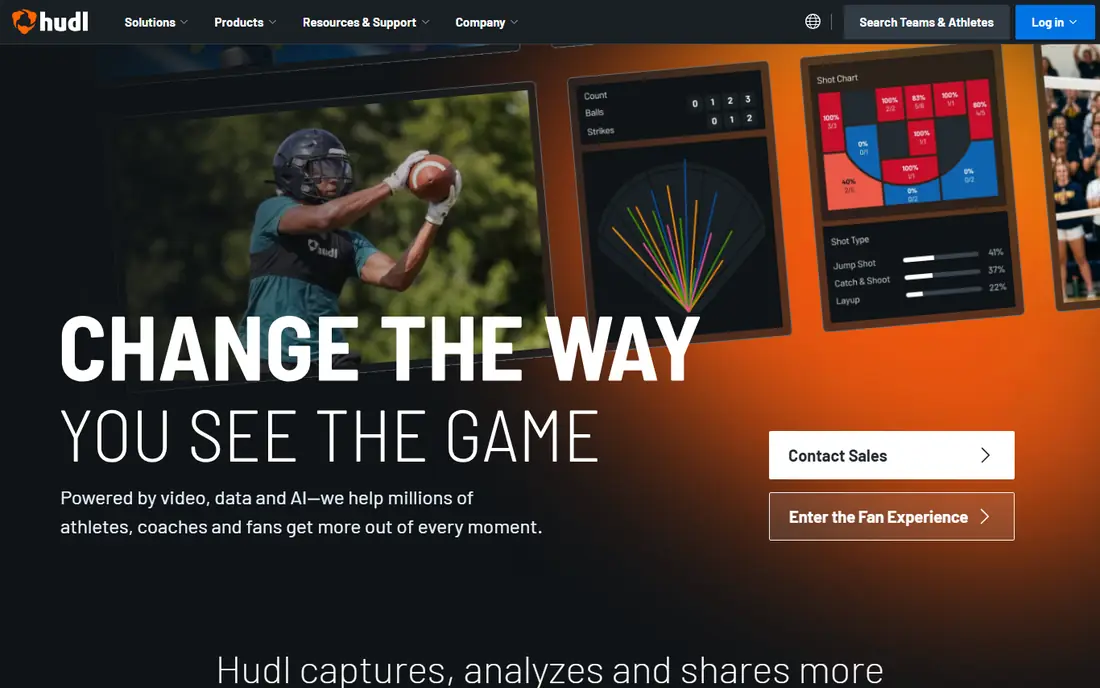
Hudl starts from the video, which is how most coaches actually teach. Staff tag plays, link clips to stats, and share playlists so players can watch their own moments before the next session. That direct link between a number and a clip makes feedback easier to accept and act on.
Hudl also connects with tracking and fitness data on some setups, so a sprint number can sit next to the play that produced it. The catch is consistency. If tagging is rushed or uneven, the reports that follow will be uneven too, so agree on a simple code window before the season starts.
- Video tagging tied to stats
- Playlists for meetings and player review
- Broad sport coverage
- Quality depends on tagging discipline
- Higher tiers add up for large squads
Stats Perform, through Opta data, is built for match analysis and scouting at scale. Teams and analysts can compare players across leagues, study event patterns, and build recruitment shortlists from consistent definitions. For a scouting department, that consistency across competitions matters more than any single flashy chart.
This is not a training-load tool, and it is not priced for a youth club. Its strength is the depth of the match record and the models built on it. Pair it with a wearable system if you need both match output and daily physical load in one workflow.
- Deep Opta event data
- AI models and predictions
- Wide league coverage
- Priced for pro and media buyers
- Less useful as a day-to-day training tool
STATSports focuses on the physical side of the game with wearable trackers that measure speed, distance, and high-intensity efforts. Conditioning coaches use the data to set individual targets and to judge when a player is ready for full training after injury. The benchmarks give return-to-play decisions a paper trail instead of a guess.
Like Catapult, it rewards teams that review data often. The hardware needs charging, fitting, and care, and the reports need someone who can translate them into session plans. For a team that trains hard and plays often, that discipline pays off in fewer soft-tissue setbacks.
- Strong sprint and high-speed running data
- Clear return-to-play benchmarks
- Proven with pro clubs
- Hardware and subscription costs
- Best with dedicated performance staff
KINEXON stands out where GPS struggles, namely indoors. Its sensor system tracks player position in real time, so coaches in basketball, handball, and similar sports get movement data that a satellite device cannot deliver inside a hall. Live dashboards let staff adjust a drill while it is still running.
The system still needs venue setup and calibration, so plan for that before a busy week. Once it is running, the combination of live position data and post-session reports gives coaches a fuller picture of spacing, effort, and load than video alone.
- Live positional data indoors and outdoors
- Useful for basketball and handball
- Fast feedback during sessions
- Sensor setup varies by venue
- Enterprise pricing
SkillCorner uses computer vision to track players from video, which removes the need to fit every player with a device. Analysts get positional data, off-ball runs, and pressing patterns that event data alone misses. For a soccer club, that off-ball picture is often where the coaching value sits.
The limit is clear. It covers soccer, and it depends on usable match video. A club that wants physical load data for training still needs a wearable system beside it. Used for tactical review and recruitment, though, it is one of the most practical ways to add tracking without new hardware.
- Tracking from broadcast video without wearables
- Detailed off-ball data
- Strong tactical use
- Soccer only
- Depends on video quality and availability
Second Spectrum uses optical tracking to capture player and ball movement, then turns that stream into tactical insight and broadcast-ready visuals. Coaches can study spacing, defensive shape, and shot creation with a level of detail that manual tagging cannot match. Media teams also use the same data for on-screen graphics.
This is a top-tier system with top-tier requirements. It fits pro clubs and leagues with analyst teams and the budget to support it. Smaller clubs should treat it as a benchmark for what tracking can do, and pick a simpler tool that fits their staff.
- Rich spatial tracking
- Strong basketball and soccer coverage
- Links tracking to video
- Enterprise only
- Heavy infrastructure and integration work
Sportlogiq combines event data with video to give analysts a deep game record. Coaches can move from a team trend to the exact clips behind it, which keeps meetings focused on evidence rather than memory. The metric depth suits analysts who build reports for coaching staff and recruitment teams.
New users should expect a learning period. The platform rewards analysts who learn its definitions and filters, and it works best when the coaching staff asks for specific answers each week. Without that routine, the depth can sit unused.
- Hundreds of game metrics
- Video linked to events
- Useful for hockey and soccer analysis
- Enterprise pricing
- Learning curve for new analysts
How we picked these
We compared official product pages, pricing pages, and public reviews, and we favored tools with a clear player-data focus, current availability in October 2026, and a track record with real teams. We left out general fitness apps and tools that only track scores, since the topic here is player-level analysis. Prices for pro tools are often quoted, so we wrote See website where a public starting price could not be verified.
What to check before you buy
Start with the decision you need to make each week. A team managing injuries needs workload data, while a team fixing defensive shape needs positional tracking and video. Buying the wrong type of data first is the most common waste in this market.
Next, count the full cost. Hardware, tags or sensors, onboarding, and analyst time all sit on top of the software fee. Ask vendors about data export, privacy handling for athlete data, and what happens to your history if you cancel. A short trial on real sessions, with your own staff doing the review, tells you more than any demo. During that trial, agree on who owns the weekly review and which single report the coaching staff will read, since a tool without a named reader rarely survives past the first month.
Frequently asked questions
What is the best sports analytics tool for player data?
There is no single winner. Catapult and STATSports lead on physical tracking, Hudl leads on video-linked coaching, and Stats Perform leads on match and scouting data. Pick based on the decision you make most often.
Do small teams need GPS tracking?
Not always. Video analysis with Hudl or a similar tool often helps a small team more, since coaching feedback is direct and cheap to act on. Add wearables when training load and injuries become the main problem.
How much do these tools cost?
Most pro tools are priced by quote, and hardware adds to the bill. Expect enterprise pricing for Catapult, Stats Perform, Second Spectrum, and Sportlogiq, and ask for a full quote that includes hardware, seats, and support.
Can one tool cover video, GPS, and scouting?
No single tool covers all three well. Most pro clubs combine a wearable system, a video platform, and a match data source. Start with one, prove the weekly routine, then add the next layer.
Is player tracking data private?
Athlete data can include health-related measures, so treat it as sensitive. Check the vendor privacy policy, limit who can view individual data, and follow your league and local rules on athlete consent and data storage.
Sources
See where you really rank - block by block
ProMapRanker scans Google Maps across a grid of your service area. Simple monthly plans from $19, white-label on every plan.
Start freeKeep reading
 zscaler alternatives
Best Zscaler Alternatives in 2026
Looking for zscaler alternatives? We compare 9 SASE and zero trust platforms on architecture, data protection, pricing, and fit for your network and team.
Read → zapier alternatives free
Best Zapier Alternatives Free in 2026
Nine automation tools for zapier alternatives free in 2026, all with genuinely free tiers, plus free plan limits, starting prices and upgrade paths explained.
Read → which platform is best for online reputation
Which Platform Is Best for Online Reputation in 2026
Wondering which platform is best for online reputation? We compare 8 review, listing, and response tools for small and multi-location businesses and agencies.
Read →