 ProMapRanker
Best Spice Company in 2026

Key takeaways
- Burlap and Barrel and Diaspora Co. suit cooks who want single-origin spices with farm details and strong freshness.
- The Spice House and Penzeys suit cooks who want a wide range, clear packaging choices and reliable staples.
- McCormick suits everyday cooking and supermarket availability, while Spicewalla and Savory Spice Shop suit blends and gift sets.
- Buy small amounts, store spices away from heat and light, and replace ground spices that smell flat, even if the jar is not empty.
- Price per jar varies with size and origin, so compare weight and pack type, not just the headline price.
Quick comparison
| Pick | Great for | Pricing starts at | Free tier | |
|---|---|---|---|---|
 McCormick | Everyday supermarket spices | See website | No | Visit |
 Burlap & Barrel | Single-origin spices | See website | No | Visit |
 The Spice House | Wide range and packaging | See website | No | Visit |
 Penzeys Spices | Gourmet staples and blends | See website | No | Visit |
 Diaspora Co. | South Asian single-origin spices | See website | No | Visit |
 Spicewalla | Blends and chef-inspired sets | See website | No | Visit |
 Savory Spice Shop | Blends and in-store range | See website | No | Visit |
 Frontier Co-op | Organic bulk and pantry staples | See website | No | Visit |
The best spice companies
We compared spice companies on sourcing transparency, range, packaging, freshness practices, online ordering and price transparency. A company that excels at single-origin turmeric is not always the best choice for a basic pantry restock, so we note the best fit for each one. Prices below are starting points from vendor pages and recent guides, and they vary by size and variety.
McCormick is the default spice company for most US home cooks, because its jars are available in almost every supermarket. Its range covers basic staples, gourmet lines and organic options, and its flavor is consistent from jar to jar. For everyday cooking, that reliability matters more than farm-level detail, and it makes restocking simple.
The trade is freshness and transparency. Supermarket spices can sit on shelves for months, and McCormick does not offer the single-farm sourcing stories that Burlap and Barrel or Diaspora Co. provide. Buy small jars, check for a strong aroma when you open them, and replace ground spices that smell flat. McCormick suits a pantry that needs reliable staples, not a specialist search.
- Widely available in US supermarkets
- Consistent flavor for everyday cooking
- Large range including gourmet and organic lines
- Less sourcing transparency than single-origin specialists
- Supermarket stock can be older than direct-order spices
Burlap and Barrel sells single-origin spices, meaning each spice comes from one farm or collective, rather than a blend of many sources. Its roster includes farms in countries such as Turkey, India, Spain, Tanzania and Vietnam, and its partners are paid through direct relationships. Editors at The Kitchn have highlighted items such as Royal Cinnamon at $10 and Ground Black Lime at $10, plus blends such as Spicy Salty Sour Sprinkle at $12.
Prices are higher than supermarket jars, and popular items can sell out, but the payoff is aroma and potency that many cooks notice immediately. The range is curated, so you may still need a supermarket or Spice House order for basic staples. Start with one or two spices you use often, such as cinnamon or cumin, and compare them with your current jar before you replace a whole pantry.
- Single-origin sourcing from partner farms
- Strong freshness reputation
- Distinctive items such as Black Urfa chili and Royal Cinnamon
- Higher prices than supermarket spices
- Some items sell out
- Range is curated rather than exhaustive
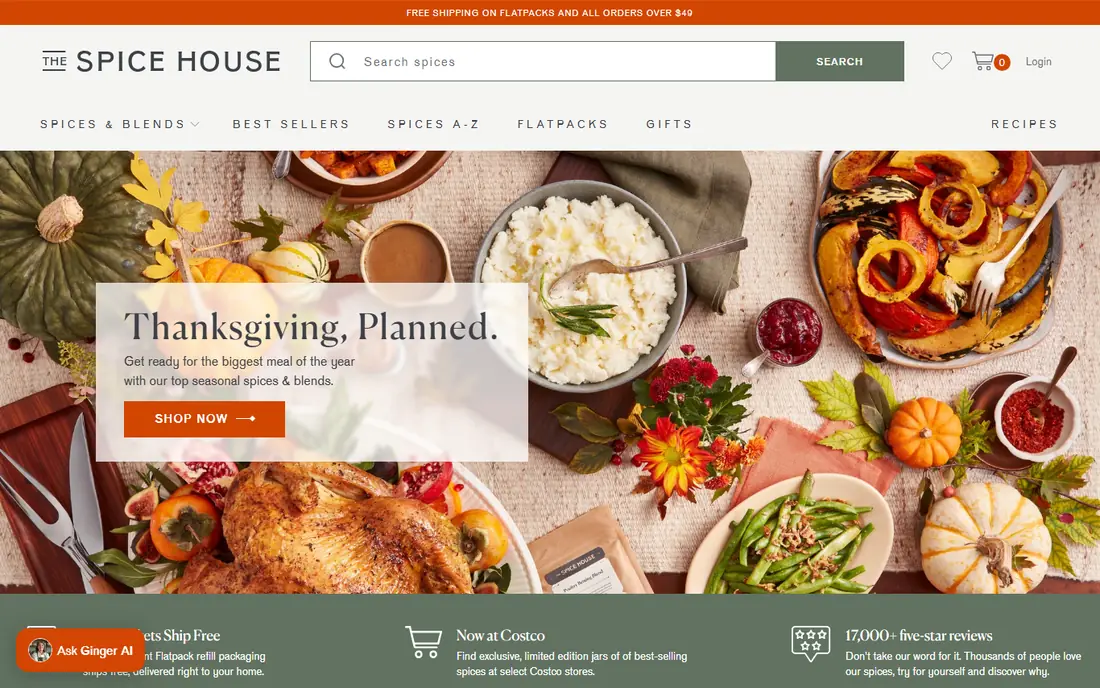
The Spice House, based in Chicago, offers one of the widest online spice ranges, with packets from $7.99, jars from $7.49 to $13.99 depending on variety, and flatpacks slightly cheaper in many listings. Its Best of Spice House collection includes 24 jars at $175 or 24 flatpacks at $165, which suits gifts or a full pantry refresh. Packet, jar, flatpack and bulk bag options let you choose storage style and size.
The range can be overwhelming, and prices vary by pack type, so compare weight as well as price. Flatpacks save shelf space and cost slightly less than jars in many cases, while bags suit frequent users. The Spice House suits cooks who want one supplier for staples, blends and less common spices, with packaging that fits their kitchen.
- Very wide range
- Packet, jar, flatpack and bag options
- Gift sets including a 24-jar set
- Price varies by pack type
- Large range can be overwhelming for new cooks
- Shipping adds to small orders
Penzeys Spices is a long-running specialist known for high-quality herbs, spices and blends, with a loyal following among home cooks and bakers. Its range covers single spices, baking spices and signature blends, and its packaging suits gifts as well as pantry use. For cooks who want a step up from supermarket jars without going fully single-origin, Penzeys is a natural middle ground.
Prices are higher than McCormick, and physical stores are not available in every city, so many buyers order online. Shipping on a small order can make a single jar costly, so it helps to order several items at once or combine a restock with a gift set. Penzeys suits cooks who value consistent gourmet quality across a broad range.
- Strong reputation for quality
- Wide range of herbs, spices and blends
- Attractive packaging for gifts
- Prices higher than supermarket brands
- Store availability varies by city
- Online shipping adds to small orders
Diaspora Co. focuses on single-origin spices from South Asia, sourced yearly from farm partners using practices it describes as beyond organic. Its site notes that its spices are potent and fresh, with a conservative two-year guideline compared with grocery store spices that may be years old on purchase. Curry powder is listed at $13 in recent product data, which reflects the small-batch, single-origin model.
The range is focused, so Diaspora Co. will not replace a full pantry supplier for every cuisine. Some items sell out between harvests, which requires planning if you cook South Asian dishes often. For turmeric, chili, cardamom and other South Asian staples, it offers a freshness and flavor step that many cooks find worth the price.
- Single-origin South Asian spices
- Yearly sourcing for freshness
- Detailed farm and flavor notes
- Focused range, not a full pantry supplier
- Some items sell out
- Prices higher than supermarket spices
Spicewalla offers dried spices and blends inspired by international cuisines, with a strong following among professional chefs and home cooks. Recent listings put single spices such as ground ginger, herbs de Provence and rubbed sage at $6, with blends such as zaatar at about $11. That pricing makes it easy to try a new cuisine without committing to a large jar.
The focus on blends means it is less suited to cooks who want single-farm sourcing details for every spice. Jar sizes are modest for some items, so frequent users may need to reorder often. Spicewalla suits cooks who want flavorful blends, gift sets and an easy way to explore world flavors, alongside a staple supplier for basics.
- Creative blends inspired by world cuisines
- Single spices from about $6 in recent listings
- Gift sets and chef collaborations
- Blend focus means fewer single-origin stories
- Small jars for some items
- Availability varies by retailer
Savory Spice Shop offers a wide range of blends, including Indian spices, world flavors and barbecue rubs, with product listings from about $6.50 to $13.95 for many items. Its collections cover garam masala, chai spice, curry powders and international blends, which helps cooks who want to recreate regional dishes at home. In-store locations, where available, allow tasting and advice that online-only shops cannot offer.
Online buyers should compare weight and blend type, because prices vary across the range. Shipping on a small order can also add cost, so a combined order works better. Savory Spice Shop suits cooks who want a broad blend library and enjoy exploring world cuisines, rather than a narrow single-origin specialist.
- Wide blend and world flavor range
- In-store tasting in some locations
- Indian, world and BBQ collections
- Prices vary by blend, often $6.50 to $13.95 in listings
- Online shipping adds to small orders
- Range can overlap
Frontier Co-op offers organic herbs, spices and pantry staples through natural food retailers and online, with bulk options for frequent users. Its organic turmeric powder was highlighted as a pick in a recent guide, and its range covers everyday staples as well as less common items. For cooks who want organic certification and bulk buying, Frontier Co-op is a practical choice.
Bulk buying needs care. A large bag that sits unused for a year will lose aroma, which defeats the purpose of buying better spices. Buy bulk only for spices you use weekly, and store them in small jars for daily use with the rest sealed away from heat and light. Frontier Co-op suits pantry staples and organic buyers who cook often.
- Organic options
- Bulk and pantry sizes
- Widely available through natural food retailers
- Turmeric and other staples highlighted in guides
- Less single-origin storytelling than specialists
- Bulk sizes can go stale if unused
- Retailer availability varies
How we picked these
We compared official vendor pages, product listings and independent guides on sourcing, range, packaging and price transparency. We used vendor and guide prices where available, and See website where price varies by size and variety. We did not claim hands-on taste testing, and we note where a price comes from a product listing for a specific size rather than a company-wide starting price.
How to buy spices that stay fresh
Buy small and buy often. Ground spices lose aroma faster than whole spices, so a small jar you finish in three to six months will taste better than a large jar that sits for two years. Whole peppercorns, cinnamon sticks, cardamom pods and cumin seeds last longer, because you grind or crush them when needed. If a ground spice smells faint when you open the jar, replace it, even if the date has not passed.
Store spices away from heat, light and moisture. A drawer or cabinet away from the stove is better than a rack above the cooker, and glass or metal tins are better than plastic that can absorb aromas. Keep spices out of the fridge, except for long-term freezer storage if you will be away for months. Label jars with the purchase date, so you can judge freshness honestly.
Finally, match the supplier to the dish. Use single-origin spices from Burlap and Barrel or Diaspora Co. when a spice is the star of a dish, such as cinnamon in baking or turmeric in a curry. Use McCormick, Frontier Co-op or The Spice House for everyday staples, and use Spicewalla or Savory Spice Shop for blends when you want a balanced flavor without mixing many jars. That mix gives you freshness where it matters and value where it does not.
Frequently asked questions
What is the best spice company?
The best company depends on what you cook. Burlap and Barrel and Diaspora Co. suit single-origin freshness, The Spice House and Penzeys suit a wide range, and McCormick suits everyday supermarket cooking. Many cooks use two suppliers: one for star spices and one for staples.
What are the best online spice companies?
Burlap and Barrel, The Spice House, Penzeys, Diaspora Co., Spicewalla and Savory Spice Shop all sell online in the US, with different strengths. Compare shipping costs, jar sizes and whether the spice you want is in stock before you order, because popular single-origin items can sell out.
How long do spices last?
Whole spices can last one to two years or more when stored well, while ground spices are best within six months to a year after opening. Diaspora Co. gives a conservative two-year guideline for its potent, fresh spices. If a spice smells flat, replace it regardless of the date.
Are expensive spices worth it?
They can be, when the spice is central to a dish and the cheaper version tastes flat or stale. Single-origin cinnamon, turmeric or chili often shows a clear difference in aroma. For a spice used in tiny amounts in a complex dish, a reliable supermarket brand is usually enough.
Should I buy whole or ground spices?
Whole spices last longer and taste fresher when ground at home, especially pepper, cumin and cardamom. Ground spices are more convenient for baking and quick cooking. A mix works well: whole for spices you use often, ground for baking spices and blends you use in small amounts.
How should I store spices?
Store spices in a cool, dark, dry place away from the stove, in sealed glass or metal containers. Avoid moisture and direct light, and do not store them above the cooker where heat will sap aroma. Label jars with purchase dates and replace ground spices that smell flat.
Sources
See where you really rank - block by block
ProMapRanker scans Google Maps across a grid of your service area. Simple monthly plans from $19, white-label on every plan.
Start freeKeep reading
 zscaler alternatives
Best Zscaler Alternatives in 2026
Looking for zscaler alternatives? We compare 9 SASE and zero trust platforms on architecture, data protection, pricing, and fit for your network and team.
Read → zapier alternatives free
Best Zapier Alternatives Free in 2026
Nine automation tools for zapier alternatives free in 2026, all with genuinely free tiers, plus free plan limits, starting prices and upgrade paths explained.
Read → which platform is best for online reputation
Which Platform Is Best for Online Reputation in 2026
Wondering which platform is best for online reputation? We compare 8 review, listing, and response tools for small and multi-location businesses and agencies.
Read →