 ProMapRanker
Best Spanish Learning App for Kids in 2026

Key takeaways
- Studycat Fun Spanish is the best starting point for ages 3 to 8, with games that cover listening, speaking, and spelling.
- Gus on the Go suits younger children with gentle vocabulary stories, while Duolingo suits older children and teens.
- Lingokids, Dinolingo, and Lingopie Kids add songs, stories, and video, which help children hear Spanish in context.
- Droplets and Peg and Pog suit short vocabulary practice and story based learning for early learners.
- Parents should check age settings, chat features, and data collection before letting a child use any app alone.
Quick comparison
| Pick | Great for | Pricing starts at | Free tier | |
|---|---|---|---|---|
 Studycat | Games for ages 3 to 8 | Free | Yes | Visit |
 Gus on the Go | First vocabulary for ages 2 to 6 | See website | No | Visit |
 Lingokids | Games and songs for ages 2 to 8 | Free | Yes | Visit |
 Dinolingo | Broad language choice for families | See website | Free trial | Visit |
 Droplets | Short vocabulary lessons | Free | Yes | Visit |
 Peg and Pog | Story based Spanish and French | See website | Free trial | Visit |
 Lingopie Kids | Video stories for ages 4 and up | See website | Free trial | Visit |
 Duolingo | Older children and teens | Free | Yes | Visit |
The best spanish learning apps for kids
We focused on age appropriate apps that teach Spanish through games, songs, stories, or short lessons, with clear age ranges and parent controls where available. Each app below is designed for children, not a general adult app with a child mode added later, except Duolingo, which we include for older children.
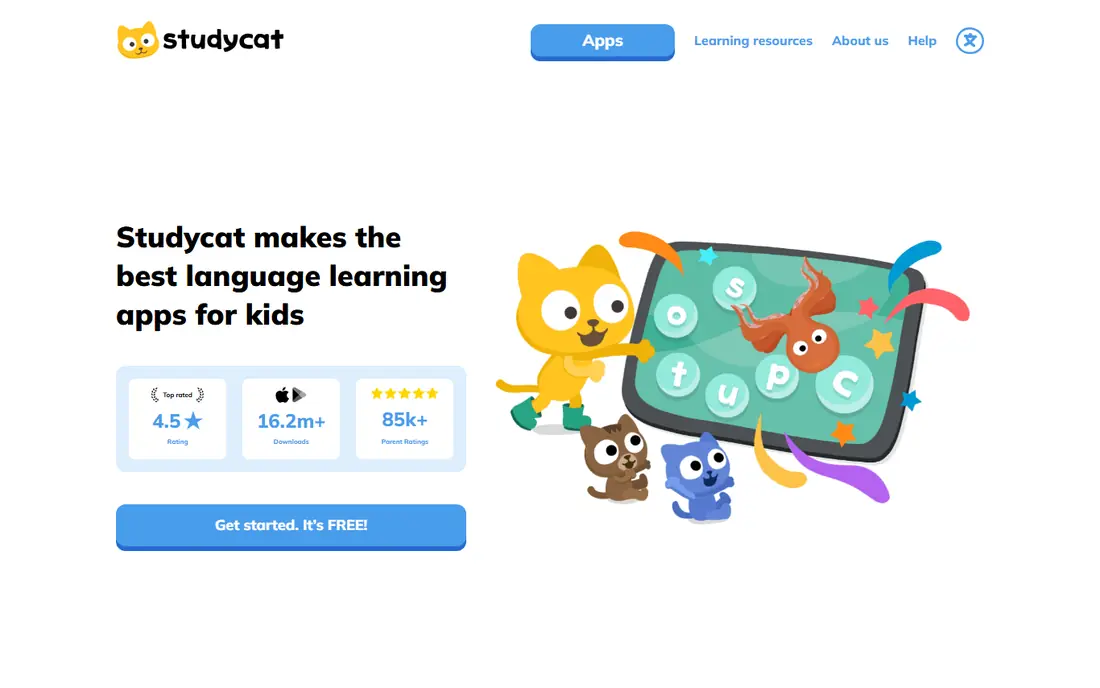
Studycat Fun Spanish is built for children aged 3 to 8, with games that ask children to listen, repeat, match, and spell Spanish words. Themes cover animals, colours, food, house, school, and numbers, so vocabulary builds around topics children already know. Native audio in different voices helps children hear pronunciation variation, which matters for early listening.
Free starter themes let parents test the app before paying, while full access needs a subscription. The app is strong for early vocabulary and speaking confidence, but it is not a full conversation course, so older children will outgrow it. For young learners starting Spanish, Studycat is our pick for most families.
- Games for listening, speaking, and spelling
- Native audio in male and female voices
- Free starter themes
- Full access needs a subscription
- Best for early vocabulary rather than long conversation
- Progress needs parent review
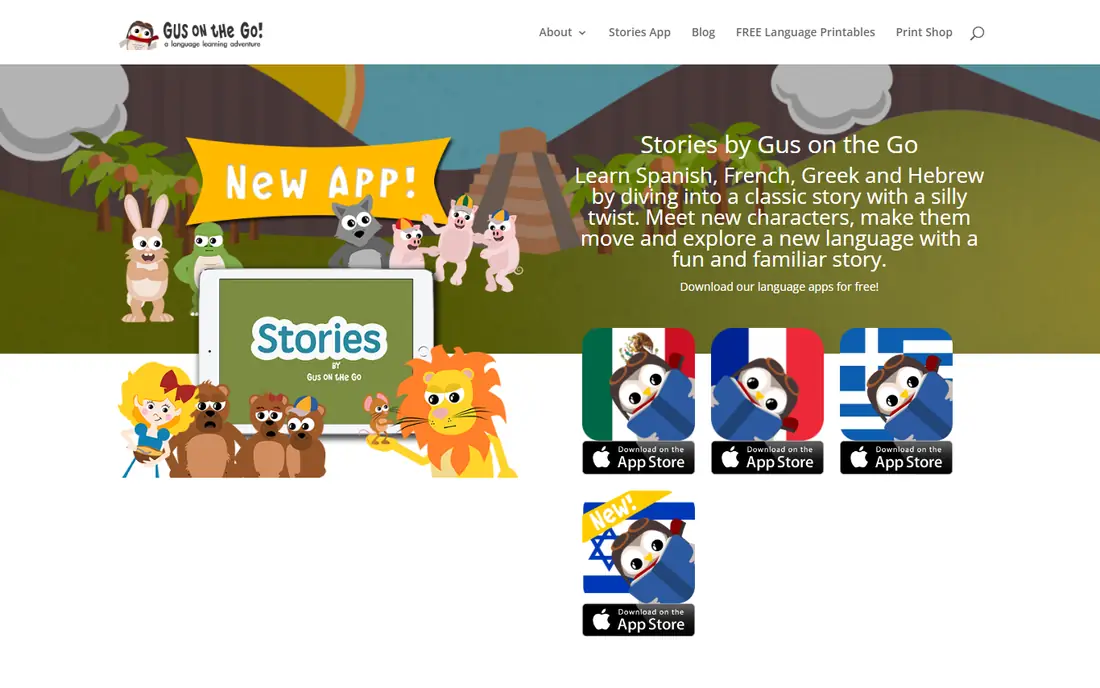
Gus on the Go follows Gus the owl through themed lessons on animals, food, transport, and everyday words. The pace is gentle, the visuals are bright, and games become available as children complete lessons, which suits toddlers and early elementary children. It is one of the simplest apps on this list, and that simplicity is a strength for first time learners.
The app is usually a one time purchase per language rather than a free app, so check the current store price before buying. Depth is also limited, since it focuses on basic vocabulary rather than sentences and grammar. For a first Spanish app for a young child, Gus on the Go is a calm and friendly choice.
- Gentle animated stories for young children
- Themed vocabulary games
- One time purchase per language in many stores
- No free tier in most listings
- Limited depth for older children
- Fewer progress reports than larger apps
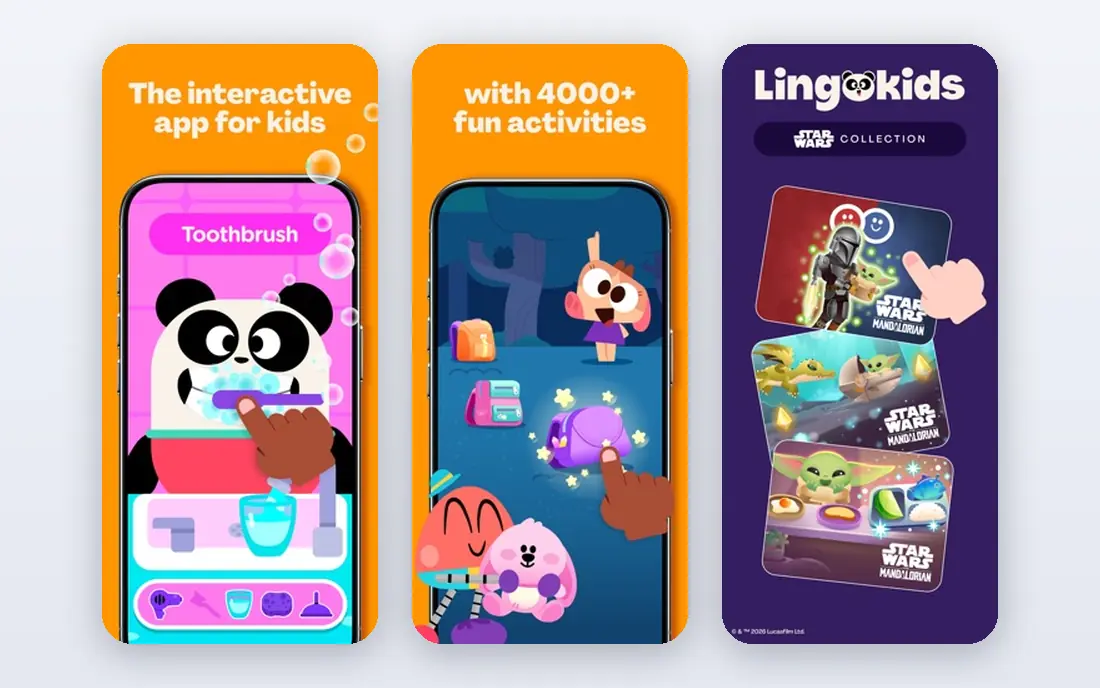
Lingokids offers games, songs, and activities for children aged 2 to 8, with Spanish learning alongside early maths, reading, and social skills. That breadth suits families who want one app for general early learning, with Spanish as part of the mix. Parent reports show progress, which helps adults see what a child has practised.
Because Lingokids is not a Spanish only course, families who want deep Spanish progress may need a more focused app as well. Full access needs a subscription, while a limited free plan lets you test the format. For young children who enjoy songs and varied games, Lingokids is a strong all round pick.
- Games, songs, and activities for young children
- Spanish content alongside other subjects
- Parent progress reports
- Spanish is part of a broader curriculum, not a Spanish only course
- Full access needs a subscription
- Content varies by region
Dinolingo covers Spanish for children aged 2 to 14, with videos, games, songs, and printable worksheets that families can use offline. The age range is wider than most apps here, which helps when siblings of different ages share one subscription. A trial lets families test the format before paying.
The breadth can also feel less focused than Studycat or Gus on the Go, since Dinolingo covers many languages and age groups. Younger children will need a parent nearby to navigate lessons and worksheets. For families who want Spanish plus other languages in one place, Dinolingo is a practical choice.
- Spanish lessons for ages 2 to 14
- Videos, games, and printable worksheets
- Wide language choice for multilingual families
- Full access needs a subscription after trial
- Interface is broader than a single language app
- Younger children need parent help
Droplets, from the makers of Drops, teaches vocabulary through short visual lessons with images and audio, in five minute sessions. That format suits children aged 6 and up who can focus for a short burst and enjoy matching words to pictures. A free tier lets children practise daily without a subscription.
Droplets is vocabulary only, so it does not teach sentences, grammar, or conversation on its own. It works best as a supplement to a story or game app, or for an older child building word knowledge. For short daily Spanish vocabulary practice, Droplets is simple, visual, and easy to fit into a routine.
- Five minute visual vocabulary sessions
- Clear images and audio
- Free tier for daily practice
- Vocabulary only, with little sentence practice
- Best for ages 6 and up
- Free tier limits daily time
Peg and Pog teaches Spanish and French through stories, songs, and games for children aged 3 to 7. The story format helps children hear Spanish in context, rather than as isolated words, which supports listening and early speaking. The pace is gentle, and the characters give young children a reason to return to the next story.
The catalogue is smaller than Studycat or Lingokids, and full access needs a subscription after a trial. Older children will also outgrow the stories quickly. For early learners who respond to stories, Peg and Pog is a charming and focused choice.
- Story based learning for ages 3 to 7
- Spanish and French options
- Gentle pace with songs and games
- Smaller catalogue than larger apps
- Full access needs a subscription after trial
- Best for early learners only
Lingopie Kids uses video stories to immerse children in Spanish, with interactive features that let children click words and review vocabulary from what they watched. That format suits children aged 4 and up who enjoy shows and stories, and it exposes them to natural speech, humour, and everyday phrases. It is a good step up from pure vocabulary games.
Video learning needs screen time limits, and younger children will benefit from watching with a parent who can pause and discuss new words. Full access needs a subscription after a trial. For families who want story based immersion, Lingopie Kids is a strong addition to a game based app.
- Immersive video stories for language learning
- Interactive subtitles and vocabulary tools
- Ages 4 and up
- Full access needs a subscription after trial
- Video format needs screen time limits
- Best with parent guidance
Duolingo is best for older children and teens learning Spanish, with a free course built around short lessons, streaks, and leagues. The game format motivates regular practice, and the progression from basic words to sentences suits children who can read and follow instructions on their own. Parents can also use the free tier to learn alongside a child.
Duolingo is not designed as a young child app, and its ads and league competition need parent awareness for younger users. Grammar is taught through examples rather than detailed rules, so school support may still be needed. For a child aged 10 or older, Duolingo is the best free Spanish learning app on this list.
- Free Spanish course with short lessons
- Streaks and leagues for motivation
- Clear progression for older children
- Designed for ages 10 and up in practice
- Ads on free tier
- Grammar explanations stay brief for young learners
How we picked these
We compared official age ranges, product pages, and app store listings, and kept only apps designed for children or clearly suitable for older children. We favoured apps with native audio, speaking practice, and parent visibility, and we left out general adult apps that lack child appropriate design. Privacy notes below reflect common parent concerns, and parents should still read each app privacy policy before use.
Choosing a Spanish app and keeping it safe for children
Match the app to age and reading level
Children aged 2 to 6 do best with Gus on the Go, Studycat, and Peg and Pog, which use pictures, stories, and simple games. Children aged 6 to 10 can add Droplets, Lingokids, and Lingopie Kids, while children aged 10 and up can use Duolingo with more independence. A child who cannot yet read will need an app led by audio and pictures, not text.
Check privacy before handing over the phone
Children's data needs extra care. Check whether the app collects voice recordings, location, or contact details, whether it includes chat with strangers, ads, or in app purchases, and whether a parent account controls settings. Prefer apps with no open chat, no ads in the child area, and a clear parent dashboard. Read the privacy policy and app store data safety section, and turn off features you do not need.
Keep sessions short and shared
Short sessions of five to fifteen minutes work best for young children, with a parent nearby for the first weeks. Use Spanish words at home too, by labelling objects, singing songs, and greeting each other in Spanish, so app learning connects to real life. If an app causes frustration, switch to a simpler one rather than pushing through, since confidence matters more than speed at this age.
Frequently asked questions
What is the best spanish learning app for kids?
Studycat Fun Spanish is the best starting point for ages 3 to 8, with games for listening, speaking, and spelling. Gus on the Go suits younger children, Lingokids suits varied games and songs, and Duolingo suits older children and teens. The best app depends on age, reading level, and whether you want games, stories, or video.
What is the best app for kids learning Spanish at home?
A game app such as Studycat plus short real life practice works well at home. Label household objects, sing Spanish songs, and use greetings such as hola and gracias during the day. Short daily sessions, with a parent nearby at first, help children retain words better than long occasional sessions.
What age can kids start learning Spanish with an app?
Many children apps start at age 2 or 3, with listening, songs, pictures, and simple words. At that age, a parent should guide sessions and keep them short. Older children can use more independent apps, such as Droplets from age 6 and Duolingo from age 10, with parent checks on privacy and screen time.
Do Spanish learning apps help kids speak Spanish?
Apps with speaking practice, such as Studycat, help more than apps that only use tapping and matching. Children get more speaking practice when an app asks them to repeat words aloud and uses native audio. Real conversation with a parent, teacher, or tutor still helps most for confidence and fluency.
Are kids Spanish apps safe for data privacy?
Safety varies by app, so parents should check data collection, ads, chat features, and parent controls before use. Prefer apps with no open chat, clear parent settings, and a privacy policy written for children. Turn off unnecessary permissions, use a parent account where available, and supervise early sessions.
Sources
See where you really rank - block by block
ProMapRanker scans Google Maps across a grid of your service area. Simple monthly plans from $19, white-label on every plan.
Start freeKeep reading
 zscaler alternatives
Best Zscaler Alternatives in 2026
Looking for zscaler alternatives? We compare 9 SASE and zero trust platforms on architecture, data protection, pricing, and fit for your network and team.
Read → zapier alternatives free
Best Zapier Alternatives Free in 2026
Nine automation tools for zapier alternatives free in 2026, all with genuinely free tiers, plus free plan limits, starting prices and upgrade paths explained.
Read → which platform is best for online reputation
Which Platform Is Best for Online Reputation in 2026
Wondering which platform is best for online reputation? We compare 8 review, listing, and response tools for small and multi-location businesses and agencies.
Read →