 ProMapRanker
Best Software to Manage Audits Efficiently in 2026


Mid-to-large firms running SOX and internal audit · Pricing starts at: See website
Key takeaways
- Audit software organises evidence, testing and issues, but it does not by itself make an organisation compliant.
- Only an independent auditor can issue an audit opinion, so treat vendor readiness claims as preparation, not certification.
- Enterprise internal audit tools are quote-based, while compliance automation tools suit smaller teams heading to a first audit.
- Map your frameworks first, since SOX, SOC 2 and ISO work need different workflows and evidence types.
- The best efficiency gain comes from automated evidence collection, not from adding more dashboards.
Quick comparison
| Pick | Great for | Pricing starts at | Free tier | |
|---|---|---|---|---|
| Optro | Mid-to-large firms running SOX and internal audit | See website | No | Visit |
 Workiva | Connecting audit work to financial reporting | See website | No | Visit |
 TeamMate+ | Traditional internal audit departments | See website | No | Visit |
 ServiceNow Integrated Risk Management | Firms already standardised on ServiceNow | See website | No | Visit |
 Archer | Highly regulated firms with complex risk programs | See website | No | Visit |
 LogicGate Risk Cloud | Business users building their own risk workflows | See website | No | Visit |
 Drata | Growing firms automating SOC 2 readiness | See website | No | Visit |
 Vanta | Firms needing wide evidence automation | See website | No | Visit |
 Hyperproof | Mid-market firms needing framework breadth | See website | No | Visit |
The best software to manage audits efficiently
We compared audit and compliance platforms that teams use in 2026 to plan audits, collect evidence, test controls and track issues to closure. Each entry notes the audit type it fits best, since no single tool covers every framework equally.
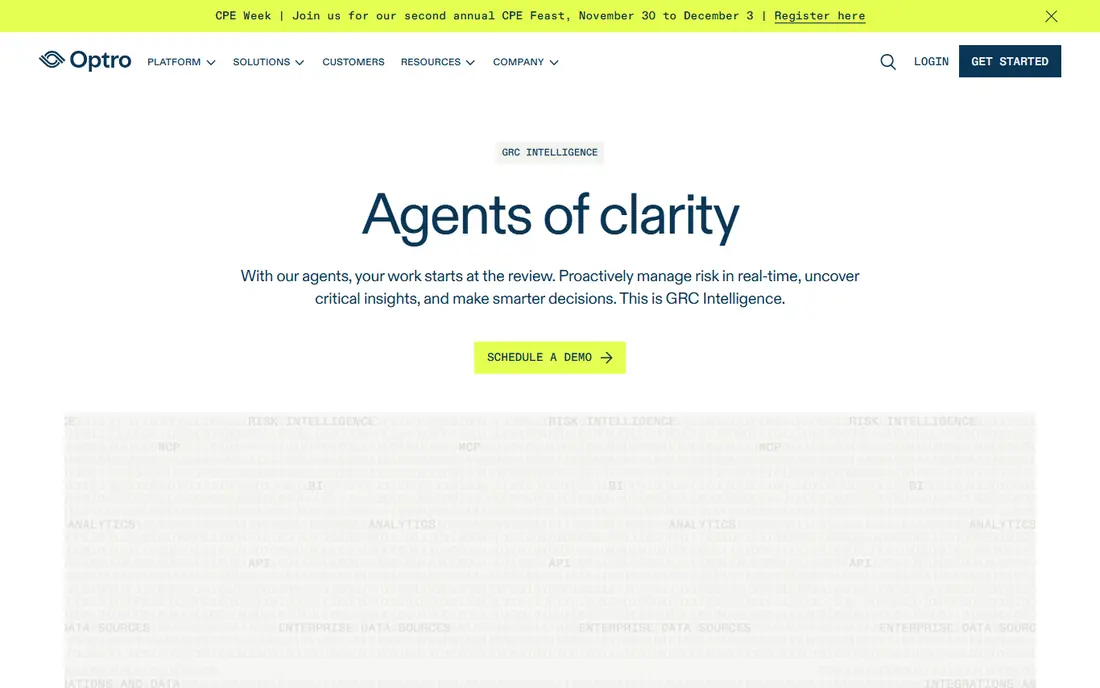
Optro, formerly AuditBoard, is the enterprise core for SOX and internal audit work. It connects risk assessment, audit planning, testing, issues and reporting in one platform, so audit teams stop tracking work across spreadsheets. Its rebrand to Optro in 2026 kept the same product focus on connected risk, with AI features added to drafting and analysis.
Pricing is quoted by module and user count, and mid-market deployments are often described in guides as running well into five figures a year. That cost fits a firm with a formal internal audit function, but it will overwhelm a startup heading to its first SOC 2 audit. For SOX scope, Optro remains a first shortlist name.
- Strong SOX and internal audit workflows
- Connected risk platform
- Used widely by large enterprises
- Quote-based enterprise pricing
- Implementation needs planning
- More than a small team needs
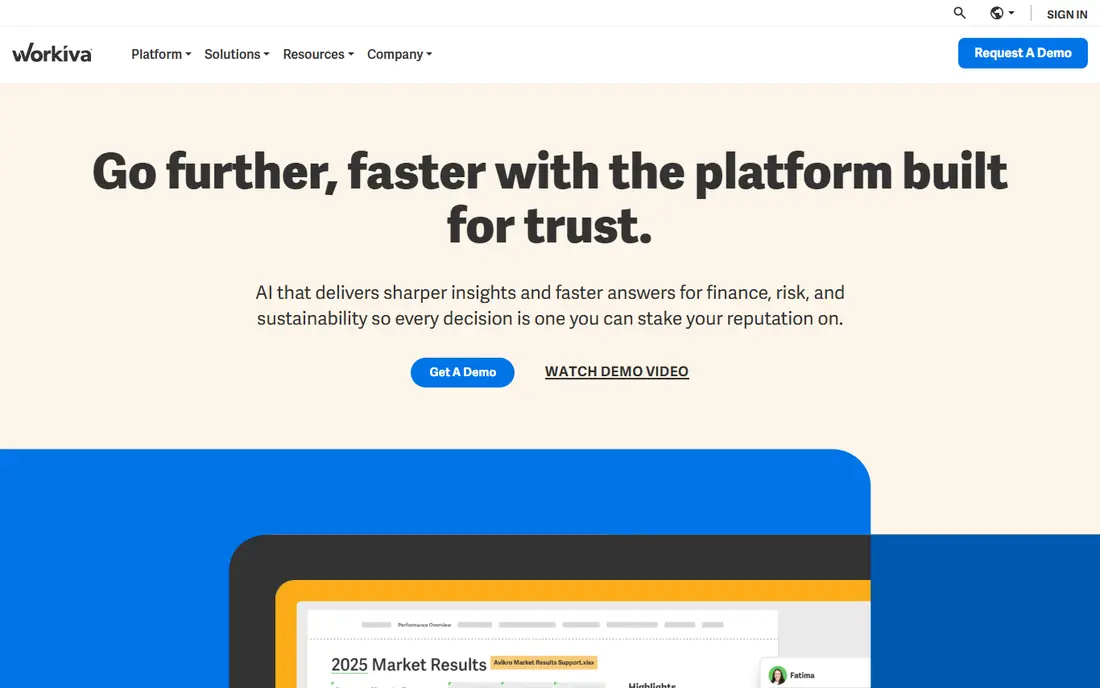
Workiva suits firms where audit work and financial reporting must stay linked. Its platform connects controlled documents, data and audit tasks, so a number in a report can be traced back to its source and its review. That traceability matters for SOX, financial reporting and regulated filings, where auditors ask for that chain.
The platform is broad, so scope it tightly to the audit and reporting work you actually need. Pricing is quoted, and costs rise with modules and users. If your main need is SOC 2 evidence automation for a SaaS product, a lighter tool such as Drata or Vanta will move faster. If reporting integrity is the core, Workiva earns its place.
- Links audit evidence to financial reports and filings
- Strong document and data controls
- Suited to regulated reporting
- Quote-based pricing
- Breadth needs careful scoping
- Implementation can be lengthy
TeamMate+, from Wolters Kluwer, is built for traditional internal audit departments that want proven workflows. It covers audit planning, risk assessment, fieldwork, findings and reporting, with templates and libraries that audit teams recognise. That familiarity helps a department move from spreadsheets without redesigning its whole method.
The trade-off is pace. TeamMate+ is less focused on automated evidence collection from cloud systems than newer compliance tools, so SOC 2 readiness work may need extra manual steps. Pricing is quoted, and the platform fits firms with an established internal audit team better than a startup with no audit staff.
- Proven internal audit workflows
- Audit planning, fieldwork and reporting in one place
- Long track record
- Quote-based pricing
- Interface feels traditional
- Less focused on automated SOC 2 evidence
ServiceNow Integrated Risk Management
Great for: Firms already standardised on ServiceNow
ServiceNow Integrated Risk Management suits enterprises that already run ServiceNow for IT and business workflows. Audit, risk and compliance tasks live inside the same platform, with workflows, approvals and reporting that IT teams already know. That shared platform reduces the need for a separate audit system and its integrations.
For firms without ServiceNow, the cost and effort of adopting the whole platform just for audit work rarely makes sense. Pricing is quoted and enterprise-scale. If ServiceNow is already your system of record, adding its risk modules is efficient. If not, a standalone audit tool will be simpler.
- Audit and risk work inside the ServiceNow platform
- Strong workflow automation
- Good for large enterprises
- Quote-based pricing
- Best value only if you already run ServiceNow
- Setup needs platform expertise
Archer, formerly RSA Archer, is built for highly regulated firms with complex risk and compliance programs. It models risks, controls, issues and audits across business units, with reporting that regulators and boards expect. Banks, insurers and large regulated firms use it to run programs that span many frameworks at once.
That depth comes with a major implementation effort and enterprise pricing. A mid-market firm with one or two frameworks will find Archer heavy, and a startup will find it out of reach. For a large regulated program where audit is one part of a wider risk system, Archer remains a credible, if costly, choice.
- Deep governance, risk and compliance modelling
- Suited to complex regulated programs
- Strong reporting
- Quote-based enterprise pricing
- Implementation is a major project
- More than most mid-market teams need
LogicGate Risk Cloud lets business users build their own risk and audit workflows without heavy coding. Teams can design control testing, issue tracking and approvals around their own process, then change them as the program grows. That flexibility suits firms whose audit needs are still evolving.
Flexibility also needs discipline. Without clear ownership and version control, each team can build a different workflow, and auditors will notice the inconsistency. Pricing is quoted, so scope the modules you need before a demo. LogicGate fits a mid-market firm that wants adaptable GRC more than a fixed audit template.
- Flexible no-code workflow building
- Business users can adapt audit processes
- Good for evolving programs
- Quote-based pricing
- Flexibility needs governance to stay consistent
- Less out-of-the-box audit depth than Optro
Drata automates much of the evidence work for SOC 2, ISO 27001 and other frameworks. It connects to cloud systems, monitors controls continuously, flags gaps and gathers evidence for auditors. That automation is why growing SaaS firms pick Drata for a first compliance audit: it turns a spreadsheet slog into a monitored program.
Drata does not issue an audit opinion. Only an independent auditor can do that, and you still need to engage one for SOC 2. Pricing is quoted and varies with frameworks and company size, with SOC 2 packages described in marketplace guides at higher annual rates than simple starter claims suggest. Confirm the full package price, including auditor introduction costs, before you budget.
- Automated evidence collection from cloud systems
- Multi-framework monitoring
- Faster path to a first audit
- Quote-based pricing
- Audit itself still needs an independent auditor
- Costs rise with frameworks and headcount
Vanta is the best-known compliance automation platform for SaaS firms, with a wide set of integrations that pull evidence from cloud, identity and development tools. It monitors controls, tracks tasks and prepares evidence packs for auditors across SOC 2, ISO 27001, HIPAA and other frameworks. That breadth suits firms that must satisfy several customer questionnaires at once.
As with Drata, Vanta prepares you for an audit but does not certify you. Only an independent auditor issues the opinion, and Vanta pricing is quoted, with entry tiers described in guides from around $10,000 a year before add-ons. Ask for the price for your exact frameworks and headcount, and check which integrations sit in the base plan.
- Widest evidence integration net in this group
- Continuous monitoring
- Strong for SaaS compliance programs
- Quote-based pricing
- Audit still needs an independent firm
- Scope can grow with add-on frameworks
Hyperproof covers a broad set of frameworks for mid-market firms that need more than a single SOC 2 tool. It tracks controls, evidence, tasks and audit requests in one place, with automation to reduce manual collection. That breadth suits a firm juggling SOC 2, ISO and customer security reviews at the same time.
Hyperproof is less widely known than Vanta or Drata, so ask for references in your size band and framework mix. Pricing is quoted, with guides describing entry rates from around $12,000 a year. The platform still needs an internal owner to keep controls current, since automation alone does not close gaps.
- Broad framework coverage for mid-market teams
- Control and evidence tracking
- Task automation
- Quote-based pricing
- Less brand recognition than Vanta or Drata
- Implementation still needs owner time
How we picked these
We compared vendor product pages and current audit software guides for platforms that are still sold in 2026 and that cover internal audit, SOX or compliance automation. We favoured a mix of enterprise audit tools and compliance automation platforms, and we kept pricing as See website where vendors do not publish rates. We did not treat vendor readiness claims as certification.
How to make audit software save time
Start by listing the frameworks, the audit owner and the evidence you already collect. Pick the tool that automates your hardest evidence first, whether that is SOX testing or cloud control monitoring. Assign one owner per control, set evidence due dates, and review open issues weekly, so the platform becomes a working system rather than a filing cabinet.
Remember the auditor boundary
Software can prepare, organise and monitor, but it cannot sign an audit opinion. Only an independent auditor can do that, and that auditor must stay independent from the software vendor where the framework requires it. Keep that boundary clear in contracts, and do not promise customers a certification you have not yet received.
Frequently asked questions
Does audit software make my company compliant?
No. It organises evidence, testing and issues, which helps you prepare for an audit. Compliance depends on your controls actually working, and on an independent auditor testing them where a formal opinion is required.
Who can issue a SOC 2 or financial audit opinion?
Only an independent auditor or CPA firm can issue a formal audit opinion. Software vendors prepare evidence and readiness work, but they do not replace the auditor, and you should keep that separation clear.
What is the best audit software for a small SaaS firm?
Drata, Vanta or Hyperproof usually fit best, since they automate cloud evidence for SOC 2 and related frameworks. Enterprise tools such as Optro and Archer suit larger firms with formal internal audit teams.
How much does audit software cost?
Most audit and GRC pricing is quote-based. Compliance automation entry points are described in guides from around $10,000 a year, while enterprise internal audit deployments run far higher. Get a quote for your frameworks, users and integrations.
Can audit software replace spreadsheets completely?
For most teams, yes, once controls, evidence and issues are migrated and owners are assigned. Keep a short transition period where both systems run, then retire the spreadsheets so work does not split across two places.
Sources
See where you really rank - block by block
ProMapRanker scans Google Maps across a grid of your service area. Simple monthly plans from $19, white-label on every plan.
Start freeKeep reading
 worlds best local seo company
8 Worlds Best Local SEO Companies for Map Pack Growth in 2026
Compare the worlds best local seo company options for Google Business Profile work, citations, reviews, and multi-location rankings and reporting in 2026.
Read → world's best web hosting company
World's Best Web Hosting Company in 2026
Searching for the world's best web hosting company? We compared 10 hosts on price, renewal rates, speed, and support to help you choose well today in 2026.
Read → who's got the best nanny tax services
Who's Got the Best Nanny Tax Services in 2026
We answer who's got the best nanny tax services, comparing full filing, back taxes, software, and pricing so families can handle nanny taxes correctly.
Read →