 ProMapRanker
Best Software to Do Payroll Internationally in 2026


Broad global hiring and payroll · Pricing starts at: $29 per employee per month
Key takeaways
- Global payroll and employer of record services are different products, and most vendors price them separately.
- Deel and Remote lead on breadth and owned-entity coverage, while Papaya Global and CloudPay-style enterprise tools suit finance-led teams.
- Contractor payments are far cheaper than full employment, so confirm which model each price covers before budgeting.
- Local tax, benefits, and termination rules vary by country, so a vendor with in-country expertise matters more than a low headline price.
Quick comparison
| Pick | Great for | Pricing starts at | Free tier | |
|---|---|---|---|---|
| Deel | Broad global hiring and payroll | $29 per employee per month | No | Visit |
 Remote | Compliance-first global employment | $29 per employee per month | No | Visit |
 Papaya Global | Finance-led global payroll | See website | No | Visit |
 Multiplier | Lower-cost global employment | See website | No | Visit |
 Oyster | Remote-first teams hiring abroad | See website | No | Visit |
 Rippling | HR, IT, and payroll in one system | See website | No | Visit |
 ADP Global Payroll | Large multinationals already on ADP | See website | No | Visit |
 Safeguard Global | Advisory-led global payroll | See website | No | Visit |
The best software to do payroll internationally
We compared these tools on country coverage, employment models, payroll accuracy, benefits handling, and how clearly each vendor prices its services. This article is general information only, not tax or legal advice. International payroll touches employment law, tax withholding, social contributions, and benefits rules that differ by country, so confirm key decisions with qualified local advisers before hiring.

Deel is the broadest starting point for many companies hiring abroad. It offers global payroll from $29 per employee per month, contractor payments, and employer of record services for teams without a local entity. That range matters, because a company may start with one contractor in one country and later need full employment in five more. Deel also offers a free HRIS tier, immigration support, and benefits handling in many markets.
The headline payroll price is not the full employment price. Employer of record services cost several hundred dollars per employee per month, and employer social contributions and statutory benefits sit on top of gross salary. Deel suits fast-growing teams that value breadth and speed. Smaller teams with one or two hires should still compare the loaded cost, including local contributions, before choosing on platform fees alone.
- Wide country coverage
- Global payroll, contractor, and employer of record options
- Self-serve onboarding
- Employer of record pricing is far higher than payroll pricing
- Setup fees can apply per entity
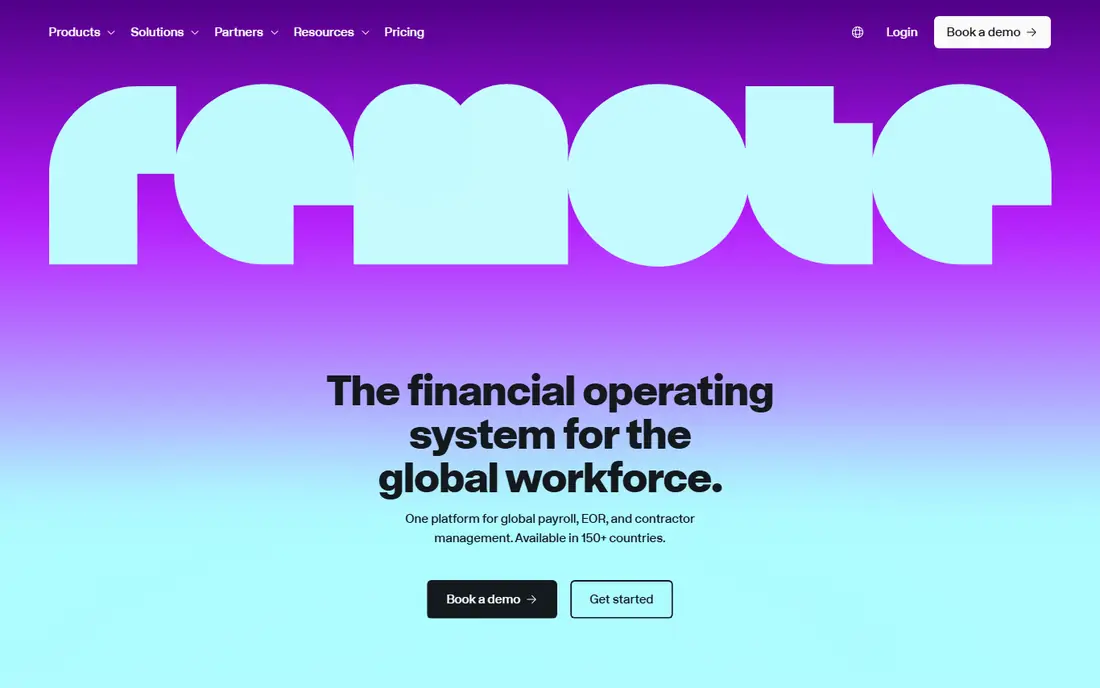
Remote builds its pitch around owned entities rather than relying only on third-party partners in each country. That model gives it direct control over contracts, payroll, and compliance in the markets where it operates, which appeals to teams that prioritise data ownership and consistent process. Global payroll starts from $29 per employee per month, while employer of record pricing is much higher and billed annually or monthly depending on the plan.
Remote is a strong fit for compliance-first teams that plan to hire in several countries and want one accountable provider. It is less of a bargain for a single hire, where the full employment fee dominates the budget. Check which countries are covered by owned entities versus partners for your specific hires, and confirm what is included in year-end processing before signing.
- Owned-entity model in many countries
- Global payroll from $29 per employee per month
- No setup fee positioning
- Employer of record pricing is high
- Off-cycle runs and year-end work can cost extra

Papaya Global treats global payroll as a finance problem as much as an HR problem. It aggregates payroll data across countries, gives finance teams a clearer view of total workforce cost, and handles payments and compliance reporting in a structured way. That focus suits larger teams that need audit trails, consolidated reporting, and treasury controls, rather than a simple tool for paying a handful of contractors.
Papaya is quote-based, so early budgeting needs a sales conversation and a clear list of countries, headcount, and payroll frequency. Smaller teams may find the platform heavier than they need, and may prefer a self-serve tool with published payroll pricing. For finance-led organisations with complex, multi-country payroll, Papaya is a serious shortlist option.
- Payroll aggregation across many countries
- Workforce analytics
- Treasury and payments focus
- Quote-based pricing
- Enterprise lean can feel heavy for small teams
Multiplier positions itself as a lower-cost global employment option, with employer of record pricing below several larger rivals on annual billing. It offers contractor management, global payroll, and employer of record services across many countries, with a particular strength in Asia-Pacific markets. For cost-sensitive teams expanding abroad, that price gap can be material across a full year of hires.
Pricing still needs care. Monthly versus annual billing changes the rate, and setup, implementation, and statutory costs sit outside the platform fee in some cases. Multiplier suits teams that want owned-entity coverage without paying the top tier of the market. Get a written quote for your exact countries and headcount, and compare the loaded cost, not only the monthly platform figure.
- Competitive employer of record pricing
- Owned entities in many markets
- Contractor and payroll options
- Pricing varies by billing period and country
- Setup and statutory fees can add up
Oyster is built for remote-first teams hiring their first international employees. It covers employer of record services in many countries, contractor payments, and benefits and equity support for distributed staff. The experience is designed for lean HR teams that need guidance through contracts, benefits, and local requirements without building in-house expertise in every market.
Oyster pricing varies by plan and country, and its employer of record rates sit at the higher end of the market in some comparisons. That makes it a better fit for teams that value support and a clear hiring experience over the lowest possible fee. If you only need to pay contractors, compare Oyster contractor pricing against simpler payroll tools before committing to full employment pricing.
- Hiring in many countries
- Benefits and equity support
- Friendly experience for distributed teams
- Quote and tier pricing varies
- No standalone global payroll in some comparisons
Rippling appeals to teams that want one system for HR, IT provisioning, and finance, with global payroll added to that core. Onboarding a new hire can trigger payroll setup, device provisioning, and app access in one workflow, which saves time for operations teams. That unified model is Rippling's main strength, and it suits US-based teams expanding abroad while keeping domestic HR in the same place.
The trade-off is pricing clarity. Rippling uses modular pricing, so the global payroll cost depends on which modules you buy and how many employees you have. Global payroll depth also varies by country, with some markets handled through partners. Rippling is best for teams already committed to a unified platform. If you only need international payroll, a specialist global provider may be simpler and cheaper.
- Unified HR, IT, and finance platform
- Global payroll add-on
- Strong automation for onboarding
- Modular pricing is hard to compare
- Global payroll coverage varies by country
ADP Global Payroll, including its GlobalView and related services, serves large multinationals with complex, multi-entity payroll needs. Its strength is depth: long payroll history, broad country coverage, tax and compliance infrastructure, and service models for enterprises that need hands-on support. Companies already running ADP domestically often find it easier to extend that relationship abroad than to adopt a separate global system.
ADP pricing is quote-based and implementation timelines for large programmes can be long, so it is not a quick self-serve choice. Smaller teams will likely find published-price global payroll tools faster and cheaper. For a large employer with many entities, many pay schedules, and strict audit needs, ADP remains a credible enterprise shortlist option.
- Deep payroll heritage
- Coverage across many countries
- Strong compliance infrastructure
- Quote-based pricing
- Implementation can be long for large programmes
Safeguard Global suits compliance-heavy organisations that want advisory support alongside payroll processing. It covers many countries, offers managed global payroll, and provides guidance on local employment, tax, and benefits rules. That advisory layer matters when hiring in markets with complex labour law, works councils, or unusual termination rules, where a software-only answer is not enough.
Safeguard is quote-based and less self-serve than newer tools like Deel or Remote, so setup involves more conversation and planning. That is a drawback for a fast-moving startup, and a benefit for an enterprise that wants a partner to share compliance work. If your team needs hands-on advice and managed services, Safeguard deserves a demo. If you want instant signup and published pricing, start with a self-serve rival.
- Global payroll across many countries
- Advisory support for compliance-heavy markets
- Managed payroll services
- Quote-based pricing
- Less self-serve than newer global payroll tools
How we picked these
We compared official pricing pages, product descriptions, and public comparisons of country coverage, employment models, and payroll features. We kept only providers that are live in October 2026 and that genuinely offer international payroll or employer of record services, rather than domestic-only payroll tools. Where a vendor does not publish a price, we wrote See website, and where payroll and employer of record prices differ, we based the starting price on payroll where a published payroll price exists.
What to check before you buy
First, separate the models in your quote. Contractor pay, global payroll for your own entity, and employer of record services are priced differently, and mixing them up makes comparisons meaningless. Ask each vendor for the platform fee, employer social contributions, statutory benefits, payment fees, and any setup or year-end charges for your exact countries.
Second, check coverage for your specific hires, not the headline country count. Confirm whether each country is served by an owned entity or a partner, who handles benefits enrollment, and how terminations and off-cycle payments work. Finally, run a parallel payroll cycle for one country before migrating a full team, and keep local tax and legal advice in the loop for contract and classification decisions.
Frequently asked questions
What is the difference between global payroll and employer of record?
Global payroll pays employees of your own local entity, while an employer of record legally employs staff on your behalf where you have no entity. Payroll is usually cheaper per employee, while employer of record services cost more because the provider takes on legal employment duties.
How much does international payroll cost?
Platform fees for global payroll often start around $29 per employee per month, while employer of record fees run several hundred dollars per employee per month. Employer social contributions, statutory benefits, and payment fees sit on top, so the loaded cost is higher than the platform fee alone.
Do I need a local entity to pay staff abroad?
Not always. An employer of record lets you hire without a local entity, and contractor payments cover genuine independent contractors. Misclassifying an employee as a contractor creates legal and tax risk, so get local advice before choosing a model.
Which countries are hardest for global payroll?
That depends on your hires, but markets with complex labour law, strong worker protections, or unusual benefits rules need more care. Ask vendors about owned-entity versus partner coverage, benefits handling, and termination process for each country you plan to hire in.
Is this article tax or legal advice?
No. This article is general information only, not tax or legal advice. International payroll rules change by country and by worker type, so confirm contracts, tax withholding, and benefits with qualified local advisers.
Sources
See where you really rank - block by block
ProMapRanker scans Google Maps across a grid of your service area. Simple monthly plans from $19, white-label on every plan.
Start freeKeep reading
 zscaler alternatives
Best Zscaler Alternatives in 2026
Looking for zscaler alternatives? We compare 9 SASE and zero trust platforms on architecture, data protection, pricing, and fit for your network and team.
Read → zapier alternatives free
Best Zapier Alternatives Free in 2026
Nine automation tools for zapier alternatives free in 2026, all with genuinely free tiers, plus free plan limits, starting prices and upgrade paths explained.
Read → which platform is best for online reputation
Which Platform Is Best for Online Reputation in 2026
Wondering which platform is best for online reputation? We compare 8 review, listing, and response tools for small and multi-location businesses and agencies.
Read →