 ProMapRanker
Best Software Testing Tools in 2026

Key takeaways
- Playwright, Selenium and Cypress lead for web automation, with Playwright offering the most modern cross-browser features.
- Jest covers unit and component testing for JavaScript, while Postman leads for API testing.
- Katalon and TestRail suit teams that want low-code creation or structured test management.
- Open-source tools are free to use, but engineering time, infrastructure and maintenance are still real costs.
Quick comparison
| Pick | Great for | Pricing starts at | Free tier | |
|---|---|---|---|---|
 Selenium | Cross-browser web automation | Free | Yes | Visit |
 Playwright | Modern cross-browser testing | Free | Yes | Visit |
 Cypress | Developer-friendly web testing | Free | Yes | Visit |
 Jest | JavaScript unit and component testing | Free | Yes | Visit |
 Katalon Studio | Low-code web, API and mobile testing | Free | Yes | Visit |
 TestRail | Test case management and reporting | See website | Free trial | Visit |
 Appium | Mobile app automation | Free | Yes | Visit |
 Postman | API testing and collaboration | Free | Yes | Visit |
 BrowserStack | Real device and browser cloud testing | See website | Free trial | Visit |
The best software testing tools
Software testing tools cover different layers: unit, API, web UI, mobile and management. Most teams need a combination, not a single tool.
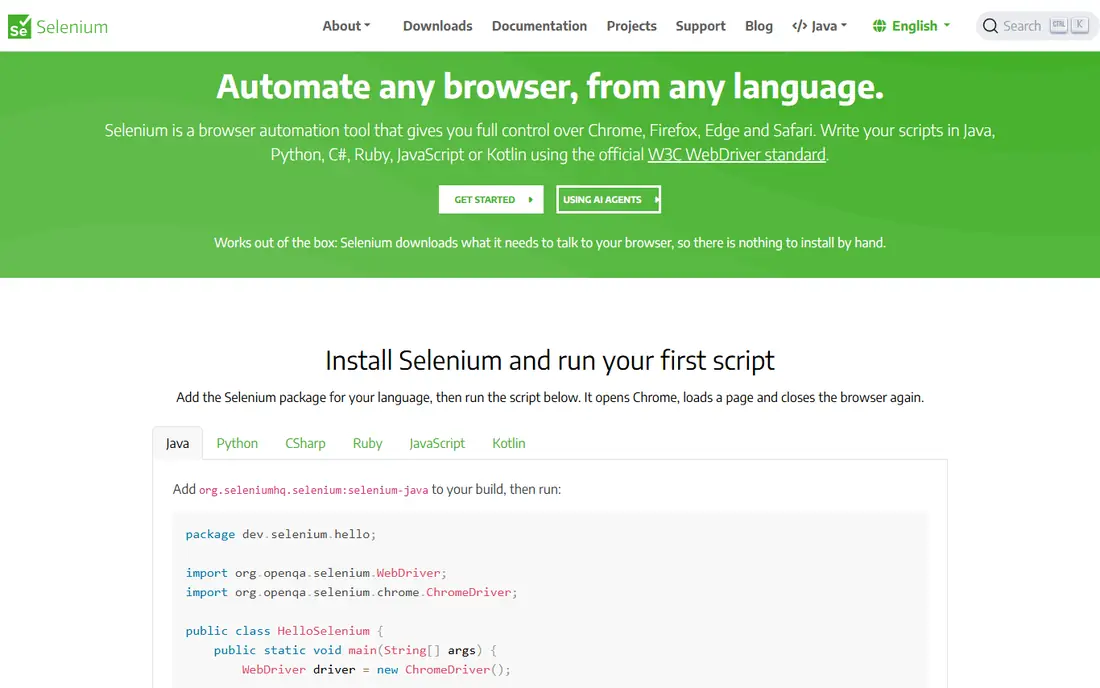
Selenium remains the standard for teams that need broad browser and language coverage. WebDriver supports Chrome, Firefox, Edge, Safari and more, in Java, Python, C#, JavaScript and other languages, and Selenium Grid runs tests in parallel across machines. Decades of documentation mean most problems already have a known answer.
That breadth comes with work. Selenium gives you a framework, not a finished product: you assemble a runner, reporting, waits and infrastructure yourself, and browser updates can break suites. Teams without automation engineers often spend more time maintaining Selenium tests than writing new ones.
- Supports many languages and browsers
- Huge community and documentation
- Grid for parallel runs
- Setup and maintenance take real engineering effort
- No built-in test management or reporting
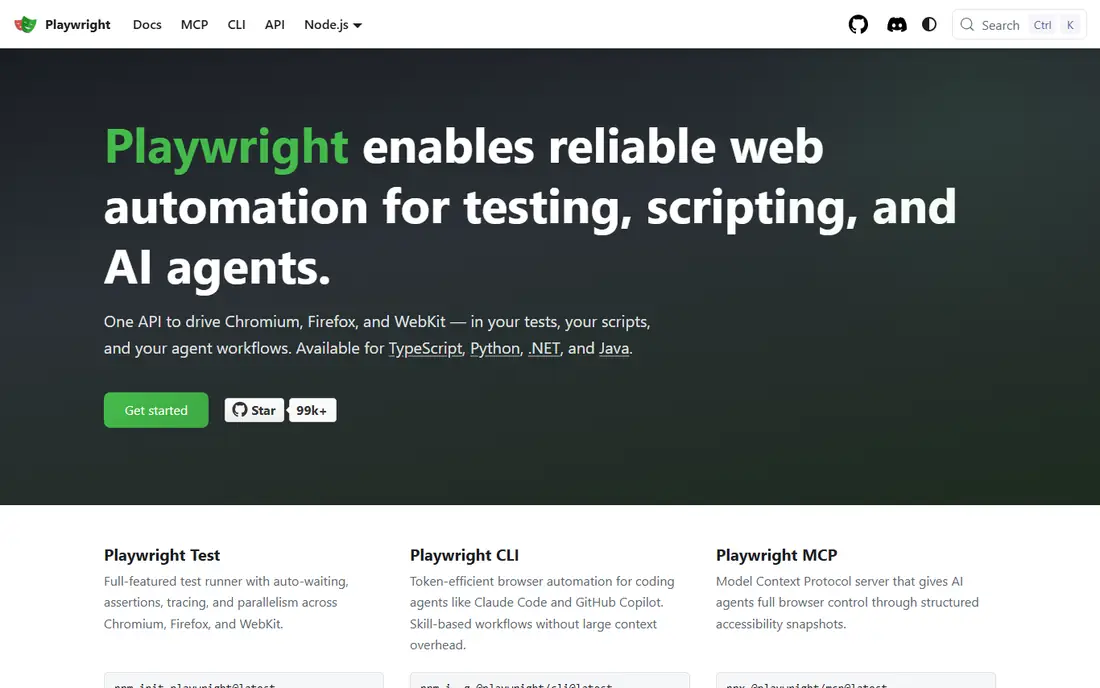
Playwright is our pick for most new web automation projects. Auto-waiting reduces flaky tests, tracing and screenshots make failures easy to debug, and one API covers Chromium, Firefox and WebKit with mobile emulation built in. Parallel runs and CI integration are straightforward, which helps teams ship faster.
Playwright still needs developers or skilled testers to write and maintain tests, so it is not a no-code option. Its fast development pace also means teams should pin versions and review release notes before upgrading a large suite. For a code-first team, those trade-offs are worth it.
- Auto-waiting and tracing
- Cross-browser and mobile emulation
- Fast parallel runs
- Needs coding skill
- API surface changes as the tool evolves
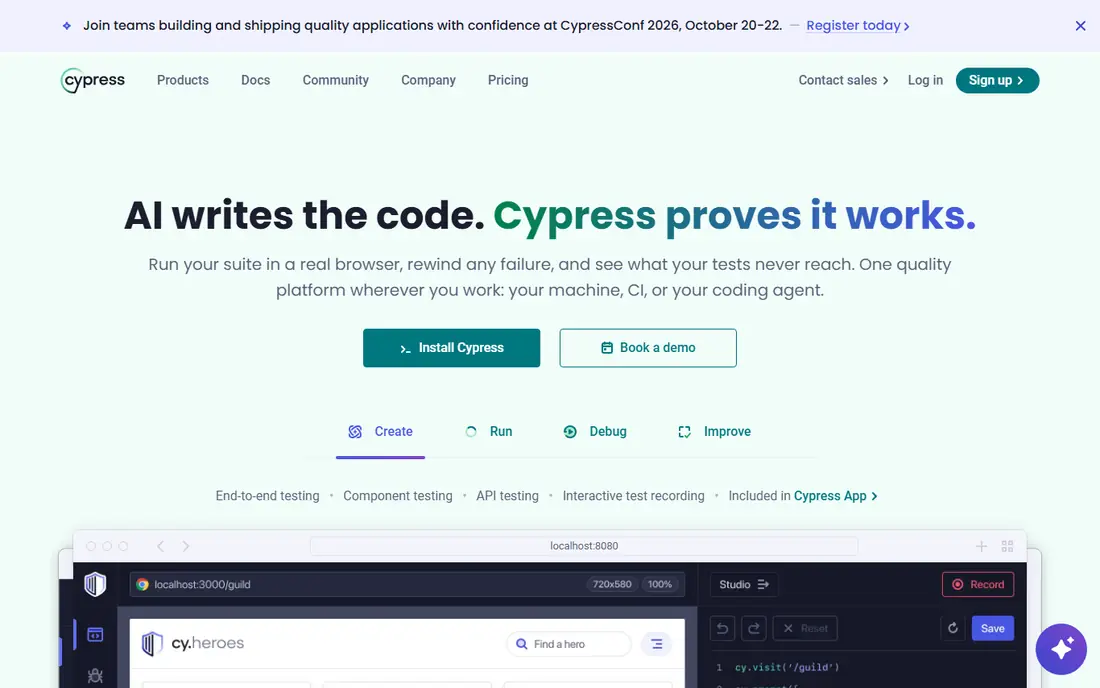
Cypress is loved by front-end teams for its developer experience. Tests reload as you write, the command log lets you step back through each action, and error messages point clearly at the failing step. For JavaScript and TypeScript teams testing a single-page app, Cypress feels faster to work with than older frameworks.
Parallel execution and advanced analytics need Cypress Cloud, which adds cost as a suite grows. Multi-tab flows and Safari testing are also limited compared with Playwright. Cypress suits component and end-to-end tests for web apps, not every testing job in a large organisation.
- Real-time reload and time-travel debugging
- Clear error messages
- Strong JavaScript ecosystem
- Local runs are sequential without paid Cloud
- Safari and multi-tab support are limited
Jest is the default unit test runner for many JavaScript projects, especially with React. It needs little configuration, includes mocks, snapshots and coverage, and runs tests in parallel by default. For testing functions, components and utilities, it is fast to learn and easy to keep in a project.
Jest is not a full browser automation tool. It can test components in a simulated DOM, but it does not replace Playwright or Cypress for real browser flows. Teams should use Jest for unit and component coverage, then add a browser tool for end-to-end confidence.
- Zero-config setup for many projects
- Snapshots and mocks built in
- Huge React ecosystem
- Focused on JavaScript
- Not a browser end-to-end tool on its own
Katalon Studio suits teams that mix manual testers and automation engineers. Record and playback let testers create tests without writing code first, while scripting mode gives engineers full control. One tool covers web, API, mobile and desktop tests, with reporting and CI integrations built in.
The free tier has limits that push serious teams toward paid plans, and per-user pricing can grow quickly for a large QA team. Katalon is also a heavier, proprietary platform than a code framework, so teams that prefer open-source flexibility may find it restrictive over time.
- Record and playback plus scripting
- Web, API, mobile and desktop coverage
- Built-in reporting
- Free tier is limited
- Paid tiers are priced per user and can add up
TestRail is the organising layer many teams need once testing grows beyond spreadsheets. It stores test cases, builds test plans and runs, tracks results, and reports coverage in a way managers and auditors can follow. Integrations with Jira and automation frameworks connect manual and automated results in one place.
TestRail does not run tests itself, so it must be paired with an execution tool such as Playwright, Selenium or Cypress. That pairing adds cost and setup, and small teams with a handful of tests may find it more structure than they need. It earns its price when test volume and reporting matter.
- Structured test cases, plans and runs
- Clear reporting
- Integrations with Jira and automation tools
- Not a test execution tool itself
- Subscription cost adds up for large teams
Appium is the open-source standard for mobile automation, covering native, hybrid and mobile web apps on Android and iOS with a WebDriver-based API. Teams can reuse Selenium knowledge, write tests in several languages, and run on emulators, simulators or real devices through cloud providers.
Mobile setup is the hard part. Configuring devices, signing, emulators and Appium servers takes time, and tests can be flaky when devices or OS versions change. Appium suits teams with mobile expertise and a real device strategy, not a team looking for a quick, no-setup mobile tool.
- Native, hybrid and mobile web apps
- Android and iOS from one API
- WebDriver-based
- Setup is complex
- Device and emulator management takes effort
Postman is the best starting point for API automation testing. Building a request takes seconds, collections organise APIs by project, and tests, monitors and CI runs turn those collections into a regression suite. Team workspaces make it easy for developers and testers to share and document APIs.
Postman is not a full web UI testing tool, so it complements rather than replaces Playwright or Cypress. Advanced automation, governance and enterprise features sit behind paid plans, and costs grow with team size and usage. For API-first teams, though, its speed and collaboration are hard to beat.
- Easy API requests and collections
- Automated API tests and monitors
- Team workspaces
- Advanced automation and enterprise features need paid plans
- Heavy use can get costly
BrowserStack removes the need to buy and maintain a device lab. Teams can run web and mobile tests on real devices and browsers in the cloud, in parallel, from CI. That coverage is valuable for releases that must work across many phones, tablets and browser versions.
Cloud testing costs real money, and heavy parallel use can become a large monthly bill. Test speed also depends on network and cloud load, so results may vary. BrowserStack suits teams that need broad real-device coverage without owning hardware, paired with a framework such as Playwright, Selenium or Appium.
- Real devices and browsers in the cloud
- No local device lab needed
- Parallel testing
- Subscription cost can be high
- Test speed depends on cloud and network
How we picked these
We compared official feature pages, pricing pages, privacy policies and app store listings for each option. We kept only products that are still offered in October 2026 and that fit the topic directly. We checked whether a free tier or trial is real, what the paid plan adds, and where each product falls short, so the list reflects trade-offs rather than marketing claims alone.
How to build a testing stack that fits your team
Start with the layer that breaks most often. For a web app, that is usually API tests with Postman plus browser tests with Playwright or Cypress. For a mobile app, add Appium or a cloud device service. For a JavaScript codebase, Jest covers unit tests cheaply. Do not buy a management tool until test volume makes spreadsheets painful.
Next, weigh code skill against speed. Code frameworks such as Playwright and Selenium give flexibility and no licence cost, but they need engineers to maintain them. Low-code tools such as Katalon let manual testers contribute sooner, but they cost more and can limit flexibility. Match the tool to the people who will actually maintain the tests.
Finally, plan for flakiness and maintenance from day one. Use stable selectors, auto-waiting where available, and parallel runs in CI. Track flaky tests and fix or quarantine them quickly, since a suite nobody trusts gets ignored. A smaller, reliable suite beats a large suite that fails for random reasons.
Frequently asked questions
What are the top software testing tools in 2026?
Playwright, Selenium and Cypress lead for web automation, Jest leads for JavaScript unit testing, Postman leads for API testing, Appium leads for mobile automation, and TestRail leads for test management. Most teams combine several of these.
What are the best API automation testing tools?
Postman is the best starting point for API testing, with collections, tests and monitors. Katalon also covers API tests alongside web and mobile, while code frameworks such as Playwright can test APIs directly for teams that prefer code.
Is Selenium still worth learning?
Yes, for teams with existing Selenium suites or broad browser and language needs. New projects often choose Playwright for its modern features, but Selenium knowledge remains valuable and widely used across the industry.
Should a small team pay for testing tools?
Not at first. Open-source tools such as Playwright, Selenium, Cypress, Jest, Appium and Postman cover most needs free. Pay when you need parallel cloud runs, test management, or low-code creation that saves more engineering time than it costs.
How do I choose between Playwright and Cypress?
Choose Playwright for cross-browser coverage, multi-tab flows and mobile emulation. Choose Cypress for a fast, developer-friendly experience on JavaScript single-page apps where those limits do not matter.
Sources
See where you really rank - block by block
ProMapRanker scans Google Maps across a grid of your service area. Simple monthly plans from $19, white-label on every plan.
Start freeKeep reading
 best website platform for seo
Best Website Platform for SEO in 2026
Compare the best website platform for SEO in 2026, from WordPress and Webflow to Wix, Squarespace and Shopify, judged on SEO control, speed and ease today.
Read → best website hosting services
Best Website Hosting Services in 2026
We compared the best website hosting services for small business, blogs and stores, with starting prices, renewal traps, free domains and support trade-offs.
Read → best web analytics tools
Best Web Analytics Tools in 2026
Compare the best web analytics tools for traffic, privacy, and product insights, including Google Analytics, Matomo, Plausible, Fathom, and Mixpanel for 2026.
Read →