 ProMapRanker
Best Software for Residential Property Management in 2026


Large portfolios and management firms · Pricing starts at: $1.49 per unit per month
Key takeaways
- Small landlords should start free with TurboTenant or Innago, while growing managers should compare Buildium, DoorLoop, and AppFolio on accounting depth.
- Per-unit pricing climbs with every door, while flat-rate tools such as RentRedi stay steady as a portfolio grows.
- The strongest picks combine listings, screening, rent collection, maintenance, and owner reporting, rather than covering only one step.
- Check minimum unit counts and monthly minimums first, since AppFolio and DoorLoop are aimed at larger portfolios.
Quick comparison
| Pick | Great for | Pricing starts at | Free tier | |
|---|---|---|---|---|
| AppFolio | Large portfolios and management firms | $1.49 per unit per month | No | Visit |
 Buildium | Growing residential portfolios | $62 per month | Free trial | Visit |
 DoorLoop | Modern full-platform management | $2.50 per unit per month | No | Visit |
 Yardi Breeze | Small portfolios wanting Yardi accounting | $1 per unit per month | No | Visit |
 RentRedi | Flat-rate self-management | $12 per month | No | Visit |
 TurboTenant | DIY landlords on a budget | Free | Yes | Visit |
 Innago | Free core management tools | Free | Yes | Visit |
 TenantCloud | Budget accounting depth | $15 per month | No | Visit |
 RentManager | Professional management firms | See website | No | Visit |
The best software for residential property management
Residential property software should handle the full rental cycle, from listing and screening to rent, maintenance, and owner statements. The tools below differ in price model, portfolio size, and accounting depth, so we compared them on those points.
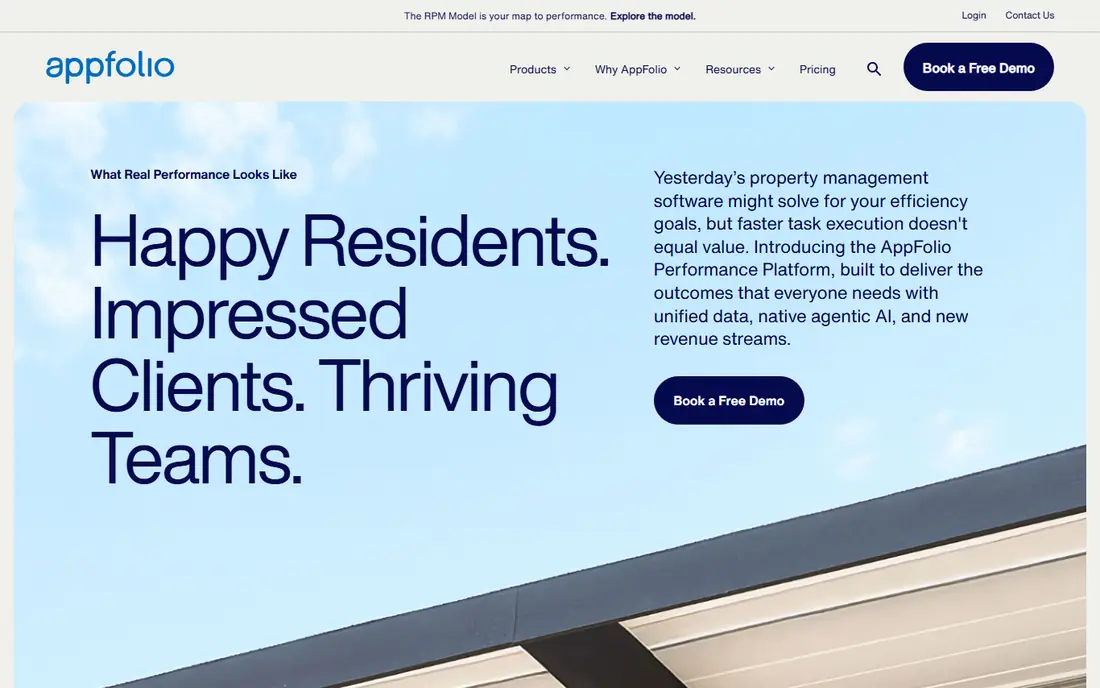
AppFolio is built for professional management companies and larger residential portfolios. It covers marketing, leasing, screening, rent collection, maintenance, accounting, and owner reporting in one system, with portals for tenants and owners. The platform also offers AI-assisted tools for accounting and communication, which help larger teams handle volume without adding headcount at the same pace.
The 50-unit minimum on Core means landlords under that size should look elsewhere, and the total cost rises with units. Implementation also takes planning, since accounting setup and portal configuration matter. For firms above the minimum that want one system for operations and books, AppFolio is a leading pick.
- Full management suite
- AI-assisted accounting tools
- Strong owner and tenant portals
- 50-unit minimum on Core
- Higher total for small portfolios
- Onboarding takes time
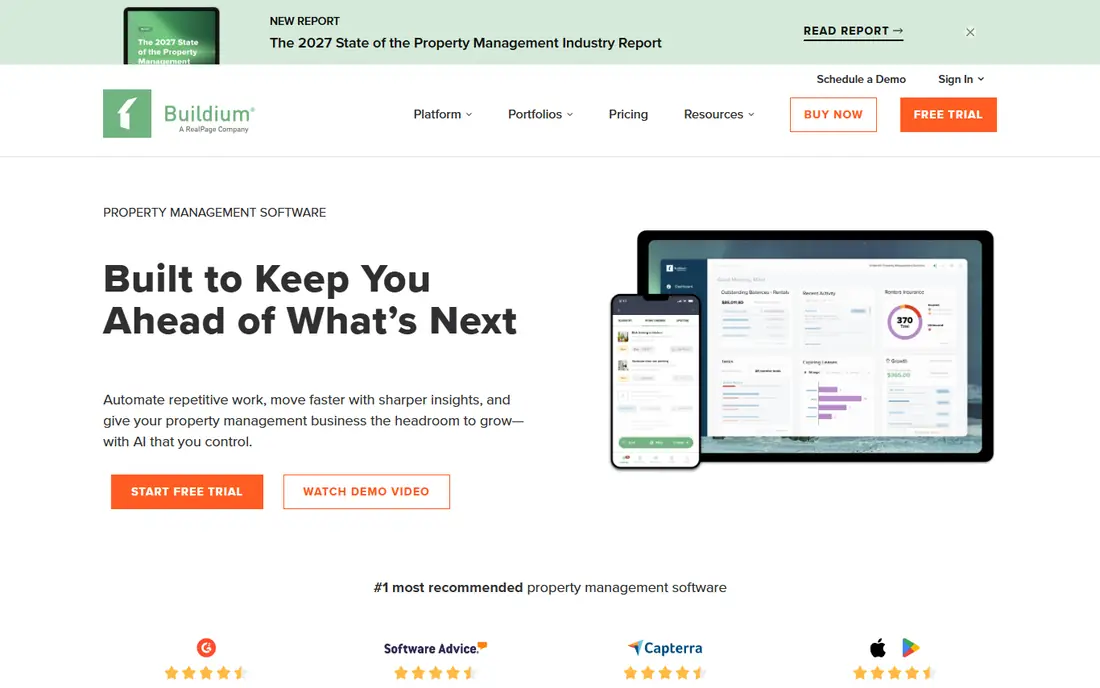
Buildium suits landlords and managers scaling from dozens to hundreds of units. The Essential plan starts at a published monthly price and covers listings, applications, screening, leases, rent collection, maintenance, and accounting. Owner statements and reporting help managers show results without separate bookkeeping software.
There is no permanent free plan, only a trial, so small landlords should test the workflow carefully before paying. Higher plans add features and capacity, which can raise the total as a portfolio grows. For a growing residential business that needs structure and real accounting, Buildium is a steady, well-known choice.
- Clear starting price
- Full leasing to ledger workflow
- Strong reporting
- No free plan
- Costs rise with portfolio features
- Learning curve for new managers
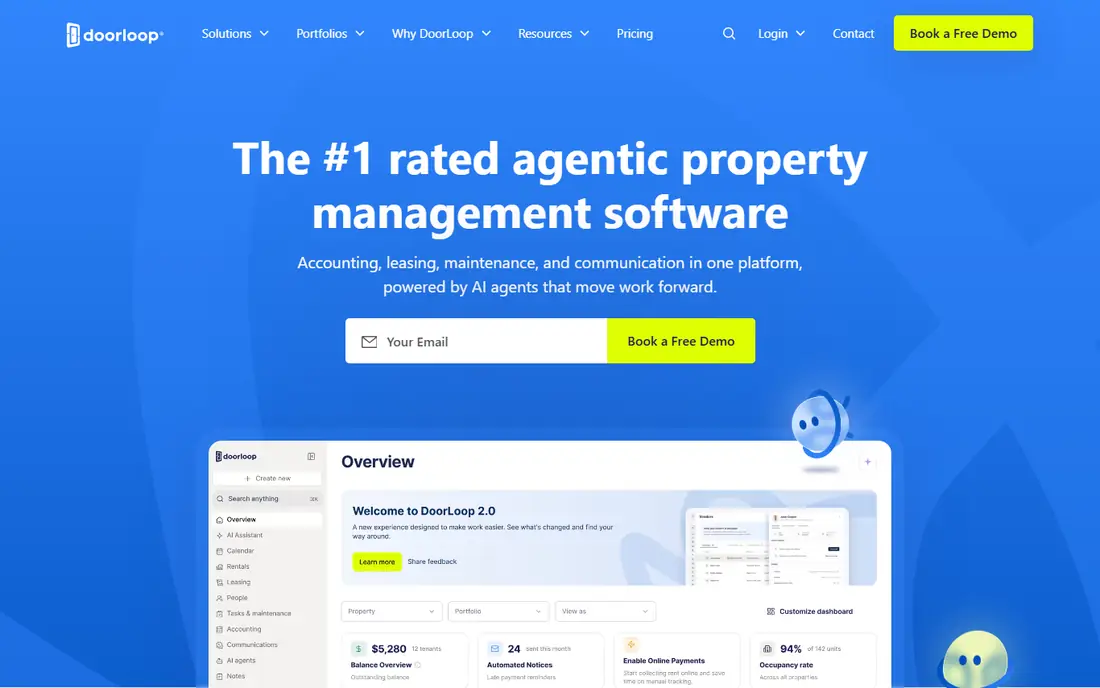
DoorLoop is a modern platform for managers who want accounting, rent collection, maintenance, leasing, and reporting in one place. The interface is clean, onboarding is guided, and full accounting is included on every plan, which avoids the add-on accounting fees some rivals charge. AI assistance helps draft messages and summarise work, saving time on routine admin.
The $199 monthly minimum on the entry plan means very small landlords will pay more than a flat-rate tool. Per-unit pricing also climbs as doors are added, so model the total at your target portfolio size. For growing firms that value ease of use and complete accounting, DoorLoop is a strong contender.
- Modern interface
- Full accounting on every plan
- AI assistance for routine work
- $199 monthly minimum on DoorLoop One
- Per-unit costs add up
- No free plan
Yardi Breeze brings Yardi accounting to smaller portfolios without the complexity of full Yardi Voyager. Pricing starts at $1 per unit per month with a $100 monthly minimum on an annual agreement, and the platform covers leasing, rent, maintenance, and accounting. It also handles a mix of residential and commercial units, which helps managers with varied portfolios.
The interface is practical rather than polished, and some features sit behind add-ons. There is no free plan, so budget from the minimum upwards. For a small firm that wants trusted accounting and a path to larger Yardi products, Breeze is a sensible pick.
- Yardi accounting heritage
- $100 monthly minimum
- Residential and commercial mix
- No free plan
- Interface is more functional than modern
- Add-ons can raise costs
RentRedi is the value pick for self-managing landlords who dislike per-unit pricing. One flat monthly rate covers unlimited units, with rent collection, listings, screening, maintenance, and accounting in the same app. That model stays steady at 5 doors and at 50, which makes budgeting simple for a growing DIY portfolio.
The platform is not a replacement for AppFolio or Buildium at professional management scale, since reporting and team controls are lighter. There is also no permanent free plan. For independent landlords who manage their own rentals and want one predictable price, RentRedi is hard to beat.
- Flat rate for unlimited units
- Rent collection and accounting included
- Mobile-friendly
- No free plan
- Less depth than AppFolio for large firms
- Some features need higher billing terms
TurboTenant gives independent landlords free core tools for listings, applications, screening, leases, and rent collection. That free start makes it a low-risk first system for a landlord with a handful of units. Paid plans add features such as advanced reporting and document tools for landlords who want more.
Accounting is lighter than Buildium or DoorLoop, so managers who need full ledgers and owner statements may outgrow it. The platform is also aimed at DIY landlords rather than professional firms. For a first rental or a small portfolio, TurboTenant offers a genuinely useful free base.
- Free core tools
- Rental applications and screening
- Rent collection included
- Paid upgrades for full features
- Accounting depth is lighter
- Aimed at smaller landlords
Innago offers capable management software at no monthly charge for landlords, covering rent collection, leases, maintenance requests, and tenant communication. That free model suits landlords who want to digitise without a monthly subscription, and the core workflow is straightforward to learn.
Some fees are covered by tenants rather than landlords, so read the fee schedule before choosing it as a selling point. Feature depth is also lighter than paid management suites, especially on accounting and reporting. For landlords who prioritise a free start and solid core tools, Innago is a strong option.
- Free core platform
- Rent collection and maintenance
- Tenant and owner tools
- Tenants cover some fees
- Feature depth is lighter
- Support options vary
TenantCloud appeals to DIY landlords who want accounting depth on a budget. The Starter plan, billed annually, covers rent collection, accounting, maintenance, and portals for tenants and landlords. That combination suits landlords who track income and expenses closely but do not need a full management firm suite.
There is no free plan in 2026, and the interface feels less modern than DoorLoop or TurboTenant. Higher plans add capacity and features, so check the tier that matches your unit count. For budget-conscious landlords who value books over polish, TenantCloud is worth a look.
- Low entry price
- Accounting and online payments
- Landlord and tenant portals
- No free plan in 2026
- Interface is less modern
- Support and features vary by plan
RentManager is built for professional property management companies that need depth across residential portfolios. It covers leasing, accounting, maintenance, owner reporting, and tenant portals, with reporting tools that suit firms managing hundreds of units. The platform is highly configurable, which helps firms with varied property types and workflows.
Pricing is quoted, and setup takes time, so it is not a quick pick for a single landlord. The learning curve is also steeper than free landlord tools. For a firm that needs a scalable, accounting-strong system and can invest in setup, RentManager belongs on the shortlist.
- Deep property management features
- Strong accounting and reporting
- Scalable for firms
- Quote-based pricing
- Learning curve
- Overkill for a handful of units
How we picked these
We compared official pricing and feature pages, landlord software guides, and property management reviews, and we favoured tools that are live in October 2026 and cover residential rentals. We weighed price model, unit minimums, accounting depth, and portfolio fit, and we mixed free landlord tools with professional suites. We did not run hands-on tenancy trials, and prices marked as quoted reflect vendors that do not publish a rate.
What to check before you buy
Start with your unit count in one year, not today. Per-unit tools look cheap at 10 doors and costly at 100, while flat-rate tools reverse that pattern. Write down the monthly minimum, the per-unit rate, and any screening or payment fees, then compare the total at your current and target size.
Next, test the full cycle with one property. Create a listing, run a screening, sign a lease, collect rent, log a maintenance request, and generate an owner statement. That single loop reveals weak accounting, confusing portals, and missing reports faster than a feature list. Also confirm bank sync, late-fee rules, and security deposit handling for your state, since rules vary.
Finally, check migration and support. Ask how existing leases, balances, and tenant records import, and what help is available during the first month. A cheap tool that loses opening balances will cost more in bookkeeping time than a pricier tool with clean import.
Frequently asked questions
What is residential property management software?
It is software for running rental homes and apartments, covering listings, applications, screening, leases, rent collection, maintenance, accounting, and owner reporting. Landlords use it to replace spreadsheets and separate payment tools, while management firms use it to run many properties in one system.
How much does it cost?
Free tools such as TurboTenant and Innago cover core needs at no monthly charge, while paid tools start at $12 to $62 per month for small portfolios. Per-unit platforms start at $1 to $2.50 per unit per month with monthly minimums, and large-firm tools are often quoted. Add screening and payment fees to the headline price.
Is free property management software good enough?
For a small DIY portfolio, often yes, since free tools cover listings, screening, rent, and maintenance. Free tools are lighter on accounting and reporting, so growing firms usually move to Buildium, DoorLoop, or AppFolio when owner statements and full ledgers matter.
Do I need AppFolio for a small portfolio?
No, AppFolio Core has a 50-unit minimum, so smaller landlords should start elsewhere. RentRedi, TurboTenant, Innago, and TenantCloud suit smaller portfolios better. Move to AppFolio when your portfolio and team need its scale and accounting depth.
Can tenants pay rent online?
Yes, all the tools here support online rent collection, though payment methods and fees vary. Confirm whether tenants pay by bank transfer or card, who covers transaction fees, and how autopay and late fees work. Test the tenant portal yourself before asking tenants to use it.
What about commercial properties?
Some tools, such as Yardi Breeze and RentManager, handle a mix of residential and commercial units. Free landlord tools are mainly residential, and commercial leases with complex terms need a platform built for that work. Check lease flexibility before choosing a residential-only tool for commercial units.
Sources
See where you really rank - block by block
ProMapRanker scans Google Maps across a grid of your service area. Simple monthly plans from $19, white-label on every plan.
Start freeKeep reading
 worlds best local seo company
8 Worlds Best Local SEO Companies for Map Pack Growth in 2026
Compare the worlds best local seo company options for Google Business Profile work, citations, reviews, and multi-location rankings and reporting in 2026.
Read → world's best web hosting company
World's Best Web Hosting Company in 2026
Searching for the world's best web hosting company? We compared 10 hosts on price, renewal rates, speed, and support to help you choose well today in 2026.
Read → who's got the best nanny tax services
Who's Got the Best Nanny Tax Services in 2026
We answer who's got the best nanny tax services, comparing full filing, back taxes, software, and pricing so families can handle nanny taxes correctly.
Read →