 ProMapRanker
Best Software for Real Estate Investors in 2026


Nationwide property data and comps · Pricing starts at: $99 per month
Key takeaways
- Most investors need only two or three tools, not a full stack of ten, and the best mix depends on strategy.
- Deal finding, follow-up and analysis are separate jobs, and one tool rarely does all three equally well.
- Rental accounting and deal analysis tools are often free to start, while lead data and investor CRMs cost more.
- This is not financial advice, and investors should verify values, rents and repair costs before making an offer.
Quick comparison
| Pick | Great for | Pricing starts at | Free tier | |
|---|---|---|---|---|
| PropStream | Nationwide property data and comps | $99 per month | Free trial | Visit |
 DealMachine | Driving for dollars and field prospecting | $99 per seat per month | Free trial | Visit |
 REsimpli | Investor CRM and deal pipeline | $249 per month | Free trial | Visit |
 DealCheck | Fast rental, flip and wholesale analysis | Free | Yes | Visit |
 Stessa | Rental bookkeeping and portfolio tracking | Free | Yes | Visit |
 BatchLeads | High-volume lead lists with contact data | $119 per month | Free trial | Visit |
 PropertyRadar | Owner alerts and trigger events | $119 per month | Free trial | Visit |
 Privy | MLS-based deal finding and investor comps | $78 per month | Free trial | Visit |
 RentCast | Rental estimates and market research | Free | Yes | Visit |
The best software for real estate investors
We focused on tools that help investors find deals, judge numbers, follow up with sellers and manage rentals. The list mixes prospecting platforms, a CRM, analysis tools and accounting, so readers can pick the part of the process they need most.
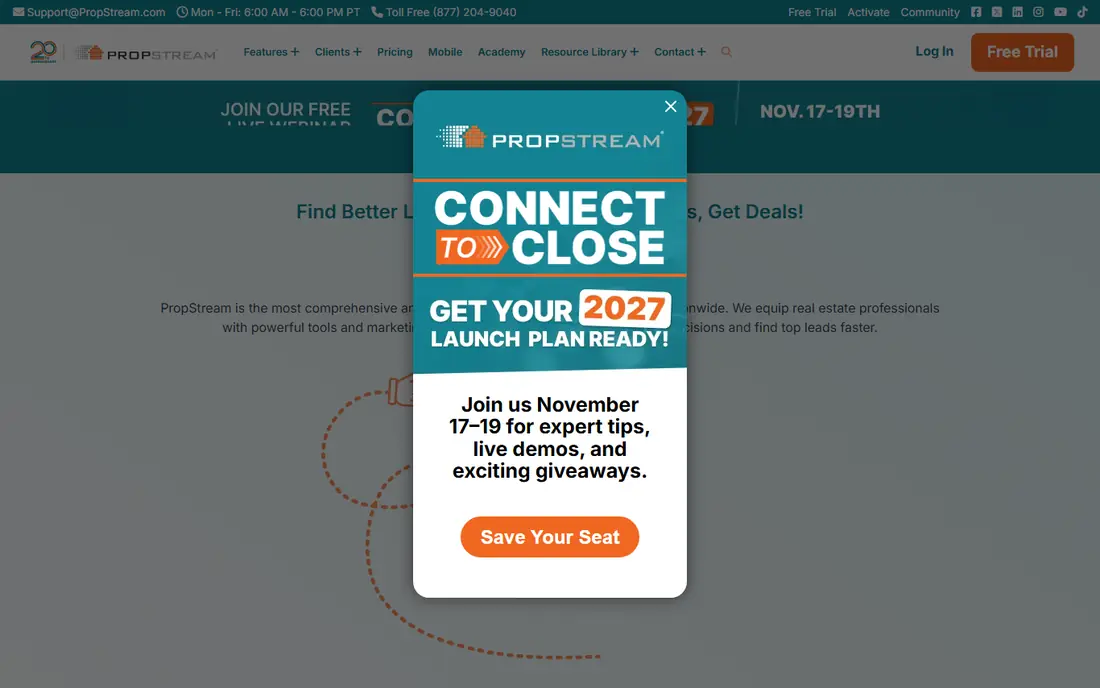
PropStream is a strong starting point for investors who need property details, owner information and comparable sales in one place. Users can filter for absentee owners, equity, pre-foreclosure and other distress signals, then build a list for outreach. Built-in calculators help with a first pass on a deal, before deeper underwriting.
The limit is that data is not perfect in every county, and a list is only as good as the follow-up behind it. Investors should spot-check values against local sales and confirm owner details before mailing or calling. For active wholesalers and flippers, though, the breadth of data is hard to match at this price.
- Large property database
- Built-in comps and calculators
- List building included
- Data quality varies by market
- Monthly cost adds up for part-time investors
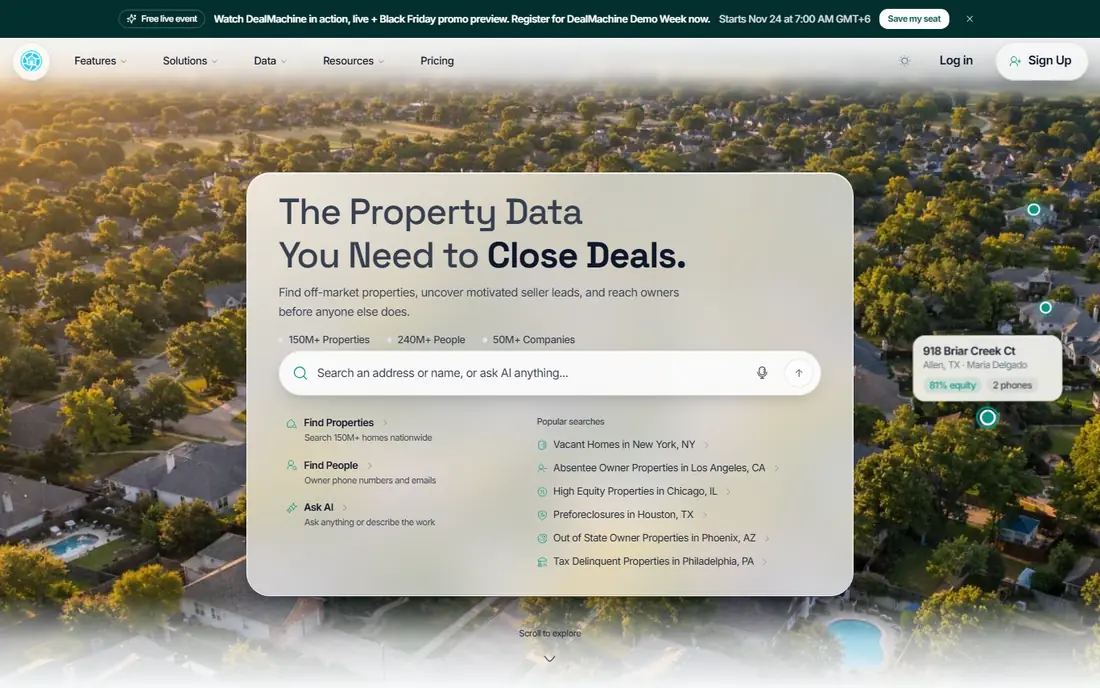
DealMachine was built around a simple field habit, which is spotting a distressed property, adding it in the app, and starting outreach. The app pulls owner details, lets users add notes and photos, and can send mail automatically. Route planning helps teams cover a neighbourhood in an orderly way instead of driving at random.
It is less useful for an investor who never prospect in the field, since many features assume driving or walking an area. Teams also need to watch per-seat costs, because each active user adds to the bill. For wholesalers who live by field prospecting, that trade-off is usually worth it.
- Easy property capture while driving
- Direct mail with property photos
- Route planning
- Per-seat pricing adds up for teams
- Less focused on rental accounting

REsimpli aims to be the operating system for an investor team, rather than one more list tool. Leads flow into a pipeline, drip campaigns follow up by text, email, voicemail and mail, and built-in accounting tracks deal costs. List stacking helps users spot properties that appear on several distress lists at once.
The price is the clear barrier. At $249 per month, it makes sense for a team doing regular deals, but it can feel heavy for someone closing one deal a year. Investors who already have a CRM may also find overlap. For a growing wholesale operation, the value is having follow-up, calling and accounting in one place.
- CRM, list builder, dialer and accounting in one system
- Drip campaigns
- List stacking
- Highest starting price in this list
- More system than a solo beginner may need
DealCheck is the tool to open before making an offer. It calculates cash flow, cash on cash return, flip profit and wholesale spreads from purchase price, rent, repairs and financing inputs. Reports are easy to share with a partner or lender, which helps when a deal needs a quick second opinion.
It does not find deals or manage follow-up, so it works best beside a prospecting tool or CRM. Investors must still enter honest inputs, because a calculator only reflects the rents and repair costs typed into it. For the price, which starts free, it is one of the most useful tools in this list.
- Quick deal calculators
- Clear reports for partners and lenders
- Free start
- Analysis only, no lead data or CRM
- Paid features needed for full reports
Stessa helps landlords keep rental finances tidy without a full accounting package. Income and expenses can be tracked by property, transactions can be grouped, and reports help at tax time. For owners with a small portfolio, that clarity alone can save hours of spreadsheet work each month.
It will not help find the next property, and it is not a CRM for seller leads. Its value comes after purchase, when rent, repairs, insurance and loan payments need to be recorded cleanly. Investors who mix personal and rental money will gain the most from setting it up early.
- Free rental accounting
- Bank and transaction tracking
- Tax-ready reports
- Not a deal-finding tool
- Paid plan needed for some advanced reports
BatchLeads is built for investors who work lists at scale. Users can pull targeted lists, skip trace contacts and launch outreach campaigns from the same platform. That combination suits wholesalers who mail or text hundreds of owners each month and need fresh lists on a regular cycle.
The risk with any volume tool is treating a list as a deal. Contact data can be out of date, and owners may not respond to a first message. Teams should budget for follow-up, not only list pulls, and should check local rules for texting and calling before starting a campaign.
- Large lead lists
- Contact data included
- Campaign tools for outreach
- Volume pricing can rise with usage
- Data still needs cleaning and follow-up
PropertyRadar stands out for monitoring, not just one-off lists. Users can watch for trigger events such as new foreclosure filings, ownership changes or equity shifts, and get alerts when a property matches their criteria. That helps investors act early, rather than working the same stale list as everyone else.
New users may need time to learn the filters and alerts, and the value depends on how well the chosen market is covered. For investors focused on one or two counties, that local depth is a strength. For buyers who jump between many states, a nationwide list tool may be simpler.
- Detailed owner and property profiles
- Trigger-event alerts
- Strong local filters
- Coverage and depth vary by state
- Learning curve for new users
Privy is aimed at investors who want MLS deals judged through an investor lens. It helps users find listed properties that may work as flips or rentals, compare them with investor comps, and run numbers quickly. For licensed agents who invest, or investors working closely with an agent, that MLS link is a clear advantage.
The limit is access. MLS rules differ by market, and off-market wholesalers may get less from it than a list tool. It also does not replace a CRM or a full accounting system. Used for its core job, finding and judging listed deals, it is a focused and fairly priced option.
- MLS data for deal finding
- Investor-focused comps
- Useful for agents and investors
- MLS access depends on market rules
- Less useful for off-market-only strategies
RentCast helps investors sense-check rent before buying. Users can look up rental estimates for a property or area, compare nearby rents and use that figure in a deal analysis. That is useful when a listing agent quote feels high, or when an area is new to the investor.
Estimates should be treated as a starting point, not a promise. Actual rent depends on condition, layout, tenant demand and local rules, so investors should confirm with local listings and property managers. As a research tool beside DealCheck, though, RentCast adds a useful check at low cost.
- Rental value estimates
- Market data for research
- Free tier to start
- Estimates are not appraisals
- API and advanced data sit on paid plans
How we picked these
We compared official pricing pages, feature pages and recent investor guides, and we favoured tools live in October 2026 that serve a clear investor job. We looked for current starting prices, free tiers, and a real fit for wholesaling, flipping or rental ownership, rather than general real estate agent tools. We did not claim hands-on testing, and we avoided tools whose pricing could not be checked at all.
What to check before you buy
Start with strategy, not software. A wholesaler needs lists and follow-up, a flipper needs fast analysis and rehab tracking, and a landlord needs accounting and rent research. Buying a CRM before there are leads to manage, or a list tool before there is a follow-up plan, wastes money.
Next, check data coverage in your market. Ask for a sample pull, compare owner details and values with county records or local sales, and confirm which states and counties are fully covered. A tool that works well in one state may be thin in another.
Finally, test the workflow end to end. Pull a list, run the numbers, send a follow-up and record the result, using a small test batch first. If any step needs a spreadsheet workaround, that friction will grow with volume. This is not financial advice, and all estimates should be verified with qualified local professionals before an offer.
Frequently asked questions
What is the best real estate investment software for beginners?
DealCheck and Stessa are good low-cost starts, because both are free to begin and cover analysis and rental accounting. For finding deals, PropStream gives a broad first look at data and lists. Beginners should start with one prospecting tool and one analysis tool, not a full stack.
What is the best software for real estate investors who wholesale?
PropStream, DealMachine and BatchLeads all fit wholesaling, but in different ways. DealMachine suits field prospecting, BatchLeads suits high-volume lists, and PropStream suits broad data research. REsimpli fits wholesalers who want leads, follow-up and accounting in one CRM.
Is there free software for real estate investors?
Yes. DealCheck, Stessa and RentCast all offer free tiers, and each covers a different job, which is analysis, accounting and rent research. Free tiers have limits, but they are enough to learn the workflow and judge a first deal before paying.
Do I need a CRM as a real estate investor?
A CRM helps once leads, follow-ups and deals grow beyond a spreadsheet. Solo investors doing a few deals a year may manage without one, while active wholesalers usually need pipeline tracking, drip campaigns and call records. REsimpli is the all-in-one option in this list.
How accurate are rental estimates and property values in these tools?
They are estimates based on available data, not appraisals or guaranteed rents. Values can lag local sales, and rents vary with condition and demand. Use them for screening, then confirm with comparable sales, local listings and, where needed, a local professional.
Sources
See where you really rank - block by block
ProMapRanker scans Google Maps across a grid of your service area. Simple monthly plans from $19, white-label on every plan.
Start freeKeep reading
 zscaler alternatives
Best Zscaler Alternatives in 2026
Looking for zscaler alternatives? We compare 9 SASE and zero trust platforms on architecture, data protection, pricing, and fit for your network and team.
Read → zapier alternatives free
Best Zapier Alternatives Free in 2026
Nine automation tools for zapier alternatives free in 2026, all with genuinely free tiers, plus free plan limits, starting prices and upgrade paths explained.
Read → which platform is best for online reputation
Which Platform Is Best for Online Reputation in 2026
Wondering which platform is best for online reputation? We compare 8 review, listing, and response tools for small and multi-location businesses and agencies.
Read →