 ProMapRanker
Best Software for Multi-Currency Accounting in 2026


US small businesses and accountant support · Pricing starts at: $38 per month
Key takeaways
- Xero and Zoho Books suit small international teams, while QuickBooks Online suits US firms that want wide accountant support.
- FreshBooks and Wave suit simple service invoicing, but their multi-currency depth is thinner than the larger platforms.
- Sage Intacct and Oracle NetSuite suit multi-entity groups that need consolidation and dimensional reporting.
- Always confirm which plan includes multi-currency, because several vendors gate it behind a higher tier.
Quick comparison
| Pick | Great for | Pricing starts at | Free tier | |
|---|---|---|---|---|
| QuickBooks Online | US small businesses and accountant support | $38 per month | Yes | Visit |
 Xero | International teams and unlimited users | $25 per month | Free trial | Visit |
 Zoho Books | Budget-conscious multi-currency teams | $15 per month | Yes | Visit |
 FreshBooks | Service firms invoicing abroad | $23 per month | Free trial | Visit |
 Sage Intacct | Mid-market multi-entity finance | See website | No | Visit |
 Oracle NetSuite | ERP with global finance | See website | No | Visit |
 Odoo | Modular apps with accounting | See website | Yes | Visit |
 Wave | Very small firms starting free | Free | Yes | Visit |
The best software for multi-currency accounting
This article is general information only and is not accounting or tax advice. Multi-currency accounting is not just invoicing in another currency. It also covers exchange rates, gains and losses, bank reconciliation in foreign currency, and reporting in a home currency, so check each of those jobs, not just the invoice template.

QuickBooks Online is the safest default for a US small business that wants an accountant to open the books without conversion work. It covers invoicing, expenses, bank feeds, and reporting, with payroll and inventory as add-ons or higher tiers. That wide accountant familiarity reduces friction at tax time and during a handover.
Multi-currency is not in the lowest plan, so teams that invoice abroad should price Essentials or higher, not Simple Start. Costs also rise with users and features, so check the tier that includes the currencies, users, and reports you actually need. This article is general information only and is not accounting or tax advice.
For a team weighing QuickBooks Online, the practical test is simple. Run one real campaign or workflow end to end, check how clean the data looks in the reports, and confirm the total price at your actual contact, user, or volume level before signing a longer term. That short trial tells you more than any feature list, because it shows where work slows down and where the tool fits your daily routine.
- Widely supported by US accountants
- Invoicing, expenses, and payroll options
- Many integrations
- Price rises by tier
- Multi-currency sits in higher plans
- Add-ons raise cost
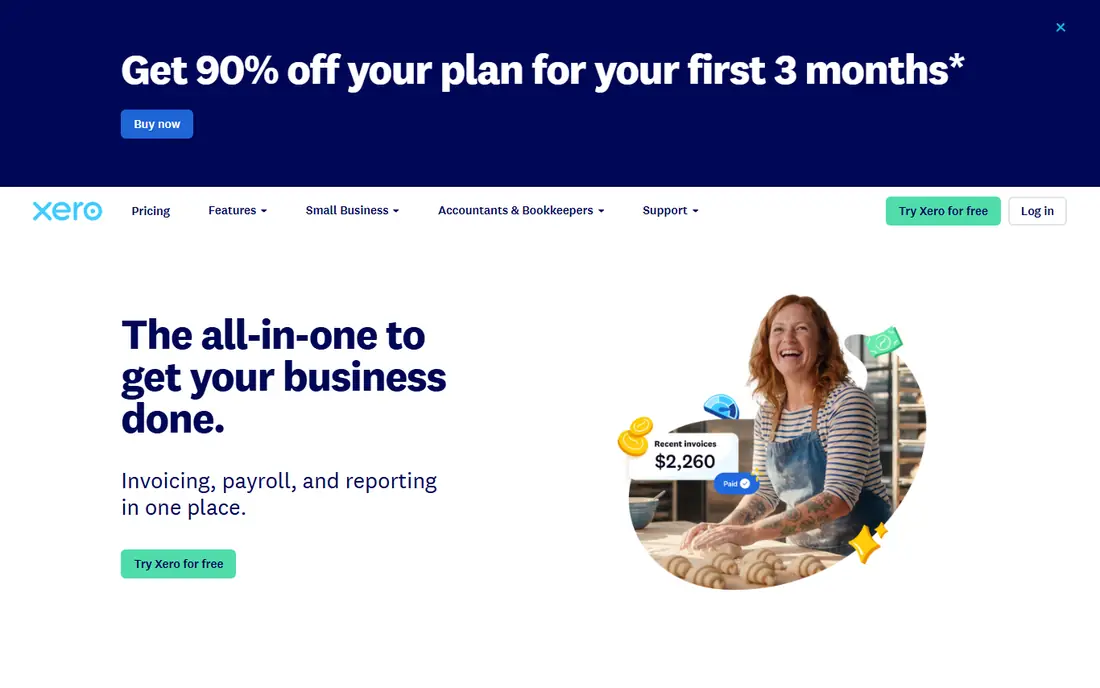
Xero suits international small businesses and teams where several people need access without per-user fees. Every plan includes unlimited users, bank reconciliation is clear, and the app range covers payments, expenses, and reporting. For a team spread across countries, that user model keeps costs predictable.
Multi-currency is in the Established plan in current US listings, not the entry Early plan, so price that tier if foreign currency is core. US payroll is handled through a partner rather than inside Xero, and Early caps invoices and bills. Confirm the plan that matches your currency and invoice volume.
For a team weighing Xero, the practical test is simple. Run one real campaign or workflow end to end, check how clean the data looks in the reports, and confirm the total price at your actual contact, user, or volume level before signing a longer term. That short trial tells you more than any feature list, because it shows where work slows down and where the tool fits your daily routine.
- Unlimited users on every plan
- Strong bank reconciliation
- Wide app range
- Multi-currency and projects sit in higher plans
- US payroll needs a partner
- Entry invoice limits apply
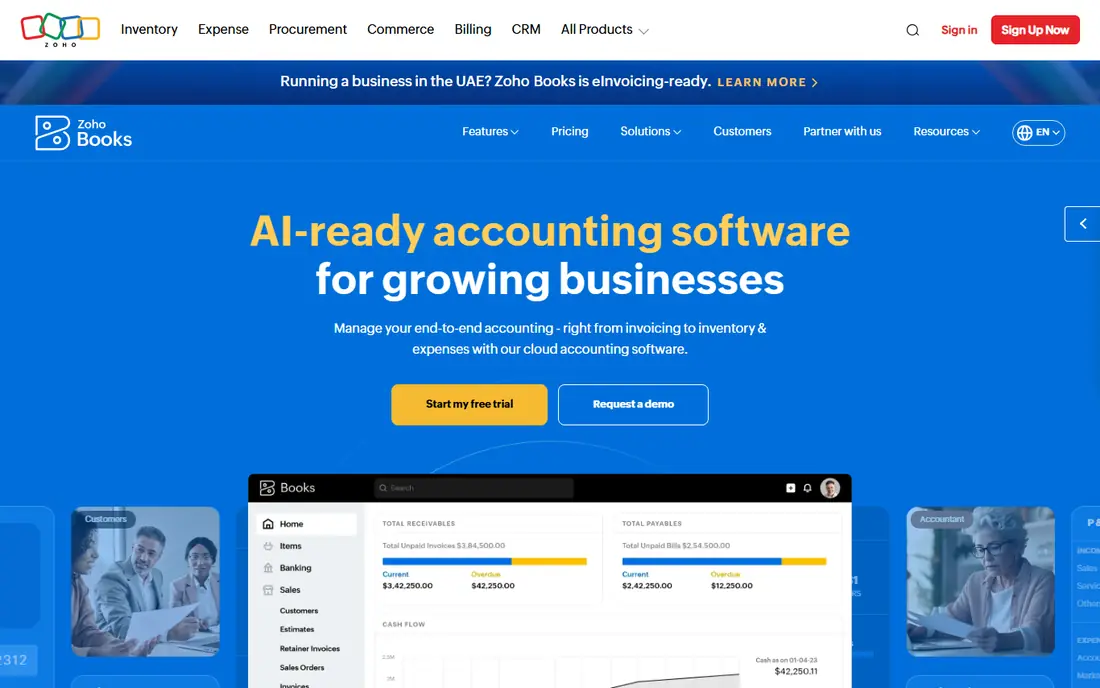
Zoho Books gives a small team a lot of accounting for the money, including multi-currency support and, on higher plans, inventory and project billing. The free plan suits very small businesses under the revenue limit, and paid plans start at $15 per month when billed annually. For a Zoho CRM user, the link between sales and books is also useful.
The interface can feel busy, and fewer accountants work in Zoho Books every day than in QuickBooks or Xero, so check your accountant first. Payroll and some local compliance features vary by region. This article is general information only and is not accounting or tax advice.
For a team weighing Zoho Books, the practical test is simple. Run one real campaign or workflow end to end, check how clean the data looks in the reports, and confirm the total price at your actual contact, user, or volume level before signing a longer term. That short trial tells you more than any feature list, because it shows where work slows down and where the tool fits your daily routine.
- Affordable plans
- Free tier for small revenue
- Inventory and projects on higher plans
- Interface takes learning
- Fewer accountants use it daily
- Payroll pricing varies
FreshBooks suits service firms that live in invoices, time, and client payments, including firms with clients abroad. Invoicing is clear, time tracking links to bills, and clients can pay online without a separate portal. For a freelancer or small agency, that client-facing simplicity is the main draw.
It is not a full ERP, and accounting depth is thinner than QuickBooks, Xero, or Sage Intacct. Plans limit billable clients, with Lite covering up to five, so growing firms should price Plus or Premium. Confirm multi-currency invoicing and reporting at your plan level before relying on it for foreign clients.
For a team weighing FreshBooks, the practical test is simple. Run one real campaign or workflow end to end, check how clean the data looks in the reports, and confirm the total price at your actual contact, user, or volume level before signing a longer term. That short trial tells you more than any feature list, because it shows where work slows down and where the tool fits your daily routine.
- Clear invoicing and time tracking
- Client-friendly payments
- Simple reports
- Full accounting depth is thinner
- Client limits by plan
- Multi-currency needs plan check
Sage Intacct suits mid-market firms with several entities, currencies, and complex reporting needs. Dimensional reporting lets finance slice results by department, location, or project without a maze of separate charts, and multi-currency and consolidation tools support international groups. For a finance-led team, that reporting depth is the reason to upgrade from a small-business ledger.
Pricing is quote-based and implementation takes months for a complex setup, so it is not a small-team purchase. Teams should scope entities, currencies, and reporting needs in the quote, and budget for implementation and training. This article is general information only and is not accounting or tax advice.
For a team weighing Sage Intacct, the practical test is simple. Run one real campaign or workflow end to end, check how clean the data looks in the reports, and confirm the total price at your actual contact, user, or volume level before signing a longer term. That short trial tells you more than any feature list, because it shows where work slows down and where the tool fits your daily routine.
- Multi-entity and dimensional reporting
- Strong financial controls
- Multi-currency support
- Quote-based pricing
- Implementation takes time
- Overkill for a sole trader
Oracle NetSuite suits growing firms that need accounting plus inventory, order management, and CRM in one system, with global currency and localisation support. Multi-currency, multi-subsidiary, and consolidation features help international groups close the books in one platform rather than stitching systems. For a firm outgrowing a small ledger, that unity is the appeal.
Pricing is quote-based and implementation is a major project, often larger than the first-year licence cost for a mid-market deployment. Teams should phase the rollout, confirm which modules are truly needed, and avoid paying for a full ERP when only finance and multi-currency are required.
For a team weighing Oracle NetSuite, the practical test is simple. Run one real campaign or workflow end to end, check how clean the data looks in the reports, and confirm the total price at your actual contact, user, or volume level before signing a longer term. That short trial tells you more than any feature list, because it shows where work slows down and where the tool fits your daily routine.
- Unified ERP with finance, inventory, and CRM
- Wide currency and localisation support
- Consolidation
- Quote-based enterprise pricing
- Implementation is large
- Modules can go unused
Odoo suits firms that want accounting alongside sales, inventory, and project apps in one modular system. The accounting app supports multi-currency invoicing and reporting, and other apps can be added as the firm grows. For a team that wants one vendor for operations and books, that modular path is flexible.
Flexibility means configuration work. Accounting depth, local compliance, and reporting depend on the apps and settings chosen, so a firm needs an implementer or a skilled admin for a serious deployment. Pricing varies by users and apps, so get a quote for the exact app set, not a single app price.
For a team weighing Odoo, the practical test is simple. Run one real campaign or workflow end to end, check how clean the data looks in the reports, and confirm the total price at your actual contact, user, or volume level before signing a longer term. That short trial tells you more than any feature list, because it shows where work slows down and where the tool fits your daily routine.
- Modular app range
- Accounting with inventory and sales
- Flexible deployment
- Accounting depth depends on modules
- Setup takes configuration
- Pricing varies by users and apps
Wave suits a very small service business that needs free invoicing and bookkeeping to start. Starter covers unlimited invoices, estimates, and bookkeeping records at no monthly cost, with payments and payroll as paid add-ons. For a sole trader with simple books, that free start is hard to beat.
Multi-currency support is more limited than in Xero, QuickBooks higher plans, or Sage Intacct, and Wave is focused on the US and Canada. Teams with regular foreign currency transactions, complex inventory, or multi-entity needs should shortlist a paid platform instead. This article is general information only and is not accounting or tax advice.
For a team weighing Wave, the practical test is simple. Run one real campaign or workflow end to end, check how clean the data looks in the reports, and confirm the total price at your actual contact, user, or volume level before signing a longer term. That short trial tells you more than any feature list, because it shows where work slows down and where the tool fits your daily routine.
- Free Starter accounting and invoicing
- Simple bookkeeping
- Payment add-ons
- Multi-currency depth is limited
- US and Canada focus
- Paid features add up
How we picked these
We compared official pricing pages, feature pages, and public documentation, and we judged each tool on multi-currency invoicing, bank reconciliation, exchange rate handling, reporting in a home currency, and user and entity limits. We kept only accounting platforms with a current multi-currency feature and a live vendor site, and we marked quote-based enterprise pricing as See website. Prices are starting prices unless a higher plan is needed for multi-currency, which we note in the write-up.
How to choose a multi-currency ledger without year-end surprises
Start with your real currency list and transaction types. A firm that invoices in euros and pays suppliers in pounds needs bank feeds, reconciliation, and reporting in both, not just an invoice in euros. Next, ask how exchange rates are set and updated, and how gains and losses appear in reports, because manual rate work creates errors at year end. Finally, involve your accountant before buying, and confirm tax and payroll handling for each country you operate in. A ledger that your accountant cannot easily review will cost more in fees than it saves in subscription price.
Frequently asked questions
What is the best accounting software for multi-currency?
Xero suits international small teams, QuickBooks Online suits US firms with wide accountant support, and Sage Intacct suits multi-entity groups. The best choice depends on entity count, accountant familiarity, and which plan includes multi-currency.
What is the best rated multi-currency accounting software for small business?
Zoho Books offers strong value for small firms, while Xero offers unlimited users and clear reconciliation. Check the plan that includes multi-currency, because entry plans often exclude it.
Does QuickBooks Online support multi-currency?
Yes, but multi-currency sits in higher QuickBooks Online plans, not Simple Start. Price Essentials or higher if foreign currency invoicing and reporting are core to your business.
What is the best multi-currency accounting software for a growing firm?
Sage Intacct suits finance-led multi-entity firms, while Oracle NetSuite suits firms that also need inventory and CRM in one ERP. Both are quote-based, so scope entities and currencies in the quote.
Is free multi-currency accounting software enough?
Wave Starter and the Zoho Books free tier suit very simple books, but multi-currency depth, reporting, and accountant support are thinner. Move to a paid plan when foreign transactions become regular rather than occasional.
Sources
See where you really rank - block by block
ProMapRanker scans Google Maps across a grid of your service area. Simple monthly plans from $19, white-label on every plan.
Start freeKeep reading
 zoho inventory alternatives
6 Alternatives to Zoho Inventory, Compared on Price and Fit
Zoho Inventory alternatives: 6 tools compared on price, free plans and fit. Katana leads the list for manufacturers. Fit and flaws are laid out for each entry.
Read → zoho crm alternatives
Best Zoho CRM Alternatives (2026)
Need Zoho CRM alternatives? We compare 7 tools on cost, free access and who each suits. Every pick gets a straight assessment. Built for quick decisions.
Read → zelle alternatives
Best Zelle Alternatives in 2026
Compare the best Zelle alternatives for sending money to friends, paying sellers and moving funds abroad, with honest notes on fees, speed and safety in 2026.
Read →