 ProMapRanker
Best Software for Marketing Agencies in 2026

Key takeaways
- GoHighLevel suits agencies that run many client accounts on one flat subscription, with unlimited users and sub-accounts on higher plans.
- HubSpot suits agencies that need deep reporting and a polished CRM, but per-seat pricing grows quickly with team size.
- Semrush and AgencyAnalytics cover the research and reporting jobs: Semrush for search and competitor work, AgencyAnalytics for branded client reports.
- Vendasta suits agencies that resell services under their own brand, while Asana, ClickUp and Hootsuite cover delivery, tasks and social publishing.
Quick comparison
| Pick | Great for | Pricing starts at | Free tier | |
|---|---|---|---|---|
 HubSpot | CRM, marketing and deep reporting | Free | Yes | Visit |
 GoHighLevel | Agencies running many client accounts | $97 per month | Free trial | Visit |
 Semrush | Search research and competitor analysis | $139.95 per month | Free trial | Visit |
 AgencyAnalytics | Branded client reporting | $20 per client per month | Free trial | Visit |
 Vendasta | Reselling services under your brand | See website | Free trial | Visit |
 Asana | Client project delivery and task tracking | See website | Yes | Visit |
 ClickUp | All-in-one tasks, docs and goals | See website | Yes | Visit |
 Hootsuite | Social publishing and monitoring for clients | See website | Free trial | Visit |
The best software for marketing agencies
We compared eight tools that agencies actually use across five jobs: client campaign delivery, project management, CRM, reporting and channel tools. The best software for marketing agencies below is not one platform for everything, since no single tool does every job well, so we cover the strongest option for each job and how they fit together.
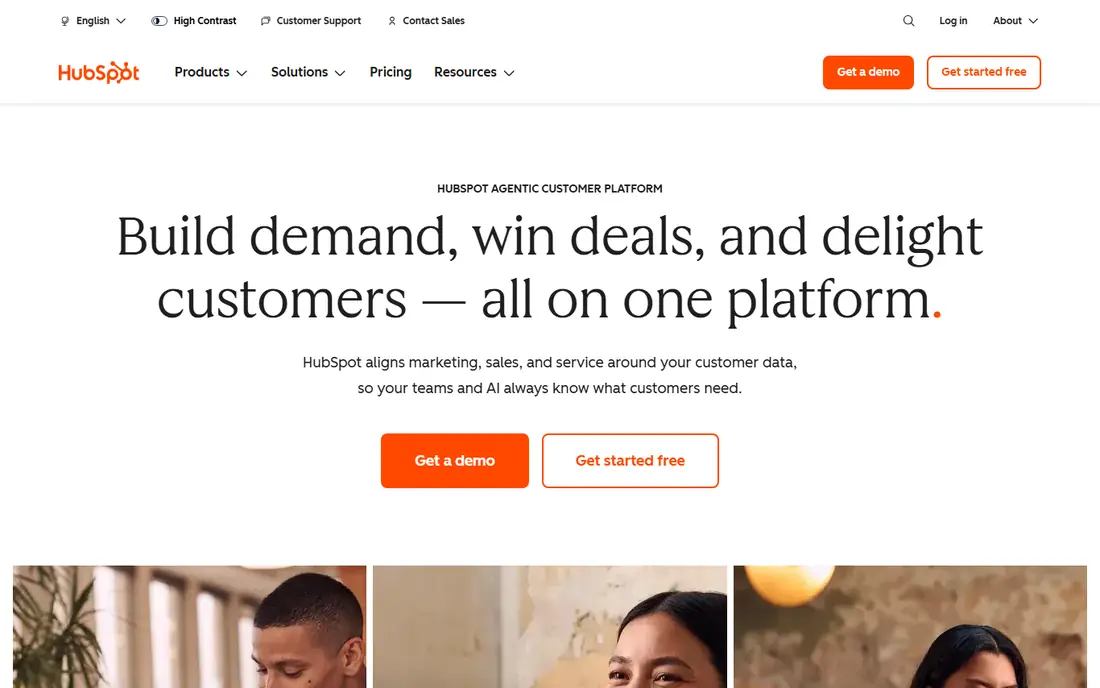
HubSpot is the strongest CRM choice for agencies that run their own pipeline well and need reporting they can trust. The free CRM covers contacts, deals and basic tracking, while paid hubs add marketing automation, sales tools, service tickets and custom reports. Data quality features such as deduplication and property validation matter once an agency handles many leads, because messy data quietly breaks every report.
The catch is the pricing model. HubSpot charges per seat and per contact tier, and each client usually needs its own account, so the bill grows with every new client and team member. Professional tiers also carry one-time onboarding fees in published comparisons. Choose HubSpot when reporting depth and polish matter more than flat multi-client pricing, and price the seats and contacts before you promise a client a fixed monthly fee.
- Free CRM to start
- Deep reporting, automation and data quality tools
- Very large integration ecosystem
- Costs rise quickly with seats, contacts and hubs
- No multi-client sub-account model like agency platforms
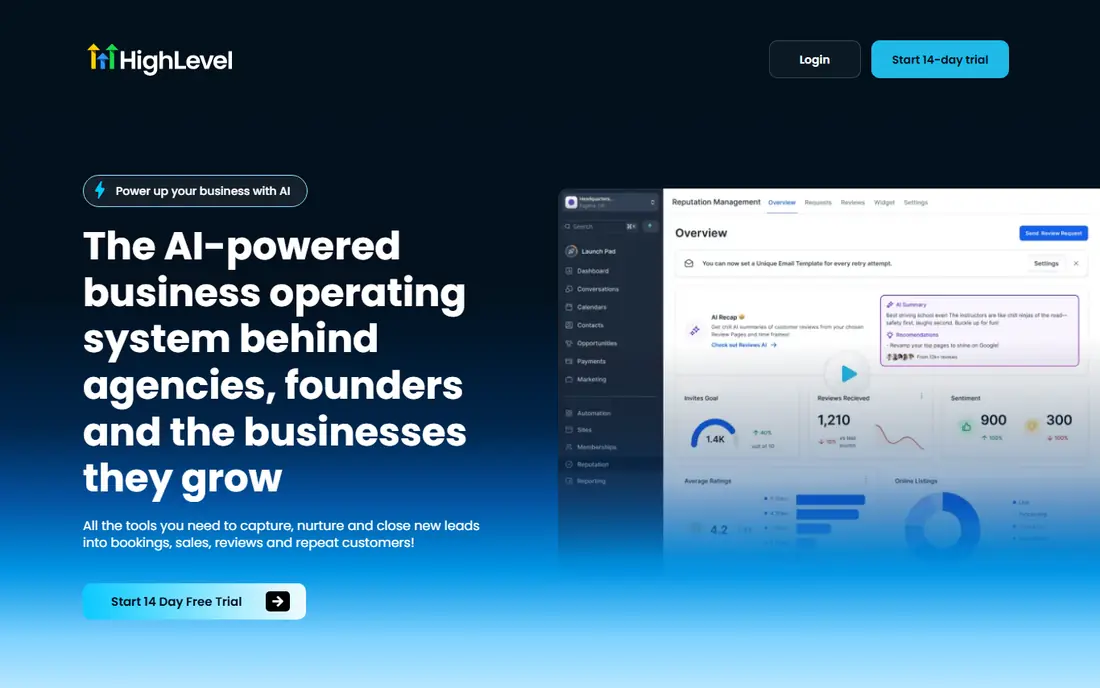
GoHighLevel is built for a different agency model: one platform, many client sub-accounts, one flat bill. Starter at $97 per month covers 3 sub-accounts, Unlimited at $297 per month covers unlimited sub-accounts, and Agency Pro at $497 per month adds SaaS Mode for reselling the platform under your own brand. Every plan includes unlimited users and contacts, and a 14-day free trial lets a team test the full setup.
That structure changes the maths. An agency with twenty clients on Unlimited pays about $15 per client per month before usage charges, a figure HubSpot's per-seat model cannot match. The trade-off is reporting depth and polish: GoHighLevel is built to deploy fast across accounts, not to produce the deepest single-company reports. Pick it when you execute marketing for many clients directly and want one system for funnels, follow-up and booking.
- Flat pricing with unlimited users
- Sub-accounts for many clients
- Funnels, email, SMS, booking and automation in one place
- Reporting is shallower than HubSpot
- Usage charges for calls, SMS and AI features sit on top of the plan
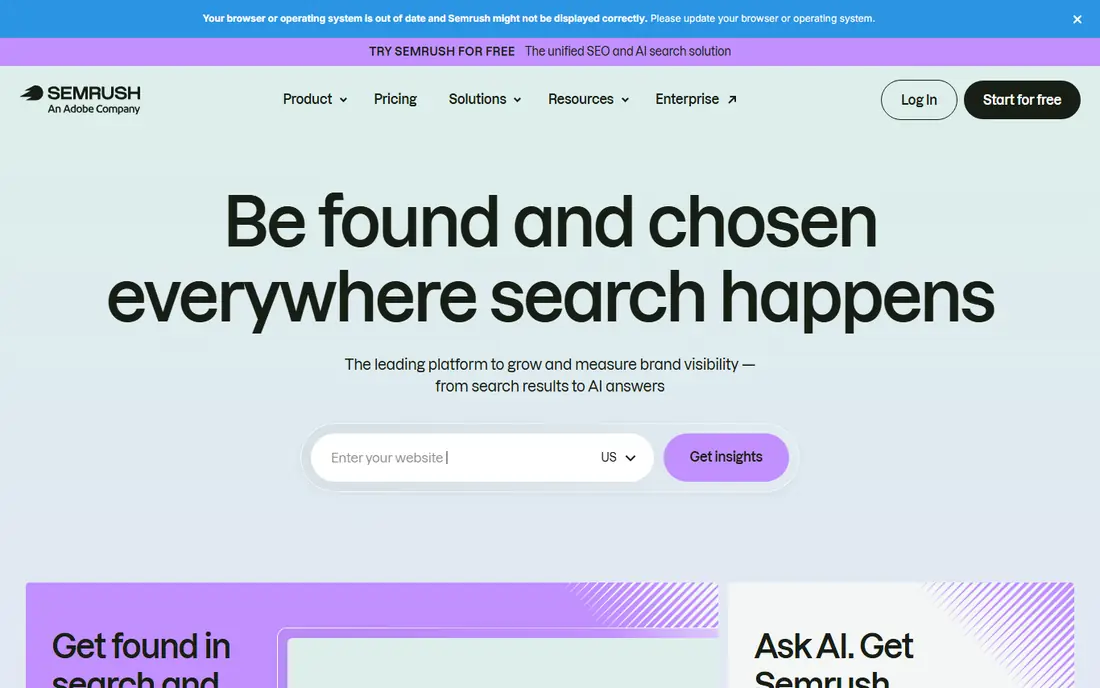
Semrush is the research engine behind many agency SEO retainers. It covers site audits, position tracking, backlink analysis, advertising research and content tools in one subscription, and agency teams organise each client as a separate project with its own tracked keywords and connected analytics. The entry SEO plan at $139.95 per month covers 5 projects and 500 tracked keywords, with higher plans raising those limits.
Costs need careful tracking. Extra users start at $45 per month on SEO plans, and white-label reporting is a paid add-on on some tiers, so a three-person agency can pay well above the headline price. Semrush does not replace a CRM or a reporting dashboard, but for search work it is the tool most clients expect an agency to know. Price the projects, keywords and seats together before you quote a retainer.
- Broad SEO, advertising and content tools
- Competitor traffic and keyword research
- Client projects and white-label reports on higher tiers
- Extra users cost from $45 per month
- Bill grows with toolkits, seats and tracked keywords
AgencyAnalytics solves the monthly report problem. It pulls data from search, advertising, social and analytics platforms into branded dashboards and scheduled reports that clients can open under your agency's name. Pricing at $20 per client per month on annual billing, with unlimited users and white-label included, makes the cost easy to pass on or bundle into a retainer.
The limitation is scope. AgencyAnalytics reports on work done elsewhere, it does not run ads, publish posts or manage search campaigns, so it pairs with Semrush, HubSpot or GoHighLevel rather than replacing them. Rank tracking and AI visibility tracking are paid add-ons, so check those costs if clients ask about search positions or AI search mentions. For agencies whose deliverable is a clear monthly report, it is the cleanest option in this guide.
- White-label dashboards and custom domain included
- Unlimited users
- Per-client pricing scales with your book
- Reporting only, it does not run campaigns
- Rank tracking and AI tracking cost extra
- Gets pricey above 25 clients
Vendasta suits agencies that resell rather than only deliver. Its marketplace offers listings, reputation, advertising and other products at wholesale prices, which the agency marks up and sells under its own brand through a white-label portal. Published comparisons describe a $99 per month minimum product spend on entry, with Professional plans requiring higher spend once resold products are counted, so the real cost depends on how much you sell.
That model is powerful for a reseller and confusing for a delivery agency. If your team executes campaigns itself, GoHighLevel or HubSpot will fit better. If your model is selling packaged services with fulfilment partners behind them, Vendasta gives you a storefront, billing and client portal in one place. Work out the minimum spend and margin per product before you sign, since the platform fee is only part of the bill.
- Marketplace of resalable products
- White-label client portal
- Fulfilment partners for services you do not deliver in-house
- Pricing is based on minimum product spend, not a simple licence
- A full platform, not a single tool
Asana is where agency delivery work lives. Projects, tasks, timelines and workloads turn a retainer into visible steps with owners and deadlines, and templates keep recurring work such as monthly reporting or campaign launches consistent across clients. Clients can be added as guests to their own projects, which reduces status-update emails and keeps approvals in one place.
Asana does not replace a CRM, a reporting dashboard or an advertising tool, and that is fine as long as you buy it for delivery only. Higher plans add portfolios, workload views and advanced reporting, so price the tier that covers multi-client oversight, not just single-project tasks. Agencies that already run delivery in spreadsheets or chat will feel the difference within the first month of consistent use.
- Clear project timelines, tasks and workloads
- Templates for recurring client work
- Strong integrations
- Not a CRM or reporting tool
- Advanced reporting and portfolios sit on higher plans
ClickUp appeals to agencies that want one workspace for tasks, documents, goals and time tracking instead of several separate tools. Views can switch between lists, boards, calendars and timelines, so a creative team, an ads team and a manager can each work in the layout they prefer while sharing the same underlying tasks. The free tier is generous enough for a small team to test the system properly.
The risk is the same as the strength. With so many options, teams without a clear workspace design end up with inconsistent projects that are hard to report on. Appoint one owner for templates, statuses and naming, and keep the structure simple for client work. Priced per user, ClickUp stays affordable for small teams, but the bill still grows with headcount, unlike GoHighLevel's flat agency pricing.
- Tasks, docs, whiteboards and goals in one workspace
- Flexible views for different teams
- Generous free tier
- Flexibility can become complexity
- Setup needs ownership or teams build inconsistent workspaces
Hootsuite covers the social publishing job for agencies that manage many client accounts. Posts can be scheduled across Facebook, Instagram, LinkedIn, TikTok and other platforms from one dashboard, while streams monitor mentions and messages that need a reply. Reports can be shared with clients to show publishing activity and engagement without exporting data by hand.
Hootsuite is a channel tool, not a full agency platform, so it pairs with a CRM, a reporting dashboard and a project tool rather than replacing them. Pricing is quoted on many agency plans, so get a direct quote based on users and social profiles before you compare it with simpler scheduling tools. For agencies with a large social workload, the time saved on scheduling and monitoring justifies the cost; for a handful of accounts, a cheaper scheduler may be enough.
- Schedule and publish across major social platforms
- Monitor mentions and messages
- Client-ready reports
- Quoted pricing on many plans
- Social-only, it does not cover SEO, ads or CRM work
How we picked these
We compared official pricing pages, agency feature descriptions and published 2026 agency software comparisons, and we kept only tools that are live in October 2026 and used by real marketing agencies for client work. We covered five distinct agency jobs rather than listing eight similar CRMs, and we wrote See website where pricing is quoted or varies by seats and profiles, instead of inventing a figure. We did not claim hands-on testing of agency accounts, and our comparison rests on vendor documentation and published pricing.
How to build an agency stack without overspending
Start from the jobs, not the tools. List the work you actually sell: search, paid ads, social, content, web design or a mix, then assign one tool to each job and check for overlap before you buy anything new. Many agencies pay for three tools that all schedule social posts, while reporting still happens in spreadsheets, because nobody mapped the stack first.
Next, price per client, not per tool. Add the per-seat, per-client and usage costs for a typical client, then compare that total with the retainer you charge. A flat platform such as GoHighLevel looks cheap per client at twenty accounts and expensive at three, while a per-client reporter such as AgencyAnalytics scales in step with revenue. Review the stack every six months, drop tools that duplicate a job, and keep the one your team actually opens every day.
Frequently asked questions
What is the best software for marketing agencies?
There is no single best tool, since agencies need different tools for CRM, delivery, reporting and channels. GoHighLevel suits multi-client delivery on a flat price, HubSpot suits deep CRM and reporting, Semrush suits search research, and AgencyAnalytics suits branded client reporting. Most agencies use a small stack, not one platform.
What tools do digital marketing agencies use?
A typical agency stack includes a CRM such as HubSpot or GoHighLevel, a project tool such as Asana or ClickUp, a research tool such as Semrush, a reporting tool such as AgencyAnalytics, and a social tool such as Hootsuite. Smaller agencies start with two or three of these and add tools as client numbers grow.
Is GoHighLevel better than HubSpot for agencies?
GoHighLevel is better for agencies managing many client accounts, because flat pricing, unlimited users and sub-accounts keep the cost per client low. HubSpot is better for a single company's pipeline, deep reporting and data quality, but its per-seat pricing grows quickly when applied across many clients.
How much does marketing agency software cost?
Costs range from free for HubSpot's CRM and the free tiers of Asana and ClickUp, through $97 per month for GoHighLevel Starter and $139.95 per month for Semrush, to quoted pricing for Vendasta and Hootsuite agency plans. Price seats, clients and usage together, since headline prices rarely show the full bill.
What is the best marketing agency platform for reporting?
AgencyAnalytics is the strongest reporting-only choice here, with white-label dashboards, a custom domain and unlimited users at $20 per client per month on annual billing. HubSpot and Semrush also produce reports, but AgencyAnalytics is built specifically to present multi-platform results to clients under your brand.
Do agencies need white-label software?
White-label software matters when clients see dashboards, reports or portals, since your brand, not the vendor's, should be on the deliverable. AgencyAnalytics includes white-label on its standard pricing, GoHighLevel offers it on higher plans, and Vendasta is built around a white-label portal. For internal tools such as Asana, white-label matters far less.
Sources
- https://www.hubspot.com
- https://www.gohighlevel.com
- https://www.semrush.com
- https://www.agencyanalytics.com
- https://www.vendasta.com
- https://www.asana.com
- https://www.clickup.com
- https://www.hootsuite.com
- https://syncgtm.com/blog/hubspot-vs-gohighlevel
- https://www.clickfunnels.com/blog/marketing-agency-software/
See where you really rank - block by block
ProMapRanker scans Google Maps across a grid of your service area. Simple monthly plans from $19, white-label on every plan.
Start freeKeep reading
 surfer seo alternatives
Surfer SEO Alternatives in 2026
We compared surfer seo alternatives for content optimisation, briefs, and scoring, covering Frase, Clearscope, NeuronWriter, MarketMuse, and more tools.
Read → best accounting software for accountants
Best Accounting Software for Accountants in 2026
We compare the best accounting software for accountants and CPA firms, from practice management to ledgers and tax prep, for firms of all sizes in 2026.
Read → best web hosting services for small business
Best Web Hosting Services for Small Business in 2026
We compared the best web hosting services for small business on price, speed, support and renewals, from budget shared hosting to managed WordPress in 2026.
Read →