 ProMapRanker
Best Software for Market Analysis in 2026

Key takeaways
- General information only: this guide is not financial advice, and market data should not be used alone to make investment decisions.
- Semrush, Ahrefs and Similarweb suit digital market and competitor analysis, but their traffic figures are estimates, not exact counts.
- Statista suits quick statistics and charts, while IBISWorld, Euromonitor and PitchBook suit deeper industry and company research.
- Institutional tools often cost far more than self-service tools, so match the subscription to how often you actually research a market.
- Always check data dates, sample size and method before quoting a figure in a plan or pitch.
Quick comparison
| Pick | Great for | Pricing starts at | Free tier | |
|---|---|---|---|---|
 Semrush | Digital market and SEO analysis | $139.95 per month | Yes | Visit |
 Similarweb | Website traffic and audience analysis | $125 per month | Free trial | Visit |
 Ahrefs | Backlink and organic search analysis | See website | No | Visit |
 Statista | Quick statistics and market charts | See website | Yes | Visit |
 IBISWorld | Industry reports and forecasts | See website | No | Visit |
 Euromonitor Passport | Consumer market sizes and forecasts | See website | No | Visit |
 PitchBook | Private company and deal data | See website | No | Visit |
 CB Insights | Tech company and funding trends | See website | No | Visit |
 Crunchbase | Company, funding and people data | See website | Yes | Visit |
 Qualtrics | Primary market research surveys | See website | Free trial | Visit |
The best software for market analysis
We compared tools that help size markets, track competitors and understand customers, and we judged them on data scope, method clarity and fit for different budgets. The best market research software for a startup is rarely the same as the best software for market research in a large strategy team. The best market analysis tools are the ones that answer your specific question with data you can check, not the ones with the largest database alone.
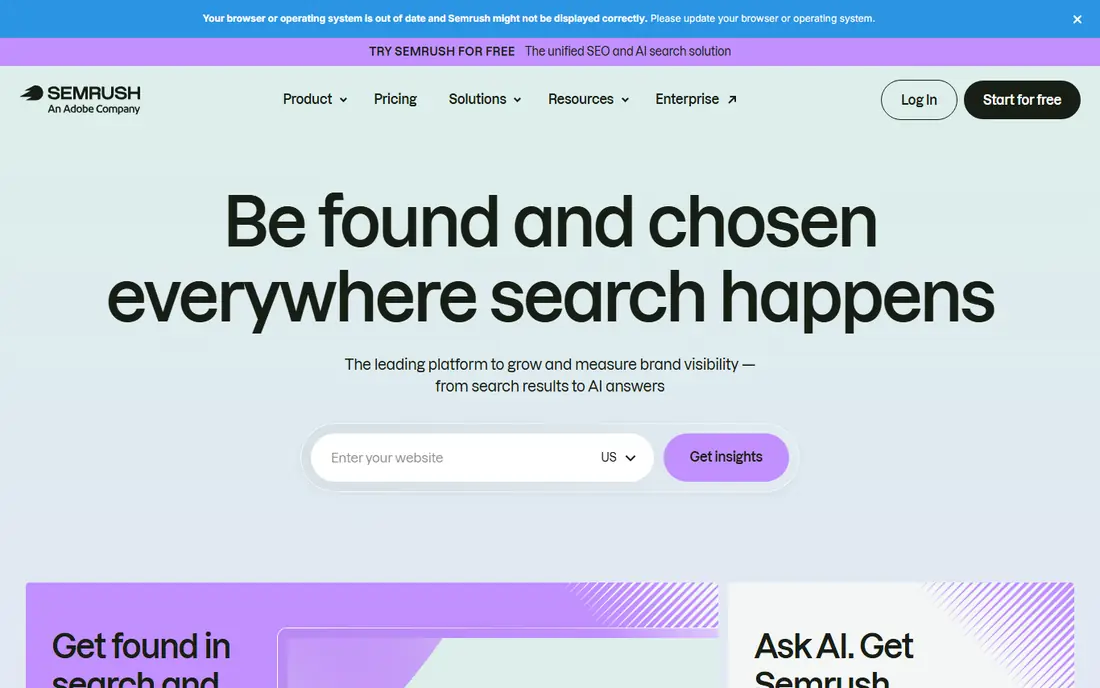
Semrush suits marketers and founders who need to see how competitors attract search traffic, which keywords matter, and where a market is growing online. It covers keyword research, site audits, backlink data, advertising research and, with its Traffic and Market add-on, estimated traffic and market share. That combination helps a team move from a vague idea of a market to a list of real competitors, topics and channels.
The main caution is packaging. The entry plan starts at $139.95 per month, or $117.33 per month on annual billing in the pricing we found, but some market-level traffic features require an add-on. Teams should check the plan page for the exact features they need, rather than assuming every traffic figure is included. Extra users also add cost, so a small team should start with one seat and expand only when reporting needs grow.
- Wide keyword, traffic and competitor data
- Content and advertising research
- Free account for basic checks
- Full traffic and market data sit in an add-on on some plans
- Costs rise with users and add-ons
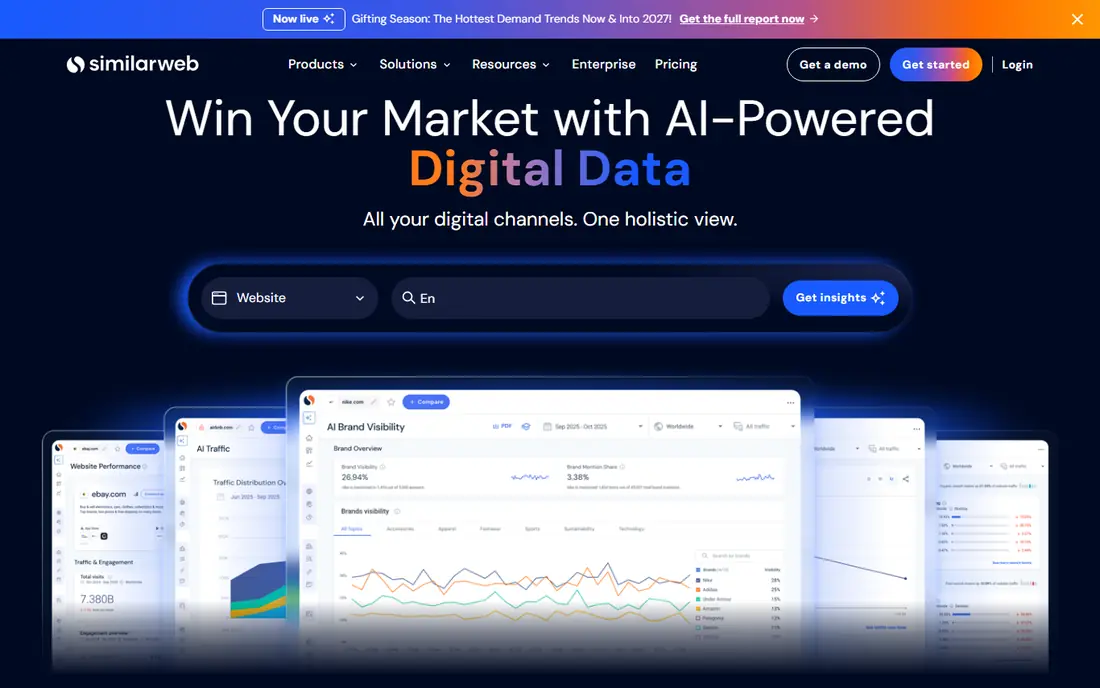
Similarweb suits strategy and marketing teams that need to compare websites, apps and industries they do not own. Enter a domain and you get estimated visits, traffic sources, top pages, audience interests and category benchmarks. That view helps answer questions such as which competitor is growing, which channel drives their traffic, and how a category is shifting over time.
The limit is accuracy. Similarweb estimates traffic from panels and other sources, and those estimates are more reliable for larger sites than for small niche sites. Treat figures as ranges for sizing, and validate key numbers against first-party data, sales data or other sources where possible. Pricing also varies by plan and add-on, with entry competitive intelligence plans starting around $125 per month in the sources we found, so check the current site for the tier that includes the data you need.
- Estimated traffic, channels and audience data for any domain
- Industry benchmarks
- App data on higher plans
- Estimates are noisy for small sites
- Higher plans and add-ons raise total cost
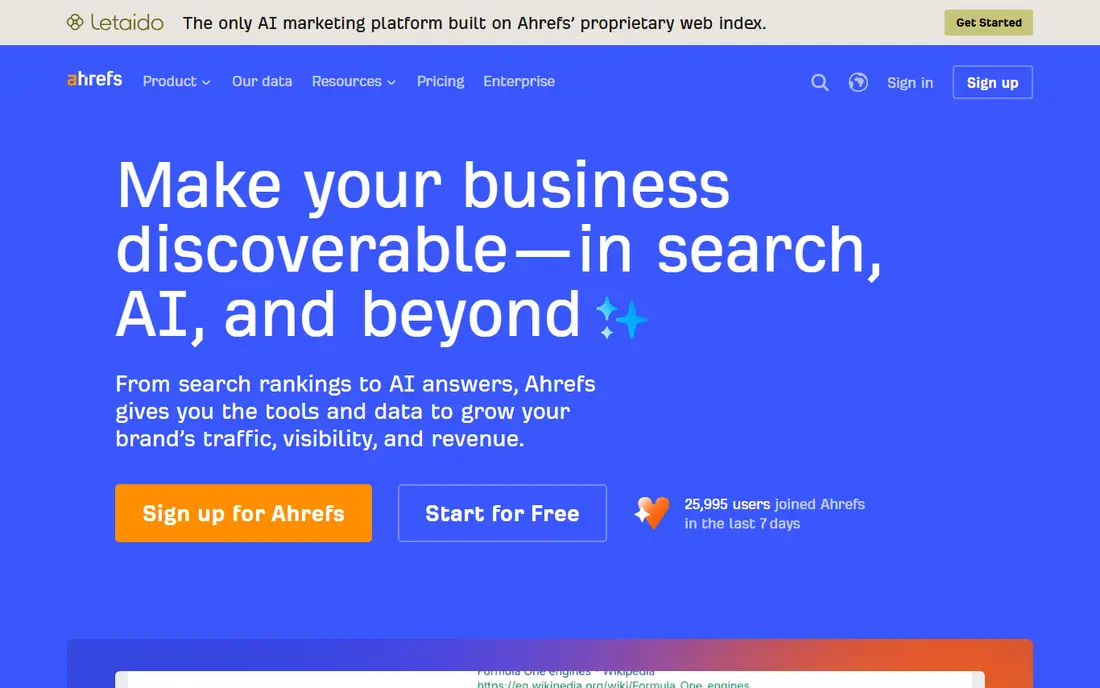
Ahrefs suits SEO and content teams that need to understand why competitors rank, which pages earn links, and which keywords drive organic traffic. Its backlink index and keyword tools are widely used for competitor research, and its site audit helps teams find technical issues that limit rankings. For market analysis, that link and keyword view reveals which topics and publishers shape a category.
The trade-off is scope. Ahrefs is stronger on search and links than on total website traffic or offline market size, so it should not be the only source for a full market sizing exercise. Pricing also changes by plan and billing period, so we list See website for the current entry figure. Teams should check how many tracked keywords, users and credits each plan includes before buying.
- Deep backlink and keyword data
- Strong site audit and content tools
- Clear link history
- Less focus on total traffic estimation than Similarweb
- Pricing varies by plan
Statista suits teams that need a credible statistic fast, such as market size, user numbers, revenue or consumer behavior for a pitch, plan or article. Its charts show the source, date and method for many figures, which helps a reader check the claim. Free statistics cover a useful range, while paid plans add full datasets, forecasts and download options.
The limit is depth. A single chart rarely explains why a market is moving, who the key buyers are, or what competitors plan next. Statista works best as a starting point for sizing and context, followed by competitor tools or industry reports for detail. Pricing also varies by account type, so check the current site for the plan that fits a single user versus a team.
- Large library of statistics and charts
- Clear source notes on many figures
- Free statistics for basic use
- Deeper data and forecasts sit behind paid plans
- Not a substitute for primary research
IBISWorld suits strategy teams, lenders and consultants who need a structured view of an industry, including size, growth, major players, cost structure and risks. Its reports follow a consistent format, which makes it easier to compare industries or to brief a team that is new to a sector. Forecasts and driver analysis help explain why an industry may grow or shrink, rather than only stating its current size.
The main barrier is price. IBISWorld is an institutional subscription, and single reports can cost hundreds or thousands of dollars, so occasional users should check whether a library, university or business advisor already provides access. That check can save a large purchase for a one-off question. Teams that research industries often will get more value from a subscription than from single reports.
- Detailed industry reports
- Forecasts and key drivers
- US and global coverage
- Institutional pricing
- Single reports can be costly for occasional users
Euromonitor Passport suits firms that sell consumer goods or services and need market sizes, growth forecasts and brand shares by country and category. Its data covers food, drink, beauty, retail, travel and many other consumer sectors, with consistent definitions that help compare markets across countries. That consistency matters when a firm must choose between two countries or categories for expansion.
The downside is cost and complexity. Passport is an enterprise platform, and pricing is quoted rather than listed as a simple monthly plan. Teams should scope which countries and categories they need, since a broad subscription can be costly for a narrow question. Training also helps, because the platform offers many views and a new user may miss the right dataset.
- Consumer market sizes by country and category
- Forecasts and company shares
- Long time series
- Enterprise pricing
- Needs training to use well
PitchBook suits investors, advisors and strategy teams that track private companies, funding rounds, valuations and exits. It profiles companies, funds and deals, and it lets users filter by sector, stage, location and deal type. That data helps answer questions such as which startups are raising in a sector, who invests in them, and how deal activity is changing over time.
The barrier is price and fit. PitchBook is priced for professional users, and it is poor value for a firm that only needs a few company profiles a year. Teams should check whether a lighter source, such as Crunchbase, covers their needs before committing to an institutional platform. PitchBook also requires care in interpretation, since private valuations and deal terms are often estimates or partial disclosures.
- Deep private company, funding and deal data
- Valuations and investor profiles
- Strong search filters
- High institutional cost
- Overkill for firms that do not track private markets
CB Insights suits teams that track technology markets, startups and emerging trends, and need to see which firms are gaining funding or attention in a sector. Its market maps group companies by category, and its funding data helps spot where capital is moving. That view is useful for strategy, partnerships and product planning in tech-adjacent markets.
The limit is sector fit and price. CB Insights focuses on tech and venture-backed firms, so it is less useful for traditional industries with few venture deals. Pricing is also enterprise-level and quoted, so small firms should check whether a trial or a single report meets their need. As with PitchBook, private market data should be treated as directional, not as exact financial fact.
- Tech market maps and funding data
- Company profiles
- Trend analysis for emerging sectors
- Enterprise pricing
- Tech focus may suit other sectors less well
Crunchbase suits founders, sales teams and researchers who need quick company, funding and people information without an enterprise contract. Free basic search covers many well-known firms, while paid plans add advanced search, lists and exports. That makes it a practical first stop for building a competitor list or checking a funding history.
The caution is data quality. Crunchbase relies in part on community and partner data, so small or early-stage firms may have incomplete profiles. Verify key funding figures against press releases, filings or the company itself before quoting them in a plan. Pricing also varies by plan, so check the current site for the tier that includes the search and export features you need.
- Large company and funding database
- Free basic search
- People and investor profiles
- Depth and export options vary by plan
- Data quality varies for small firms
Qualtrics suits teams that need primary research, such as customer surveys, concept tests, pricing studies or brand tracking, rather than only secondary data. It offers survey design, distribution, quotas, analysis and reporting in one platform, with enterprise features for large research programs. That makes it useful when public data cannot answer a question about your own customers or a new product idea.
The main risk is survey quality. A poorly worded survey can produce confident but misleading results, so teams need clear objectives, unbiased questions and a representative sample. Qualtrics pricing is also quoted for many plans, so we list See website, and small teams should check whether a simpler survey tool meets their needs. For a quick poll, a full research platform may be more than required.
- Strong survey design and distribution tools
- Analysis and reporting
- Enterprise research features
- Pricing is quoted for many plans
- Needs survey design skill to avoid biased results
How we picked these
We compared official feature and pricing pages, public reviews and data method notes, and we favored tools that are live in October 2026, fit market analysis directly, and state their data sources clearly. We excluded tools that could not be verified as current, generic search tools with no market data, and products that present estimates as exact counts without method notes. Where pricing was unclear or conflicting, we wrote See website rather than repeating an uncertain figure.
We also weighed data method alongside database size. That is why this guide stresses checking dates, samples and definitions, and why it treats traffic and funding figures as estimates unless a primary source confirms them.
What to check before you buy
Start with the question, not the database. Write the decision in one sentence, such as whether to enter a category, which competitor to watch, or what price customers accept. Then list the exact data you need, including market size, growth, competitors, channels and customer needs. That list shows whether you need a digital tool, an industry report, a company database or a survey, and it prevents buying a broad subscription for a narrow question.
Next, check method and date for every key figure. Ask how traffic was estimated, how a market was defined, whether a forecast includes inflation or currency effects, and when the data was last updated. If a vendor cannot answer those questions, treat the figure as a rough guide. Cross-check at least one key number in a second source, especially before using it in a pitch or investment case.
Finally, plan how the research will be used. Assign an owner to update the analysis, note the data date in every chart, and store the source links with the report. A market analysis that cannot be traced to a source will be questioned later, and a figure without a date can mislead a team that assumes it is current.
Frequently asked questions
What is the best market research software for startups?
Statista for affordable statistics, Similarweb for digital competitive data, and Crunchbase for company basics are strong low-cost starting points. Semrush helps when search is a key channel, while Qualtrics helps when you need to survey your own customers. Start cheap, upgrade when the questions get more specific, and check whether a library already offers IBISWorld or Euromonitor access.
What is the best software for market research in a large firm?
Large firms often combine tools, using IBISWorld or Euromonitor for industry sizing, PitchBook or CB Insights for company and deal data, and Semrush or Similarweb for digital analysis. No single tool covers industry, company, digital and primary research equally well. A combined stack, with clear owners for each source, usually gives a stronger analysis than one broad subscription.
Can I list the best market analysis tools for a business plan?
Yes, but list them by question, not by brand alone. Use Statista or IBISWorld for market size, Similarweb or Semrush for competitor traffic, Crunchbase or PitchBook for company data, and Qualtrics for customer surveys. State the data date and source for each figure, and note where a figure is an estimate. That method makes a plan easier to trust.
Is market analysis software financial advice?
No. This guide is general information only, and market data alone should not drive an investment, loan or pricing decision. Investment choices need advice from a qualified professional, along with financial statements, risk analysis and your own goals. Treat market tools as research inputs, not as recommendations to buy, sell or invest.
How accurate is competitor traffic data?
Traffic estimates are directional, especially for smaller sites, because they are modeled from panels and other sources rather than counted directly. They work well for ranking larger competitors and spotting trends, but they can be noisy for niche sites. Validate critical numbers against first-party data, sales data or multiple tools before acting on them.
Sources
See where you really rank - block by block
ProMapRanker scans Google Maps across a grid of your service area. Simple monthly plans from $19, white-label on every plan.
Start freeKeep reading
 zoho inventory alternatives
6 Alternatives to Zoho Inventory, Compared on Price and Fit
Zoho Inventory alternatives: 6 tools compared on price, free plans and fit. Katana leads the list for manufacturers. Fit and flaws are laid out for each entry.
Read → zoho crm alternatives
Best Zoho CRM Alternatives (2026)
Need Zoho CRM alternatives? We compare 7 tools on cost, free access and who each suits. Every pick gets a straight assessment. Built for quick decisions.
Read → zelle alternatives
Best Zelle Alternatives in 2026
Compare the best Zelle alternatives for sending money to friends, paying sellers and moving funds abroad, with honest notes on fees, speed and safety in 2026.
Read →