 ProMapRanker
Best Software for Data Extraction and Integration in 2026


Teams that want managed, low-maintenance pipelines · Pricing starts at: Free
Key takeaways
- Fivetran suits teams that want managed connectors, while Airbyte suits teams that want open-source control and a large connector catalog.
- Hevo and Stitch suit smaller teams, while Integrate.io and Matillion suit larger, warehouse-focused workloads.
- Usage pricing differs sharply, so model your real row, event, or credit volume before you compare headline prices.
- Change-data-capture and transformation support decide whether a tool fits live analytics or only nightly loads.
- Only collect data you have a right to use, and check source terms and privacy rules before building a pipeline.
Quick comparison
| Pick | Great for | Pricing starts at | Free tier | |
|---|---|---|---|---|
| Fivetran | Teams that want managed, low-maintenance pipelines | Free | Yes | Visit |
 Airbyte | Engineering teams that want open-source control | $20 per month | Yes | Visit |
 Hevo Data | Small and midsize teams that want no-code pipelines | $265 per month | Yes | Visit |
 Stitch | Small teams that want simple extract-and-load | $100 per month | Free trial | Visit |
 Integrate.io | Teams that want fixed-fee ETL and ELT in one place | $1,999 per month | Free trial | Visit |
 Matillion | Warehouse-native teams on Snowflake, Redshift, or BigQuery | See website | Free trial | Visit |
 Estuary Flow | Teams that need streaming change-data-capture | Free | Yes | Visit |
 Qlik Talend Cloud | Enterprises that need integration plus governance | See website | Free trial | Visit |
 AWS Glue | Teams already running inside AWS | $0.44 per DPU-hour | No | Visit |
The best software for data extraction and integration
We compared nine tools that extract data from sources and load it into warehouses or other destinations, with a focus on connectors, transformations, pricing models, and change-data-capture support. We note lawful collection only: these tools should be used with data you have permission to access and process.
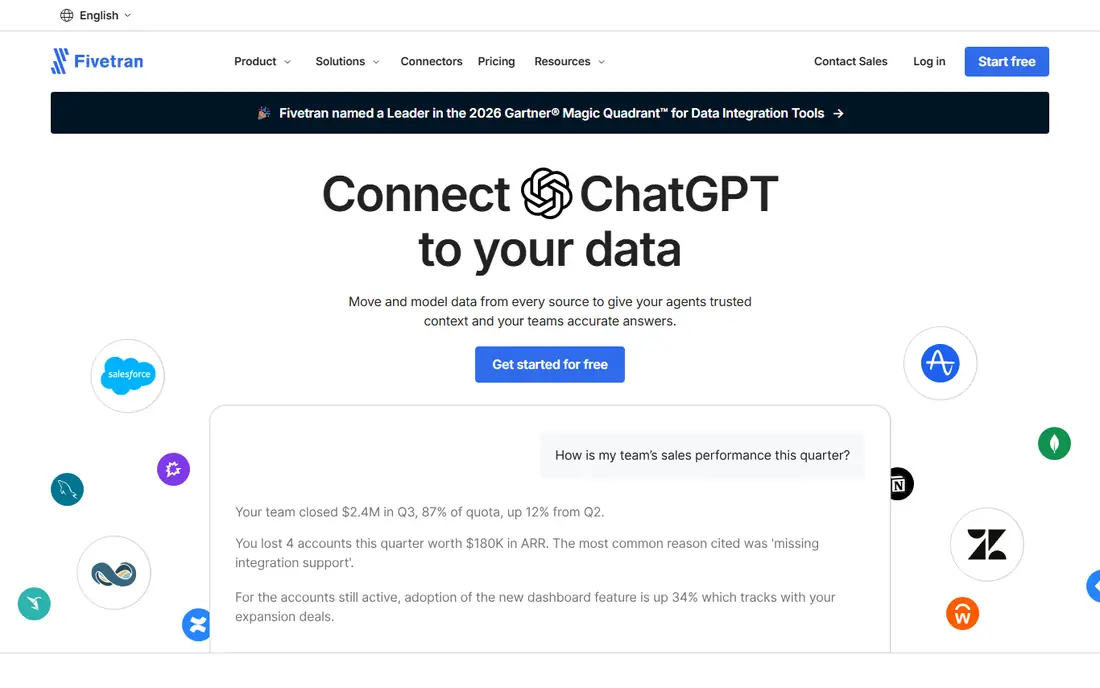
Fivetran is a strong option in this list. Fivetran manages extraction and loading from many sources into warehouses, with automated handling of schema changes. Its managed connectors reduce pipeline maintenance for teams that would rather spend time on analysis than on connector code.
In our view, the main trade-off is this: usage pricing based on changed rows can rise fast for high-churn tables, so model a real month before committing. That matters most when your volume, team size, or budget changes, so test the setup you will use every week before you commit.
- Large managed connector catalog
- Automated schema changes
- Change-data-capture support
- Usage pricing can rise with changed rows
- Costs need careful modeling
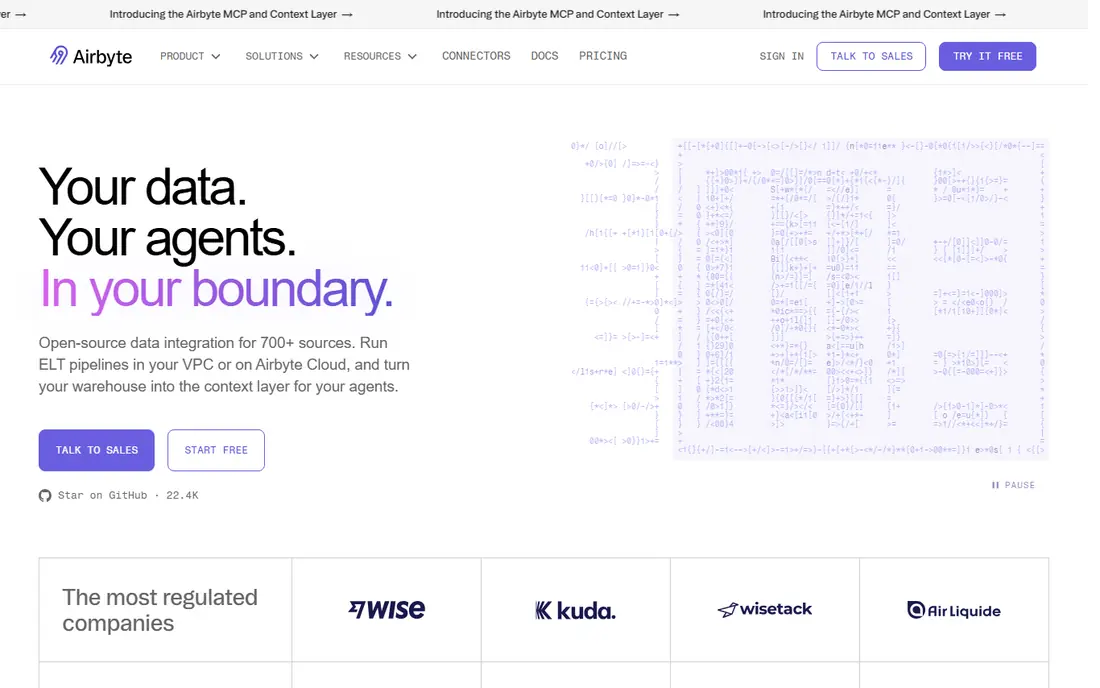
For many buyers, Airbyte is a practical place to start. Airbyte offers an open-source ELT platform with a large connector catalog, plus a cloud option for teams that do not want to host it. Its connector builder and community catalog help when a source is unusual or needs a custom connector.
The honest catch is self-hosting adds infrastructure and maintenance work, while cloud pricing depends on volume, so compare both paths honestly. Before you sign up, run one real task through it and check the result against your current process.
- Open-source ELT platform
- Large community connector catalog
- Self-hosted or cloud options
- Cloud costs vary with volume
- Self-hosting needs engineering time
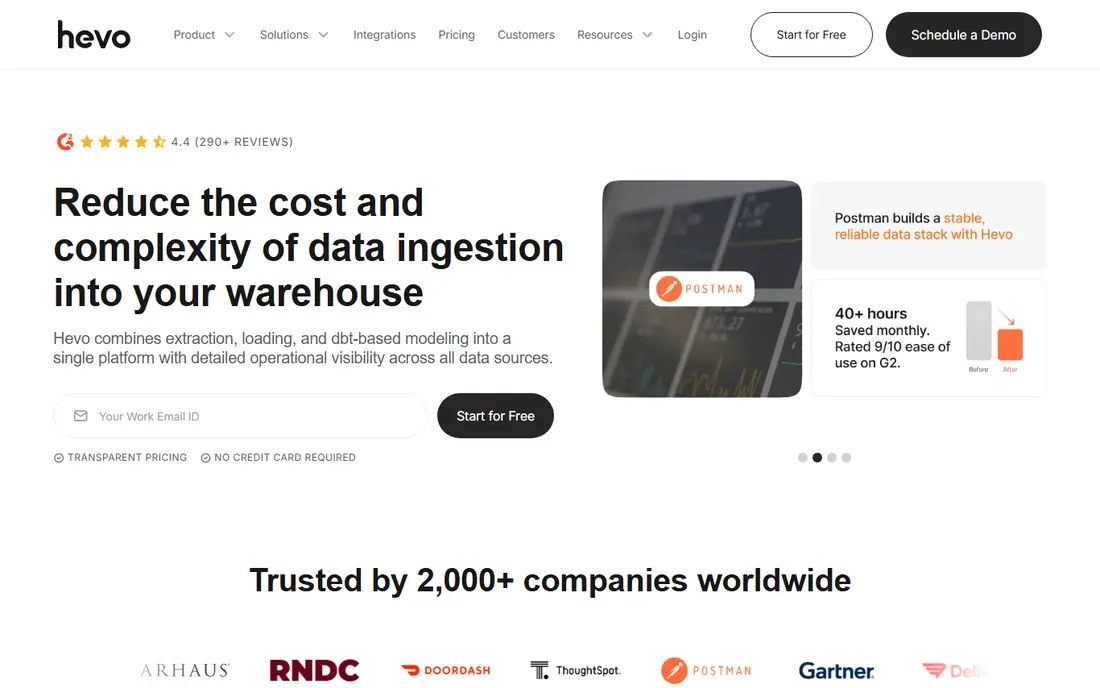
Hevo Data takes a different approach in this category. Hevo Data builds no-code pipelines from many sources into warehouses, with automatic schema mapping and transformation options. Its simple setup suits teams without a large data engineering group, especially for common SaaS and database sources.
We would weigh this point carefully: event-based pricing counts repeated writes, so high-frequency updates can raise the bill faster than a simple row count suggests. A short trial with your own data tells you more than a feature page, so use it before you move a whole workflow across.
- No-code pipeline setup
- Automatic schema mapping
- Python and drag-and-drop transformations
- Event-based pricing can rise with high-frequency updates
- Some advanced features sit on higher plans
Stitch deserves a close look before you decide. Stitch focuses on simple extract-and-load from common sources into warehouses. Its row-tier pricing and straightforward setup suit teams that need reliable loads without a large transformation layer.
In our view, the main trade-off is this: transformation support is limited, so teams that need heavy in-pipeline logic should pair it with a warehouse transformation tool. That matters most when your volume, team size, or budget changes, so test the setup you will use every week before you commit.
- Simple setup for common sources
- Row-tier pricing
- Warehouse loading
- Limited transformation support
- Product is being absorbed into Qlik Talend Cloud in comparisons
Integrate.io is a strong option in this list. Integrate.io combines ETL, ELT, change-data-capture, and reverse ETL in one platform with a visual builder. Its fixed-fee model can suit high-volume teams that want predictable costs rather than per-row billing.
The honest catch is the entry price is high for a small team, so it fits better once data volume makes usage pricing unpredictable. Before you sign up, run one real task through it and check the result against your current process.
- Fixed-fee pricing with unlimited volume in comparisons
- Visual builder
- ETL, ELT, CDC, and reverse ETL
- Entry price is high for small teams
- Setup needs care for complex pipelines
For many buyers, Matillion is a practical place to start. Matillion builds pipelines inside cloud warehouses, using warehouse compute for transformations. Its visual workflows suit teams already committed to Snowflake, Redshift, or BigQuery and that want transformations close to the data.
We would weigh this point carefully: pricing is credit-based and often by quote, so a workload test is needed to compare it fairly with usage-based rivals. A short trial with your own data tells you more than a feature page, so use it before you move a whole workflow across.
- Warehouse-native transformations
- Visual workflow design
- Agentic pipeline building in comparisons
- Pricing is by quote or credits
- Learning curve for warehouse-specific design
Estuary Flow takes a different approach in this category. Estuary Flow focuses on streaming change-data-capture, moving changes quickly from sources to destinations. Its derivations let teams shape data in flight with SQL or TypeScript, which suits live dashboards and operational use.
In our view, the main trade-off is this: per-connector fees add to the volume charge, so count connectors as well as gigabytes when you price a deployment. That matters most when your volume, team size, or budget changes, so test the setup you will use every week before you commit.
- Streaming CDC with low latency
- SQL and TypeScript derivations
- Free allowance in comparisons
- Per-connector fees add up
- Newer platform than Fivetran or Talend
Qlik Talend Cloud deserves a close look before you decide. Qlik Talend Cloud combines integration, data quality, and governance tools for enterprise data work. Its depth suits organizations that need trusted, governed data across many systems, not just a single pipeline.
The honest catch is pricing is by quote and the platform is broad, so small teams may find it heavier than a focused ELT tool. Before you sign up, run one real task through it and check the result against your current process.
- Broad connector and integration tools
- Data quality and governance features
- Change-data-capture heritage
- Pricing is by quote
- Platform is broad for a simple load job
AWS Glue is a strong option in this list. AWS Glue runs serverless ETL jobs inside AWS, with schema discovery and support for Spark, Python, and visual jobs. Its pay-per-use model suits AWS teams that want ETL close to S3, Redshift, and other AWS services.
We would weigh this point carefully: costs vary with runtime and cluster size, and idle development endpoints can add charges, so job design and monitoring matter. A short trial with your own data tells you more than a feature page, so use it before you move a whole workflow across.
- Serverless Spark ETL
- Automated schema discovery
- Visual and code-based jobs
- Costs vary with job runtime and cluster size
- Best inside AWS
How we picked these
We compared official product pages, pricing pages, and recent ETL comparisons. We kept only tools that are still offered in October 2026 and that both extract data and integrate it into a destination. We used See website where a vendor does not publish a clear starting price. We did not claim hands-on testing, and we weighed connector coverage, transformation support, change-data-capture, and pricing shape more than connector counts alone.
How to price a data pipeline before you buy
Do not compare headline prices alone. Pick one real source, one destination, and one month of volume, then ask each vendor what that month would cost, including changed rows, events, credits, or compute hours. Check whether full refreshes, failed syncs, and deleted rows count toward billing, since those details change totals. Test schema changes, late-arriving data, and a failed sync, and check how alerts and retries work. Finally, confirm data handling: where data is processed, how access is controlled, and whether source terms allow the collection you plan.
Frequently asked questions
What is data extraction and integration software?
It is software that pulls data from sources such as databases, SaaS apps, files, or APIs, transforms it where needed, and loads it into a warehouse, database, or operational tool. ETL and ELT are two common patterns for that work.
What is the difference between ETL and ELT?
In ETL, data is transformed before loading. In ELT, data is loaded first and transformed inside the warehouse. ELT suits cloud warehouses, while ETL suits cases where data must be cleaned before it lands.
Is open-source ELT cheaper than managed ELT?
Open-source software can be free, but hosting, monitoring, and engineering time still cost money. Managed tools charge for usage but reduce maintenance. Compare total cost, including staff time, not only the software fee.
Do I need change-data-capture?
Change-data-capture helps when you need fresh data or low-latency updates, since it moves only changed rows. Nightly batch loads can be enough for reporting that does not need live data.
Can I use these tools for web scraping?
Only for lawful collection. Use data you have permission to access, follow source terms and privacy rules, and avoid collecting personal data without a lawful basis. These tools are best for your own systems and licensed sources.
Sources
See where you really rank - block by block
ProMapRanker scans Google Maps across a grid of your service area. Simple monthly plans from $19, white-label on every plan.
Start freeKeep reading
 worlds best local seo company
8 Worlds Best Local SEO Companies for Map Pack Growth in 2026
Compare the worlds best local seo company options for Google Business Profile work, citations, reviews, and multi-location rankings and reporting in 2026.
Read → world's best web hosting company
World's Best Web Hosting Company in 2026
Searching for the world's best web hosting company? We compared 10 hosts on price, renewal rates, speed, and support to help you choose well today in 2026.
Read → who's got the best nanny tax services
Who's Got the Best Nanny Tax Services in 2026
We answer who's got the best nanny tax services, comparing full filing, back taxes, software, and pricing so families can handle nanny taxes correctly.
Read →