 ProMapRanker
Best Software for Corporate Training Programs in 2026

Key takeaways
- Small teams should pick a platform with published pricing and a free tier, while large enterprises need multi-portal and compliance depth.
- Collaborative authoring suits companies where internal experts create courses, while a ready-made library suits fast compliance rollout.
- Pricing often depends on user brackets or quotes, so model your real learner count, including partners and customers.
- A pilot with one real course, one compliance report, and one manager view will reveal more than a feature checklist.
Quick comparison
| Pick | Great for | Pricing starts at | Free tier | |
|---|---|---|---|---|
 TalentLMS | Small and mid-size teams | $119 per month | Yes | Visit |
 Docebo | Enterprise learning at scale | See website | No | Visit |
 Cornerstone | Large enterprise talent and learning | See website | No | Visit |
 Absorb LMS | Multi-audience training | See website | No | Visit |
 360Learning | Collaborative expert-led learning | $8 per user per month | No | Visit |
 SAP Litmos | Fast compliance deployment | See website | No | Visit |
 LearnUpon | Employee, customer, and partner training | See website | No | Visit |
 iSpring Learn | Rapid course creation | See website | Yes | Visit |
The best software for corporate training programs
We compared platforms on course creation, compliance tracking, reporting, and pricing clarity, so you can match the tool to your training audience.
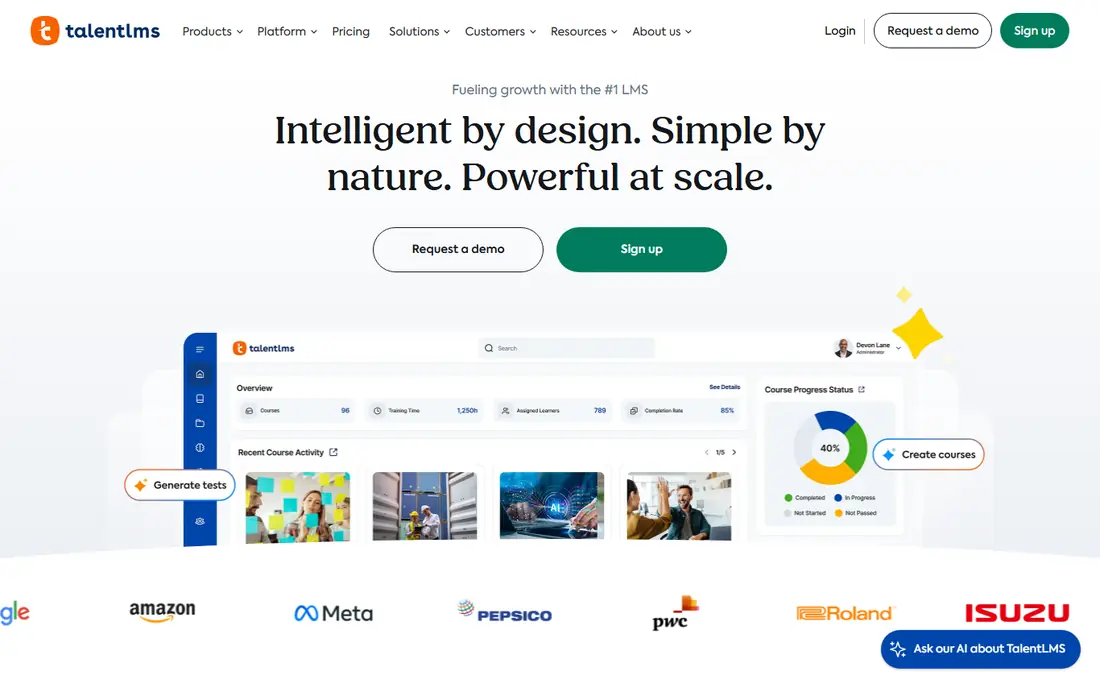
TalentLMS is the easiest starting point for a small or mid-size team. Its free plan covers up to 5 users and 10 courses, and Core starts at $119 per month billed annually for up to 40 users, with Grow and Pro tiers above it. That published pricing is rare in this market, and it makes budgeting simple for a team that knows its learner count.
The limits appear at scale. Enterprise pricing starts at a high user count, and costs jump as you move brackets, so a fast-growing company should model the next bracket before it commits. Ready-made courses also cost extra. For onboarding, compliance, and skills training in a small to mid-size company, TalentLMS is a practical, low-friction pick.
- Clear published pricing
- Free plan for up to 5 users
- Fast setup and easy course tools
- Enterprise starts at a high user threshold
- Larger brackets raise cost
- Ready-made library is an add-on
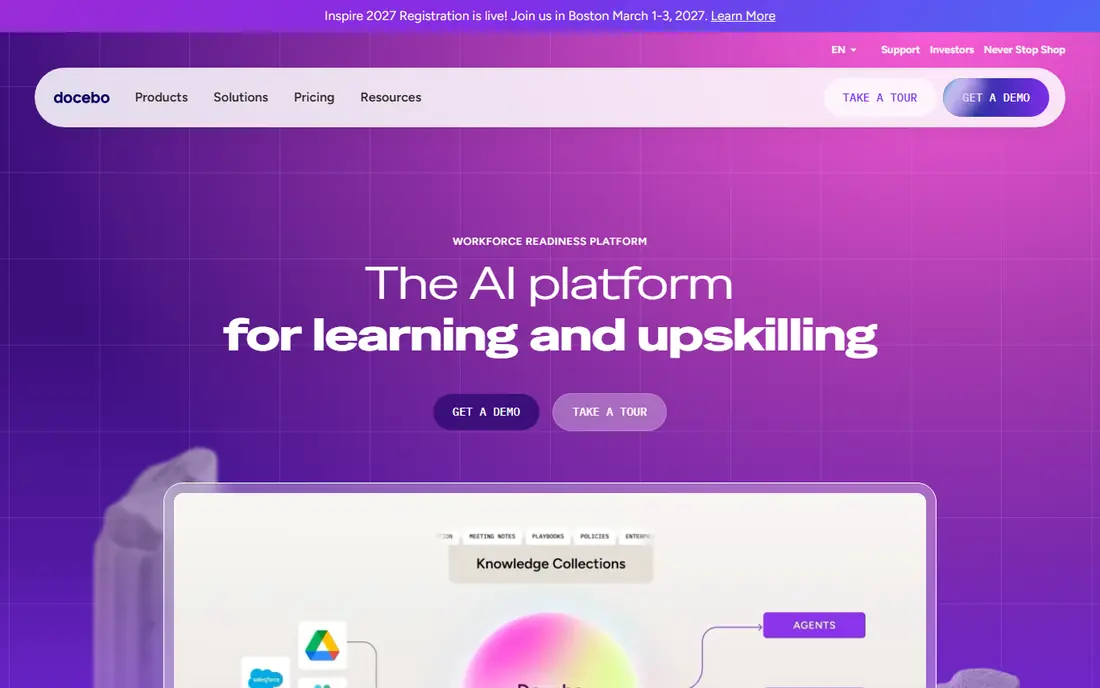
Docebo suits large organizations that need personalized learning at scale. It supports employee, customer, and partner audiences, offers AI-assisted paths and content tools, and provides reporting that helps learning teams show completion and skill progress. That breadth makes it a strong choice for a global company with many roles and regions.
The trade-off is cost and effort. Pricing is quoted based on active users and scope, and a full rollout needs data, content, and integration planning. A small team will find TalentLMS faster and cheaper. For an enterprise that needs scale, personalization, and multi-audience delivery, Docebo is a leading shortlist name.
- AI-driven learning paths and personalization
- Multi-audience support
- Strong analytics
- Quote-only pricing
- Implementation takes planning
- Smaller teams may not need its depth
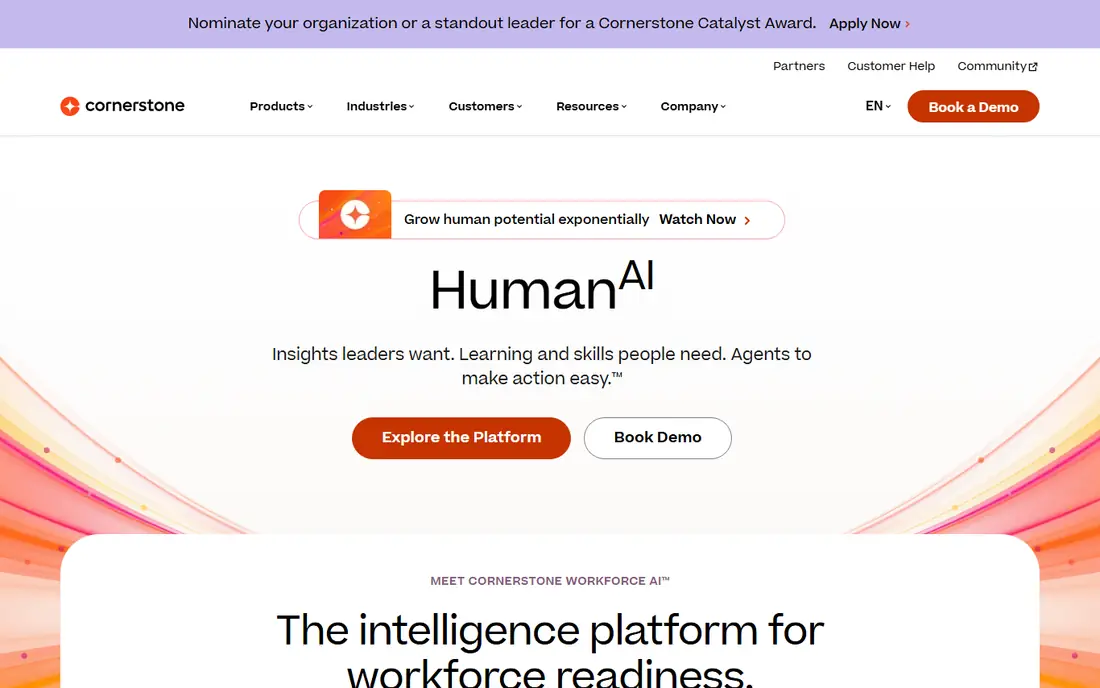
Cornerstone fits large enterprises that want learning tied to skills, performance, and talent planning. Its platform covers compliance training, skills development, and career growth in one system, with reporting suited to audits and global rollouts. That combination helps a large employer link training to workforce planning, not just course completion.
The downside is weight. Setup is involved, pricing is quoted, and a mid-size team may pay for talent features it does not use. If your main need is a simple LMS for a few hundred learners, a lighter tool will serve you better. For a global enterprise with compliance and talent needs, Cornerstone is a serious option.
- Learning plus skills and talent tools
- Strong compliance and reporting
- Built for global enterprises
- Quote-only enterprise pricing
- Complex setup
- Smaller companies may find it heavy
Absorb LMS suits organizations that train more than one audience from one system. Its multi-portal design lets you give employees, customers, and partners separate branded spaces, while keeping administration and reporting in one place. Ecommerce tools also help training companies sell courses directly.
The catch is pricing clarity. Absorb is quote-based, so you need a written estimate based on users, portals, and features. Implementation also takes care, especially if you run many portals. For extended enterprise training, where one audience is not enough, Absorb is a strong, flexible pick.
- Multi-portal support for different audiences
- Strong reporting and analytics
- Ecommerce for selling courses
- Quote-only pricing
- Setup needs planning
- Smaller teams may prefer published pricing
360Learning is built around a simple idea: internal experts should create courses, not just consume them. Its collaborative authoring tools let subject experts build, review, and update courses quickly, with AI assistance for drafting and structure. The Team plan is listed from $8 per user per month for up to 100 users in published guides, which makes the entry cost clear.
The limit is participation. If your experts will not create content, the collaborative model loses its main advantage, and a ready-made library platform may suit you better. Higher tiers are also quoted. For companies that want fast, expert-led learning and already have people willing to teach, 360Learning is a distinctive pick.
- Collaborative authoring by internal experts
- Low published starting price
- AI-assisted course creation
- Higher tiers are quoted
- Free plan is not offered, trial only
- Needs expert participation to shine
SAP Litmos suits teams that need compliance training live quickly. It combines course delivery with a ready-made content library, gamification, and mobile access, which helps get employees through required training without building every course from scratch. Compliance reporting helps managers prove completion for audits.
The trade-off is fit. Pricing is quoted, and teams already using SAP tools gain more from the integration than teams outside SAP. Customization is also less deep than some enterprise LMS platforms. For a mid-size to large team that needs fast, trackable compliance training, Litmos is a practical choice.
- Fast deployment and ready-made content
- Strong compliance tracking
- Gamification and mobile access
- Quote-only pricing
- Customization depth varies
- SAP fit matters for full value
LearnUpon is a strong pick for companies that train employees, customers, and partners from one platform. Its portals keep each audience separate, while automation handles enrollment, reminders, and reporting. The learner experience is clean, which helps completion rates for customer and partner training.
The catch is entry size. Published guides describe quote-based pricing from around 100 users, so very small teams may find TalentLMS cheaper and faster. For a growing company that needs multi-audience training with good automation, LearnUpon is a credible, well-regarded option.
- Multi-portal design for several audiences
- Workflow automation
- Clean learner experience
- Quote-only pricing from around 100 users in guides
- Smaller teams may find it pricey
- Setup needs planning
iSpring Learn suits teams that already build training in PowerPoint and want to turn it into online courses fast. Its authoring tools convert slides into interactive courses, and the LMS handles assignments, tracking, and reporting without a steep learning curve. A trial or free starting option is listed in guides, with paid pricing varying by users.
The limit is enterprise depth. Very large, multi-portal programs may need Docebo, Cornerstone, or Absorb instead, and the ready-made content library is smaller than Litmos. For a mid-size team that creates its own courses and wants a fast, affordable rollout, iSpring Learn is a practical pick.
- Fast PowerPoint-based course creation
- Good for mid-size teams
- Clear reporting and mobile access
- Pricing varies by user count and billing
- Advanced enterprise features are limited
- Content library is smaller than some rivals
How we picked these
We compared official product and pricing pages and recent public LMS guides, and we favored platforms that are live in 2026, cover different team sizes, and handle compliance and multi-audience training in a clear way. We did not claim hands-on testing, and we wrote See website where pricing is quoted or varies by user count rather than inventing a figure. Where a guide figure is used, it is marked as such in the text.
How to choose the best corporate training platform
Start with your audiences. Internal employees, customers, and partners often need separate portals, branding, and reporting, and only some platforms handle that well. If you train only employees, a simpler LMS will cost less and launch faster. If you sell training, check ecommerce, certification, and per-client reporting before you shortlist.
Next, test compliance end to end. Build one real course, assign it to a test group, run the completion report, and check how managers see overdue learners. That test reveals reporting gaps that a sales demo hides. Also check integrations with your HR system, single sign-on, and content standards, since manual user management becomes painful as learner counts grow.
Finally, model total cost. Published monthly prices often exclude content libraries, implementation, and higher user brackets, so ask for a written quote at your real learner count and at the next bracket up. A pilot with one department, one compliance course, and one manager report will tell you more than a long feature comparison, and it gives you evidence to take to finance.
Frequently asked questions
What is the best corporate training software for a small business?
TalentLMS is a strong small business pick, thanks to its free plan and published pricing, while iSpring Learn suits teams that build courses from slides. Pick the tool that matches your course creation style, not just the lowest headline price.
What is the best LMS for training companies?
Training companies that serve many clients should shortlist Absorb LMS and LearnUpon, because both support separate portals and per-audience reporting. Check how client data is separated, how certificates are issued, and whether you can sell courses directly from the platform.
What is the best platform for corporate training programs focused on compliance?
SAP Litmos and TalentLMS both handle compliance well, with completion tracking, certificates, and reports, while Cornerstone suits large enterprises with audit and talent needs. Test the overdue report and certificate expiry handling before you choose.
How much does corporate training software cost?
Costs vary widely: TalentLMS Core starts at $119 per month for up to 40 users, 360Learning Team starts at $8 per user per month in guides, and most enterprise platforms are quoted. Always model your learner count, portals, and content needs before comparing quotes.
What is the best corporate training platform for collaborative learning?
360Learning is the leading collaborative pick, since it lets internal experts create and update courses together. If your experts will not author content, a platform with a ready-made library, such as Litmos, may deliver faster value.
Can one platform train employees, customers, and partners?
Yes. Absorb LMS, Docebo, and LearnUpon all support multiple audiences through portals, with separate branding and reporting. Confirm portal limits, user counts, and pricing for each audience before you sign, since those details drive the total cost.
Sources
See where you really rank - block by block
ProMapRanker scans Google Maps across a grid of your service area. Simple monthly plans from $19, white-label on every plan.
Start freeKeep reading
 outreach alternatives
Outreach Alternatives in 2026
Compare outreach alternatives for 2026, from Salesloft and Apollo to HubSpot and Lemlist, with pricing, channels, features, limits, and honest trade-offs.
Read → best web conference tools
Best Web Conference Tools in 2026
Compare the best web conference tools for meetings, webinars and team calls, with current pricing, free plans and honest limits for each option here today.
Read → best voice cloning tools
Best Voice Cloning Tools in 2026
Compare the best voice cloning tools in 2026, from ElevenLabs and Descript to Resemble and Cartesia, with consent rules, pricing, licenses, and limits.
Read →