 ProMapRanker
Best Software for AI Search Visibility in 2026


Enterprise brands needing deep coverage · Pricing starts at: See website
Key takeaways
- Otterly AI is the cheapest credible starting point, while Profound suits large brands that need deep engine coverage.
- Prompt count, engine coverage, and refresh speed matter more than a single visibility score.
- AthenaHQ is the only tool here with a free plan, which makes it a useful first test before paying.
- Treat AI visibility scores as directional trends, not exact rankings, because answer engines change often.
Quick comparison
| Pick | Great for | Pricing starts at | Free tier | |
|---|---|---|---|---|
| Profound | Enterprise brands needing deep coverage | See website | No | Visit |
 Peec AI | Agencies and multi-client tracking | $95 per month | No | Visit |
 Otterly AI | Small teams and first-time buyers | $29 per month | No | Visit |
 Scrunch AI | Site audits and AI crawler analytics | $250 per month | No | Visit |
 AthenaHQ | Testing with your own data before paying | $295 per month | Yes | Visit |
 Semrush AI Visibility Toolkit | Teams already using Semrush | $99 per month | No | Visit |
 Ahrefs Brand Radar | Teams already using Ahrefs | $199 per month | No | Visit |
 Writesonic | Tracking that turns into content briefs | $79 per month | No | Visit |
The best software for AI search visibility
AI search visibility software tracks how often your brand appears in answers from ChatGPT, Google AI Overviews, Perplexity, Gemini, and similar systems, and which sources those answers cite. The tools below differ mainly in prompt limits, engine coverage, and how much help they give you to fix what they find.
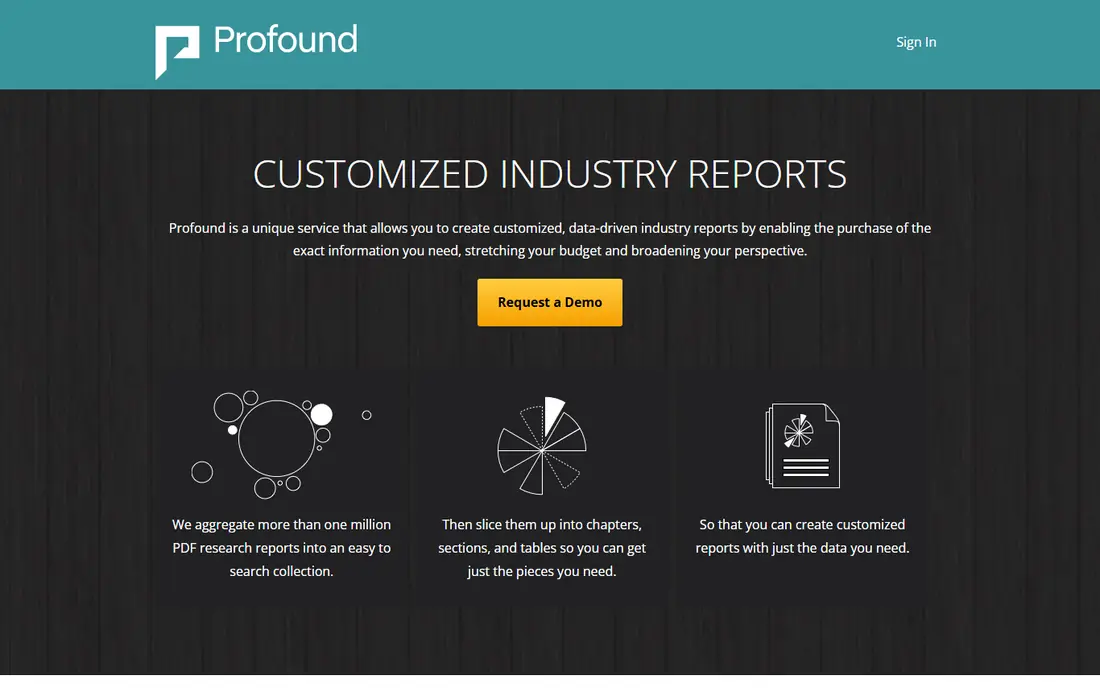
Profound is the deepest tool on this list for large brands. On enterprise tiers it tracks up to nine answer engines, including ChatGPT, Perplexity, Google AI Overviews, Google AI Mode, Gemini, Claude, Copilot, Grok, and DeepSeek, and it connects crawler activity to analytics tools. That breadth matters when a brand appears differently across engines and you need one place to compare them.
The trade-off is cost and complexity. Paid plans are quoted rather than published as a simple starter price, and the lower tiers cover fewer engines. A free trial is available, but the full platform suits teams with analyst time and a formal buying process. Smaller teams should start cheaper and move to Profound when engine breadth becomes the bottleneck.
- Broad engine coverage on enterprise tiers
- Citation and competitor analysis
- Crawler analytics through integrations
- Enterprise pricing by quote
- Entry tier covers fewer engines
- Full value needs analyst time
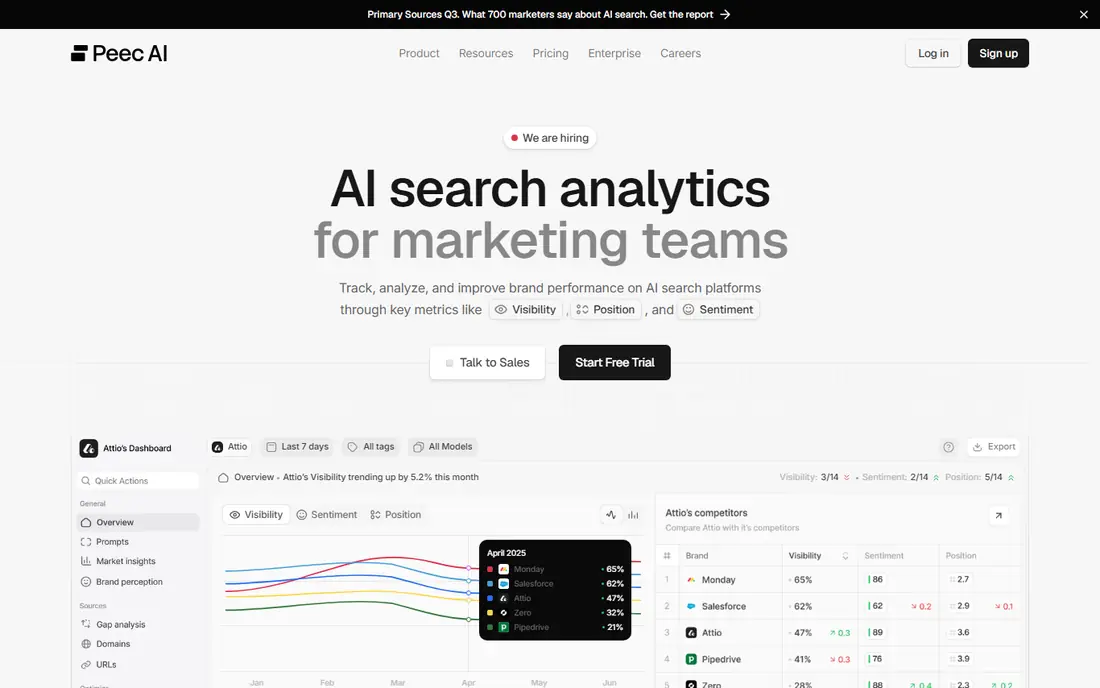
Peec AI is a strong mid-market choice for SEO and content teams, and it works well for agencies because seats are not the main cost driver. You pick prompts, choose engines, and watch daily changes in brand mentions, citations, and competitor position. The interface is clear enough for client reporting without heavy setup.
Entry limits need attention. The Starter plan covers 50 prompts and three of six models, with all six on enterprise tiers, and Claude coverage sits higher up. Pricing has appeared in both dollars and euros across listings, so confirm the currency on the vendor page before budgeting. For agencies tracking several clients with a standard prompt set, Peec AI is a balanced pick.
- Clean daily tracking and competitor views
- Unlimited seats on many plans
- Choice of engines on each plan
- Entry plan covers only three of six models
- Claude needs a higher tier
- Price is in euros on some listings, so check currency
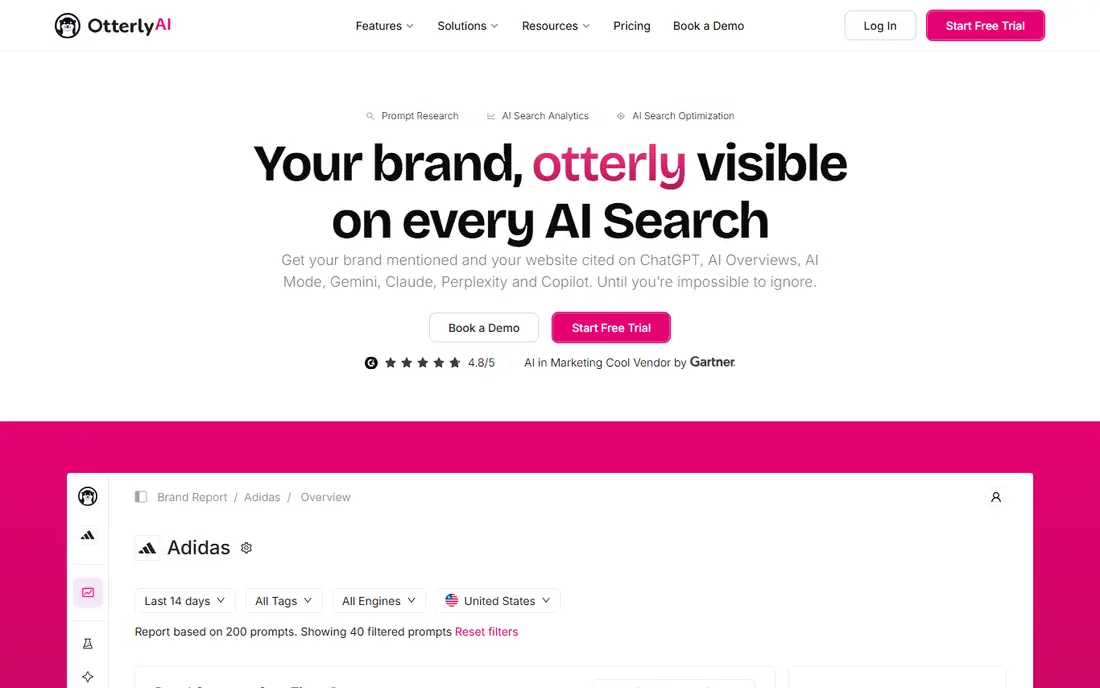
Otterly AI answers the simplest question in this category: is your brand named at all in AI answers, and is that changing? The Lite plan costs $29 per month, or $25 per month billed annually, and covers 15 prompts across ChatGPT, Google AI Overviews, Perplexity, and Copilot. That is enough for a small brand to test whether AI visibility work is worth more investment.
The limits are prompt count and engine add-ons. Gemini, AI Mode, and Claude sit behind add-ons or higher tiers, and API access starts higher still. A seven-day trial lets you test with real prompts before paying. If you need hundreds of prompts or broad engine coverage, budget for a larger plan or a different tool.
- Lowest entry price among dedicated trackers
- Daily tracking on core engines
- Unlimited seats
- Only 15 prompts on the Lite plan
- Claude and some engines are add-ons
- API access needs a higher tier
Scrunch AI suits teams that suspect the problem is technical, not just content. Alongside brand tracking, it analyzes how AI crawlers read your site, audits pages for AI readability, and benchmarks you against competitors. That combination helps when your brand is missing from answers because pages render poorly for crawlers or lack clear, citable facts.
The entry price is higher, at $250 per month billed annually for the Starter plan, with 125 prompts on some listings. Claude coverage and API access sit on enterprise tiers. A seven-day trial is available. Choose Scrunch AI when site infrastructure is part of the question, not only when you want a mention count.
- AI crawler analytics plus brand tracking
- Site audits for AI readability
- Strong competitor benchmarking
- Higher entry price than budget trackers
- Some engines only on enterprise tiers
- Credit and prompt limits need careful reading
AthenaHQ is the easiest tool here to test without a sales call, because its free Essential plan gives a limited number of credits to run real checks. Paid Starter costs $295 per month and covers 3,600 credits across multiple engines, with content agents that suggest fixes for gaps the tracking finds. For ecommerce teams, its link between citations and Shopify revenue is a useful extra.
Credit math is the catch. A credit equals one answer, so a prompt asked daily across many engines uses credits fast. Small teams may burn through the free credits quickly and face a large jump to Starter. Use the free plan to learn which prompts matter, then decide whether the paid plan fits your prompt count.
- Free Essential plan with credits
- Broad engine coverage on paid plans
- Revenue attribution for some stores
- Paid Starter is expensive for small teams
- Credit model needs careful math
- Compliance details need checking on higher tiers
Semrush AI Visibility Toolkit makes sense if your team already lives in Semrush. It adds AI mention tracking, citation analysis, and prompt research to the SEO suite you already use, so reports can sit beside keyword rankings and site audits. That consolidation saves tool-switching and keeps one invoice for search work.
The per-domain price is the limit. At $99 per month per domain, with 25 prompts on the entry toolkit, multi-brand agencies pay for each domain separately. Bundled Semrush One plans cost more but raise prompt limits. If you do not already use Semrush, a dedicated tracker such as Otterly AI or Peec AI may be cheaper for AI visibility alone.
- AI tracking beside classic SEO data
- Prompt research and brand performance views
- Daily tracking on core engines
- Priced per domain, so multi-brand costs add up
- Only 25 prompts on the entry toolkit
- Full suite plans cost more
Ahrefs Brand Radar suits research-heavy teams that already use Ahrefs. It draws on a large prompt index, so you can study how brands appear across AI Overviews, AI Mode, ChatGPT, Perplexity, Gemini, and Copilot without building every prompt from scratch. Custom prompt tracking is also available, with extra prompt packages priced separately.
Cost is the main question. Brand Radar add-ons start at $199 per month per platform, or $699 per month for all platforms on some listings, while the Lite plan includes only five tracked prompts. If Ahrefs is already in daily use, the marginal value is clear; if you only need AI visibility, a dedicated tracker costs less. Check the current add-on page before budgeting, since Ahrefs pricing pages differ by plan.
- Large prompt index for brand research
- AI Overviews, ChatGPT, Perplexity, and Gemini coverage
- Fits existing Ahrefs workflows
- Standalone add-on pricing is high
- Lite plan includes only a few tracked prompts
- Full cost depends on platform add-ons
Writesonic fits content teams that want tracking and writing in one place. When the tracker shows a prompt you lose, the platform can turn that gap into a brief, draft, or outline, which shortens the path from measurement to action. That workflow suits teams that publish often and need to close gaps quickly.
The trade-off is depth. Specialist trackers such as Profound and Scrunch AI give deeper citation, crawler, and competitor analysis, while Writesonic is stronger on output than on measurement. Entry pricing starts around $79 per month on recent listings, but plan details vary, so confirm the current page. Choose Writesonic when content production is the bottleneck, not when you need the deepest tracking data.
- AI visibility tracking beside writing tools
- Gaps can become content briefs the same day
- Broad engine coverage on paper
- Measurement depth is thinner than specialist trackers
- Pricing and plan details vary
- Content output still needs human review
How we picked these
We compared recent October 2026 price and feature coverage for dedicated AI visibility tools and SEO suites with AI tracking. We favored tools that are still sold, track multiple answer engines, and publish at least some pricing or trial terms, and we noted where pricing is quoted, per domain, or credit-based. We treated visibility scores as trends, not precise rankings, because answer engines update models and sources often.
How to choose without overpaying
Start with a small, real prompt list: the questions customers actually ask about your product, your brand name, and your top competitors. Run that list on a trial or free plan for two weeks, and check whether the answers change when you change a page. That test tells you more than any demo dashboard.
Count prompts and engines before you sign
Multiply prompts by engines by refresh frequency to get your real answer count. A plan with 15 prompts across four engines, checked daily, is a different workload from 50 prompts across three engines. Also check whether Claude, Gemini, or AI Mode costs extra, since those add-ons change the total. Sign monthly first, and move to annual billing only after the prompt list proves stable.
Frequently asked questions
What is AI search visibility software?
It tracks how often your brand, product, or website appears in answers from AI systems such as ChatGPT, Google AI Overviews, Perplexity, and Gemini, and which sources those answers cite. It helps you see where you are mentioned, where competitors are cited instead, and which pages need clearer facts.
How is AI search visibility different from classic SEO rankings?
Classic SEO tracks your position on a results page for a keyword. AI visibility tracks if a brand is named or cited inside a generated answer, which may have no clickable ranking at all. Both matter, but they need different tools and different fixes.
How many prompts do I need to track?
Start with 15 to 50 prompts covering brand questions, product comparisons, and problem questions your customers ask. That range fits the entry plans on this list. Expand only after you see which prompts drive real traffic or sales, rather than tracking hundreds of questions no one asks.
Do I need a dedicated tool if I already use Semrush or Ahrefs?
Not always. Semrush AI Visibility Toolkit and Ahrefs Brand Radar cover core AI tracking inside suites you may already pay for. A dedicated tool such as Profound, Peec AI, or Scrunch AI is worth it when you need broader engine coverage, crawler analytics, or agency reporting that the suite add-on does not provide.
How often should AI visibility be checked?
Daily checks suit teams that publish or change pages often, while weekly checks suit monthly reporting. Daily data is noisier, so look at trends over two to four weeks before changing strategy based on a single day. Weekly tools can still work for reporting, but they react slower to page changes.
Sources
See where you really rank - block by block
ProMapRanker scans Google Maps across a grid of your service area. Simple monthly plans from $19, white-label on every plan.
Start freeKeep reading
 zscaler alternatives
Best Zscaler Alternatives in 2026
Looking for zscaler alternatives? We compare 9 SASE and zero trust platforms on architecture, data protection, pricing, and fit for your network and team.
Read → zapier alternatives free
Best Zapier Alternatives Free in 2026
Nine automation tools for zapier alternatives free in 2026, all with genuinely free tiers, plus free plan limits, starting prices and upgrade paths explained.
Read → which platform is best for online reputation
Which Platform Is Best for Online Reputation in 2026
Wondering which platform is best for online reputation? We compare 8 review, listing, and response tools for small and multi-location businesses and agencies.
Read →