 ProMapRanker
Best Software Engineering Podcasts in 2026


Deep technical interviews with practitioners · Pricing starts at: Free
Key takeaways
- Software Engineering Daily and Software Engineering Radio are the best starting points for deep technical interviews and systems topics.
- The Changelog is the best show for open source stories, while Syntax is the best fit for front end and full stack builders.
- Developer Tea and CodeNewbie suit shorter listening and earlier career stages, without dumbing down the craft.
- Every show in this list is free to listen to, so the real cost is time, which makes format and episode length worth checking first.
Quick comparison
| Pick | Great for | Pricing starts at | Free tier | |
|---|---|---|---|---|
| Software Engineering Daily | Deep technical interviews with practitioners | Free | Yes | Visit |
 The Changelog | Open source projects and developer stories | Free | Yes | Visit |
 Syntax | Front end and full stack development | Free | Yes | Visit |
 Software Engineering Radio | Architecture, systems, and engineering practice | Free | Yes | Visit |
 CoRecursive | Software ideas told through stories | Free | Yes | Visit |
 Developer Tea | Short, focused thinking for developers | Free | Yes | Visit |
 CodeNewbie | People starting out in software | Free | Yes | Visit |
 Practical AI | Applied machine learning for builders | Free | Yes | Visit |
 Stack Overflow Podcast | Developer careers, culture, and community | Free | Yes | Visit |
The best software engineering podcasts
These shows are all free, still publishing, and useful for working engineers rather than general tech news listeners.
Software Engineering Daily
Great for: Deep technical interviews with practitioners
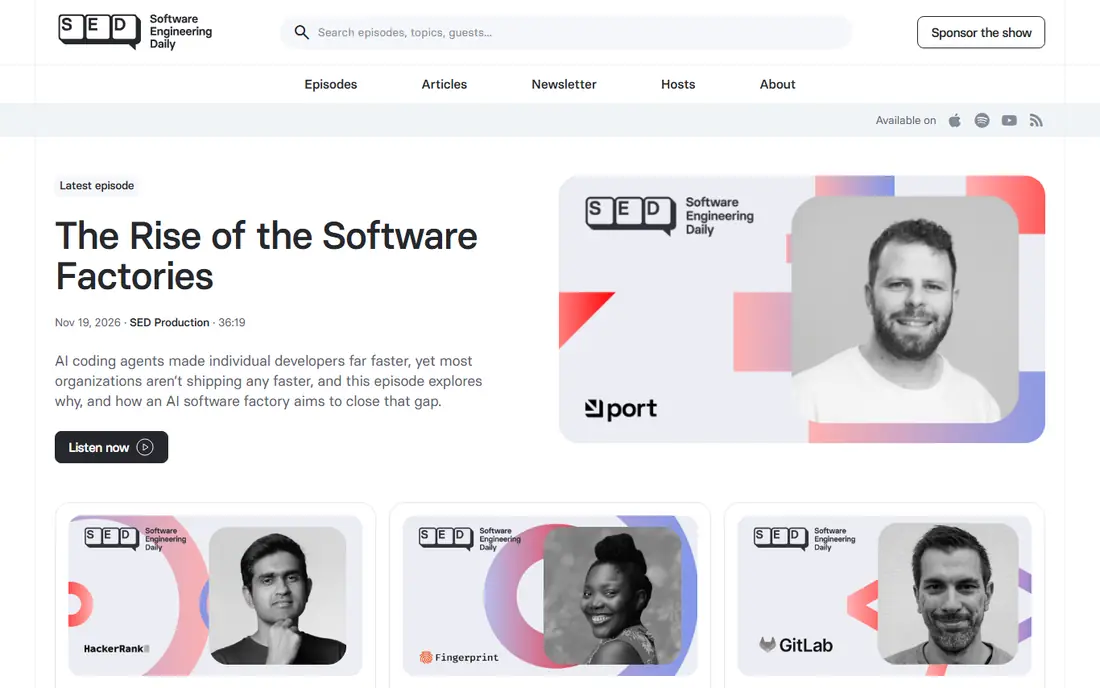
Software Engineering Daily is the workhorse show on this list. Episodes interview engineers and founders about the systems they built, the failures they hit, and the choices they would change. That practitioner focus makes it useful for senior engineers who want detail, not just headlines.
The volume is the catch. With near daily publishing, no listener keeps up with everything, so treat it as a library to search by topic rather than a feed to finish. Pick episodes on systems you are actually building, and skip the rest without guilt.
- Near daily episodes across systems, AI, and infrastructure
- Interviews go into real trade offs
- Large back catalog to learn from
- Episode quality varies by guest
- Near daily pace is hard to follow in full

The Changelog has stayed relevant because it treats open source as a human story. Maintainers talk about why a project started, how it is governed, and what breaks when a popular library grows up. That context helps engineers choose dependencies with more care than a star count ever gives.
It is less of a tutorial show, so listeners who want step by step code walkthroughs may want to pair it with a more technical feed. As a weekly habit for staying close to open source, it is one of the easiest shows on this list to keep up with.
- Warm, well produced interviews with maintainers
- Covers open source culture as well as code
- Multiple related shows under one feed family
- Some episodes lean toward community stories over code detail
- Weekly pace means deep topics get one shot
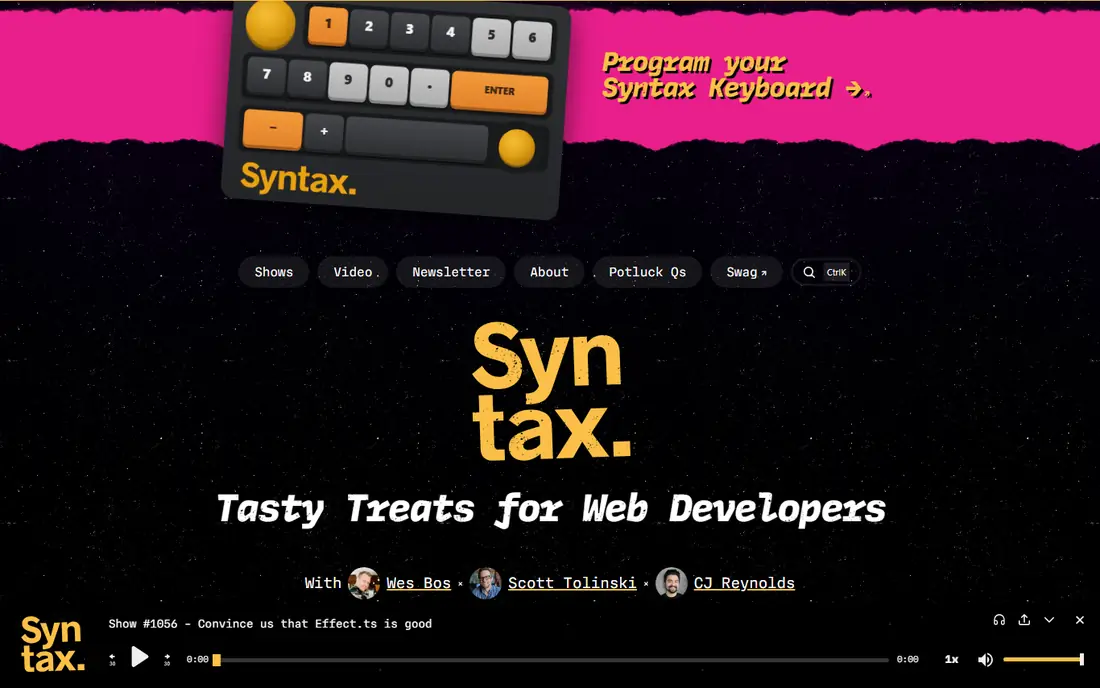
Syntax, hosted by Wes Bos and Scott Tolinski, is the friendliest technical show here. Episodes cover JavaScript, frameworks, CSS, tooling, and the daily work of building for the web, with enough detail to act on and enough humor to keep a commute moving.
Back end engineers may find the systems depth lighter than Software Engineering Radio. For front end and full stack developers, though, the mix of practical tips, tool reviews, and career talk makes it a strong default subscription.
- Practical web development topics with clear explanations
- Hosts cover both design and code
- Twice weekly short and long formats
- Front end focus means back end systems get less depth
- Inside jokes and banter divide some listeners
Software Engineering Radio
Great for: Architecture, systems, and engineering practice
Software Engineering Radio is the show to pick when you want to understand a topic properly. Episodes on architecture patterns, testing, security, and team practice are structured, well researched, and grounded in production work. It is a natural fit for engineers preparing for design discussions or senior roles.
That depth comes with a denser listening style. New listeners should start with a topic they already know, so they can judge the format, before tackling an unfamiliar architecture episode. The back catalog is a strong study resource for system design.
- Carefully researched episodes on architecture and process
- Expert guests with real production experience
- Useful show notes and references
- Slower, denser pace than interview chat shows
- Some episodes assume solid prior knowledge
CoRecursive, hosted by Adam Gordon Bell, stands out for storytelling. An episode might follow the history of an idea, a language feature, or a famous bug, and use that story to explain why software works the way it does. Listeners who learn best from narrative will find this format sticks.
The trade off is frequency and news value. CoRecursive is not the show for weekly tool updates, and gaps between episodes can be long. Keep it as a slow burn subscription alongside a faster news or interview show.
- Story driven episodes that explain hard ideas clearly
- Thoughtful interviews with builders and researchers
- Good for long listens
- Irregular publishing pace
- Less frequent coverage of current tools
Developer Tea, hosted by Jonathan Cutrell, is built for small pockets of time. Episodes often run well under half an hour and focus on how developers think, learn, and make career decisions, rather than on a single framework. That makes it easy to keep as a daily habit.
Do not expect deep code tutorials here. The value is in clearer thinking about work: how to learn, how to communicate a technical choice, and how to grow without burning out. Pair it with a technical show for a balanced listening week.
- Short episodes that fit a walk or a break
- Focus on mindset, career growth, and decision making
- Consistent host voice
- Short format limits technical depth
- Some topics repeat across the long back catalog
CodeNewbie is the most welcoming show on this list for someone new to code. Episodes cover learning to program, finding a first role, and building confidence, with guests who talk openly about false starts and slow progress. That honesty matters when tutorials make progress look instant.
Experienced engineers will outgrow much of the content, and that is fine. The show does its job best at the start of a career, and its community focus helps new developers find people to learn with, not just content to consume.
- Welcoming tone for new developers
- Covers learning paths, first jobs, and community
- Guests share honest early career stories
- Less depth for senior engineers
- Publishing pace has varied over time
Practical AI, from the Changelog family, is the show for engineers who build with machine learning rather than just read about it. Episodes cover model choices, data pipelines, evaluation, and the operational work of keeping an AI feature running in production.
Generalist engineers may find some episodes too specialized, and the show assumes a working interest in AI. For teams adding AI features to real products, the practical angle, including what failed in production, is more useful than research news alone.
- Focus on shipping real AI systems, not just research headlines
- Covers data, models, and operations
- Hosts ask grounded practitioner questions
- AI focus means general software topics get less room
- Some episodes assume familiarity with machine learning terms
The Stack Overflow Podcast works as a lighter, broader listen. Episodes touch on careers, hiring, AI tools for developers, and life inside engineering teams, often starting from questions developers actually ask. That makes it easy listening for a mixed audience of students, working engineers, and managers.
It will not replace a systems deep dive, and listeners who want pure technical depth should keep Software Engineering Daily or Software Engineering Radio in rotation. As a weekly check in on developer culture, it earns its place.
- Mix of engineering, career, and community topics
- Accessible length and tone
- Strong connection to real developer questions
- Broader focus means less deep systems coverage
- Some episodes lean toward company and community news
How we picked these
We compared current podcast listings, official show pages, and 2026 developer podcast guides, and we kept only shows that are free, still publishing, and focused on software engineering rather than general tech news. We checked hosts, format, and focus for each show, and we favored a mix of deep technical, front end, AI, and early career shows over a list of near identical interview feeds. We did not claim hands on listening tests beyond reviewing episode descriptions and show pages.
How to build a podcast habit that actually teaches you something
Pick one deep show, one practical show, and one light show, and stop there. Three subscriptions are easier to keep than ten, and a focused rotation beats a feed full of unwatched episodes. For many engineers, that trio is Software Engineering Radio, Syntax, and Developer Tea, with other shows added by topic.
Use episode titles as a filter. Search a show back catalog for the system you are building this month, such as caching, testing, or data pipelines, and listen to those episodes first. Keep a short note after each useful episode: one idea you will try, and one question it raised. That note turns passive listening into something you can use in a design review or a code review.
Finally, protect your time. A podcast should fit a walk, a commute, or a workout, not displace focused practice. If a show stops teaching you, unsubscribe without guilt and try another one from this list.
Frequently asked questions
What are the best software podcasts for beginners?
CodeNewbie and Developer Tea are the kindest starting points, since they focus on learning and career growth in short, clear episodes. Syntax is a good next step for web development, while Software Engineering Daily suits beginners once they want deeper technical interviews.
Which podcast is best for system design?
Software Engineering Radio is the strongest pick for system design and architecture, thanks to its structured episodes and experienced guests. Software Engineering Daily is a useful second source, especially for real production stories about scaling and trade offs.
Are these software engineering podcasts free?
Yes, every show in this list is free to listen to on common podcast apps. Some shows offer supporter memberships or bonus content, but the main episodes are free, so you can try each show before committing time to it.
How often do these shows publish?
Pace varies a lot. Software Engineering Daily publishes near daily, Syntax publishes twice weekly, and CoRecursive publishes less often. Check the recent episode dates in your podcast app before subscribing, since a show that fits your week matters as much as its topic.
Can podcasts replace courses for learning software engineering?
No, podcasts work best as a complement to building and reading. They build judgment, vocabulary, and awareness of trade offs, while courses and real projects build the hands on skill. Use podcasts to guide what you practice next, not as a substitute for practice.
Sources
See where you really rank - block by block
ProMapRanker scans Google Maps across a grid of your service area. Simple monthly plans from $19, white-label on every plan.
Start freeKeep reading
 zscaler alternatives
Best Zscaler Alternatives in 2026
Looking for zscaler alternatives? We compare 9 SASE and zero trust platforms on architecture, data protection, pricing, and fit for your network and team.
Read → zapier alternatives free
Best Zapier Alternatives Free in 2026
Nine automation tools for zapier alternatives free in 2026, all with genuinely free tiers, plus free plan limits, starting prices and upgrade paths explained.
Read → which platform is best for online reputation
Which Platform Is Best for Online Reputation in 2026
Wondering which platform is best for online reputation? We compare 8 review, listing, and response tools for small and multi-location businesses and agencies.
Read →