 ProMapRanker
Best Software Developer Companies in 2026

Key takeaways
- Accenture and Cognizant suit large transformation programs that span platforms, operations, and organizational change.
- EPAM, Globant, and Thoughtworks suit engineering-led product work where delivery practice matters as much as scale.
- Infosys, TCS, Capgemini, and IBM Consulting suit large, multi-year programs with broad technology and industry coverage.
- Pricing for these firms is project-based and quoted, so compare proposals on team, scope, and delivery model, not headline rates alone.
- The best firm depends on your program size, in-house team, and whether you need consulting, engineering, or both.
Quick comparison
| Pick | Great for | Pricing starts at | Free tier | |
|---|---|---|---|---|
 Accenture | Global transformation programs | See website | No | Visit |
 EPAM Systems | Large product engineering | See website | No | Visit |
 Globant | Digital product engineering | See website | No | Visit |
 Cognizant | Large enterprise services | See website | No | Visit |
 Infosys | Large IT and AI programs | See website | No | Visit |
 Thoughtworks | Engineering-led modernization | See website | No | Visit |
 Capgemini | Enterprise cloud and data programs | See website | No | Visit |
 TCS | Large-scale application services | See website | No | Visit |
 IBM Consulting | Hybrid cloud and AI programs | See website | No | Visit |
The best software developer companies
We compared public service descriptions, industry focus, delivery models, and scale. Our pick for broad transformation is Accenture, while EPAM is our pick for engineering-led product programs. No invented scores or rankings are used here, since project fit matters more than a single number.
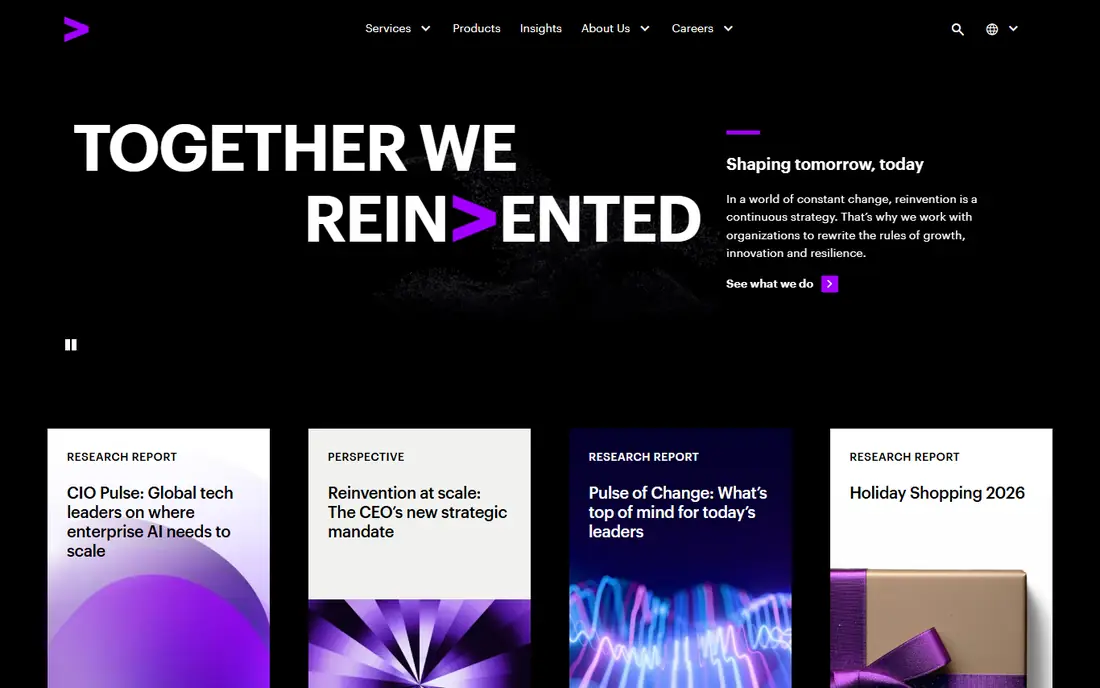
Accenture suits organizations that need change across business and technology, not just code. Its teams cover strategy, cloud, data, AI, and industry platforms, which helps when a program touches several departments. That breadth also helps with board-level governance and multi-year roadmaps.
Smaller companies may find Accenture heavy and costly for a single product build. For a defined product team, a specialist engineering firm may move faster. For a global transformation with many workstreams, Accenture scale is the point.
- Very broad global delivery
- Consulting plus technology and operations
- Strong AI and cloud practices
- Premium pricing for large programs
- Large teams can feel heavy for small projects
- Governance overhead suits enterprises more than startups
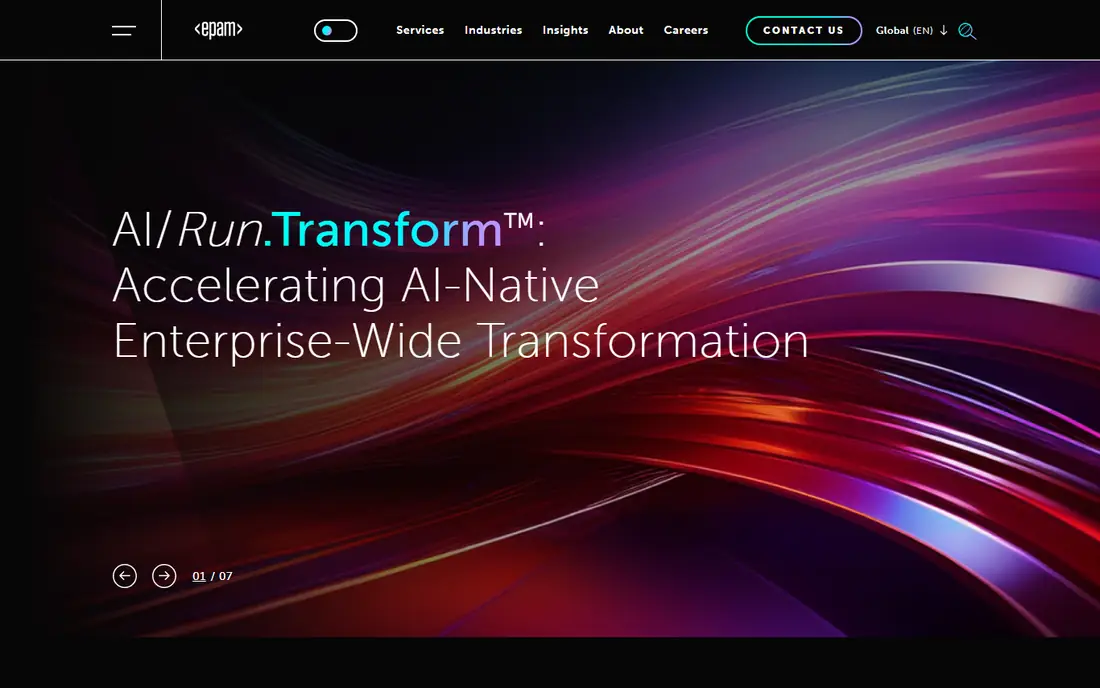
EPAM is known for engineering-led delivery across product, cloud, data, and AI work. It suits companies that need several build teams working to a product roadmap, with engineers who own delivery rather than just staff a project. Its global delivery model supports programs that span regions and time zones.
Clients still need clear product ownership, since EPAM delivery works best with a defined roadmap and decision maker. Ask for relevant engineering references and team profiles during selection. For large product engineering, EPAM is a strong shortlist choice.
- Deep engineering heritage
- Product and platform builds at scale
- AI-native delivery focus in recent public positioning
- Project pricing is quoted
- Large programs still need strong client product ownership
- Availability varies by skill and region
Globant suits brands that need digital products and customer experiences built at scale. Its studio structure groups specialists by domain, such as digital experience, data, and AI, which helps product teams assemble the right mix. That model fits consumer-facing apps, commerce, and media products well.
Back-office modernization may suit a different firm with deeper legacy and operations focus. Check studio experience in your industry during selection. For experience-led product work, Globant is a credible option.
- Studio model for digital experiences
- Product engineering at global scale
- AI-focused delivery models in recent public reports
- Project pricing is quoted
- Experience-heavy focus may suit consumer products more than back-office systems
- Team fit varies by studio
Cognizant suits large enterprises that need application services across several business units. Its scale supports regulated work in banking, healthcare, and other industries where compliance and audit trails matter. Clients with many legacy systems and ongoing support needs benefit from that breadth.
Small product builds may get lost in a large account structure, so ask who leads your team day to day. For a large, multi-year enterprise program, Cognizant scale and industry coverage are real advantages.
- Broad cross-industry enterprise capacity
- Regulated industry experience in banking and healthcare
- Large delivery workforce
- Project pricing is quoted
- Large firm processes can slow small projects
- Delivery quality varies by account team
Infosys suits enterprises that need reliable delivery at scale across applications, cloud, and data. Its global teams support long programs with many workstreams, and its AI services cover both modernization and new product work. That scale helps when you need to move hundreds of applications under one contract.
Clients should invest in governance, since scale alone does not guarantee speed. Define outcomes, milestones, and acceptance checks in the contract. For large IT programs with steady delivery needs, Infosys is a safe shortlist option.
- Large global delivery capacity
- AI and cloud services across industries
- Long enterprise track record
- Project pricing is quoted
- Large programs need strong client governance
- Innovation speed varies by account
Thoughtworks suits organizations that want to improve both software and how internal teams build it. Its consultants work on product delivery, modernization, and engineering practice, often alongside client teams. That coaching element helps companies that want lasting capability, not just a delivered system.
Scale limits matter for very large multi-country rollouts, where a larger firm may staff faster. Thoughtworks also works best when clients accept changes to process, not just code. For engineering-led change, it is a strong choice.
- Strong engineering practice and delivery culture
- Modernization and product delivery focus
- AI delivery platforms in public positioning
- Project pricing is quoted
- Smaller scale than Accenture or Cognizant
- Best fit requires client teams willing to change how they build
Capgemini suits enterprises that need consulting plus delivery across cloud, data, and industry platforms. Its European strength helps companies with operations there, and its global teams support multi-region programs. That mix suits transformation work that spans technology and business process.
Small startups will find Capgemini heavy for a single app build. Ask for practice leads in your technology area, not just a general sales team. For enterprise cloud and data programs, Capgemini belongs on the shortlist.
- Broad consulting and technology coverage
- Cloud, data, and AI services
- Strong European and global presence
- Project pricing is quoted
- Large firm overhead for small builds
- Delivery experience varies by country and practice
TCS, or Tata Consultancy Services, suits large organizations that need steady application services at scale. Its teams cover development, modernization, cloud, and support across many industries. That scale helps enterprises that run many systems and need predictable delivery over years.
Product teams that want fast, small-team iteration may prefer a specialist firm. For a large enterprise that values scale, stability, and broad coverage, TCS is a well-established option. Compare its proposed team, not just its brand, during selection.
- Very large delivery workforce
- Long enterprise application track record
- Broad industry and technology coverage
- Project pricing is quoted
- Large account structures can feel impersonal
- Change speed depends on governance and team
IBM Consulting suits enterprises whose architecture already leans on IBM or partner cloud and AI platforms. Its teams cover hybrid cloud, data, AI, and application modernization, with enterprise architecture as a core strength. That fit matters when a program must connect legacy systems to new cloud services.
Companies with no IBM footprint may find a more neutral firm a better fit. Check whether the proposed team brings platform-neutral experience or mainly IBM product experience. For hybrid cloud programs, IBM Consulting is a relevant choice.
- Hybrid cloud and AI expertise
- Enterprise architecture strength
- Ties to IBM and partner technology ecosystems
- Project pricing is quoted
- Best fit where architecture already uses IBM or partner platforms
- Large firm processes for small work
How we picked these
We compared public company service pages, industry guides, and delivery descriptions, focusing on fit rather than invented scores. A firm made this list only if it offers software development as a current, large-scale service with public client work in enterprise or product engineering. We did not rank firms by a single score, since a firm that suits a global bank may not suit a startup product team.
We also grouped firms by model: global consultancies, large IT services firms, and engineering-led specialists. That grouping helps buyers shortlist firms that match their program type. Always check recent references in your industry and technology area, since account teams matter more than brand names.
How to choose a software developer company
Start with the work, not the vendor list. Write a one-page brief: the problem, the users, the systems involved, the timeline, and what success looks like. A firm cannot price or staff well without that brief, and vague briefs lead to vague proposals.
Compare teams, not just proposals
Ask who will actually work on your project, how senior they are, and how much time they will spend. Request work samples and references for similar systems, and speak to those references about delivery, communication, and handover. A strong sales team does not guarantee a strong delivery team.
Define ownership and acceptance checks
Decide who owns product decisions, architecture, and testing. Set acceptance checks for each phase, such as working software, test coverage, documentation, and knowledge transfer. Include post-launch support, security patching, and handover terms in the contract, so you are not locked into one vendor forever.
Match the model to your in-house team
Choose team extension if you have product leadership and need engineers. Choose a dedicated team if you need a full product unit. Choose a fixed project only if scope is truly stable. The wrong model causes friction even when the firm itself is good, so decide this before you sign.
Frequently asked questions
What are the best software development companies?
Accenture suits broad transformation, EPAM and Thoughtworks suit engineering-led product work, and Cognizant, Infosys, TCS, Capgemini, and IBM Consulting suit large enterprise programs. The best firm depends on your program size, industry, and in-house team.
What are the top companies for software engineers to work for?
That depends on what an engineer values: scale, product variety, remote options, or engineering culture. Large firms offer broad projects and training, while specialists such as EPAM, Globant, and Thoughtworks often offer deeper product engineering work. Check current roles and team reviews before applying.
How much does it cost to hire a software developer company?
Costs are quoted per project and vary by team size, location, seniority, and duration. Small product builds cost far less than multi-year enterprise programs. Get at least two written proposals with team profiles and milestones, and compare total cost, not just hourly rates.
Should I choose a large firm or a specialist firm?
Choose a large firm when governance, scale, and multi-country delivery are the main constraints. Choose a specialist when speed, engineering depth, and product focus matter most. Many buyers use a large firm for platform programs and a specialist for product teams.
What should I ask before signing with a developer company?
Ask for the delivery team profiles, similar project references, security and testing practices, and handover terms. Ask how they handle scope changes, delays, and knowledge transfer. Get acceptance checks and support terms in writing.
Do these companies work with small businesses?
Most firms here focus on enterprise and mid-market clients, though some take smaller projects through dedicated teams. Small businesses often get better value from a midsize product agency or a dedicated team provider, so compare at least one smaller firm alongside a large one.
Sources
See where you really rank - block by block
ProMapRanker scans Google Maps across a grid of your service area. Simple monthly plans from $19, white-label on every plan.
Start freeKeep reading
 zscaler alternatives
Best Zscaler Alternatives in 2026
Looking for zscaler alternatives? We compare 9 SASE and zero trust platforms on architecture, data protection, pricing, and fit for your network and team.
Read → zapier alternatives free
Best Zapier Alternatives Free in 2026
Nine automation tools for zapier alternatives free in 2026, all with genuinely free tiers, plus free plan limits, starting prices and upgrade paths explained.
Read → which platform is best for online reputation
Which Platform Is Best for Online Reputation in 2026
Wondering which platform is best for online reputation? We compare 8 review, listing, and response tools for small and multi-location businesses and agencies.
Read →