 ProMapRanker
Best Software Composition Analysis Solutions in 2026

Developer-first SCA · Pricing starts at: $25 per developer per month
Key takeaways
- Snyk and Mend suit most dev teams that want scanning plus fix automation in normal workflows.
- Dependabot is the free baseline every GitHub team should enable before buying anything else.
- Black Duck and Sonatype suit compliance-heavy teams that need legal-grade license and policy controls.
- Socket and FOSSA fill specific gaps: malicious package detection and license reporting, which CVE scanning alone does not cover.
Quick comparison
| Pick | Great for | Pricing starts at | Free tier | |
|---|---|---|---|---|
| Snyk Open Source | Developer-first SCA | $25 per developer per month | Yes | Visit |
 Mend | Automated remediation | See website | Free trial | Visit |
 Black Duck | Governance and compliance | See website | No | Visit |
 Sonatype Lifecycle | Repository policy control | See website | Free trial | Visit |
 GitHub Dependabot | Free GitHub baseline | Free | Yes | Visit |
 FOSSA | License compliance | See website | Yes | Visit |
 JFrog Xray | JFrog artifact scanning | See website | Free trial | Visit |
 Socket | Malicious package detection | See website | Yes | Visit |
The best software composition analysis solutions
Software composition analysis, or SCA, scans the open-source packages in your code for known flaws, license risks and, in newer tools, malicious behavior. A good tool does more than list flaws: it prioritizes what is reachable, suggests a fix and produces a software bill of materials, or SBOM, for audits. We compared vendor pages, pricing pages and public reviews in October 2026.
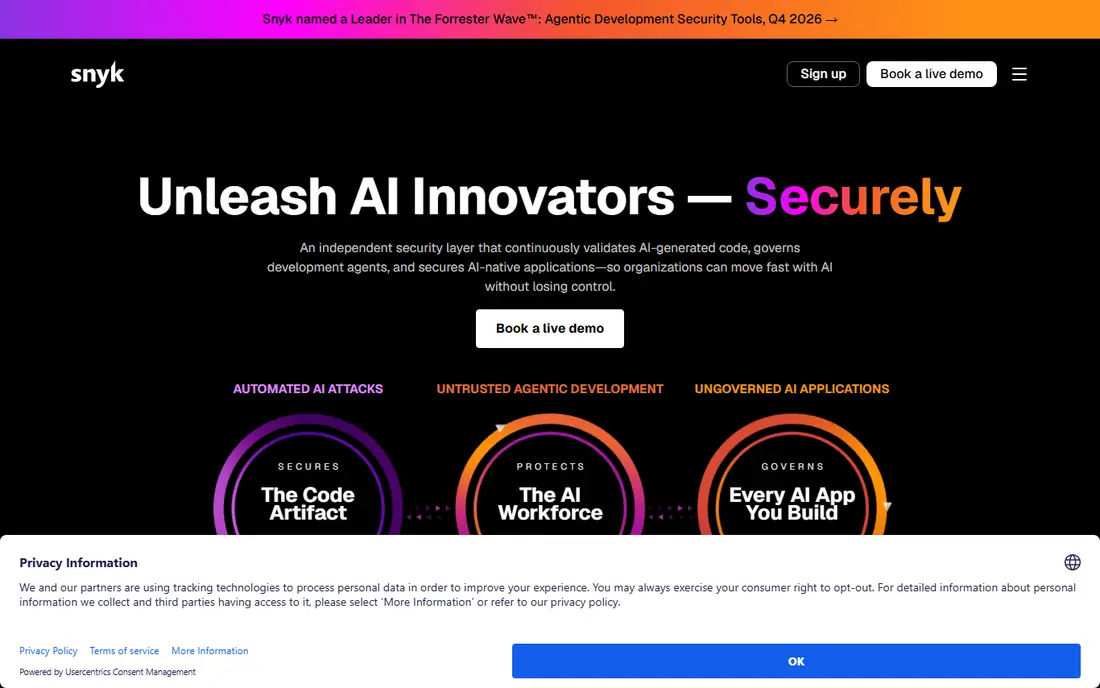
Snyk is our pick for most dev teams because it meets developers where they work. It scans in the IDE, in pull requests and in CI, and it opens fix pull requests rather than just reporting a flaw. Priority scoring helps teams focus on flaws that matter, instead of treating every advisory as equal. The Team plan starts at $25 per developer per month, with a free tier for smaller use.
The cost model needs care at scale. Large deployments may move to credit-based pricing, so get a quote based on real contributor count. For compliance-heavy license audits, pair Snyk with a legal-grade tool or check whether its license reporting meets your audit standard. For day-to-day SCA, it is the most developer-friendly option here.
- Free tier for small projects
- IDE and pull request integration
- Fix pull requests and priority scoring
- Per-developer pricing adds up
- Large deployments use a credit meter
- Policy depth is lighter than Black Duck for some audits
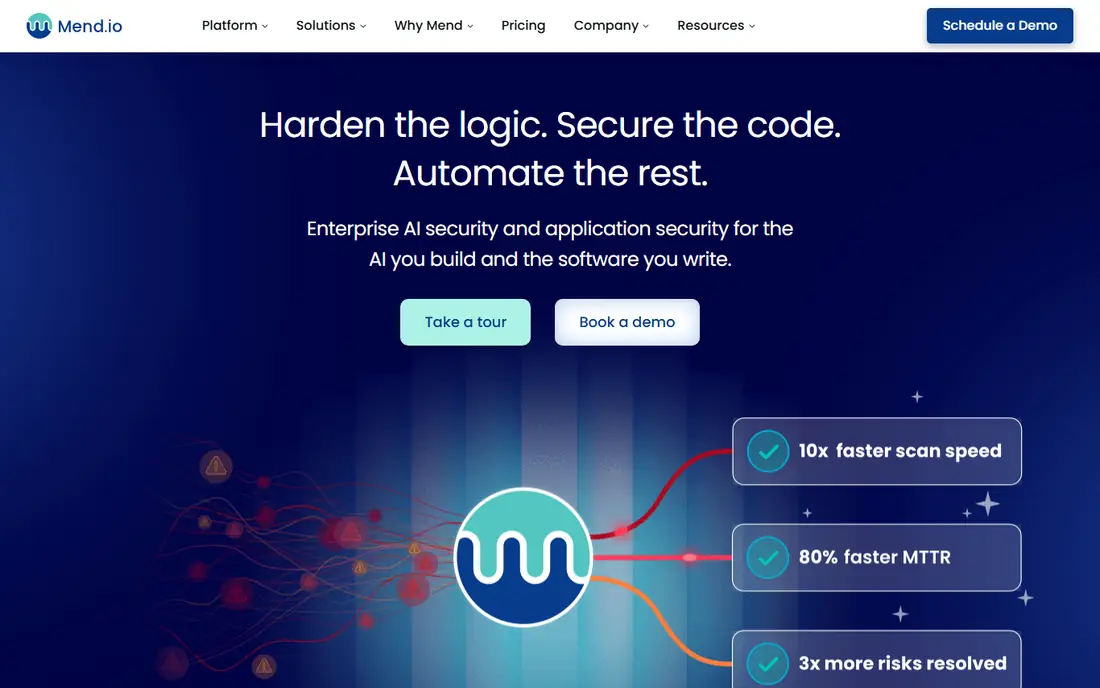
Mend, formerly WhiteSource, suits teams that want remediation throughput, not just alerts. Its Renovate tool opens dependency update pull requests automatically, and its SCA platform supports policies, SBOM generation and prioritization. That combination helps a team clear a backlog of outdated packages without hand-writing every upgrade.
Pricing is subscription-based and quoted, so budget from a sales quote rather than a list price. Implementation for a larger estate often takes two to four weeks. If your main pain is a long list of unpatched dependencies, Mend is a strong shortlist pick alongside Snyk.
- Strong automated remediation and Renovate updates
- SBOM and policy support
- Broad language coverage
- Pricing is quoted
- Setup takes weeks for larger estates
- Interface can feel dense
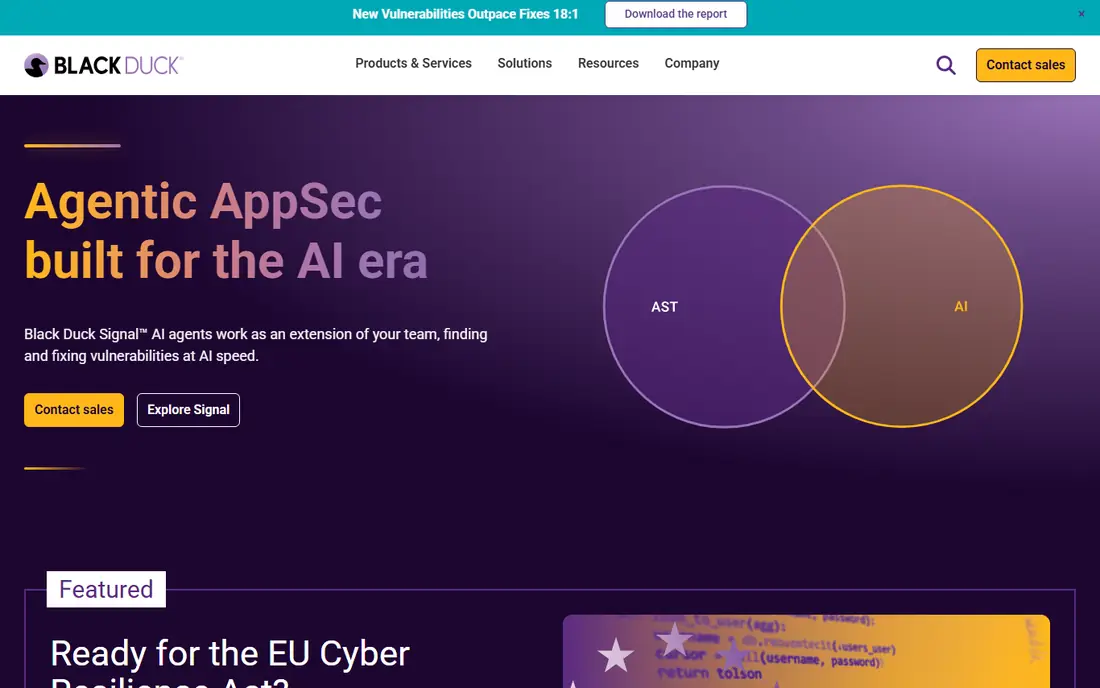
Black Duck suits organizations where license and compliance evidence matters as much as flaw fixing. It is known for deep license analysis, binary scanning for packages that are not declared in manifests, and policy controls that auditors can follow. That depth makes it common in mergers, regulated industries and large enterprise programs.
It is not a light developer tool. Pricing is quoted, setup is heavier, and developers may find the workflow slower than Snyk or Mend. Choose Black Duck when an audit, a customer SBOM request or a legal review drives the purchase, and pair it with a developer tool if day-to-day fix speed also matters.
- Legal-grade license analysis
- Binary analysis
- Deep policy controls for audits and M and A work
- Enterprise pricing
- Heavier setup
- Developer experience is less light than Snyk
Sonatype Lifecycle, formerly Nexus Lifecycle, suits teams that want to stop risky packages before they enter the build. It works with Sonatype Nexus Repository to apply policies at download time, so a developer cannot easily pull a package that violates license or security rules. That gate is its main advantage over scan-only tools that report problems after code is written.
Pricing is quoted and per-application in many contracts, so get a quote based on application count. Teams not on Nexus can still use Lifecycle, but the full value appears when repository and policy work together. For a mid to large team with a formal policy program, it is a strong enterprise pick.
- Blocks risky packages at the repository
- Strong policy management
- SBOM support
- Enterprise pricing
- Best value when paired with Nexus Repository
- Learning curve for policy design
Dependabot is the baseline every GitHub team should enable before spending on SCA. It is free, it watches dependencies in GitHub repos, and it opens pull requests to update vulnerable packages. It also supports a wide range of package managers, which makes it a practical floor for small teams and open-source projects.
Its limits are license reporting and governance depth. It will not give you a legal-grade license report or a full SBOM program on its own. Treat Dependabot as the floor, then add Snyk, Mend or FOSSA when you need prioritization, license control or SBOM exchange with customers.
- Free for GitHub repos
- Native pull requests for vulnerable dependencies
- Fast support for new package managers
- Limited license reporting
- No deep SBOM governance
- GitHub-centric only
FOSSA suits teams whose main SCA risk is legal, not just security. It tracks open-source licenses, flags obligations such as attribution or source disclosure, and produces reports that legal teams can review. That focus matters for companies that ship products containing many open-source components and need to prove compliance to customers.
For pure flaw fixing, Snyk or Mend offer deeper remediation. FOSSA can still scan for flaws, but its strength is license governance. Use it as the license layer alongside a security-focused SCA tool, or as the main tool when license risk is the driver and flaw scanning is already covered elsewhere.
- License-first reporting
- Attribution and obligation tracking
- Free tier for small use
- Vulnerability depth is lighter than Snyk or Mend
- Pricing is quoted for larger use
- Setup needs license policy decisions
JFrog Xray suits teams already running JFrog Artifactory for artifact management. It scans binaries, containers and packages stored in Artifactory, applies policies and license rules, and blocks or flags risky artifacts before they reach production. That registry-level control is similar in spirit to Sonatype, but inside the JFrog ecosystem.
Outside JFrog, its appeal drops. Pricing is bundled with the JFrog platform and quoted, so standalone buyers should compare Snyk or Mend first. If Artifactory is already your artifact store, Xray is the natural SCA extension and avoids a separate scanning pipeline.
- Scans artifacts and containers in JFrog
- Ties to Artifactory workflows
- Policy and license support
- Best value inside the JFrog platform
- Pricing is bundled and quoted
- Less standalone appeal
Socket fills a gap that CVE scanning misses: malicious packages. Advisory databases lag behind new typosquats and compromised versions, while Socket analyzes package behavior, such as suspicious install scripts or network calls, and can block a risky install. That makes it a useful layer on top of Dependabot or Snyk, especially for JavaScript-heavy teams.
It is not a full compliance replacement. License governance, SBOM depth and enterprise policy still need a broader SCA tool. Add Socket when malicious packages are a real concern, which they are for most teams pulling many public packages, and keep your main SCA tool for flaw and license coverage.
- Behavioral analysis for malicious packages
- Blocks risky installs
- Free tier for small use
- Does not replace a full compliance SCA tool
- Pricing tiers vary
- Focus is narrower than Snyk or Mend
How we picked these
We compared vendor feature and pricing pages, SBOM and policy documentation and public reviews in October 2026. We kept tools that scan real dependency inventories, support policies or fix workflows, and are still sold and supported. Where pricing is quoted, we wrote See website rather than repeating a marketplace estimate as a vendor price.
How to build an SCA program that developers will actually use
Start with the free floor, then add depth in order of risk. Enable Dependabot everywhere, generate SBOMs in CI in CycloneDX format, and set a policy for new packages. Then add a developer tool such as Snyk or Mend for fix automation, and add reachability triage before the alert queue grows. Alert forwarding without triage trains developers to ignore security, so prioritize reachable flaws first.
Next, decide who owns license and SBOM decisions. Security teams can own flaw policy, but legal or product teams should own license policy, since a license block can stop a release. Test policy changes on a small set of repos first, and give developers a clear path to request an exception. A policy that blocks work without a workaround will be bypassed, not followed.
Do not confuse CVE scanning with full supply-chain cover
CVE scanning covers known flaws in known packages. It does not cover malicious packages, undeclared binaries or license obligations on its own. Cover those three threats deliberately: a CVE tool for flaws, Socket or a repository gate for malicious packages, and FOSSA or Black Duck for licenses. That split is the simplest way to avoid a false sense of cover.
Frequently asked questions
Which software composition analysis tool is best for most teams?
Snyk or Mend suits most teams, with Dependabot as the free baseline. Snyk is more developer-first, while Mend is stronger on automated remediation throughput. Choose based on which workflow your developers will actually follow.
What is the best rated software composition analysis software for compliance?
Black Duck and Sonatype Lifecycle suit compliance-heavy programs, thanks to legal-grade license analysis and policy controls. FOSSA is a strong license-focused addition when legal reporting is the main driver.
Is there a free software composition analysis tool?
Yes. Dependabot is free for GitHub repos, Snyk and Socket offer free tiers, and OWASP Dependency-Check is a free open-source scanner for teams that want a self-hosted baseline. Free tools cover flaws, but license and SBOM governance often need a paid plan.
Do I need an SBOM, and what format should I use?
Many customers and regulated buyers now ask for an SBOM, and CycloneDX is a widely accepted format for sharing it. Generate SBOMs in CI even before a customer asks, so you can answer quickly when they do.
How is SCA different from SAST?
SCA scans third-party packages and dependencies for flaws and license risks. SAST scans your own code for flaws in how it is written. Most AppSec programs need both, since modern apps are largely composed of open-source packages plus custom code.
Sources
See where you really rank - block by block
ProMapRanker scans Google Maps across a grid of your service area. Simple monthly plans from $19, white-label on every plan.
Start freeKeep reading
 zoho inventory alternatives
6 Alternatives to Zoho Inventory, Compared on Price and Fit
Zoho Inventory alternatives: 6 tools compared on price, free plans and fit. Katana leads the list for manufacturers. Fit and flaws are laid out for each entry.
Read → zoho crm alternatives
Best Zoho CRM Alternatives (2026)
Need Zoho CRM alternatives? We compare 7 tools on cost, free access and who each suits. Every pick gets a straight assessment. Built for quick decisions.
Read → zelle alternatives
Best Zelle Alternatives in 2026
Compare the best Zelle alternatives for sending money to friends, paying sellers and moving funds abroad, with honest notes on fees, speed and safety in 2026.
Read →