 ProMapRanker
How to Pick Softphone Software

Key takeaways
- Top of the list is 8x8, which targets global voice and contact center.
- Ooma suits low-cost small business phone.
- 8x8, Ooma and the 5 others all sell by quote; expect sales conversations before you see a price.
- A permanent free plan is missing from all 7 tools, 8x8 and Ooma included; plan for a trial or a premium start.
- One limit worth knowing about Vonage: product line is complicated.
Direct answer
If you need global voice and contact center, 8x8 is the first tool to look at here. Aircall fits integrations-first phone system; Dialpad fits AI-powered business calling. The remaining 4 options are covered below with prices and limits.
Quick comparison
| Pick | Great for | Pricing starts at | Free tier | |
|---|---|---|---|---|
 8x8 | Global voice and contact center | See website | Free trial | Visit |
 Aircall | Integrations-first phone system | See website | Free trial | Visit |
 Dialpad | AI-powered business calling | See website | Free trial | Visit |
 Vonage | Adaptable business communications | See website | Free trial | Visit |
 RingCentral | Full unified communications | See website | Free trial | Visit |
 Nextiva | Mid-market communications suite | See website | Free trial | Visit |
 Ooma | Low-cost small business phone | See website | Free trial | Visit |
The 7 tools in detail
This ProMapRanker guide covers 7 options for softphone software. Each profile lists a starting price, free plan details, strengths and drawbacks, so you can drop poor fits quickly.

For global voice and contact center, 8x8 is a natural candidate. 8x8's differentiator is global: unlimited calling plans handling dozens of countries suit firms with international teams and customers.
Downsides: Interface less modern.
Worth adding: the product bundles voice, video, chat, and a real contact center, which lets support operations grow without switching vendors. On top of that, firms with staff or customers across borders get predictable international costs that domestic-focused competitors cannot match. This comparison lists no price for 8x8; ask the vendor. Free plan details: Free trial.
- Solid global presence
- Unlimited calling in numerous countries
- Support experiences vary
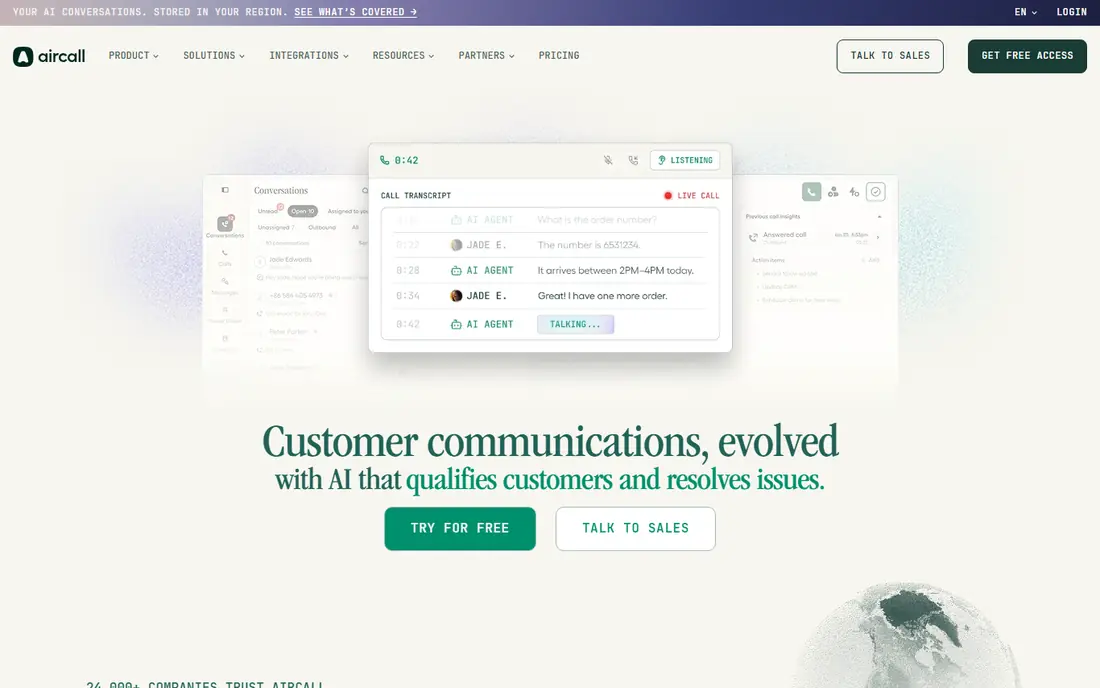
Aircall is aimed squarely at integrations-first phone system. But the integration-first design means reps spend time talking rather than logging calls.
Where it is weaker: Per-user pricing brings up.
For teams whose CRM is the center of gravity, Aircall's fit is natural. Aircall shows no starting price here, so confirm the cost on the vendor site. As for free access: Free trial.
- 100+ integrations
- Quick setup
- Advanced analytics cost more
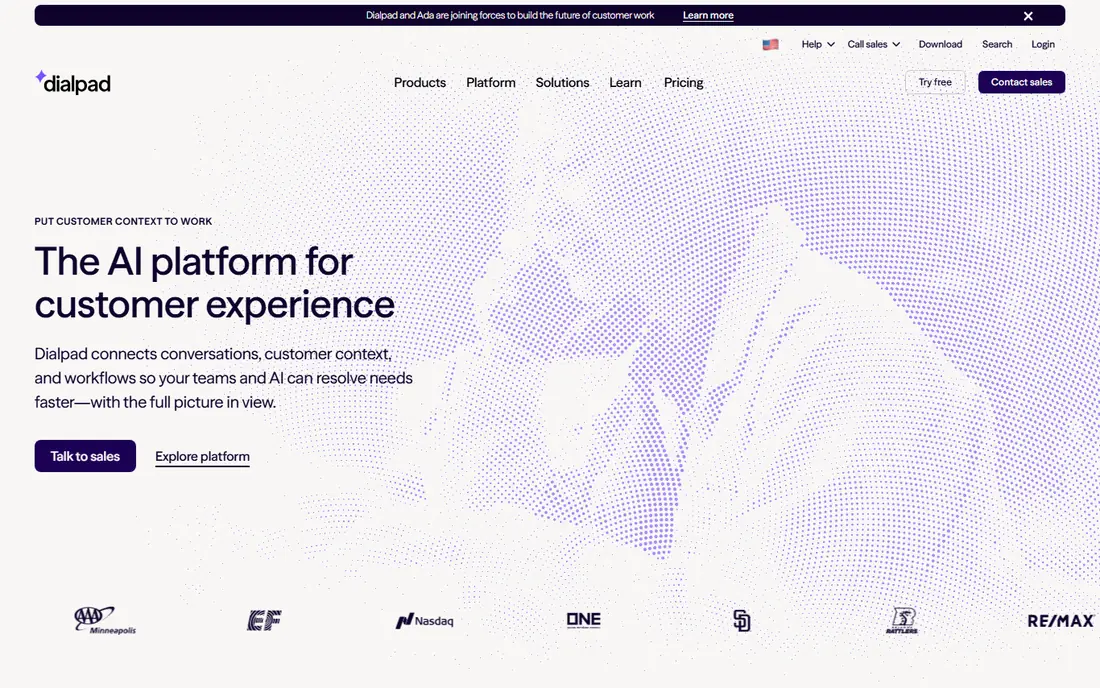
Dialpad is a good fit for AI-powered business calling. Dialpad built AI into calling before it was fashionable.
Beyond that, live transcription, sentiment analysis, and coaching prompts help sales and support teams perform better on live calls. This comparison lists no price for Dialpad; ask the vendor. Free plan details: Free trial.
Honest limits: Smaller integration list than RingCentral.
- Clean modern apps
- Decent value levels
- AI features need higher plans
Vonage was built for adaptable business communications. Vonage straddles two worlds: unified communications for companies that want it packaged, and communications APIs for developers who want to build it themselves.
More specifically, the UC side spans voice, video, and messaging; the API side powers custom calling experiences inside other products. For everyday use, evaluate the specific product line you need, not the brand usually. Vonage shows no starting price here, so confirm the cost on the vendor site. As for free access: Free trial.
Points against: Pricing varies widely.
- Global network
- Capable APIs for custom builds
- Product line is complicated
Choose RingCentral for full unified communications. Integrations with Salesforce, Microsoft 365, and Google Workspace put calling inside the tools teams already use.
Downsides: Admin console has a ramp-up time.
Upsides: Huge integration library.
Check the vendor site for RingCentral pricing; none is listed in this comparison. Trial and free access: Free trial.
- Voice, video
- Messaging unified
- Pricing levels gate features
Think of Nextiva for mid-market communications suite. Voice quality is consistently praised, the support team actually answers, and the product spans voice, video, messaging, and customer surveys in one subscription. The product evolves slower than Dialpad's or Aircall's, and pricing takes a conversation.
But communications infrastructure should be boring in the best sense: it works, someone answers when it does not, and the bill is predictable. On top of that, Nextiva provides that. Nextiva wins on reliability and support instead of flash. No starting price is listed for Nextiva here; confirm pricing on the vendor site. Free access: Free trial.
The main drawbacks: Pricing less transparent.
Highlights: All-in-one system.
- Decent customer support reputation
- Dependable voice quality
- Less innovation pace
Ooma targets budget-friendly small business phone. Ooma brings business phone service down to small-business budgets. Worth adding: the softphone and desk phone choices handle the essentials: auto-attendant, ring groups, voicemail transcription, and mobile apps, at prices well under the UC giants.
Trade-offs to know: Fewer advanced features.
Worth adding: setup is genuinely straightforward. Bigger teams outgrow it. Pricing for Ooma is not stated here, so ask the vendor for current figures. Free options: Free trial.
- Low prices
- Straightforward setup
- Best for smaller teams
What went into this list
Pricing pages, product documentation and feature lists were the main sources, and every entry carries at least one honest drawback. Seat minimums, billing terms and add-ons can move the real cost, so the starting prices here are a guide and not a quote. The order reflects how well each tool fits the most common buying scenario for softphone software, then price clarity, then free plan access. It is a starting point, not a verdict.
Pre-purchase checklist
- Ask each vendor, from 8x8 to Ooma, for a written quote; none of them publishes a starting price.
- Use real work to test the free trial from 8x8, Aircall, Dialpad and others, rather than a demo project.
- Before choosing 8x8, weigh its main limit: interface less modern.
- The entry price of Vonage is only the starting point; model the full cost with seats and extras.
- Look at which plan of Aircall unlocks the features you need; entry tiers are often cut down.
Frequently asked questions
Can I try these options before paying?
Often, yes. 8x8, Aircall, Dialpad and others offer a free trial. Use your own data and a real task during the test, and check what the free tier or trial limits before you rely on it.
What is softphone software?
It generally comes with voicemail, call forwarding, conferencing, and integrations with business tools. Most business VoIP services now lead with softphone apps.
How are the tools for softphone software ordered?
8x8 sits first and Ooma last because the order follows typical fit for softphone software, then price clarity and free access. It is a judgement call, so read each profile for fit and limits.
Do these tools publish their prices?
No. None of the tools, from 8x8 to Ooma, shows a fixed starting price here, so budget time for quotes.
Does any tool for softphone software here have a free plan?
A permanent free plan is not offered by 8x8, Ooma or the other tools here. Several tools offer a trial. Plan a short evaluation period instead.
Sources
See where you really rank - block by block
ProMapRanker scans Google Maps across a grid of your service area. Simple monthly plans from $19, white-label on every plan.
Start freeKeep reading
 zscaler alternatives
Best Zscaler Alternatives in 2026
Looking for zscaler alternatives? We compare 9 SASE and zero trust platforms on architecture, data protection, pricing, and fit for your network and team.
Read → zapier alternatives free
Best Zapier Alternatives Free in 2026
Nine automation tools for zapier alternatives free in 2026, all with genuinely free tiers, plus free plan limits, starting prices and upgrade paths explained.
Read → which platform is best for online reputation
Which Platform Is Best for Online Reputation in 2026
Wondering which platform is best for online reputation? We compare 8 review, listing, and response tools for small and multi-location businesses and agencies.
Read →