 ProMapRanker
Best Social Trading Platform in 2026

Key takeaways
- This is not financial advice. Trading carries risk, copied trades can lose money, and past performance of a trader does not predict future results.
- eToro is the clearest all-round social trading platform, with CopyTrader, a social feed, and a large community in one app.
- ZuluTrade, NAGA, and AvaTrade suit traders who want strategy choice, risk controls, or a broker with social features built in.
- TradingView and Public suit learners and community investors more than pure copy traders, since their strength is shared ideas rather than automatic copying.
- Check regulation, fees, margin use, and copy controls for your country before funding any account, since availability and terms vary by region.
Quick comparison
| Pick | Great for | Pricing starts at | Free tier | |
|---|---|---|---|---|
 eToro | All-round copy trading | Free | Yes | Visit |
 ZuluTrade | Strategy choice and controls | See website | No | Visit |
 NAGA | Social feed plus AutoCopy | See website | No | Visit |
 AvaTrade | Guided social trading | See website | No | Visit |
 Trading 212 | Social portfolio sharing | Free | Yes | Visit |
 Public | Community investing | Free | Yes | Visit |
 TradingView | Shared ideas and charting | Free | Yes | Visit |
 Collective2 | Verified strategy marketplace | See website | No | Visit |
 Darwinex | Systematic strategy signals | See website | No | Visit |
The best social trading platform
Social trading means learning from, following, or copying other traders, but the platforms below do that job in different ways. Some copy trades automatically, some share portfolios for discussion, and some sell verified strategies. That difference matters more than any headline about community size.

eToro is the most complete social trading platform for beginners because copying, discussion, and portfolio building sit in one place. You can filter traders by risk score, asset class, and performance history, allocate at least $200 to copy one trader, and stop or pause copying at any time. A free virtual portfolio lets you practice the same steps without risking real money.
The honest limit is that copying does not remove risk. A trader with strong past results can still lose money, and frequent trading by a copied trader can raise your costs through spreads and fees. Use eToro's risk scores, drawdown data, and loss limits as a screen, not as a promise, and start with an amount you can afford to lose.
- CopyTrader with a $200 minimum per copied trader
- Social feed and Smart Portfolios in the same platform
- Free virtual portfolio for practice
- Spreads and conversion fees still apply to copied trades
- Copy trading is not available in all US states, so check availability first
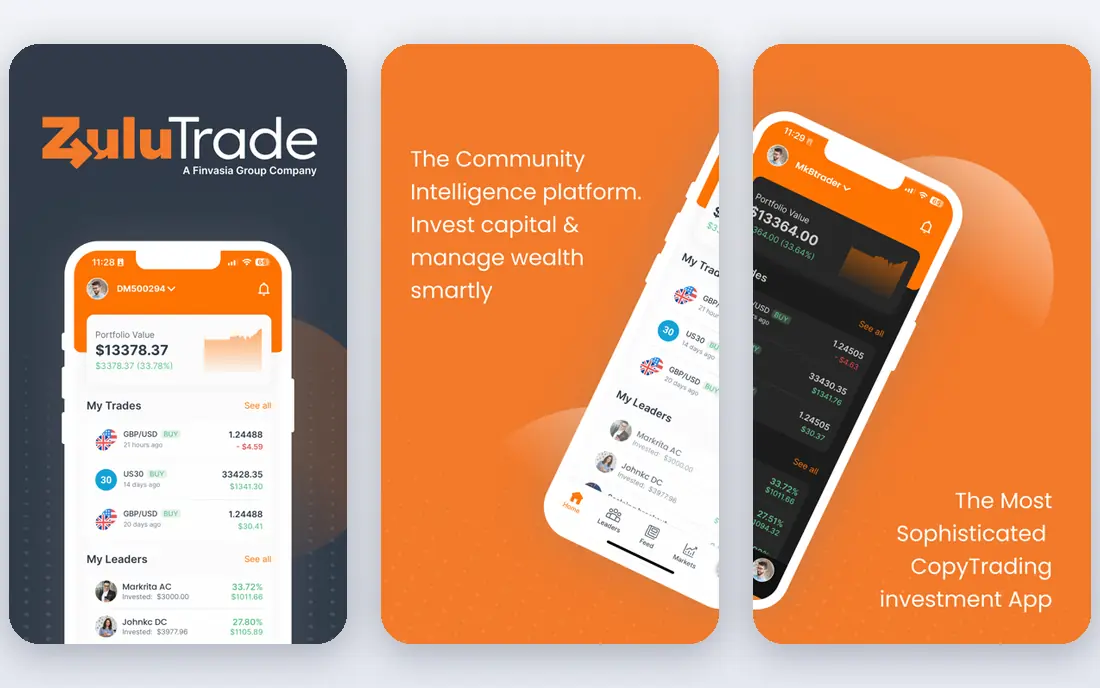
ZuluTrade suits traders who want to compare many strategies before committing money. Provider pages show performance history, drawdown, and risk metrics, with filters that help you narrow a long list to a few candidates. ZuluGuard can pause copying if a provider's behavior changes beyond limits you set, which adds a safety layer that simple copy buttons lack.
The complexity is the trade-off. Because ZuluTrade connects to partner brokers, your spreads, fees, and available markets depend on the broker you choose, not only on ZuluTrade itself. That flexibility is useful for experienced traders, but beginners should read both ZuluTrade and broker terms before funding an account.
- Large marketplace of signal providers with detailed statistics
- ZuluGuard risk protection
- Works with partner brokers in many countries
- You still need a broker account, so total cost depends on that broker
- Provider performance fees can apply, depending on the setup
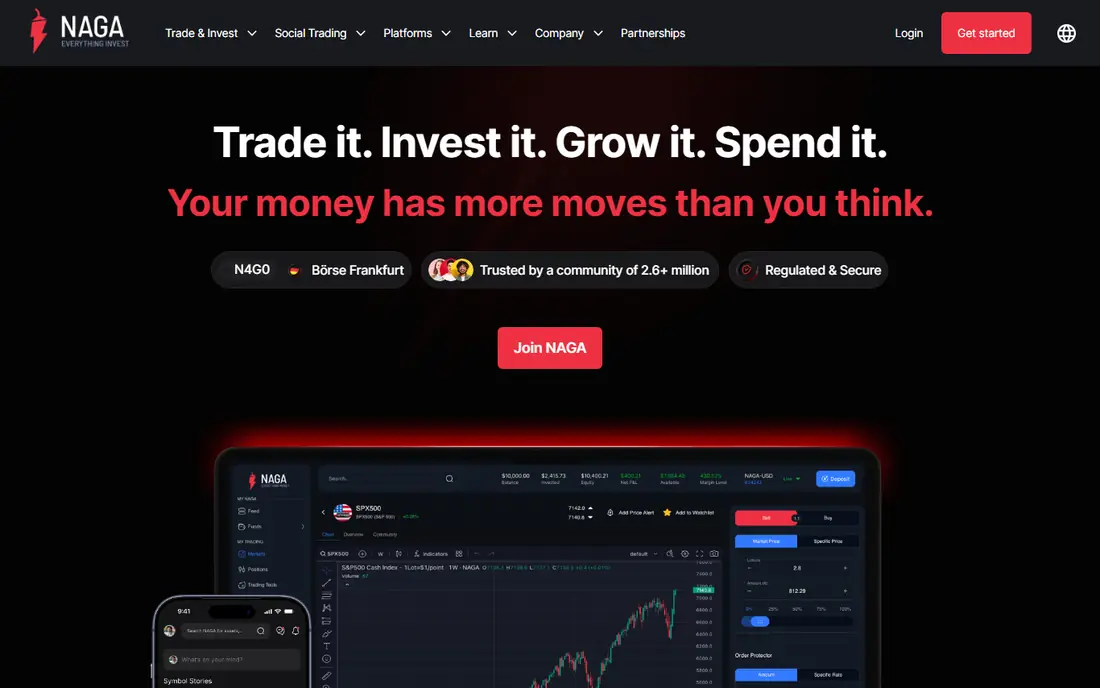
NAGA feels more like a trading social network than a plain broker app, with a feed where traders share ideas and trades alongside their own activity. AutoCopy lets you mirror another trader automatically, with controls for how much to allocate and how positions are sized. That mix suits traders who want both community discussion and hands-off copying.
The main warning is product type. Many NAGA instruments are CFDs, which use margin borrowing and can lose money quickly, especially when copied trades move against you. Check if you are trading real assets or CFDs, set a copy loss limit, and do not copy a high-margin trader with money you need for bills.
- Social feed blended with trading in one app
- AutoCopy with position sizing controls
- Copy amounts can start from a modest minimum in many regions
- Much trading is in CFDs, which carry margin risk
- Fees and copy terms vary by country and account type
AvaTrade suits traders who want a regulated broker first and social features second. AvaSocial lets you follow traders, see their activity, and copy trades from within the AvaTrade ecosystem, without joining a separate strategy marketplace. Education pages and platform guides help newer traders understand margin and order types before they copy.
The limit is scope: AvaSocial is smaller as a social network than eToro or NAGA, so you will find fewer traders to follow. If broker regulation and guided tools matter more to you than community size, that trade is reasonable. As with any copy tool, check fees and margin use for your account type before you start.
- AvaSocial app for following and copying traders
- Regulated broker with education material
- Risk tools including AvaProtect on eligible trades
- Social features are an add-on to a broker account, not a standalone network
- Spreads and fees vary by instrument and account
Trading 212 fits investors who like the social side of investing but do not want full automatic copying. Its Pies feature lets users build a portfolio allocation, share it, and let others follow that allocation with AutoInvest, which suits longer-term, portfolio-style investing. Commission-free stock and ETF trading in many regions keeps costs clear for that style.
If you want every trade of another trader copied in real time, Trading 212 is not the closest match, since its social model is portfolio-based. For investors who want ideas, shared allocations, and a low-cost brokerage in one app, it is a strong alternative to a pure copy-trading platform.
- Commission-free stock and ETF investing in many regions
- Pies feature for sharing and following portfolio allocations
- Practice account available
- Social sharing centers on portfolios, not automatic trade-by-trade copying
- Availability and features vary by country
Public is a community investing app where members post trades with a short explanation of why they made them. That context helps learners see reasoning, not just a buy or sell signal, and it encourages discussion about risk and time horizon. Fractional shares let smaller investors build positions without buying a full share.
Public does not offer the same automatic copying as eToro or ZuluTrade, so it suits investors who want ideas and discussion, then make their own decisions. Treat every community post as one person's view, check the facts yourself, and never invest based on a post alone.
- Community feed where members share why they traded
- Commission-free stock and ETF trading in the US
- Fractional shares for smaller budgets
- No classic copy-trading feature that mirrors another investor automatically
- Community posts are opinions, not advice
TradingView is first a charting and idea-sharing platform, and its social value comes from published charts, scripts, and trade ideas that other users can review and discuss. That transparency helps learners study how other traders read a market, test an indicator, or set a stop level. A free tier covers core charting and community browsing, with paid tiers adding more indicators and alerts.
TradingView alone does not copy trades for you, and any broker connection you add brings its own fees and rules. Use TradingView to learn and to test ideas, and use a broker or copy platform separately if you want automatic execution. The combination is common among experienced traders for that reason.
- Large community sharing charts and trade ideas
- Strong charting tools with many indicators
- Free tier for charting and idea browsing
- Not a copy-trading broker by itself
- Trading through a connected broker depends on that broker's terms and availability
Collective2 is a strategy marketplace where developers list trading systems with full, verified trade histories, rather than hypothetical backtests alone. Subscribers pay a monthly fee per strategy, which varies by system, and can auto-trade the strategy through a supported broker. That verification focus helps you judge a strategy on real trades, drawdowns, and consistency.
The cost stack is the catch: you pay the strategy subscription plus your broker's spreads and fees, and a strategy that trades often can raise total costs quickly. Collective2 suits traders who are comfortable reading detailed performance data and who want a marketplace model, rather than a social feed with casual copying.
- Strategies show verified, real-time trade history
- Subscription pricing is clear per strategy
- Auto-trading through supported brokers
- Subscription fees add to broker costs
- Past verified results still do not guarantee future results
Darwinex takes a different route to social trading by turning trader strategies into risk-normalized signals that investors can follow. That normalization aims to make it easier to compare strategies with different margin levels and volatility, rather than ranking them only by raw return. Detailed statistics on risk, drawdown, and consistency support that comparison.
The learning curve is real. Beginners may find the signal model harder to grasp than a simple copy button, and the platform suits traders who already understand risk-adjusted performance. If you like systematic strategies and careful comparison, Darwinex is worth studying. If you want a simple social feed, eToro or Public will feel more direct.
- Risk-normalized signals that aim to make strategies comparable
- Detailed performance and risk statistics
- Focus on systematic traders
- Concept takes time to understand for beginners
- Availability and product terms vary by country
How we picked these
We compared official platform pages, copy-trading guides, and broker terms, and we kept only platforms that offer a real social or copy feature in 2026, whether that is automatic copying, portfolio sharing, or verified strategy signals. We favored regulated brokers and platforms with clear risk controls, and we noted where a platform needs a separate broker account or where terms vary by country. We did not rank platforms by promised returns, since no platform can promise them, and we used See website where a single starting price would mislead.
How to use social trading without copying blindly
Treat every trader you follow as a hypothesis to check, not as a source of truth. Read their full history, including losing periods, and look at risk score, drawdown, margin use, and how long they have traded. A trader with a short, lucky run is not the same as a trader with a long, steady record, even if their recent return looks higher.
Set limits before you copy anyone
Decide a maximum allocation per trader, a loss limit that stops copying, and a total amount for social trading that you can afford to lose. Use the platform's copy controls to enforce those limits, and review copied trades weekly rather than letting them run untouched for months. If a trader changes strategy, increases margin use, or starts trading assets you do not understand, pause copying and reassess.
Separate learning from copying
Use community feeds, TradingView ideas, and Public posts to learn, and use copying only for traders whose approach you understand. If you cannot explain why a trader bought an asset, in plain terms, you should not be copying that trade yet. Learning first also helps you spot red flags, such as hidden margin borrowing, concentrated bets, or performance claims that do not match the verified history.
Watch total costs, not just headline fees
Copy trading often increases trading frequency, which raises spreads, overnight fees, and conversion costs. Add strategy subscription fees on marketplaces such as Collective2 to that total, and compare the full cost against a simple buy-and-hold portfolio. If costs eat most of the edge, a cheaper, slower approach may serve you better.
Frequently asked questions
What is the best social trading platform?
eToro is the best all-round social trading platform for most users, thanks to CopyTrader, a social feed, and Smart Portfolios in one app. ZuluTrade suits traders who want more strategy choice, while TradingView and Public suit learners who want ideas and discussion rather than automatic copying.
What are the best social trading apps?
eToro, NAGA, and AvaTrade are the strongest social trading apps with copying features, while Public and TradingView are strong community apps for ideas and charting. The best app depends on whether you want automatic copying, portfolio sharing, or idea discussion.
What are the best social trading platforms for beginners?
eToro and Public suit beginners well, since eToro offers a free virtual portfolio for practice and Public offers community context for trades. Start with a practice account, copy only small amounts at first, and learn how risk scores and drawdowns work before increasing an allocation.
Is copy trading safe?
Copy trading is not safe in the sense of guaranteed results, since copied trades can lose money and margin borrowing can increase losses quickly. Risk controls, diversification across traders, loss limits, and small starting allocations reduce risk, but they do not remove it.
How much do I need to copy a trader on eToro?
eToro requires a minimum of $200 to copy a single trader, with a $1 minimum per copied position. Positions below that minimum are not opened, so small allocations may skip a copied trader's smallest trades.
Is social trading financial advice?
No, social trading posts, leaderboards, and copied trades are not financial advice, and this article is general information only, not financial advice. Make your own decisions, consider your goals and risk tolerance, and seek independent advice if you are unsure.
Sources
- https://www.etoro.com
- https://www.zulutrade.com
- https://www.naga.com
- https://www.avatrade.com
- https://www.trading212.com
- https://www.public.com
- https://www.tradingview.com
- https://www.collective2.com
- https://www.darwinex.com
- https://www.etoro.com/en-us/copytrader/
- https://www.fxleaders.com/forex-brokers/social-trading-platforms/
See where you really rank - block by block
ProMapRanker scans Google Maps across a grid of your service area. Simple monthly plans from $19, white-label on every plan.
Start freeKeep reading
 zscaler alternatives
Best Zscaler Alternatives in 2026
Looking for zscaler alternatives? We compare 9 SASE and zero trust platforms on architecture, data protection, pricing, and fit for your network and team.
Read → zapier alternatives free
Best Zapier Alternatives Free in 2026
Nine automation tools for zapier alternatives free in 2026, all with genuinely free tiers, plus free plan limits, starting prices and upgrade paths explained.
Read → which platform is best for online reputation
Which Platform Is Best for Online Reputation in 2026
Wondering which platform is best for online reputation? We compare 8 review, listing, and response tools for small and multi-location businesses and agencies.
Read →