 ProMapRanker
Best SOC 2 Compliance Software for SaaS Companies in 2026

Key takeaways
- Only an independent auditor can issue a SOC 2 report, and software alone does not make an organisation compliant.
- Vanta, Drata and Secureframe lead on integrations and continuous monitoring, while Sprinto and Scytale suit smaller SaaS teams with guided help.
- Most vendors price by quote or by company size, so ask for a written quote that includes each framework you need.
- A trust center and auditor-friendly evidence export matter as much as the control library when enterprise buyers ask questions.
Quick comparison
| Pick | Great for | Pricing starts at | Free tier | |
|---|---|---|---|---|
 Vanta | Broad integrations for growing SaaS teams | See website | Free trial | Visit |
 Drata | Continuous control monitoring | See website | Free trial | Visit |
 Secureframe | Guided setup with training included | See website | Free trial | Visit |
 Sprinto | Fast first SOC 2 for smaller teams | See website | Free trial | Visit |
 Scytale | Expert-led multi-framework work | See website | Free trial | Visit |
 Scrut Automation | All-in-one compliance and risk tracking | See website | Free trial | Visit |
 Hyperproof | Mid-market governance and audit collaboration | See website | Free trial | Visit |
 Thoropass | Software plus an in-house audit option | See website | Free trial | Visit |
The best soc 2 compliance software for saas companies
We compared official feature pages, pricing pages, integration lists and public reviews for these tools. The list below focuses on tools that automate evidence collection, track controls over time and help a SaaS team prepare for an independent audit.
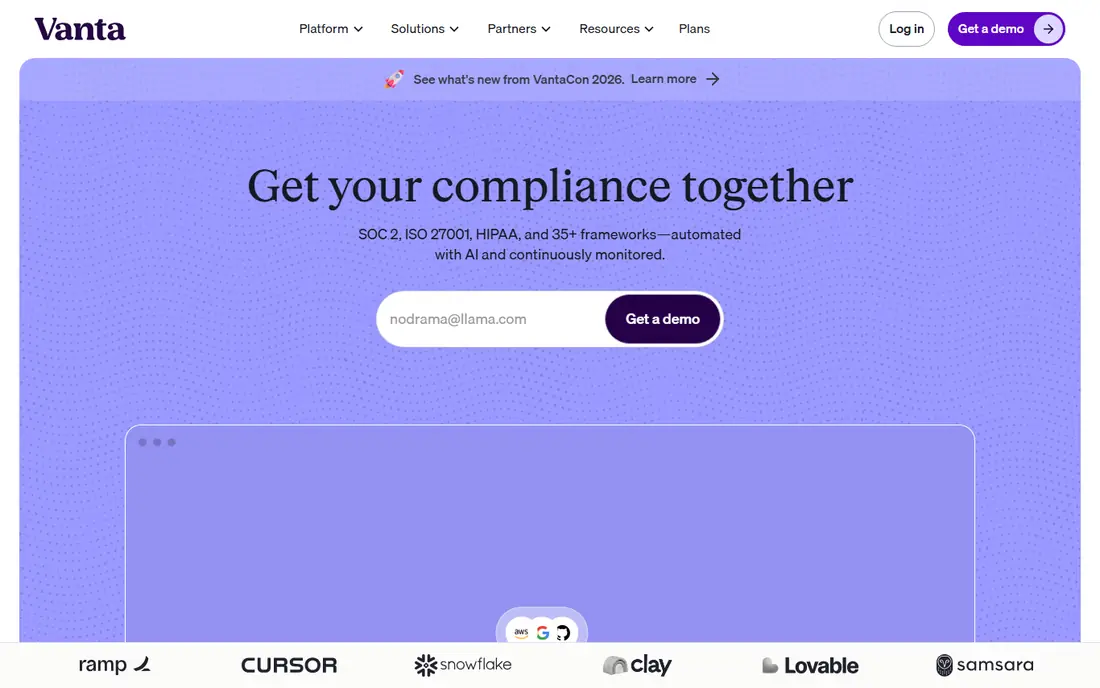
Vanta connects to common cloud, identity and code tools and pulls evidence on a schedule, which cuts down on screenshots and manual chasing near audit time. Its control library covers SOC 2 alongside other frameworks, so a team that later needs ISO 27001 or HIPAA does not have to start from a blank page. The trust center also helps sales teams answer security questionnaires without forwarding the same documents again and again.
The trade-off is cost and scope. Pricing depends on company size and the frameworks selected, so a small team should get a firm quote before assuming the entry figure applies to them. Vanta does not itself issue a SOC 2 report, and a team still needs an independent auditor to test controls and sign the report. For SaaS companies selling to larger buyers, though, the breadth of integrations and the familiar trust center format are real advantages.
- Wide integration library
- Continuous monitoring
- Customer trust center
- Pricing is quote based
- Costs can rise as frameworks and headcount grow
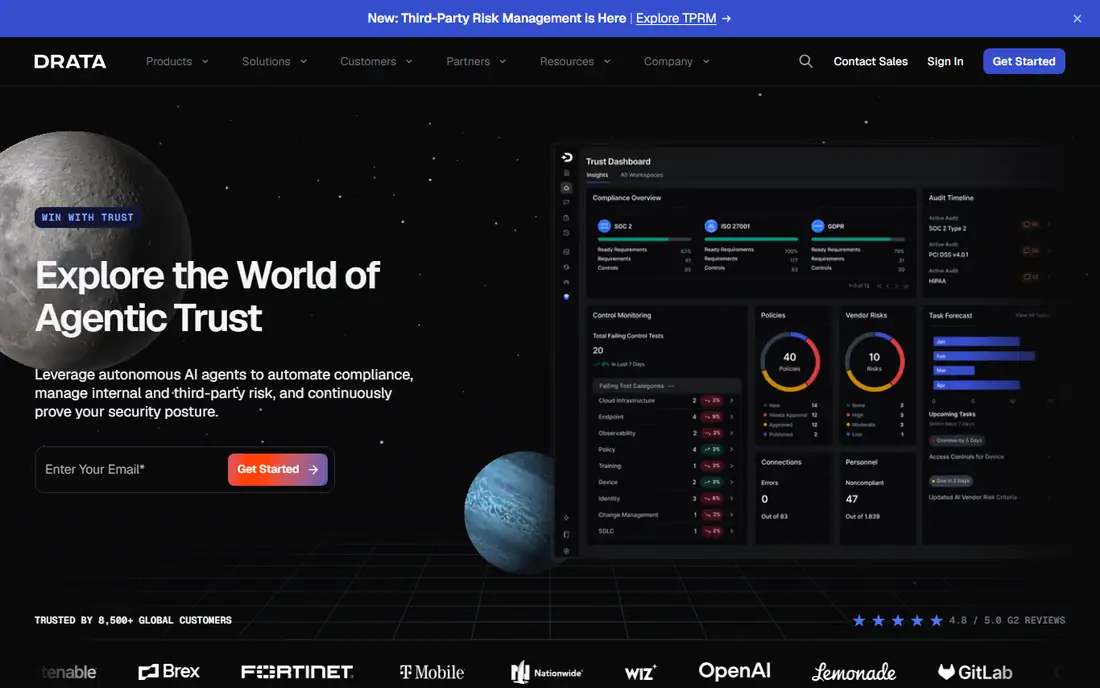
Drata monitors controls continuously and flags failures as they happen, rather than leaving problems to surface during an audit window. That approach suits SaaS teams with changing infrastructure, because a new misconfiguration or an expired policy review shows up quickly in the dashboard. The platform also gives auditors a structured workspace, which can shorten the back and forth over evidence requests.
Smaller teams should weigh the depth against the price and the setup effort. Drata is built for companies that already have someone owning security, even part time, and it works best when integrations are connected properly from the start. If your team has no security owner at all, a more guided option may get you to audit readiness faster. For mid-market SaaS firms, the monitoring depth is the main reason to shortlist it.
- Real-time control tracking
- Strong framework coverage
- Auditor collaboration tools
- Quote based pricing
- May feel heavy for very small teams
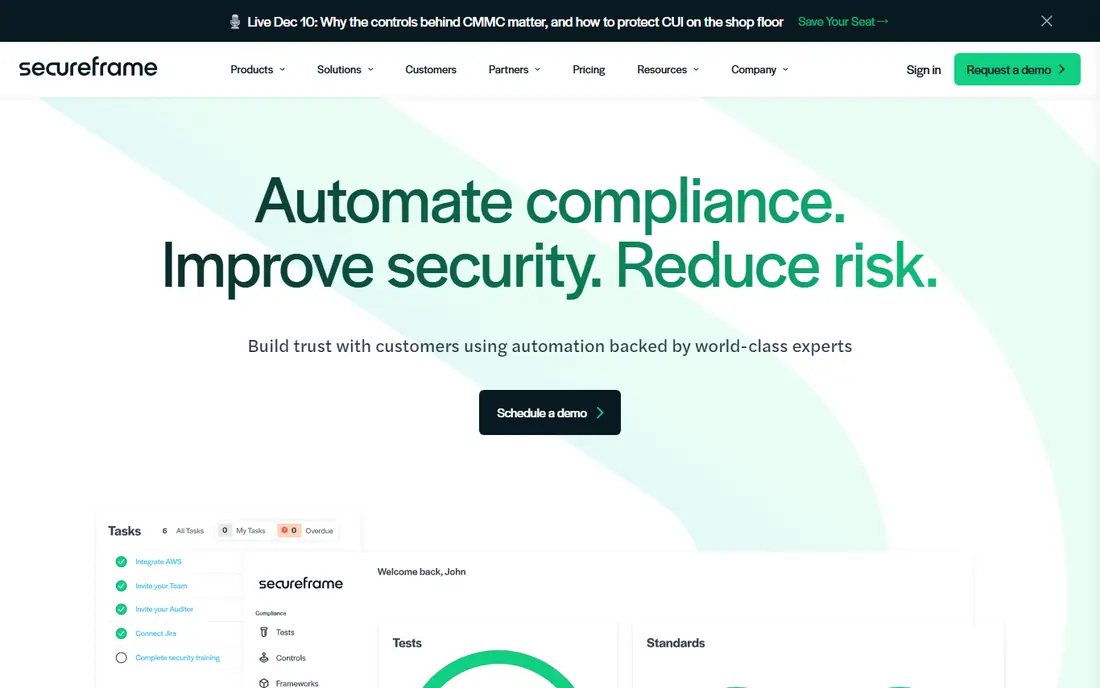
Secureframe pairs automation with a guided onboarding path, including policy templates and employee training that many teams otherwise buy separately. That bundle appeals to SaaS founders who know they need SOC 2 for deals but do not have a compliance specialist on staff. The platform tracks tasks, vendors and personnel, so the work stays visible instead of living in scattered spreadsheets.
The catch is that published entry figures often cover one framework, and adding frameworks or headcount changes the quote. Secureframe supports the audit process and works with audit partners, but it does not replace the independent auditor. Teams should confirm exactly what is included in their tier, including training seats and auditor support, before signing. For a first SOC 2 project, the guided structure is a clear strength.
- Prebuilt policy library
- Bundled personnel training
- Audit support
- Pricing varies by tier
- Some advanced features sit in higher plans
Sprinto is built around getting a smaller SaaS team from kickoff to audit readiness without hiring a compliance lead first. Its workflows break the work into checks, tasks and evidence, and its support team helps teams work through common blockers. With support for many frameworks, a team can add ISO 27001 or GDPR-related controls later without switching tools.
Pricing is quoted rather than published as a single flat rate, so compare the full quote, including any framework fees, against the other vendors here. Sprinto does not issue the SOC 2 report itself, and the audit still goes through an independent firm. If speed and hands-on guidance matter more than brand recognition with the largest enterprise buyers, Sprinto deserves a demo.
- Guided onboarding
- Many integrations
- Multi-framework support
- Quote based pricing
- Audit itself is handled by partner firms
Scytale combines software with people who know the audit process, which helps teams that want advice on control design rather than just a dashboard. Its playbooks cover SOC 2 and other frameworks, and its team helps prepare evidence for auditor review. A penetration test add-on can also help teams address the security testing questions that enterprise buyers often raise.
The platform has fewer integrations than Vanta or Drata, so check that your core tools connect before committing. Pricing is quoted, and add-ons change the total, so ask for an itemised quote. For SaaS teams that want an expert in the loop without hiring a full-time compliance manager, Scytale offers a useful middle path between pure software and a consultancy.
- Compliance experts included
- Audit collaboration
- Penetration testing add-on
- Smaller integration list than the largest vendors
- Quote based pricing
Scrut Automation brings compliance, risk and vendor tracking into one view, which helps a SaaS team show how controls, risks and third-party vendors connect. That matters when a buyer asks about a specific vendor or a specific risk, because the answer does not require digging through separate tools. Its framework library supports SOC 2 alongside other common standards, so growing teams can expand without a migration.
Brand recognition is the main weakness, since some large buyers ask for the most familiar names first. A strong trust center and a clean audit trail can offset that, but it is worth testing with your own prospects. Pricing is quoted, so request a quote that matches your headcount and framework list. For teams that want risk and compliance in one place, Scrut is a practical pick.
- Unified compliance and risk dashboards
- Broad framework library
- Vendor risk tracking
- Less well known to some enterprise buyers
- Pricing is quote based
Hyperproof is aimed at teams that treat SOC 2 as part of a wider governance program rather than a one-off project. It links controls to risks, tasks and evidence, and it gives auditors and internal teams a shared workspace for reviews. That structure helps mid-market SaaS companies that already run internal audits or manage several frameworks at once.
The downside is transparency on price, since Hyperproof works from proposals rather than a public price list. Smaller teams may also find the governance features more than they need for a first SOC 2. If your company already has risk and audit processes and wants one system to hold them together, Hyperproof fits well. If you only need SOC 2 quickly, a simpler guided tool may be faster.
- Risk registers and task management
- Audit collaboration
- Broad framework support
- Pricing is not published
- Setup suits teams with some governance experience
Thoropass stands out because it pairs compliance software with audit services from its own CPA firm, which can simplify scheduling and evidence handoffs. For a SaaS team, that means fewer vendors to coordinate and a clearer path from readiness work to the audit itself. Its experts also help with control design and remediation, which helps first-time teams avoid common audit findings.
The bundled audit route ties you to its affiliated firm, so teams that already have an auditor may prefer a platform-only vendor. Pricing is quoted and depends on scope, so compare the combined platform and audit cost against buying them separately. For teams that want one accountable provider from setup through the report, Thoropass is worth a serious look.
- Platform plus audit support from its own CPA firm
- Expert guidance
- Clear audit path
- Audit must go through its affiliated firm for the bundled route
- Quote based pricing
How we picked these
We compared official feature pages, pricing pages, integration lists and public reviews, and we kept only tools that actively support SOC 2 for SaaS companies in October 2026. We favoured tools with continuous monitoring, auditor collaboration features and a clear route to an independent audit. We left out tools that only sell consulting with no software, and tools whose pricing or SOC 2 support could not be confirmed from public sources.
What to check before you buy
Start with your buyer requirements, not the feature list. Ask which framework and report type your largest prospects actually ask for, and whether they need a Type 1 or Type 2 report. Then check integrations against the tools you already use, including cloud providers, identity providers and code repositories, because manual evidence collection defeats much of the value.
Next, get written quotes that state headcount limits, framework fees and renewal terms. Ask who performs the audit, what the auditor needs from your team, and how long the observation period for a Type 2 report will run. Finally, test the trust center and the evidence export, since those are the parts your buyers and auditors will see most. A tool that looks good in a demo but exports messy evidence will cost time later.
Frequently asked questions
Does SOC 2 software make my company compliant?
No. Software helps you collect evidence, track controls and prepare for an audit, but only an independent auditor can issue a SOC 2 report. Your team still has to operate the controls over time and fix gaps the auditor finds.
How long does a first SOC 2 take for a SaaS company?
It varies by team size, control gaps and report type. Many teams spend a few months on readiness, and a Type 2 report also needs an observation period during which controls run. Ask each vendor for a realistic timeline based on your current controls.
How much does SOC 2 compliance software cost?
Most vendors in this list price by quote, based on headcount and frameworks. Entry figures seen in marketplace listings often cover one framework only, so always ask for a total that includes every framework, user and renewal year you plan to use.
Do I still need an auditor if I buy one of these tools?
Yes. The auditor tests your controls independently and signs the report. Some vendors bundle audit services or work with partner firms, but the audit itself remains separate from the software subscription.
Can one tool cover SOC 2 and ISO 27001 together?
Most tools here support multiple frameworks and map shared controls across them, which reduces duplicate work. Confirm that both frameworks are included in your quote, since some vendors charge per framework.
Sources
See where you really rank - block by block
ProMapRanker scans Google Maps across a grid of your service area. Simple monthly plans from $19, white-label on every plan.
Start freeKeep reading
 worlds best local seo company
8 Worlds Best Local SEO Companies for Map Pack Growth in 2026
Compare the worlds best local seo company options for Google Business Profile work, citations, reviews, and multi-location rankings and reporting in 2026.
Read → world's best web hosting company
World's Best Web Hosting Company in 2026
Searching for the world's best web hosting company? We compared 10 hosts on price, renewal rates, speed, and support to help you choose well today in 2026.
Read → who's got the best nanny tax services
Who's Got the Best Nanny Tax Services in 2026
We answer who's got the best nanny tax services, comparing full filing, back taxes, software, and pricing so families can handle nanny taxes correctly.
Read →