 ProMapRanker
Best Small Business Accounting Software in 2026

Most US small businesses · Pricing starts at: $38 per month
Key takeaways
- QuickBooks Online is the safest default for US small businesses, mainly because most accountants already know it and its app range is widest.
- Xero suits teams that need unlimited users without per-seat fees, while Wave and Zoho Books suit very small budgets.
- FreshBooks wins for service businesses that live on invoicing and time tracking, but it is weaker for complex double-entry bookkeeping.
- Entry plans often cap users, invoices or bills, so check those limits before you choose on price alone.
- Payroll, payments and inventory usually cost extra, so compare the full monthly total, not just the base accounting plan.
Quick comparison
| Pick | Great for | Pricing starts at | Free tier | |
|---|---|---|---|---|
| QuickBooks Online | Most US small businesses | $38 per month | Free trial | Visit |
 Xero | Teams and unlimited users | $25 per month | Free trial | Visit |
 FreshBooks | Service businesses and invoicing | $23 per month | Free trial | Visit |
 Wave | Zero-budget solos | Free | Yes | Visit |
 Zoho Books | Budget firms in the Zoho range | Free | Yes | Visit |
 Sage Accounting | Established firms and inventory | See website | Free trial | Visit |
 FreeAgent | UK freelancers and small firms | See website | Free trial | Visit |
 Patriot Accounting | Simple US bookkeeping | $20 per month | Free trial | Visit |
 Kashoo | Simplest bookkeeping for non-accountants | See website | Free trial | Visit |
The best small business accounting software
We compared invoicing, bank reconciliation, reporting, payroll options, integrations and price. The best accounting software for small business owners is the one you will use weekly, that your accountant can open without friction, and that grows without forcing a painful move later.
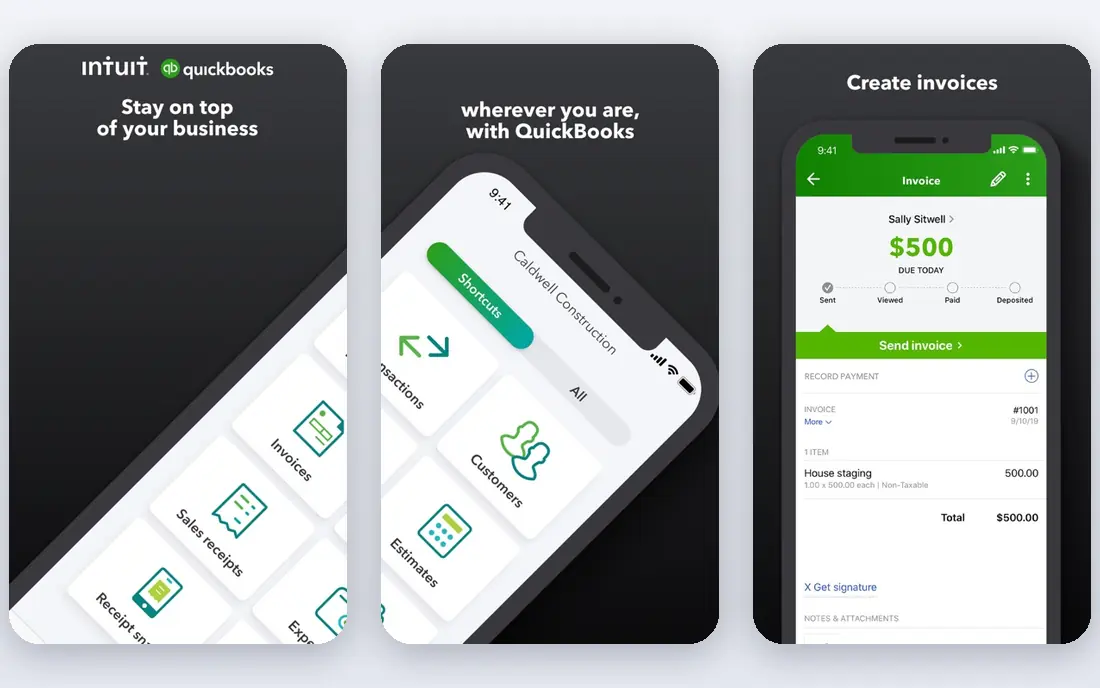
QuickBooks Online is the default for a reason. Most US accountants already work in it, which cuts onboarding time and year-end questions. Its Simple Start plan starts at $38 per month in recent pricing, with Essentials, Plus and Advanced tiers adding users, inventory and deeper reporting. Bank feeds, invoicing, expense tracking, sales tax tools and a large app marketplace cover most small business needs in one place. The cost is the main drawback. Promotions expire, payroll and payments cost extra, and the interface can feel crowded for a solo owner. If you plan to hire staff, hold inventory, or work closely with an accountant, that cost is often justified. If your books are simple, start with a cheaper tool and move to QuickBooks Online only when you need its depth.
- Widest accountant familiarity
- Deep app range
- Strong reporting and payroll add-ons
- Higher price than rivals
- Add-ons add cost
- Entry plan allows only one user
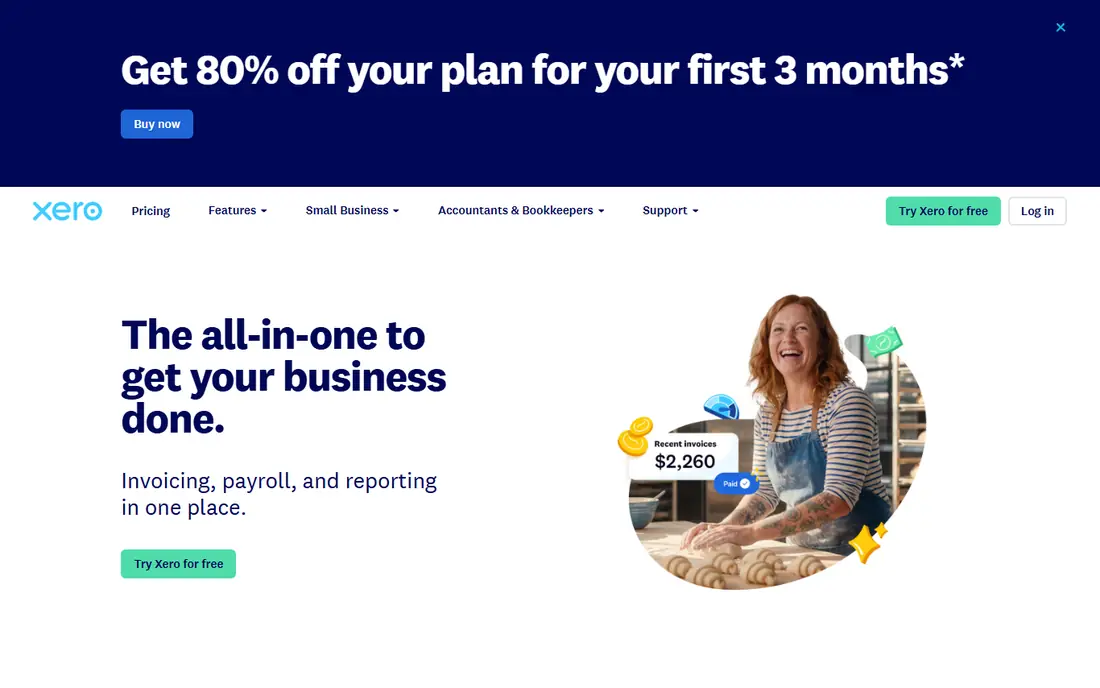
Xero is the best online accounting software for small business teams that hate per-user fees. Every plan includes unlimited users, so a bookkeeper, an accountant and two staff members can work without extra seat charges. Its Early plan starts at $25 per month in recent pricing, with Growing and Established tiers raising invoice, bill and feature limits. Bank reconciliation is clear, and its app range is strong for e-commerce, payments and reporting. The entry limits matter. Early allows only 20 invoices and 5 bills a month in recent pricing, which pushes growing firms to the Growing plan. US payroll is handled through a partner rather than built in, which adds a step. If you run a team, sell across borders, or want a clean modern interface, Xero is a strong rival to QuickBooks Online.
- Unlimited users on all plans
- Clean interface
- Strong bank reconciliation
- Entry plan caps invoices and bills
- US payroll runs through a partner
- Smaller US accountant network
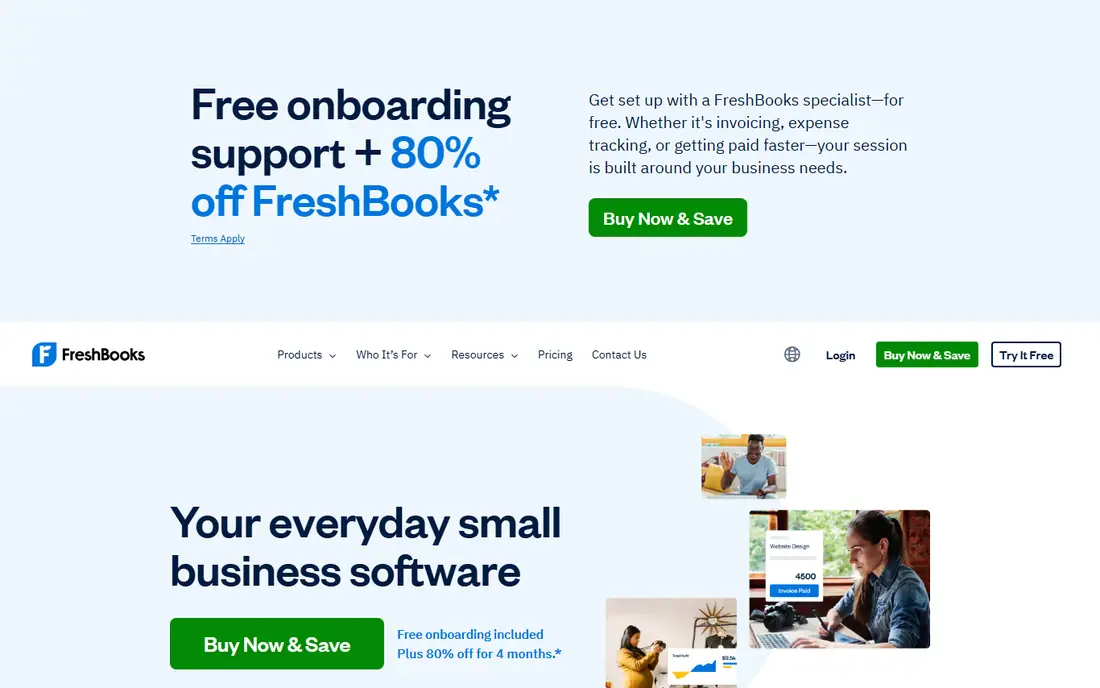
FreshBooks is built around getting paid. Service businesses, consultants and freelancers can track time, turn it into an invoice, chase late payments and record expenses without learning full accounting terms. Its Lite plan starts at $23 per month in recent pricing, with Plus and Premium tiers raising client limits and adding features. The interface is friendly, and clients can pay online from the invoice. For complex books, FreshBooks is less suited. It is not built as a full double-entry system in the same way as QuickBooks Online or Xero, and entry plans lack some reconciliation depth. If invoicing drives your business and your books are simple, FreshBooks is the best app for small business accounting in daily use. If you hold inventory or need deep reports, choose QuickBooks Online or Xero instead.
- Excellent invoicing and time tracking
- Easy client billing
- Good expense and mileage tools
- Lite plan caps billable clients
- Weaker for complex bookkeeping
- Bank reconciliation is limited on entry plans
Wave is the best bookkeeping software for small business owners who need real books at no monthly cost. Its Starter plan is free and covers accounting and invoicing, which suits sole proprietors, freelancers and very small firms. Setup is quick, invoices look clean, and you can record income and expenses without a paid plan. The limits appear as you grow. Some bank import features sit in the Pro plan at $19 per month in recent pricing, payroll costs extra, and its integration range is narrower than QuickBooks Online or Xero. If your budget is zero and your books are simple, Wave is hard to beat. If you need payroll, inventory, or deep reporting, budget for a paid tool instead.
- Free core accounting and invoicing
- Unlimited invoices
- Simple setup
- Paid Pro plan needed for some bank features
- Payroll is an add-on
- Fewer integrations than leaders
Zoho Books is the best financial software for small business owners who already use Zoho apps, or who want strong value. Its free plan covers firms with revenue up to $50,000 a year, with paid plans starting at low monthly rates in recent pricing. Invoicing, expenses, bank feeds, sales tax and reporting are solid, and the tool fits neatly beside Zoho CRM, Zoho Inventory and Zoho Payroll. The trade is integration breadth. Zoho Books has fewer third-party apps than QuickBooks Online, and its free plan caps invoices per year. If you already live in Zoho, or you want a low-cost tool with real double-entry accounting, Zoho Books is a strong pick. If your accountant insists on QuickBooks Online, that advice may outweigh the saving.
- Free plan for revenue up to $50,000 a year
- Strong value on paid plans
- Deep Zoho integration
- Fewer third-party integrations than QuickBooks Online
- Free plan has invoice limits
- Learning curve for new users
Sage Accounting suits established small businesses that need more than simple invoicing. Its higher tiers handle inventory, job costing and deeper reporting, which helps product firms, trades and firms with project work. Sage has served businesses for decades, and its reporting tools suit owners who review margins, stock and cash flow each month. Pricing varies by country, so check your local Sage site for current plans rather than trusting a US price list. The interface can feel heavier than Xero or FreshBooks for a new owner. If you need inventory depth and plan to grow into a larger firm, Sage is worth a trial. If you need simple books, Wave or Zoho Books will feel faster.
- Strong inventory and job costing on higher tiers
- Long business history
- Solid reporting
- Pricing varies by country
- Learning curve can be steep
- Entry plans are limited
FreeAgent is a strong pick for UK freelancers, contractors and small firms. It handles invoicing, expenses, bank feeds and UK tax estimates in a clear interface, and it is popular with accountants who serve small UK businesses. For a solo UK owner, it often feels simpler than QuickBooks Online, since its tax and filing tools match UK rules. For US businesses, FreeAgent is a weaker fit, since its tax tools and payroll options focus on the UK. Check your country pricing and feature list before you commit. If you run a UK small business and want simple, accountant-friendly books, FreeAgent deserves a trial beside Xero and QuickBooks Online.
- Clear UK tax tools
- Simple invoicing and expenses
- Good for freelancers and contractors
- UK focus limits US fit
- Fewer US payroll and tax features
- Smaller app range than leaders
Patriot Accounting is the best accounting small business software pick for US owners who want simplicity over depth. Its Basic plan starts at $20 per month in recent pricing, with a Premium tier at $30 per month, and it covers invoicing, expenses and basic reports without a steep learning curve. Payroll can be added from the same vendor, which keeps pay and books in one place. Reporting and integrations are narrower than QuickBooks Online or Xero, and inventory tools are limited. That makes Patriot a poor fit for product firms with complex stock needs. For a service firm, a trades firm, or a very small team that wants clean books and US support, Patriot is a low-cost, low-friction choice.
- Simple setup
- Low starting price
- US payroll add-on from the same vendor
- Limited reporting depth
- Fewer integrations
- Not suited to complex inventory
Kashoo, now sold as TrulySmall in some markets, suits owners who find other tools too complex. Its interface uses plain terms, setup takes little time, and invoicing and expense tracking cover the daily needs of a micro-business. For an owner who has avoided bookkeeping because tools felt heavy, Kashoo can be the tool that finally gets used each week. Depth is the limit. Reporting, inventory and multi-user controls are thinner than in QuickBooks Online, Xero or Sage, so growing firms will outgrow it. Use Kashoo when simplicity matters most and your books are small. Move to a deeper tool when you hire staff, add inventory, or need reports your accountant can build on.
- Very simple interface
- Quick invoicing and expenses
- Low learning curve
- Limited feature depth
- Fewer integrations
- Not suited to larger teams
How we picked these
We compared official feature pages, pricing, app store listings, privacy policies and public reviews, plus 2026 pricing coverage from independent guides that cite vendor pricing pages. We favoured tools with real double-entry accounting or clear invoicing depth, bank feeds, usable reports, and pricing that a small firm can sustain. We did not run live books in each tool, and prices and plan limits change often, so confirm the current plan on each vendor site before you buy.
How to choose accounting software for your business
Start with your business type. Service firms need invoicing, time tracking and payment links. Product firms need inventory, purchase orders and cost tracking. Firms with staff need payroll, even if it is an add-on. A tool that fits your type will save more time than a tool with a longer feature list that you never use.
Check limits before price
Entry plans often cap users, invoices, bills or clients. A $23 or $25 plan that forces an upgrade in three months costs more than a $38 plan that fits from day one. List your monthly invoices, bills, users and bank accounts, then match those counts to the plan limits. Also check whether bank feeds, multi-currency, project tracking and accountant access sit in your tier or in a higher tier.
Payroll, payments and tax
Payroll usually costs extra, and payment processing fees apply per transaction on top of the plan price. Check whether payroll files taxes for you, whether payments link to invoices, and whether sales tax tools cover your state or country. If your accountant uses one tool, ask which tool they prefer, since their familiarity can cut year-end fees and errors.
Trial it with real data
Use the free trial or free plan with a month of real invoices, expenses and bank transactions, not sample data. Test invoicing, reconciliation, a profit and loss report, and a payment from a client. If those four tasks feel slow or confusing, try another tool. The best software is the one you and your team will use each week, not the one with the lowest first-month price.
Frequently asked questions
What is the best accounting software for small business owners who are just starting?
Wave or Zoho Books suit new owners on a tight budget, since both offer free plans for simple books. QuickBooks Online suits new owners who plan to work with an accountant soon, since most US accountants already know it. Start free if your books are simple, and move to a paid tool when invoices, staff or inventory grow.
What is the best bookkeeping software for small business service firms?
FreshBooks is the best bookkeeping software for small business service firms that bill by time or project, thanks to invoicing, time tracking and client payments in one place. Xero and QuickBooks Online suit service firms that need deeper reports, multi-user access, or inventory, so match the pick to your reporting needs.
What is the best online accounting software for small business teams?
Xero is the best online accounting software for small business teams, because every plan includes unlimited users without per-seat fees. QuickBooks Online is the rival pick when your accountant prefers it, though its entry plans cap users, so check the tier that fits your team size before you commit.
What is the best app for small business accounting on a phone?
QuickBooks Online, Xero, FreshBooks, Wave and Zoho Books all offer mobile apps for invoicing, expenses and bank checks, and the best app for small business accounting depends on which desktop tool you already use. Test receipt capture, invoice sending and bank reconciliation in the app during the trial, since mobile quality varies by task.
Is free accounting software enough for a small business?
Free software is enough when your books are simple, your invoices are few, and you do not need payroll, inventory or deep reports. Wave covers that case well, and Zoho Books covers it for firms under its revenue limit. Move to a paid plan when bank feeds, payroll, multi-user access or inventory become weekly needs.
What is the best business accounting software for small business firms that sell products?
QuickBooks Online Plus, Xero Established and Sage Accounting suit product firms, thanks to inventory, purchase tracking and margin reports on higher tiers. Check stock counts, supplier bills and sales channels against each plan, since inventory depth varies widely, and trial the stock workflow before you commit.
Sources
- https://justwebworld.com/top-accounting-softwares-for-business/
- https://gatpsolutions.com/blog/bookkeeping-software-for-small-business/
- https://solomoneystack.com/bookkeeping-software/
- https://www.trustradius.com/compare-products/patriot-software-vs-sage-50
- https://runfreetools.com/blog/best-accounting-software-for-small-business
See where you really rank - block by block
ProMapRanker scans Google Maps across a grid of your service area. Simple monthly plans from $19, white-label on every plan.
Start freeKeep reading
 youtube alternatives
Best YouTube Alternatives in 2026
Looking for youtube alternatives in 2026? We compare Vimeo, Dailymotion, Twitch, Rumble, and more on price, audience, monetization, control and privacy.
Read → what's the best ai tool for photo editing
What Is the Best AI Tool for Photo Editing in 2026
What is the best AI tool for photo editing? We compare ten tools for 2026, from Photoshop and Lightroom to Luminar, Topaz, Canva and mobile editors today.
Read → twitter alternatives
Best Twitter Alternatives in 2026
Compare the best twitter alternatives for 2026, from Bluesky, Threads, and Mastodon to Reddit, Tumblr, and Micro.blog, with free plans and audience notes.
Read →