 ProMapRanker
Best Sleep Meditation App in 2026

Key takeaways
- Calm leads for sleep stories and soundscapes, while Headspace leads for structured courses that teach meditation step by step.
- Insight Timer offers the largest free library, which makes it the best no-cost starting point.
- Balance and Happier suit people who want a personalised daily plan rather than a large browse-and-pick library.
- Most paid apps cost around $70 per year, so a free trial is the best way to test the voice and style you will hear nightly.
- These apps support sleep habits, but they do not replace medical care for ongoing sleep problems.
Quick comparison
| Pick | Great for | Pricing starts at | Free tier | |
|---|---|---|---|---|
 Calm | Sleep stories and soundscapes | $14.99 per month | Yes | Visit |
 Headspace | Structured courses and sleepcasts | $12.99 per month | Yes | Visit |
 Insight Timer | Large free library | Free | Yes | Visit |
 Balance | Personalised daily plans | $11.99 per month | Yes | Visit |
 Happier | Skeptics and clear instruction | $14.99 per month | Yes | Visit |
 Waking Up | Thoughtful, theory-led practice | $14.99 per month | Yes | Visit |
 Smiling Mind | Free evidence-based programs | Free | Yes | Visit |
 Pzizz | Sleep sounds and nap tools | See website | Yes | Visit |
The best sleep meditation app
A good sleep app does one thing well at bedtime: it helps you wind down without keeping you awake with choices, bright screens, or noisy ads. The apps below differ in voice, structure, and price, so the best one is often the one you will actually open at night.
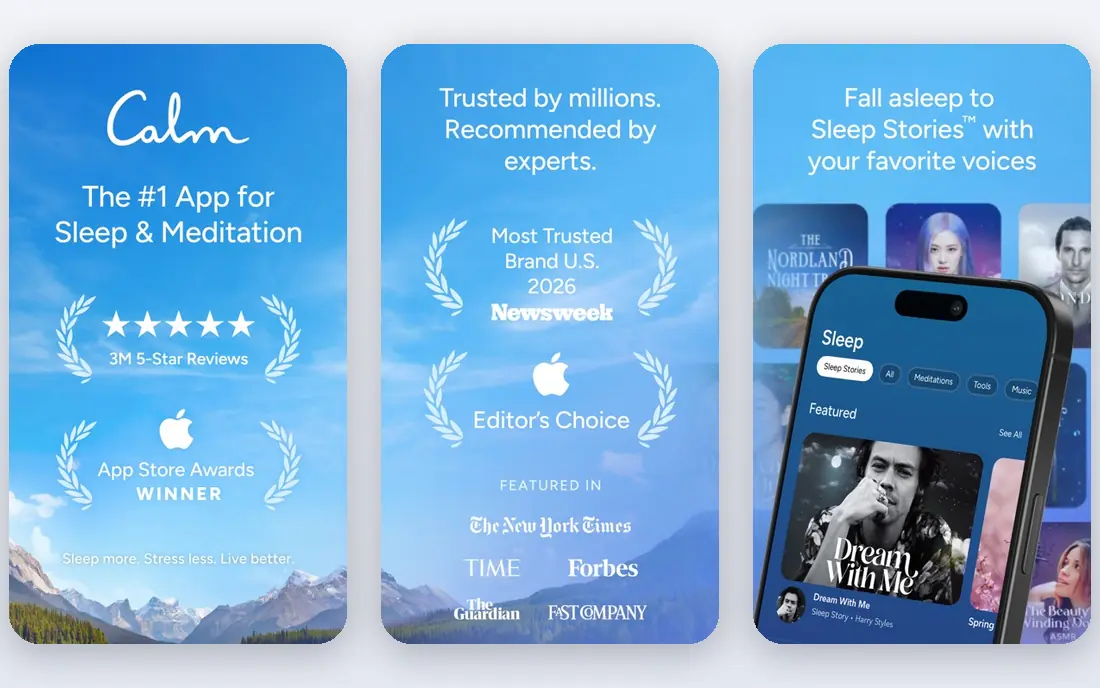
Calm is our pick for most people whose main goal is falling asleep. Sleep Stories, read by familiar voices, give the mind something gentle to follow, and the soundscapes and sleep music help mask household noise. The Daily Calm adds a short daytime session for people who want a regular habit.
The free content is limited, so most users will need Premium to get full value. If you mainly want to learn meditation technique rather than fall asleep, the size of the sleep and music library can make the teaching content harder to find.
- Large Sleep Stories library
- Strong soundscapes and sleep music
- Simple bedtime routines
- Most content sits behind Premium
- Library can feel crowded
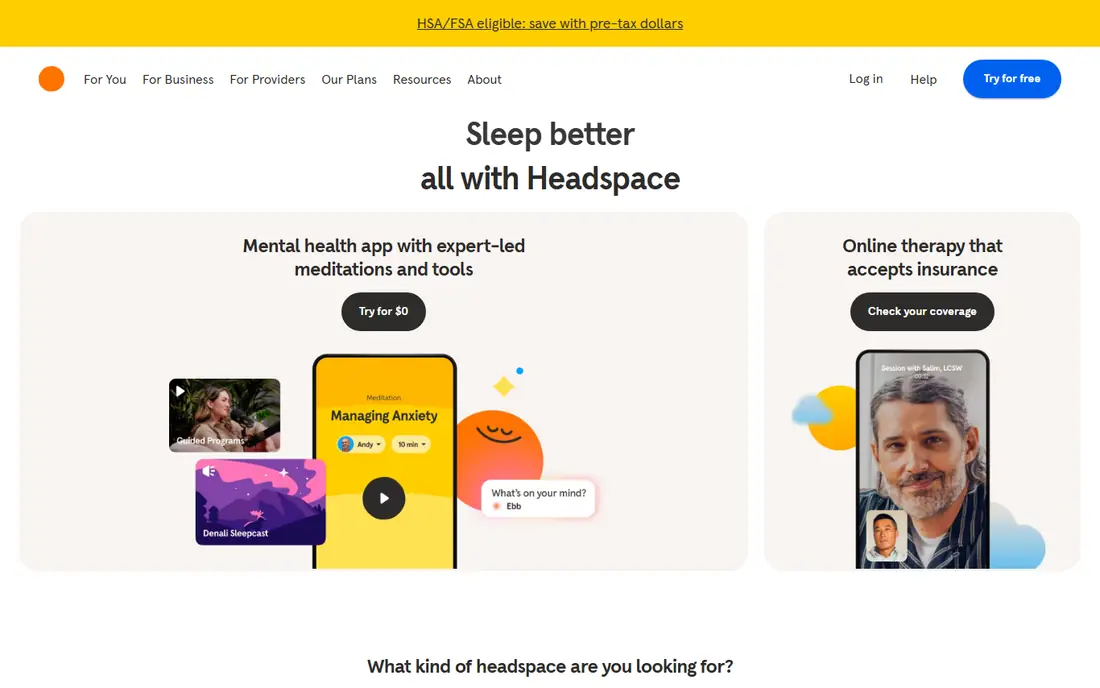
Headspace suits beginners who want a clear path. Courses build skills in small steps, with animations that explain each idea in plain language. Sleepcasts pair a gentle story with ambient sound, and short exercises help with stress during the day.
The trial is a good test, but almost everything moves behind the paywall after it ends. If you already know the basics and just want bedtime audio, Calm or Insight Timer may give better value for the same money.
- Clear step-by-step courses
- Sleepcasts and sleep sounds
- Short SOS exercises
- Most content needs a subscription after the trial
- Coaching and therapy costs vary
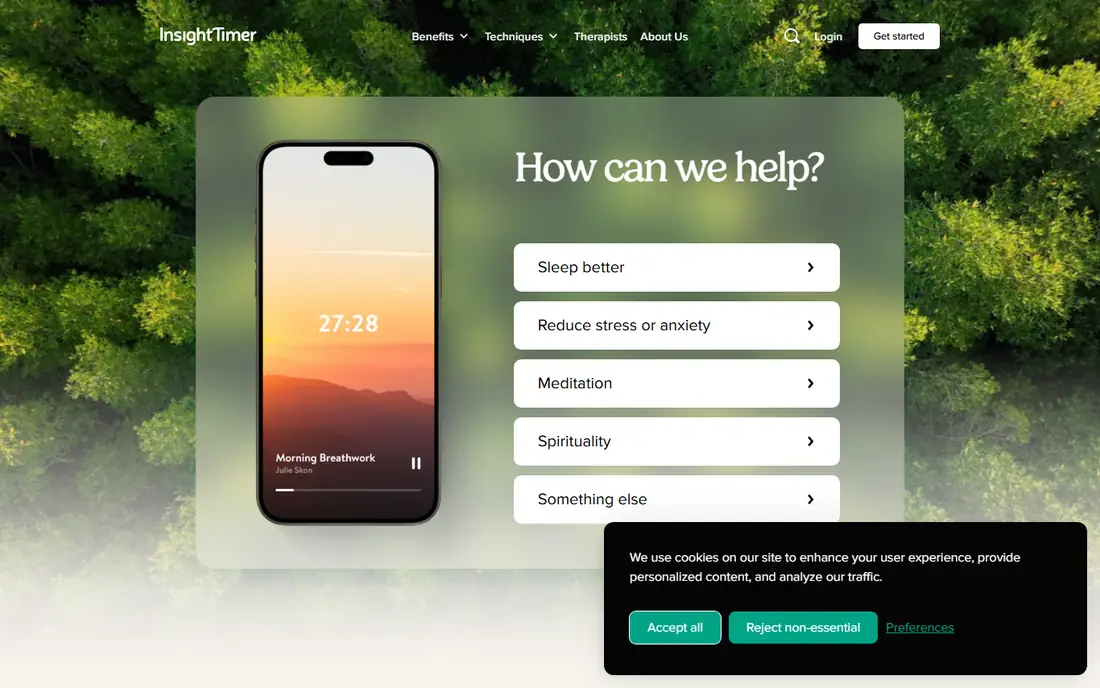
Insight Timer is the best free starting point, and for many people it is all they need. Thousands of guided meditations, sleep tracks, talks, and a flexible timer cover most bedtime needs without a subscription. You can follow teachers you like and join live sessions.
The size is also the weakness. Quality varies, and finding a voice you trust takes some searching at first. Save favourites early, and use the timer for nights when you prefer silence over a guided track.
- Huge free library from many teachers
- Good timer for silent practice
- Live events and groups
- Quality varies by teacher
- Large library can feel overwhelming
Balance asks about your goals, experience, and schedule, then builds a daily plan rather than leaving you to browse. That structure helps people who open a large library, feel stuck, and close the app again. Sleep sessions and wind-down routines fit neatly into the plan.
The library is smaller than the leaders, so variety seekers may miss the depth of Calm or Insight Timer. If you value a plan that tells you what to do tonight, Balance is a strong choice.
- Plans adapt to your goals and experience
- Clear sleep and wind-down sessions
- First-year offer often available
- Smaller library than Calm or Insight Timer
- Personalisation needs regular check-ins
Happier, formerly Ten Percent Happier, suits people who feel put off by vague or mystical language. Teaching is direct, practical, and grounded in everyday examples, which helps skeptics stick with a habit. Sleep meditations and courses sit alongside daytime practice.
It costs more per year than Calm or Headspace on some plans, and it does not match Calm for sleep stories. Choose it when clear instruction matters more than a large bedtime story library.
- Plain, practical teaching style
- Good courses for beginners
- Sleep content alongside meditation
- Higher annual price than some rivals
- Less sleep-story content than Calm
Waking Up suits people who want to understand meditation, not just follow a voice at night. Lessons explain attention, awareness, and common mental habits in clear terms, and daily sessions build on those ideas. Sleep content is present, though it is not the main focus.
The tone can feel serious at bedtime, so it fits listeners who prefer calm instruction over stories. The free access policy for people who cannot afford a subscription is a genuine plus.
- Thoughtful lessons on mind and awareness
- Good sleep and daily sessions
- Free access if you cannot afford it
- Tone is more intellectual than cosy
- Less bedtime-story variety
Smiling Mind is a fully free, evidence-based option, which makes it ideal for families and tight budgets. Programs cover sleep, stress, and mindfulness for adults and children, and the content is developed with psychologists. There is no paywall blocking the core programs.
It does not try to match Calm for celebrity stories or polished sound design. For a free, trustworthy bedtime routine, especially for households with children, it is hard to beat.
- Fully free programs
- Developed with psychologists
- Programs for adults and children
- Smaller sleep-story library
- Design is simpler than paid rivals
Pzizz takes a different approach: it generates a new mix of music, voice, and sound effects each night, so bedtime audio never repeats exactly. Dedicated nap modes with set lengths help daytime rest, and focus mode suits work sessions. Offline playback helps when you travel.
It teaches less meditation technique than Headspace or Happier. Choose Pzizz when sound, not instruction, is what helps you fall asleep, and check the current store price before subscribing.
- Generates fresh sleep audio each night
- Dedicated nap and focus modes
- Offline playback
- Less guided meditation teaching
- Price varies by store and plan
How we picked these
We compared official app store listings and vendor pricing pages, plus 2026 meditation app comparisons. We looked for apps with dedicated sleep content, a working free tier or trial, and availability in the United States in October 2026. We kept a mix of story-led, course-led, and free options, rather than listing only the two largest brands.
How to choose a sleep app
Start with your bedtime problem. If racing thoughts keep you awake, a story or guided track that gives your mind a gentle focus often works better than silence. If noise wakes you, soundscapes and masking sounds matter more than teaching. If you wake in the night, look for a short track you can restart without bright screens.
Next, test the voice. You will hear this voice when you are tired and sensitive to tone, so a free trial matters more than a feature list. Try two or three nights with each finalist, and notice which voice you still want to hear on the third night.
Also check practical details. Offline downloads help on trips and in rooms with weak signal. A sleep timer, a dark screen mode, and a simple favourites list all make nightly use easier. If you share a room, check whether the app works well with a single earbud or a small speaker at low volume.
Finally, keep expectations fair. A sleep app can support a wind-down routine, a regular bedtime, and lower light and screen use in the evening. If sleep problems last for weeks, affect daytime safety, or include loud snoring and breathing pauses, speak with a clinician rather than relying on an app alone. This guide is general information, not medical advice.
Frequently asked questions
What is the best sleep meditation app for falling asleep fast?
Calm is the most popular pick for falling asleep, thanks to Sleep Stories and soundscapes that give the mind a gentle focus. Pzizz is a strong alternative when generated sound, rather than a story, helps you drift off.
What is the best guided meditation app for beginners?
Headspace leads for beginners, with step-by-step courses that teach basics in order. Balance is another good choice when you want a personalised daily plan instead of choosing each session yourself.
What are the best mindfulness apps that are free?
Insight Timer and Smiling Mind offer the strongest free options. Insight Timer gives the largest free library, while Smiling Mind gives structured, evidence-based programs at no cost.
Are sleep meditation apps worth paying for?
A paid app is worth it when you use it most nights and prefer its voices, stories, or structure to free options. Start with a free trial, track how many nights you use it in two weeks, and only renew when the habit is real.
Can a sleep app help with anxiety at night?
Guided tracks, breathing exercises, and sleep stories can help some people calm racing thoughts at bedtime. For ongoing anxiety or sleep problems that affect daily life, speak with a clinician, since an app is a support tool, not treatment.
Do these apps work offline?
Most paid apps on this list offer offline downloads for sessions and stories, while free tiers may limit downloads. Check the download option on your plan before a trip, and download a few favourites in advance.
Sources
See where you really rank - block by block
ProMapRanker scans Google Maps across a grid of your service area. Simple monthly plans from $19, white-label on every plan.
Start freeKeep reading
 zendesk alternatives
Best Zendesk Alternatives in 2026
Compare the best Zendesk alternatives in 2026, from budget help desks to AI-first support tools, with current pricing, free plans, and honest trade-offs.
Read → wordpress alternatives
Best WordPress Alternatives in 2026
Looking for the best WordPress alternatives? We compare 8 free and paid options for blogs, business sites, stores, and developer-led projects in 2026.
Read → which real estate company has the best training
Best Real Estate Company Training in 2026
Compare which real estate company has the best training, from Keller Williams and eXp to Compass and Coldwell Banker, by program, mentor, and fit in 2026.
Read →