 ProMapRanker
Best Shopify Apps to Boost Sales in 2026

Key takeaways
- Start with the sales gap you actually have, whether that is trust, repeat purchases, average order value or abandoned carts.
- Judge.me and Loox cover reviews and social proof, while Klaviyo and Omnisend cover email and SMS recovery.
- ReConvert and Frequently Bought Together lift order value, while Smile covers loyalty and repeat buying.
- Free plans are useful for testing, but most cap orders, contacts or sends, so price each app at your expected volume in six months.
Quick comparison
| Pick | Great for | Pricing starts at | Free tier | |
|---|---|---|---|---|
 Klaviyo | Email and SMS marketing | $20 per month | Yes | Visit |
 Judge.me | Product reviews | $15 per month | Yes | Visit |
 Loox | Photo and video reviews | $49.99 per month | Yes | Visit |
 Smile | Loyalty and referrals | $15 per month | Yes | Visit |
 Privy | Popups and list growth | See website | Yes | Visit |
 ReConvert | Post-purchase upsells | $9.99 per month | Yes | Visit |
 Yotpo Reviews | Reviews plus Google ratings | $15 per month | Yes | Visit |
 Omnisend | Email and SMS for growing stores | See website | Yes | Visit |
 Shopify Inbox | On-site chat | Free | Yes | Visit |
The best Shopify apps to boost sales
Every app below is a real Shopify App Store app, and we compared its App Store listing, vendor pricing page and feature pages. We focused on what each app actually does, what its free plan limits, and where costs rise as a store grows. No app alone fixes a weak product, unclear pricing or slow site, so treat these as tools for specific sales jobs.
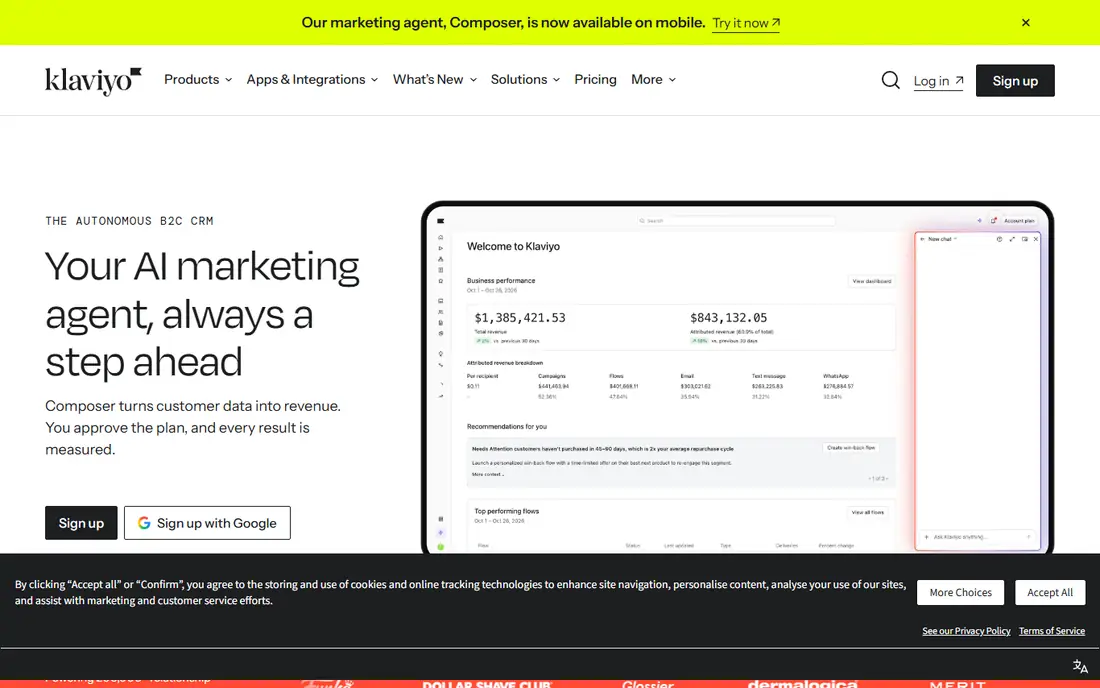
Klaviyo is the email and SMS platform most growth-stage Shopify stores shortlist first. Abandoned cart, browse abandonment, welcome and post-purchase flows run from Shopify order and behaviour data, and segmentation lets stores target buyers by purchase history rather than blasting the whole list. That data connection is the reason Klaviyo often outperforms generic email tools for Shopify stores.
The catch is cost and complexity. Paid email starts at $20 per month for up to 250 contacts in recent listings, and SMS is priced separately, so a growing list can push the bill up quickly. Flows also need proper setup, testing and list hygiene to avoid spam complaints. Stores with a real email list and repeat-purchase potential will get the most value.
- Strong flows for abandoned carts, welcome series and post-purchase emails
- Detailed segmentation
- Deep Shopify data connection
- Costs rise with contacts and SMS sends
- Setup takes time to do well
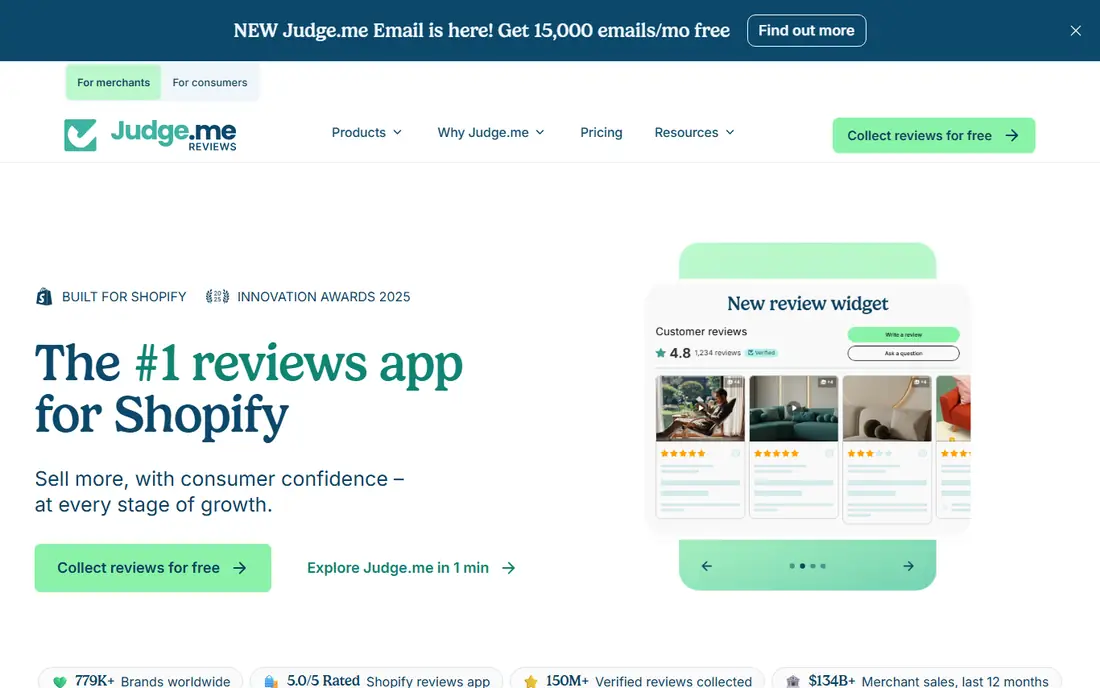
Judge.me gives Shopify stores product reviews without charging per review, which is a rare and practical advantage. The free plan allows unlimited reviews, including photos and video, while the paid Awesome plan at $15 per month adds features such as review coupons, Q&A and richer widgets. Review requests can be automated after delivery, so stores do not need to chase buyers manually.
The limit is that the most polished display and marketing features sit on the paid plan, and widget styling needs some work to match a custom theme. Judge.me also does not replace a loyalty or email platform on its own. For social proof at a fair price, it is one of the strongest App Store values available.
- Unlimited reviews on free plan
- Photo and video reviews
- Review request automation and widgets
- Advanced features need the paid plan
- Design customisation takes some setup
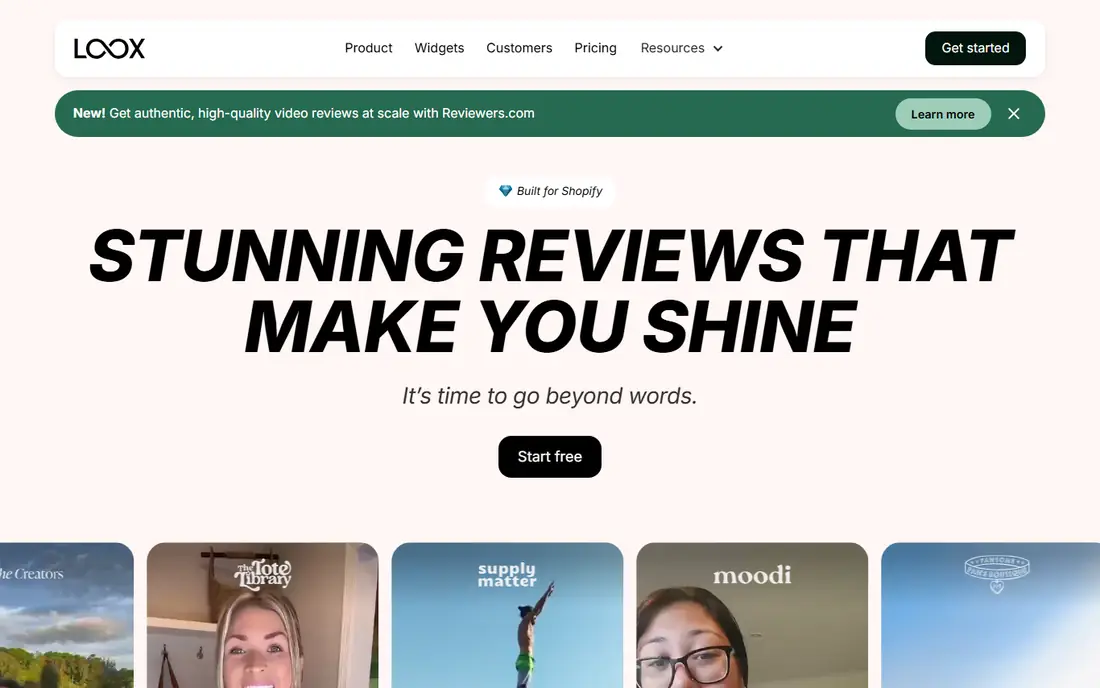
Loox focuses on visual proof, collecting photo and video reviews from real buyers and displaying them on product pages, collection pages and a dedicated happy customers page. For fashion, beauty, home and other visual categories, a customer photo often sells better than a star rating alone. Reviewers can be offered a discount for sharing a photo, which helps stores build visual proof faster.
The drawback is price. The free plan covers up to 500 orders in recent listings, while the paid Convert plan starts at $49.99 per month, which is a jump from Judge.me. Stores with low order volume or non-visual products may not need photo reviews at that price. Visual brands with steady orders will find the conversion lift easier to justify.
- Photo and video reviews that show products in real use
- Referral and discount incentives for reviewers
- Google review snippets support
- Paid plan starts higher than Judge.me
- Pricing scales with orders
Smile helps stores turn one-time buyers into repeat buyers with points for purchases, referrals, birthdays and social actions, plus VIP tiers for best customers. The rewards panel sits on the storefront, so customers can see points and rewards without emailing support. That visibility matters, because a loyalty programme nobody notices cannot change behaviour.
The free plan covers up to 200 orders a month in recent listings, so growing stores will move to paid plans, starting at $15 per month. Smile also works best when a store already has repeat-purchase potential, since points alone cannot fix a product people only buy once. For consumables, beauty, food and apparel, it is a practical retention tool.
- Points, referral and VIP programmes
- Easy customer-facing rewards panel
- Shopify-native setup
- Free plan caps monthly orders
- Deeper features need higher plans
Privy grows email and SMS lists with popups, flyouts, banners and spin-to-win offers that appear at timed or exit-intent moments. Captured contacts can then flow into Klaviyo, Omnisend or Shopify Email for follow-up, which makes Privy a list-building front end rather than a full email platform. Cart-saving displays and announcement bars add conversion tools beyond popups.
The risk is user experience. Too many popups, or a popup on every page, can frustrate visitors and hurt trust, so stores should test timing, frequency and mobile display carefully. Pricing also varies, so check the current vendor page before installing. Used sparingly, Privy is a fast way to grow a list that later drives sales.
- Popups, banners and spin-to-win offers for list growth
- Cart-saving and announcement tools
- Email and SMS capture
- Aggressive popups can annoy visitors if overused
- Pricing needs checking on the vendor site
ReConvert turns the thank-you page from a dead end into a selling moment. After checkout, customers see one-click upsell and cross-sell offers, surveys, birthday collection or reorder prompts, without re-entering payment details for accepted upsells. That timing matters, because the buyer has already decided to trust the store.
The free plan covers up to 50 orders in recent listings, and paid plans start at $9.99 per month, so volume drives cost. Upsell success also depends on pairing relevant products, since random offers feel pushy and convert poorly. Stores with complementary products and steady orders will see the clearest lift in average order value.
- Post-purchase upsell and cross-sell offers
- Thank-you page customisation
- One-click upsells without re-entering payment
- Free plan caps orders
- Upsell relevance needs product pairing work
Yotpo Reviews collects product and site reviews, displays them on store pages, and supports Google Seller Ratings, which can show star ratings in search results for eligible stores. That search visibility is a real advantage over a reviews app that only works on-site. Review request flows, moderation and widgets cover the core job well.
Pricing starts at $15 per month in recent listings, with a free plan up to 50 orders a month, and costs scale as orders grow. Some AI and marketing features need higher plans, so stores should compare the exact tier they need rather than the headline price. Yotpo suits stores that value search-visible social proof alongside on-site reviews.
- Review collection and display
- Google Seller Ratings support
- AI review summaries on higher plans
- Costs scale with orders
- Some advanced tools need higher tiers
Omnisend gives growing Shopify stores email, SMS and web push from one platform, with prebuilt flows for welcome, abandoned cart, order follow-up and win-back campaigns. Shopify data powers segmentation, so stores can target buyers by purchase behaviour without complex setup. For stores that want Klaviyo-style automation at a gentler starting point, Omnisend is a credible alternative.
The drawback is scaling cost, since pricing rises with contacts and message volume, and the most detailed reporting sits on higher plans. Omnisend also has fewer deep integrations than Klaviyo for very large stacks. Mid-size stores that want one marketing platform for email and SMS will find it a balanced choice.
- Email, SMS and push in one platform
- Prebuilt automation flows
- Shopify-native segmentation
- Pricing scales with contacts and sends
- Advanced reporting needs higher plans
Shopify Inbox is the free chat app from Shopify itself, letting visitors ask questions while they are still on a product page. Staff can see order context and reply from Shopify admin or the mobile app, which helps resolve sizing, shipping and stock questions before a visitor leaves. That timing can save sales that a contact form would lose.
The limit is staffing. Chat only helps if someone answers promptly during shopping hours, or if automated replies cover common questions well. Large teams with complex support needs will still need a dedicated helpdesk. For small and mid-size stores, Shopify Inbox is a free and easy conversion tool that pairs well with reviews and email apps.
- Free chat on the storefront
- Answers pre-purchase questions in real time
- Connects to Shopify order data for staff
- Needs staff or automation to answer promptly
- Not a full helpdesk for large support teams
How we picked these
We compared Shopify App Store listings, vendor pricing pages and feature pages for apps that are available now for Shopify stores. We kept apps with a clear sales job, a usable free plan or free install, and recent App Store presence, and we noted free-plan caps where listings state them. Prices change often, so we used the clearest starting figure from recent listings and wrote See website where pricing was not stable enough to quote.
What to check before you install
Start by finding your weakest sales number. If traffic converts poorly, prioritise reviews and chat. If carts are abandoned, prioritise email and SMS recovery. If buyers never return, prioritise loyalty. If order value is low, prioritise upsells and bundles. Installing apps in the wrong order wastes money and slows the store.
Next, test one app at a time for at least 30 days and watch page speed, conversion rate and support load. Every app adds code to a storefront, and a slower site can cancel out the sales an app was meant to add. Remove apps that do not move a clear number, and avoid running two apps for the same job, such as two review platforms or two popup tools.
Finally, price the stack at future volume. Free plans cap orders, contacts or sends, so a stack that costs little at 100 orders a month can cost much more at 1,000 orders. Check monthly and annual pricing, SMS costs, and whether annual billing locks you into a plan you may outgrow.
Frequently asked questions
Which Shopify app increases sales the most?
No single app wins for every store, because the answer depends on the gap. Reviews help low-trust stores, email helps stores with abandoned carts, loyalty helps repeat-purchase stores, and upsells help stores with low order value. Diagnose the gap first, then pick the matching app.
Are free Shopify apps enough to boost sales?
Free plans can test an app and help small stores, but most cap orders, contacts or sends. A free plan is a good trial, not a permanent plan for a growing store, so budget for paid tiers as volume rises.
How many Shopify apps should a store use?
Use the smallest set that covers each real gap, usually one app per job for email, reviews, upsells and loyalty. Too many apps slow the site, create overlapping popups and make support harder, so remove apps that do not move a clear result.
Do review apps really help sales?
Reviews help when buyers are unsure about quality, sizing or trust, especially for new brands. Photo reviews help most for visual products, while text reviews and star ratings help across categories. Reviews work best alongside clear product pages and fair return policies.
Will upsell apps annoy customers?
They can, if offers are irrelevant or appear too often. Relevant post-purchase offers, shown once and easy to decline, tend to perform better than aggressive pre-checkout popups. Test offer relevance and frequency before scaling any upsell app.
Should I use Klaviyo or Omnisend?
Klaviyo suits larger stores that need deep segmentation and advanced flows, while Omnisend suits growing stores that want email, SMS and push in one simpler platform. Both work well for Shopify, so choose based on list size, budget and how much automation depth the team will actually use.
Sources
See where you really rank - block by block
ProMapRanker scans Google Maps across a grid of your service area. Simple monthly plans from $19, white-label on every plan.
Start freeKeep reading
 zyte alternatives
Best Zyte Alternatives in 2026
These zyte alternatives cover managed scraping APIs, proxy networks and no code tools for lawful collection from your own or consented sources only in 2026.
Read → zerto alternatives
Best Zerto Alternatives in 2026
Compare the best zerto alternatives for disaster recovery and replication, with recovery targets, cloud options and honest trade-offs for teams in 2026.
Read → zerofox alternatives
Best ZeroFox Alternatives in 2026
We compared 9 zerofox alternatives for brand protection, phishing takedowns, dark web monitoring, and social impersonation, with clear coverage notes.
Read →