 ProMapRanker
Best SEO Tools in 2026


All in one SEO with local add on · Pricing starts at: $139.95 per month
Key takeaways
- For US businesses, the right SEO tool must handle location based search, local pack results, and Google Business Profile data, not just national rankings.
- BrightLocal and Whitespark lead on local tracking, while Semrush and Ahrefs lead on full site research.
- A free start with Google Search Console covers real queries and clicks, and paid tools add competitor and local grid detail.
- City and ZIP code tracking matters, because a ranking in one part of town can differ sharply from another part.
- Our pick for most small US businesses is to pair one local tracker with one research suite, rather than buying three overlapping suites.
Quick comparison
| Pick | Great for | Pricing starts at | Free tier | |
|---|---|---|---|---|
| Semrush | All in one SEO with local add on | $139.95 per month | Free trial | Visit |
 Ahrefs | Backlink and competitor research | $129 per month | Yes | Visit |
 BrightLocal | US local rank and listing tracking | $39 per month | Free trial | Visit |
 Whitespark | Local rank grids and citations | $14 per month | Free trial | Visit |
 Moz Pro | Beginner friendly SEO research | $99 per month | Free trial | Visit |
 SE Ranking | Value all in one with local tools | $129 per month | Free trial | Visit |
 Mangools | Simple keyword research | $49 per month | Free trial | Visit |
 Surfer SEO | Content optimization | $89 per month | Free trial | Visit |
 Screaming Frog SEO Spider | Technical site audits | $279 per year | Yes | Visit |
The best SEO tools for US location based search
This guide looks at SEO tools through a US location lens. That means we judged each tool on US location based search and local results: rankings by city and ZIP code, map and local pack visibility, listings and citations, and Google Business Profile checks. A tool that only tracks national rankings did not earn a place on local strength alone.
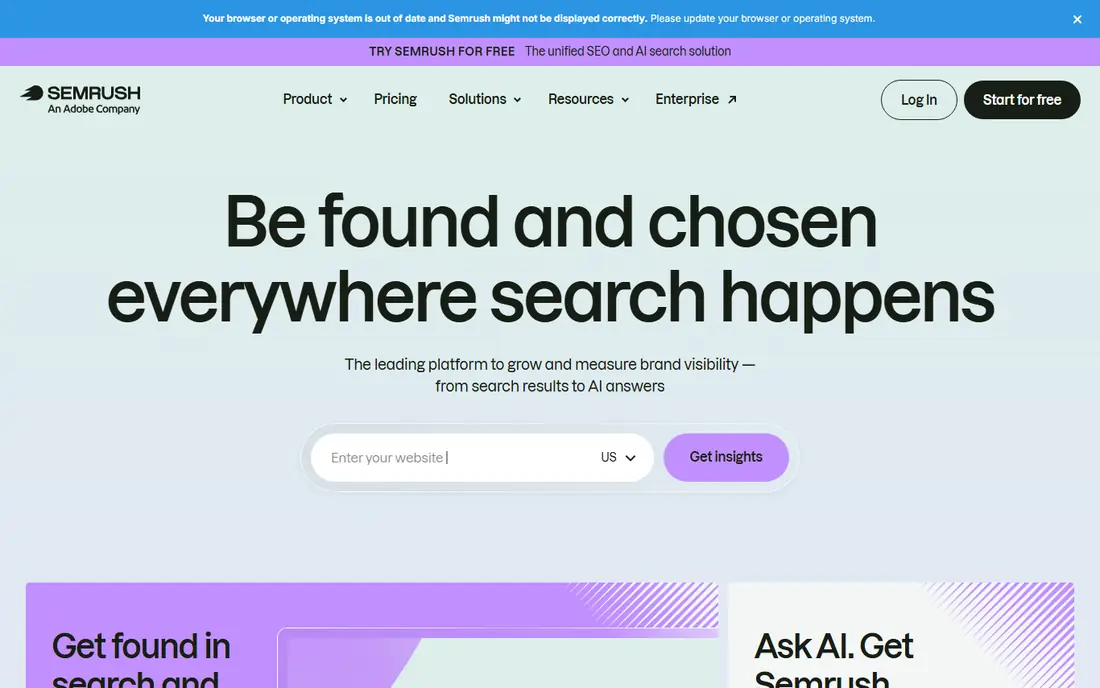
Semrush is the broadest tool in this list, and its US value comes from combining national research with local tracking in one account. Keyword research, site audits, backlink data, and rank tracking sit together, and the local toolkit adds profile management, citation checks, and map tracking. For a business with several US locations, that combination cuts down on juggling separate tools.
The cost is the honest catch. The main plan alone is already a serious monthly spend for a single location business, and local features add to it. We would pick Semrush when SEO, content, and paid search all matter, and when one team manages several locations or clients.
- Wide keyword and backlink data
- Local toolkit for profiles and listings
- Position tracking by location
- Local features cost extra on top of the main plan
- Entry plan limits projects and keywords
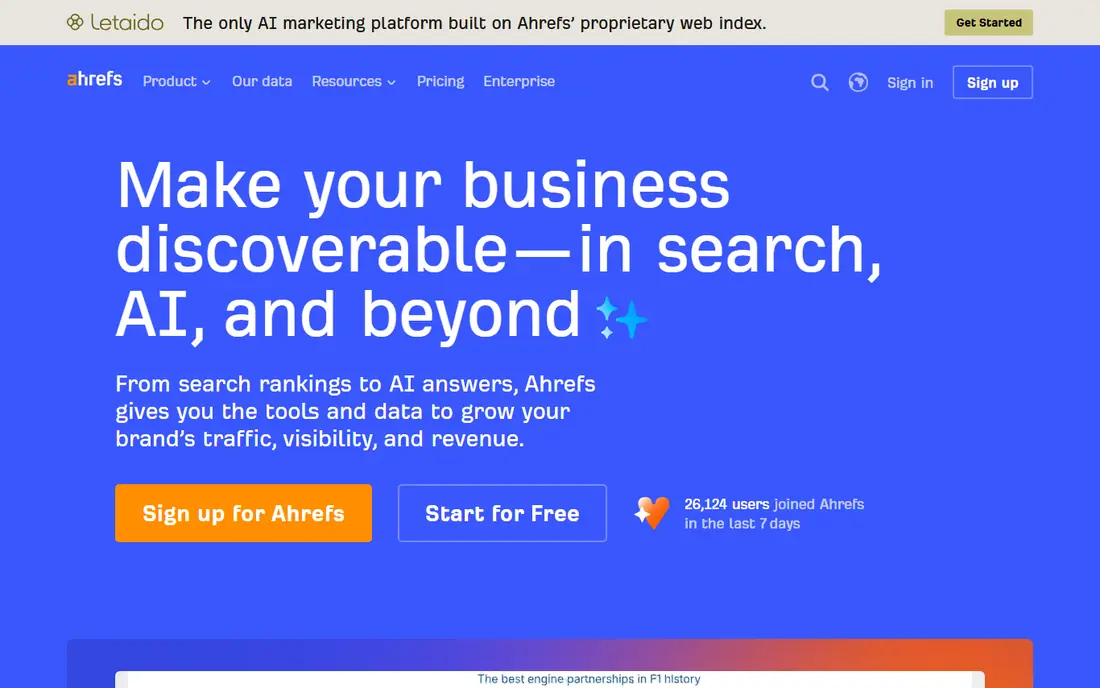
Ahrefs earns its place for US research depth. Its backlink index helps a business see who links to local competitors, which pages earn those links, and where content gaps sit. Rank tracking can be set by location, so a team can watch a keyword in a specific US city rather than guessing from a national average.
It is not a dedicated local listings tool, so businesses that need citation cleanup and review management will still want a local specialist alongside it. Pair Ahrefs with BrightLocal or Whitespark, and the local picture becomes much clearer than either tool gives alone.
- Large backlink index
- Strong competitor analysis
- Rank tracking by location
- Local listing tools are limited
- Entry plan caps crawl credits
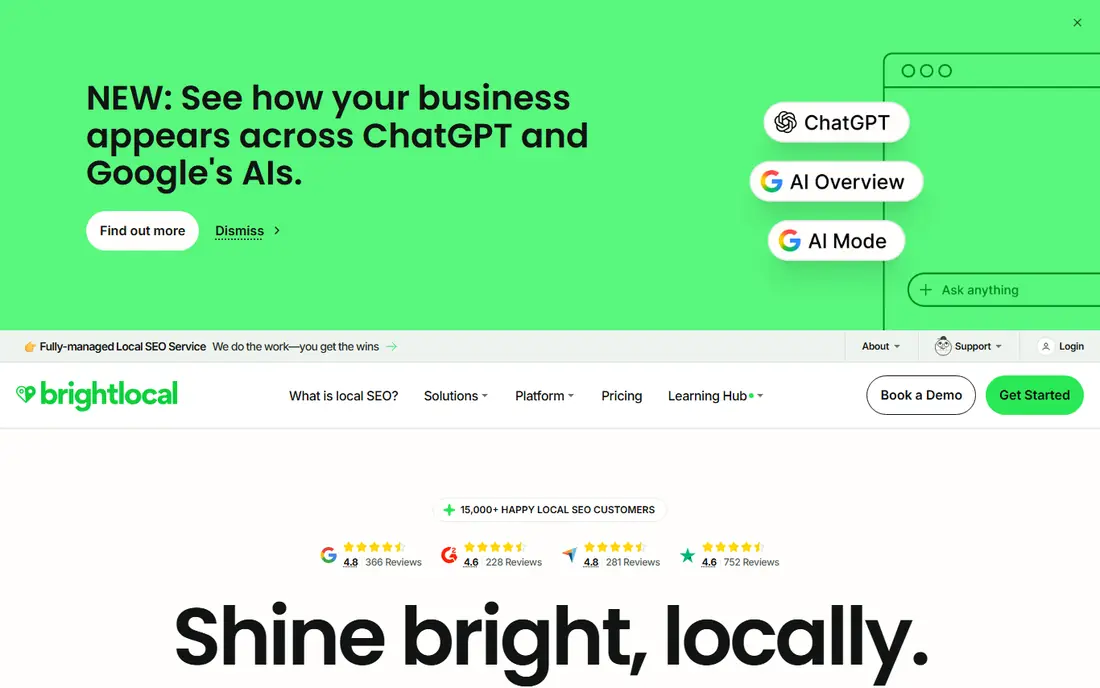
BrightLocal is built for the local job, and it shows. Its Local Search Grid maps rankings across points in a city, which matters because map results shift by searcher location. Citation tracking checks listings across US directories, and profile audits flag missing hours, categories, or photos that hurt local visibility.
The limit is scope. BrightLocal will not replace a full research suite for content planning or backlink analysis. For a US service business, restaurant, clinic, or multi location brand, though, it is often the first paid tool worth buying, because it measures the results customers actually see nearby.
- Local Search Grid maps
- Citation tracker
- Google Business Profile audits
- Not a full keyword research suite
- Reporting depth grows with plan tier
Whitespark is a local specialist with a lower entry price than many rivals. Its Local Rank Tracker follows map and local pack rankings, and its citation service builds listings by hand, which helps new businesses fix inconsistent name, address, and phone details across directories. The profile audit tool gives a quick check on Google Business Profile completeness.
It will not cover national keyword research or technical audits in depth, so think of it as a local layer, not a whole SEO platform. For a single location business on a tight budget, that focused layer is often exactly what is needed.
- Low cost local rank tracker
- Citation building service
- Profile audit tool
- Interface is plainer than larger suites
- Research tools are limited
Moz Pro suits small teams that want research data without a steep learning curve. Keyword Explorer, rank tracking, and link analysis cover the core jobs, and location settings let a US business track rankings in its own market. The learning material around the tool also helps owners who are doing SEO themselves for the first time.
Larger agencies may outgrow its link data and crawl depth, and dedicated local work still benefits from a specialist. For a small US business that wants one understandable suite, Moz Pro remains a fair middle ground between free tools and the biggest platforms.
- Clear keyword and link metrics
- Rank tracking by location
- Helpful learning resources
- Backlink index is smaller than Ahrefs
- Local tools are less deep than BrightLocal
SE Ranking bundles a lot for its price, which appeals to freelancers and agencies serving US clients. Rank tracking supports location settings, site audits flag technical issues, and keyword research covers the planning stage. Local features add directory and listing checks, so a small agency can report on local visibility without a second subscription.
The trade off is depth in backlinks, where specialist tools still lead. If your work leans heavily on competitor link analysis, keep Ahrefs in the stack. If your work leans on tracking, audits, and client reports across US locations, SE Ranking covers more ground per dollar.
- Rank tracking, audits, and research in one plan
- Local listing checks
- Agency friendly reporting
- Backlink data is thinner than Ahrefs
- Entry plan limits tracked keywords
Mangools is the friendly option in this list. Its KWFinder tool makes keyword research quick, and SERPWatcher tracks rankings with city level settings for US markets. Bloggers, small shops, and solo owners often stick with Mangools because the interface does not demand SEO training to get a useful answer.
Serious competitor and link work will need a second tool, and larger keyword lists push you to higher plans. Still, for a US small business that mainly needs to pick good keywords and watch local rankings, Mangools is a sensible low cost start.
- Easy to learn
- City level rank tracking
- Clean keyword tool
- Backlink data is basic
- Limits are tight on the entry plan
Surfer SEO answers a different question: once you know the keyword and the location, what should the page actually say. It analyzes top results for a query and location, then scores a draft against that pattern, covering terms, structure, and length. For US businesses writing service pages for specific cities, that location aware view helps avoid generic copy that ranks nowhere.
It does not track local listings or manage profiles, so it works best as a companion to a tracker like BrightLocal. We would add Surfer SEO when content is the bottleneck, not when listings or technical issues are the main problem.
- Content scoring based on top results
- Location aware SERP analysis
- Clear editing guidance
- Not a rank tracker or listing tool on its own
- Needs a research tool alongside it
Screaming Frog is a desktop crawler that audits a site page by page. It finds broken links, missing titles, redirect chains, duplicate content, and other technical issues that hurt rankings in any location. The free version covers small sites up to 500 URLs, which is enough for many local businesses to run a first audit.
It does not track rankings or listings, and its desktop setup suits technical users more than owners. Use it for a thorough audit a few times a year, fix what it finds, and let your local tracker measure whether those fixes moved nearby results.
- Deep desktop crawling
- Finds broken links and duplicate content
- Free version crawls up to 500 URLs
- Desktop only, so no cloud reporting
- Learning curve for beginners
How we picked these
We compared official feature pages, pricing pages, and public documentation, with a US location filter applied throughout. A tool earned a place if it supports US location based tracking, local pack or map data, listings, or profile checks, or if its research depth is strong enough to support local work when paired with a local specialist. We did not claim hands on testing, and we kept prices to figures published or widely reported from vendor pages in 2026, using See website where a price was unclear.
What to check before you pay
Start with your service area, not your budget. List the cities and ZIP codes that actually bring customers, then check whether the tool tracks rankings at that level and shows map grid results. A national rank average can hide a weak showing in the neighborhood that matters most.
Next, check listings and profiles. US local search leans on consistent name, address, and phone details across directories, plus a complete Google Business Profile. If the tool only tracks keywords, plan for a second tool or service that handles citations and reviews.
Finally, run a short trial on one location. Track five to ten real customer keywords, check the map grid, and run one audit. Keep the tool that gives you a clear next action each week, whether that action is a listing fix, a content update, or a technical repair.
Frequently asked questions
What is the best SEO software for a US location?
For most US small businesses, the best SEO software pairs a local tracker such as BrightLocal or Whitespark with a research suite such as Semrush or Ahrefs. The local tracker measures nearby results, while the suite covers keywords, competitors, and audits.
Why do local rankings differ by location in the USA?
Google tailors local results to the searcher, so a business can rank well in one part of a city and poorly a few miles away. Map grid tools show that spread, which is why city level tracking alone can mislead a local business.
Do I need a paid tool if I use Google Search Console?
Google Search Console is free and shows real queries, clicks, and indexing data for your own site, so start there. Paid tools add competitor data, local grids, listing checks, and tracking for keywords you do not yet rank for.
How much should a small US business spend on SEO tools?
A single location business can start with free Google tools plus one local tracker from about 14 to 39 dollars per month. Add a research suite only when keyword planning, competitor work, or content volume justifies the higher monthly cost.
Can one tool handle national and local SEO together?
Yes, suites such as Semrush and SE Ranking cover both, but their local features may cost extra or sit in a separate module. Check the local plan details before you assume national and local tracking come in one price.
Sources
See where you really rank - block by block
ProMapRanker scans Google Maps across a grid of your service area. Simple monthly plans from $19, white-label on every plan.
Start freeKeep reading
 zoro.to alternatives
Best Zoro.to Alternatives in 2026
We compare the best zoro.to alternatives in 2026, listing only legal licensed anime streaming services, from Crunchyroll to free options for fans today.
Read → zip alternatives
Best Zip Alternatives in 2026
We compare the best zip alternatives for buy now, pay later in 2026, covering pay-in-4 plans, fees, spending limits, and credit reporting options today.
Read → yesware alternatives
Best Yesware Alternatives in 2026
Compare the best yesware alternatives for sales email tracking, templates, and sequences, with current pricing and honest tradeoffs for small sales teams.
Read →