 ProMapRanker
Best SEO Tools for Small Businesses in 2026

Key takeaways
- Semrush is our pick for most small businesses that want one tool for keyword research, rank tracking, audits and content help.
- Ahrefs is the best choice when backlink research and competitor analysis matter more than an all-in-one suite.
- Mangools and Ubersuggest are the honest budget picks for owners who need real keyword data without a three-figure monthly bill.
- SE Ranking stands out for freelancers and small agencies that live on client reports and need generous tracking limits.
- Start with Google Search Console for free, then add one paid tool, since two overlapping suites usually waste money.
Quick comparison
| Pick | Great for | Pricing starts at | Free tier | |
|---|---|---|---|---|
 Semrush | All-in-one SEO, content and PPC | $139 per month | Free trial | Visit |
 Ahrefs | Backlink research and competitor analysis | $29 per month | Yes | Visit |
 Moz Pro | Beginner-friendly SEO with Domain Authority | $49 per month | Free trial | Visit |
 SE Ranking | Agencies and freelancers with many clients | $129 per month | Free trial | Visit |
 Mangools | Simple keyword research for small sites | $29.90 per month | Free trial | Visit |
 Ubersuggest | Solo owners on a tight budget | $29 per month | Yes | Visit |
 Screaming Frog | Technical site audits and crawling | See website | Yes | Visit |
 Surfer SEO | Optimizing content to rank | $59 per month | Free trial | Visit |
The best SEO tools for small businesses
A good SEO tool for a small business does a few jobs well: it finds keywords people actually search for, tracks rankings, audits the site for technical problems and shows what competitors are doing. We compared tools that are actively sold in October 2026, with published pricing and a track record with small sites, and we favored tools that a non-specialist owner can actually use week to week.
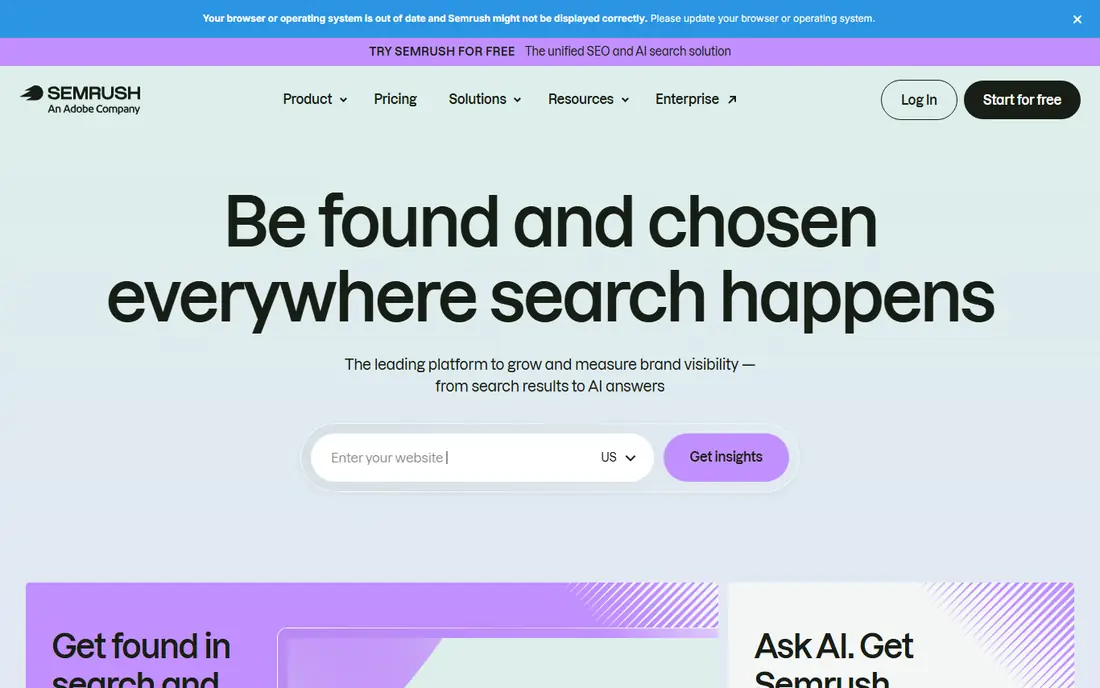
Semrush is the most complete tool on this list, and the best single purchase for a small business that wants to handle SEO in-house. It covers keyword research, rank tracking, site audits, backlink analysis, content ideas and paid search research, so an owner or a small marketing team can run most SEO work without buying three separate tools. Its competitor reports are also genuinely useful for a local business trying to understand why a rival outranks it.
The price is the catch. At $139 per month, Semrush is a serious commitment for a small site, and many of its tools will sit unused in the first months. Take the trial, learn the keyword and audit tools first, and only keep the subscription if you use it at least weekly. A business that only checks rankings once a month will get better value from a cheaper tool.
- Keyword research, rank tracking, audits and content tools in one login
- Large keyword database
- Useful competitor reports
- Expensive for a very small site
- The number of tools can overwhelm a new user
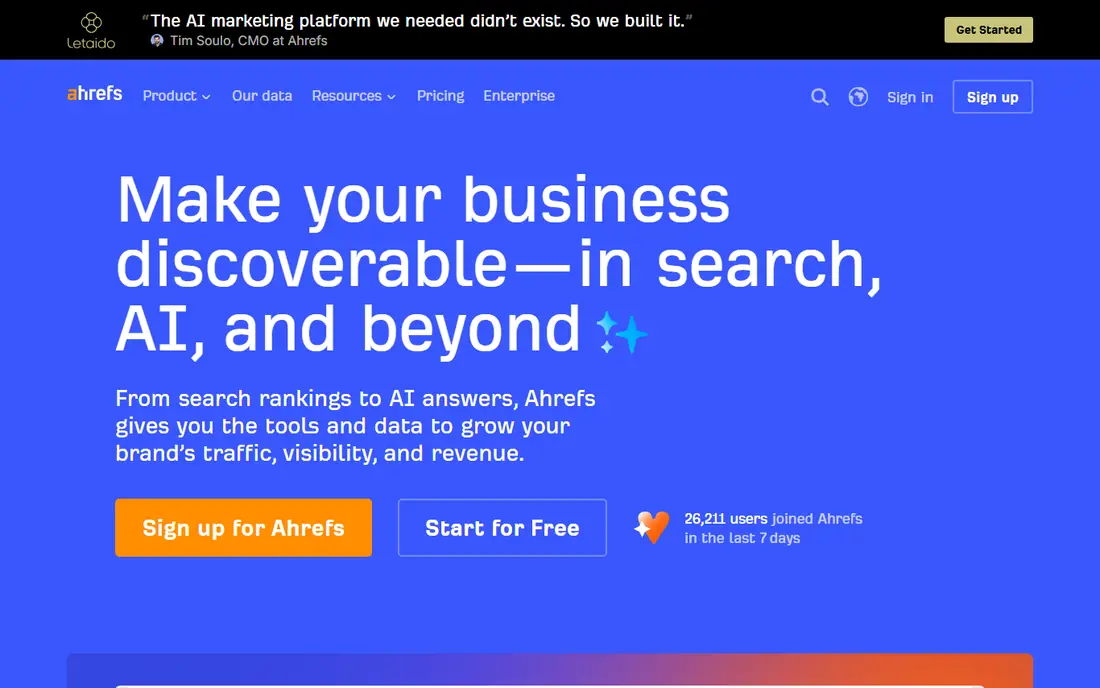
Ahrefs is the tool SEOs reach for when links and competitors matter most. Its backlink index is among the deepest available, its keyword explorer surfaces search volume and difficulty, and its content explorer shows which pages earn links in your niche. For a small business building links or studying a competitor's best pages, Ahrefs gives answers that cheaper tools cannot match.
Pricing needs careful reading. The $29 per month Starter plan is a limited entry point, and the main Lite plan costs $129 per month, with credit limits on research. Ahrefs Webmaster Tools is free for your own verified sites and covers audits and basic backlink data, so start there if budget is tight. Buy the paid plan when competitor research becomes a weekly job, not a curiosity.
- Deep backlink index
- Strong keyword and content discovery
- Free Webmaster Tools for your own sites
- Full plans start much higher than the entry tier
- Credit limits apply on paid plans
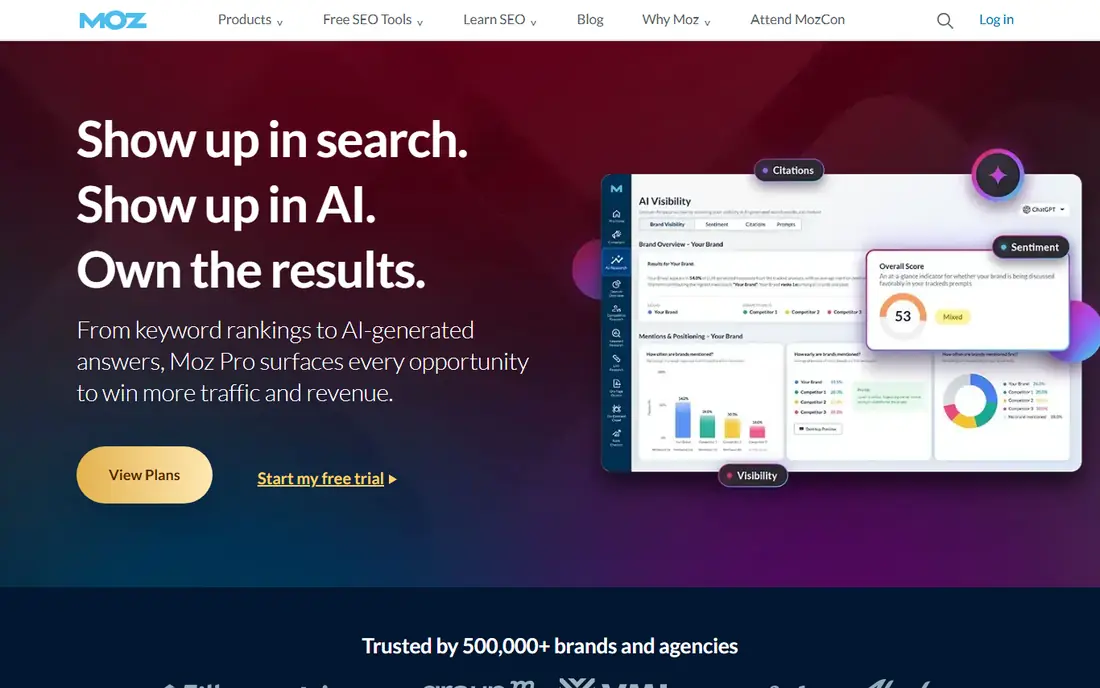
Moz Pro suits a small business owner who wants professional SEO data without a steep learning curve. Its interface is calmer than Semrush, its reports are readable for clients or partners, and its Domain Authority metric gives a simple benchmark for comparing your site against competitors. Local SEO features also help businesses that depend on nearby customers.
The database is smaller than the two leaders, so keyword ideas in very narrow niches can feel thinner. The $49 per month Starter plan covers one website, and the Standard plan at $99 per month is the realistic choice for a business tracking several sites. Moz Pro is best for owners who value clarity over raw data depth.
- Clear reports that non-specialists can read
- Domain Authority for benchmarking
- Local SEO strengths
- Smaller keyword database than Semrush or Ahrefs
- Higher tiers cost much more than the entry plan
SE Ranking is built for people who manage SEO for others: freelancers, consultants and small agencies. Its Core plan tracks a large number of keywords daily, its white-label reports look professional for clients, and it bundles keyword research, audits, backlink checks and AI search tracking in one subscription. For a small agency, that combination replaces several separate tools and report templates.
For a single small business with one website, $129 per month is hard to justify against Mangools or Ubersuggest. SE Ranking earns its price when you report to clients, track many keywords or manage several sites. Solo owners should only choose it if they already outgrow the budget tools.
- Daily rank tracking with generous limits
- White-label client reports
- Audits and research in one suite
- Higher entry price than budget tools
- Interface takes time to learn fully
Mangools, built around its KWFinder keyword tool, is the friendliest budget suite on this list. It finds keywords, scores their difficulty, tracks rankings and checks basic site issues, all in an interface that a non-specialist can learn in an afternoon. Bloggers, niche site owners and small businesses that mainly need keyword research will find it covers the core job without the clutter of an enterprise suite.
Backlink research is lighter than Ahrefs, and the entry plan updates rankings weekly rather than daily. Neither limit matters much for a small site that publishes a few pages a month. Mangools is the right pick when you want real keyword data, a clear interface and a bill under $30 to $50 per month.
- Clean, easy interface
- Good keyword difficulty scores
- Rank tracking included
- Lighter backlink data than Ahrefs
- Rank updates are weekly on the entry plan
Ubersuggest, from Neil Patel's team, is the cheapest usable keyword tool for a solo owner doing their own SEO. It reports keyword ideas, search volume, difficulty, traffic estimates and content suggestions in a simple layout, and its free tier lets you run limited searches before paying. A lifetime purchase option also exists, which appeals to owners who dislike monthly subscriptions.
The data is thinner than the leaders, and agency users will miss deeper backlink and reporting features. For a single website owner who checks keywords, tracks a handful of rankings and audits occasionally, Ubersuggest covers the essentials at a price that is easy to keep. Treat it as a starter tool, and upgrade when your site outgrows it.
- Low entry price with a lifetime option
- Simple keyword and traffic reports
- Free searches to test it
- Data depth is thinner than Semrush or Ahrefs
- Some features feel basic for agency work
Screaming Frog SEO Spider is a different kind of tool: a desktop crawler that audits your website page by page. It finds broken links, redirect chains, missing titles and descriptions, duplicate content and slow pages, and it exports the results for fixing. Technical SEOs consider it the best crawler available, and the free version covers up to 500 URLs, which suits many small sites.
It is not a full SEO suite. There is no keyword research, rank tracking or competitor data, so most small businesses will pair it with Mangools, Ubersuggest or Google Search Console. Buy the paid licence when your site passes 500 URLs or you need saved crawls and integrations. For technical audits alone, nothing on this list beats it for the price.
- Best-in-class desktop crawler
- Finds broken links, redirects and duplicate content fast
- Free tier for small sites
- Desktop software, not a cloud suite
- No keyword research or rank tracking built in
Surfer SEO helps writers produce pages that match what already ranks for a keyword. Its content editor scores a draft against top-ranking pages, suggests terms, headings and structure, and tracks content performance over time. For a small business that publishes blog posts or service pages and wants them to compete, Surfer turns vague advice about "better content" into specific edits.
It does not replace a research tool. You still need keyword data, rank tracking and audits from another tool, so budget Surfer as an add-on rather than a standalone suite. Pair it with Mangools or Ubersuggest for research, or with Semrush if you already pay for a suite, and use it only on pages that matter commercially.
- Content editor with clear on-page guidance
- SERP analysis for target keywords
- Useful for writers and editors
- Not a full SEO suite
- Needs a research tool alongside it for keywords and tracking
How we picked these
We compared SEO tools with current pricing, active development and a real user base among small businesses in October 2026. We favored tools with a free plan or trial, clear limits, rank tracking and site audits, and we mixed full suites with focused tools such as Screaming Frog and Surfer because small businesses often buy one suite plus one specialist. Tools that only served enterprises, or that had no verifiable current pricing, were left out.
What to check before you buy
Start with Google Search Console, which is free and shows the queries your site already ranks for, plus indexing and technical problems straight from Google. Add one paid tool that fills the gap you actually feel: keyword research, rank tracking, audits or content help. Buying two full suites at once usually means paying twice for the same keyword database.
Next, check limits against your real site count and keyword count. Entry plans often cover one website, a few hundred tracked keywords and weekly rank updates, while daily tracking and more sites need higher tiers. Count your sites and your money keywords before choosing a plan, and confirm what happens when you exceed a limit. Finally, use the trial on a real project: research ten keywords, run an audit and build one report. If the tool does not change a decision in that trial, it will not earn its monthly fee later.
Frequently asked questions
What is the best SEO tool for small business?
Semrush is our pick for most small businesses that want one all-in-one tool, while Ahrefs is better for backlink and competitor work. For a tight budget, Mangools and Ubersuggest cover keyword research and tracking at a much lower price. Start with Google Search Console for free, then add the paid tool that matches your biggest gap.
What is the best small business SEO tool for beginners?
Moz Pro and Mangools are the easiest to learn, with clear reports and simple keyword tools. Ubersuggest is also beginner-friendly and cheap, though its data is thinner. Avoid buying an enterprise suite as a first tool, since the extra features add confusion without adding rankings in the first months.
What are the best SEO tools for small businesses on a budget?
Mangools at $29.90 per month and Ubersuggest at $29 per month are the strongest budget picks, with free trials or free searches to test them. Screaming Frog is free for sites up to 500 URLs, and Google Search Console is free for every site owner. Together, those free and budget tools cover most of what a small site needs.
Is Semrush or Ahrefs better for a small business?
Semrush is better as a single all-in-one tool, covering keywords, audits, content and paid search research. Ahrefs is better for backlink analysis and studying competitor pages and links. Most small businesses need only one of them, so choose based on whether your main job is broad SEO management or link and competitor research.
Do small businesses need an SEO tool at all?
Every site owner should use Google Search Console, which is free and gives first-party data from Google. A paid tool becomes worth it when you research new keywords regularly, track rankings for money pages, audit a growing site or report to clients. If you only publish rarely and rank locally through other channels, free tools may be enough.
How much should a small business spend on SEO tools?
A realistic starting budget is $0 to $60 per month for a single small site, using free tools plus Mangools or Ubersuggest. A business with several sites, client work or serious content plans may justify $129 to $139 per month for SE Ranking, Ahrefs or Semrush. Spend more only when the tool regularly changes what you publish or fix.
Sources
See where you really rank - block by block
ProMapRanker scans Google Maps across a grid of your service area. Simple monthly plans from $19, white-label on every plan.
Start freeKeep reading
 outreach alternatives
Outreach Alternatives in 2026
Compare outreach alternatives for 2026, from Salesloft and Apollo to HubSpot and Lemlist, with pricing, channels, features, limits, and honest trade-offs.
Read → best web conference tools
Best Web Conference Tools in 2026
Compare the best web conference tools for meetings, webinars and team calls, with current pricing, free plans and honest limits for each option here today.
Read → best voice cloning tools
Best Voice Cloning Tools in 2026
Compare the best voice cloning tools in 2026, from ElevenLabs and Descript to Resemble and Cartesia, with consent rules, pricing, licenses, and limits.
Read →