 ProMapRanker
Best SEO Tools for Beginners in 2026

Key takeaways
- Start free with Google Search Console, which shows how Google actually sees your site.
- Ubersuggest and Mangools are the easiest paid entry points for keyword research and rank tracking.
- Semrush and Ahrefs are more powerful, but they cost more and take longer to learn.
- Moz Pro offers guided learning and clear explanations, which helps new users build good habits.
- The best SEO tool for beginners is the one you will open every week, not the one with the most features.
Quick comparison
| Pick | Great for | Pricing starts at | Free tier | |
|---|---|---|---|---|
 Google Search Console | Free site diagnostics | Free | Yes | Visit |
 Ubersuggest | Budget keyword research | See website | Free trial | Visit |
 Mangools | Simple keyword tools | $29.90 per month | Free trial | Visit |
 Moz Pro | Guided learning for beginners | $99 per month | Free trial | Visit |
 Semrush | All-in-one suite | $139 per month | Free trial | Visit |
 Ahrefs | Backlink and keyword depth | $129 per month | Free trial | Visit |
 SE Ranking | Value all-in-one tool | See website | Free trial | Visit |
 AnswerThePublic | Question and content ideas | See website | Free trial | Visit |
The best SEO tools for beginners
Search engine optimization sounds technical, but the first steps are simple: find words people search for, fix basic site problems, and track whether your pages rank. The tools below cover those steps at different prices, and none of them require you to be an expert to start.
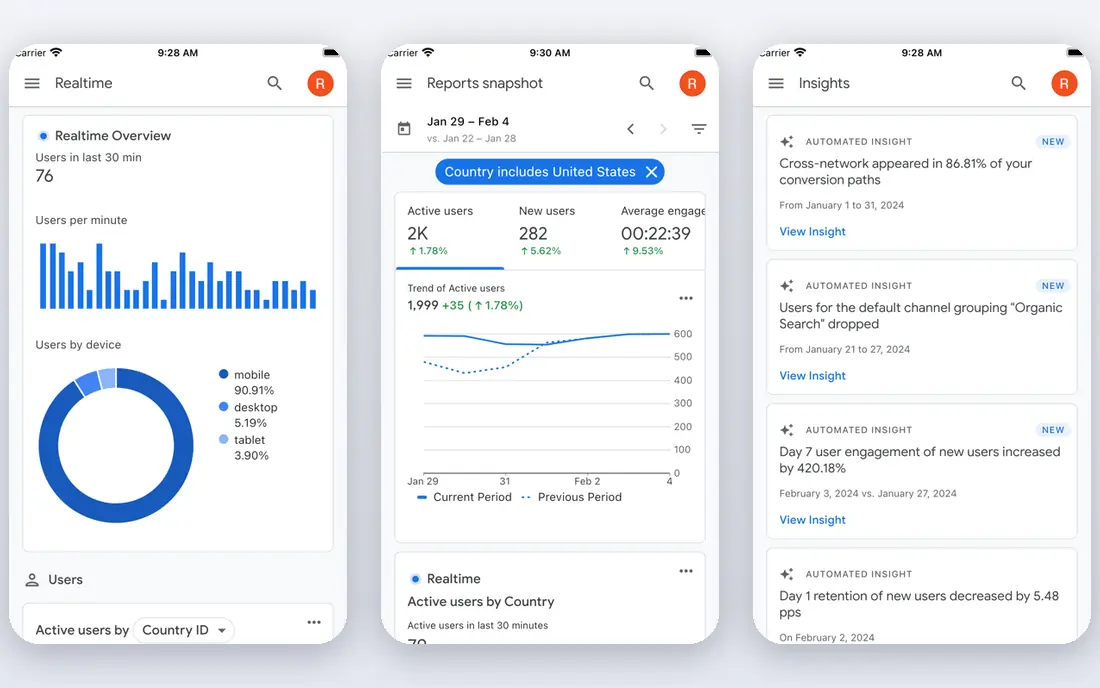
Google Search Console should be the first tool every beginner sets up. It is free, it comes from Google, and it shows which search queries bring people to your site, which pages get clicks, and which pages have indexing problems. That direct data beats guessing, and it helps you fix real issues instead of chasing vanity metrics.
The limits are clear. Search Console does not show competitor keywords or full keyword difficulty scores, and its reports need some learning to read well. Pair it with a keyword tool for ideas, and use Search Console to check whether your work is actually improving. Every site owner should have it, no matter what else they pay for.
- Free and direct from Google
- Shows real search queries and clicks
- Flags indexing and page problems
- No competitor keyword data
- Reports take learning to read
- Limited to sites you verify
Ubersuggest is one of the easiest paid tools for a beginner to understand. You type a topic, get keyword ideas with volume and difficulty estimates, and see a basic site audit in the same dashboard. That simple flow helps new users move from an idea to a plan without getting lost in dozens of modules.
Free use is limited, so heavy researchers will hit the daily cap quickly. Data depth also trails the larger suites, especially for backlink research. Still, for bloggers and small business owners on a budget, Ubersuggest gives a clear, low-cost way to learn keyword research without a steep bill.
- Simple keyword ideas and difficulty scores
- Site audit and rank tracking included
- Low-cost entry for beginners
- Free searches are limited each day
- Data depth is less than Semrush or Ahrefs
- Some features need a paid plan
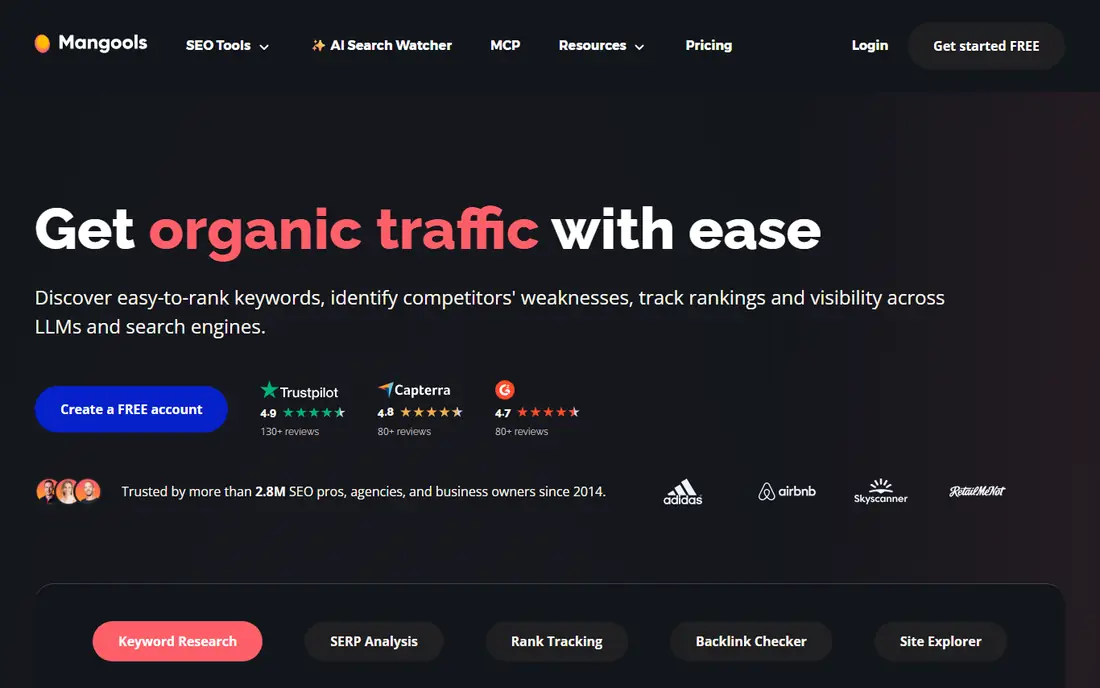
Mangools is built around simplicity. Its KWFinder tool shows keyword ideas, difficulty, and search trends in a clean layout, and its companion tools cover rank tracking, site profiling, and link checking. Beginners often prefer Mangools because each tool does one job well, instead of hiding features inside a large suite.
The trade-off is scale. Mangools has a smaller data index than Semrush or Ahrefs, and plan limits apply to searches and tracked keywords. For a small site with a focused topic list, those limits rarely matter. For a large site tracking hundreds of keywords, a bigger suite may fit better.
- Clean and easy interface
- KWFinder for keyword ideas
- Rank tracking and site checks included
- Smaller data index than larger suites
- Limits on searches and tracked keywords
- Fewer advanced features
Moz Pro has long been a friendly entry point for people learning SEO. Its Keyword Explorer explains difficulty and opportunity in plain terms, and its site audits point out problems with guidance on how to fix them. Moz also publishes learning guides that help beginners understand why a metric matters, not just what the number is.
The price is higher than Ubersuggest or Mangools, so it suits beginners who are ready to pay for a guided experience. Backlink data is also less deep than Ahrefs, though most beginners will not need that depth at first. If you want a tool that teaches as you use it, Moz Pro is a strong pick.
- Clear explanations and learning resources
- Keyword Explorer for ideas
- Site audits with plain guidance
- Higher starting price than budget tools
- Data depth trails Ahrefs on backlinks
- Some tools feel dated
Semrush is the most complete tool on this list, covering keyword research, site audits, rank tracking, competitor research, and content tools in one platform. For a growing business that wants one subscription instead of several tools, that breadth is valuable. Its large keyword database also helps when you research a wide range of topics.
Beginners should be honest about the learning curve. Semrush has many modules, and new users can spend weeks just learning where things live. The price is also high for a first tool. Semrush fits best once you publish regularly and need competitor data, audits, and tracking together.
- Broad keyword, audit, and competitor tools
- Rank tracking and content tools in one platform
- Large keyword database
- Price is high for beginners
- Many modules can overwhelm new users
- Free account limits are tight
Ahrefs is known for backlink research, and its data depth is a major reason professionals trust it. Keywords Explorer gives detailed keyword ideas, difficulty scores, and click data, while Site Explorer shows which sites link to you and to your competitors. Ahrefs Webmaster Tools also gives free audits and backlink checks for sites you verify.
For a beginner, the Lite plan price is a real commitment, and the full interface takes time to learn. Start with the free Webmaster Tools if you own a site, and move to a paid plan when you need full keyword and competitor research. Ahrefs is a long-term tool, not just a first-week experiment.
- Deep backlink index
- Strong Keywords Explorer
- Free Webmaster Tools for verified sites
- Paid plans are costly for beginners
- Interface takes time to learn
- Lite plan limits apply
SE Ranking offers a useful middle path between budget tools and the large suites. It covers keyword research, site audits, rank tracking, and competitor checks in one platform, with pricing based on how many keywords and checks you need. That model helps growing sites pay for what they use instead of a flat high fee.
Backlink data is thinner than Ahrefs, and new users still need time to learn the dashboard. For small businesses that have outgrown a budget tool but are not ready for Semrush or Ahrefs prices, SE Ranking is a sensible step up. Check the current plan limits on the pricing page to match your keyword count.
- Keyword, audit, and rank tracking in one tool
- Clear pricing by limits
- Good value for growing sites
- Backlink data is thinner than Ahrefs
- Interface needs learning
- Some advanced features sit on higher tiers
AnswerThePublic answers a different question from the other tools here: what do people actually ask about a topic. It turns a seed keyword into maps of questions, comparisons, and related phrases, which helps beginners plan articles that match real search intent. That focus makes it a strong brainstorming tool, even though it is not a full SEO suite.
Free searches are limited, and AnswerThePublic does not track rankings or audit your site. Use it alongside Search Console and a keyword tool, so ideas turn into pages you can measure. For content planning, especially for blogs and small business sites, it earns its place on this list.
- Visual maps of questions people ask
- Great for content ideas
- Simple to use for brainstorming
- Limited free searches each day
- No rank tracking or audits
- Best paired with another SEO tool
How we picked these
We compared official pricing pages, feature lists, and public guides for SEO tools that are actively sold in October 2026 and that a beginner can actually use. We favored tools with clear difficulty scores, site audits, or direct Google data, and we included free, budget, and premium options so readers can start at their comfort level. We did not claim hands-on testing we did not do, and we left out tools that require expert setup to deliver basic value.
How to start with SEO tools
Start with the free basics. Set up Google Search Console, verify your site, and submit a sitemap. Then pick one keyword tool and build a short list of 20 to 50 related terms, grouped by what the searcher wants. Choose topics where your site has a realistic chance to rank, not just the highest-volume terms.
Next, fix the basics before you chase advanced features. Check that pages load well, titles describe the content, and internal links connect related pages. Run a site audit in your chosen tool and fix the clear errors first, such as missing titles or broken links. Those fixes often help more than a new tool.
Finally, track a small set of keywords each week and review Search Console monthly. SEO takes time, and weekly tracking helps you see slow progress without overreacting to daily changes. If a tool sits unused for a month, switch to a simpler or cheaper one, because the best tool is the one you actually use.
Frequently asked questions
Which SEO tools are best for beginners?
Google Search Console is the best free starting point, while Ubersuggest and Mangools are the easiest paid tools for keyword research. Moz Pro suits beginners who want guided learning, and Semrush or Ahrefs fit once you publish regularly and need deeper data.
What is the best SEO software for beginners on a budget?
Ubersuggest and Mangools offer the lowest-cost paid entry points on this list, and Google Search Console is free. Start with the free tools, add a budget paid tool when you need more keyword ideas, and upgrade only when your site grows.
List the best SEO tools for beginners in one short plan?
Start with Google Search Console for diagnostics, add Ubersuggest or Mangools for keyword ideas, use AnswerThePublic for content questions, and track rankings in the same tool. That four-tool setup covers most beginner needs without a large bill.
Is Semrush too hard for beginners?
Semrush is usable for beginners, but its many modules can feel overwhelming at first. Start with keyword research and site audits, ignore the rest until you need it, and use the free trial to test whether the interface fits your workflow.
Do beginners need a paid SEO tool at all?
Not at first. Google Search Console plus free tiers can carry a new site for months. Pay when you need more keyword ideas, competitor data, or rank tracking than free tools provide, and when you publish often enough to use the data weekly.
What is the top 5 SEO software for beginners?
For most beginners, the top five are Google Search Console, Ubersuggest, Mangools, Moz Pro, and Semrush, in that order by ease and cost. The right order for you depends on budget, site size, and whether you need competitor data yet.
Sources
See where you really rank - block by block
ProMapRanker scans Google Maps across a grid of your service area. Simple monthly plans from $19, white-label on every plan.
Start freeKeep reading
 best website platform for seo
Best Website Platform for SEO in 2026
Compare the best website platform for SEO in 2026, from WordPress and Webflow to Wix, Squarespace and Shopify, judged on SEO control, speed and ease today.
Read → best website hosting services
Best Website Hosting Services in 2026
We compared the best website hosting services for small business, blogs and stores, with starting prices, renewal traps, free domains and support trade-offs.
Read → best web analytics tools
Best Web Analytics Tools in 2026
Compare the best web analytics tools for traffic, privacy, and product insights, including Google Analytics, Matomo, Plausible, Fathom, and Mixpanel for 2026.
Read →