 ProMapRanker
Best SEO Copywriting Services in 2026

Key takeaways
- Agency services suit teams that want strategy, briefs, and editing in one retainer, while platforms suit teams that brief in-house and need volume.
- Published pricing ranges from per-word platform rates to five-figure monthly agency retainers, so match the model to output needs first.
- Ask for samples in your niche, a named editor, and a revision policy before signing, since writing quality varies more than price lists suggest.
- The best service for most small teams is one with a clear brief process, subject checks, and reporting tied to traffic and leads, not word count alone.
Quick comparison
| Pick | Great for | Pricing starts at | Free tier | |
|---|---|---|---|---|
 Siege Media | Link-earning SEO content | See website | No | Visit |
 Animalz | Thought leadership for B2B | See website | No | Visit |
 Grow & Convert | Bottom-funnel SaaS content | $10,000 per month | No | Visit |
 Omniscient Digital | Topical authority programs | See website | No | Visit |
 Verblio | Volume content at scale | See website | No | Visit |
 Compose.ly | Managed writer and editor teams | See website | No | Visit |
 Writing Studio | Technical and regulated niches | See website | No | Visit |
 Codeless | Fixed-volume content programs | See website | No | Visit |
The best seo copywriting services
We compared SEO copywriting services that plan, write, and edit search-focused content for businesses, looking at service model, pricing transparency, niche depth, and how work is checked before delivery. The eight below cover agencies and managed platforms.
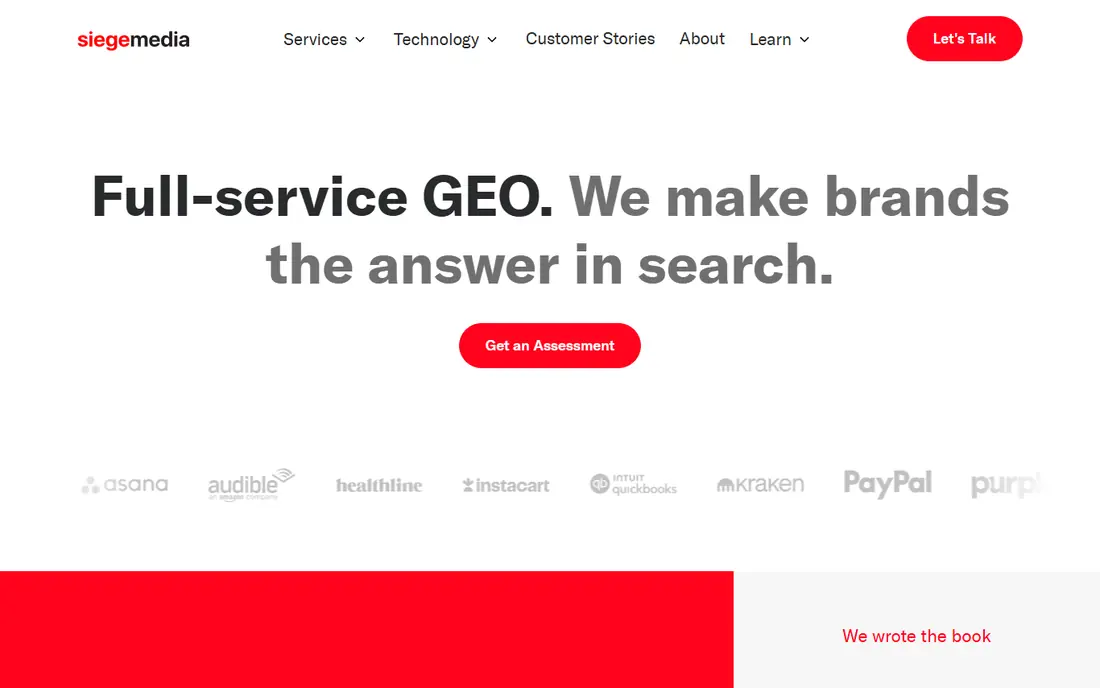
Siege Media is an agency known for SEO content that aims to earn links, not just fill a blog calendar. Its teams pair keyword research with design-led assets, such as data studies and visual guides, and support that content with digital PR outreach. That model suits growth-stage companies that want fewer, stronger pieces rather than a high volume of short posts.
The trade-off is cost and commitment. Pricing is custom, and published comparisons place its minimums in the higher agency range. A small team with a tight budget will get more output from a platform, but a company that needs authority content with a link record may find Siege a better use of spend.
- Content built to earn links and citations
- Design and digital PR support
- Work for growth-stage brands
- Custom pricing only
- Minimums suit larger budgets
- Not a fit for one-off blog posts
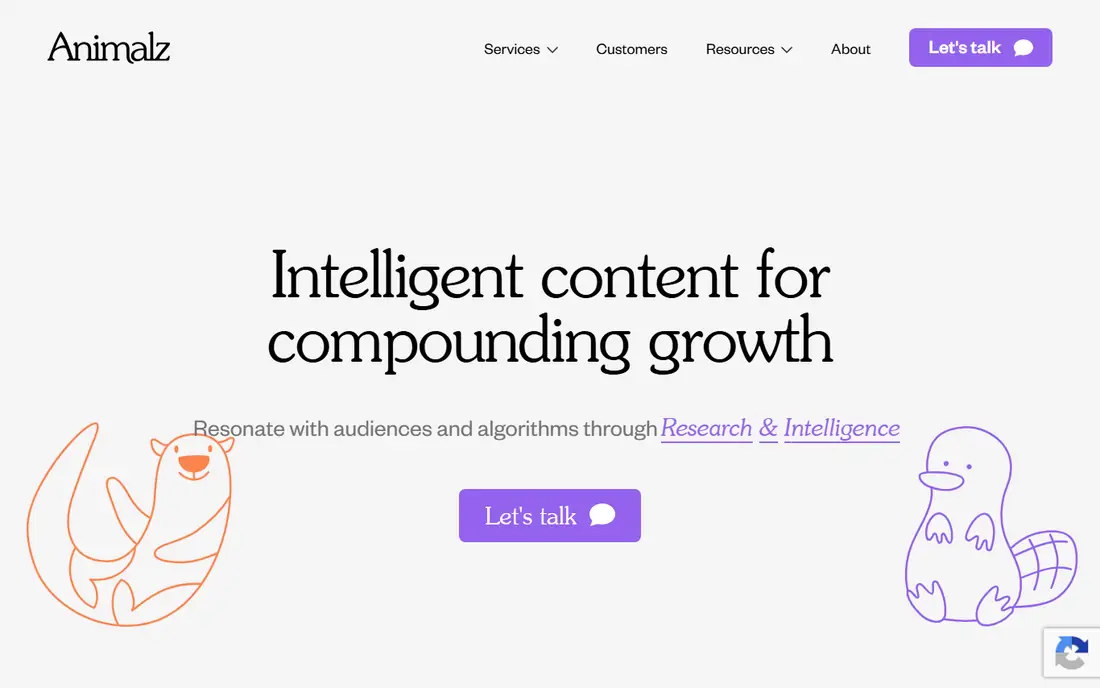
Animalz is a content agency focused on B2B and SaaS companies, with an emphasis on thought leadership alongside search performance. Its writers and strategists build content around customer problems and product value, rather than chasing keyword volume alone. That approach suits companies that need to sound credible to expert buyers.
The catch is fit and budget. Animalz works on custom engagements, and its process is heavier than a per-article platform. Teams that need fast, low-cost posts should look elsewhere, while teams that want a small set of high-quality pieces with a clear point of view will get more from this model.
- Strong B2B and SaaS writing bench
- Strategy-led content programs
- Experienced editors
- Custom pricing
- Lead times can be longer for research-heavy pieces
- Best for funded teams
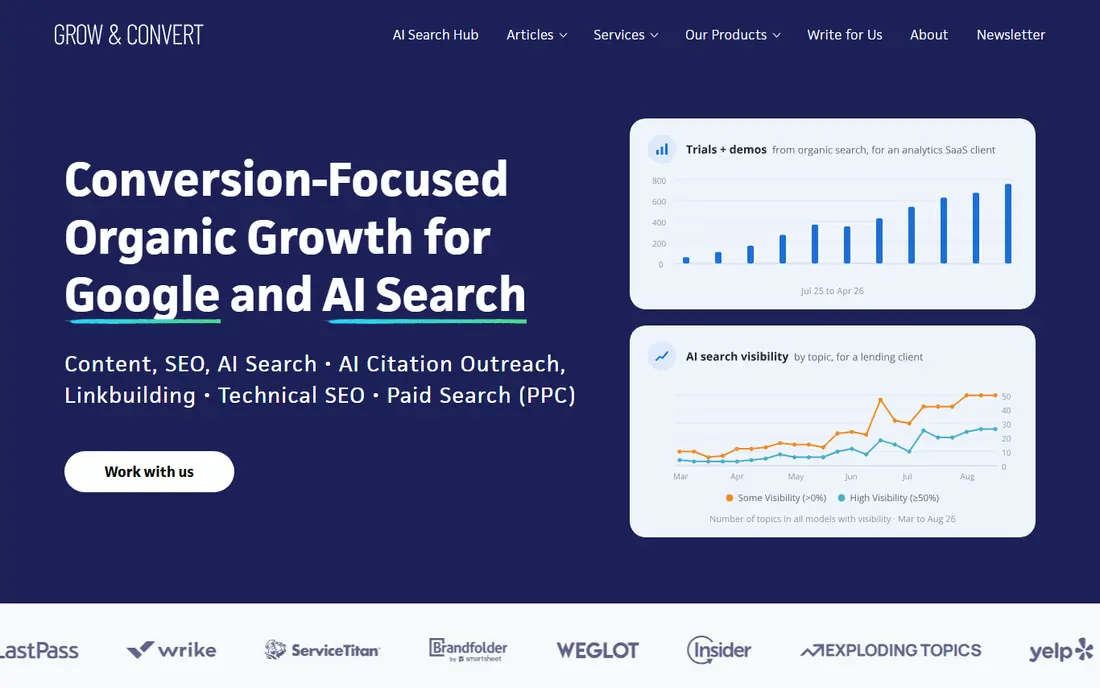
Grow & Convert is an agency that builds SEO content around bottom-funnel topics, the pages that turn searchers into trials, demos, and calls. Published 2026 comparisons list its pricing at $10,000 per month, which reflects a full program of strategy, writing, and editing rather than a per-article fee. Its case material stresses conversions over traffic alone.
That focus is both the strength and the limit. A SaaS company with a proven product and a sales motion will benefit most, since the content is designed to close demand that already exists. A new site that still needs broad awareness content may need a wider program first, or a lower-cost platform to build volume.
- Content tied to conversions and pipeline
- Bottom-funnel focus
- Case-led reporting
- High monthly minimum
- Narrow fit for SaaS and service firms
- Not for broad top-funnel volume
Omniscient Digital builds organic growth programs for software companies, combining SEO strategy, content production, and digital PR. Published comparisons list engagements from $10,000 to $15,000 per month, and one comparison cites $120,000 per year as a starting point for larger programs. Its recent work also covers AI search, which matters as more buyers get answers from chat and AI overviews.
The honest limit is budget. This is a program for companies that can fund a sustained content effort and wait for compounding traffic. Smaller teams should treat Omniscient as a benchmark for quality and process, and buy a smaller service until volume and revenue justify a program of this size.
- Topical authority and AI search coverage
- Content plus digital PR
- Work for software companies
- Large engagements, with published figures in five figures per month
- Custom pricing only
Verblio is a platform, not a traditional agency. Teams submit briefs, writers in its network claim them, and editors check the work before delivery. Published comparisons cite rates from $0.06 per word for hybrid work and $0.16 per word for human-written work, though current platform pricing should be confirmed on its site. That model suits teams that already know their keywords and need steady output.
The risk is writer fit. A vague brief will return generic copy, and a niche topic needs a writer with real subject knowledge. Our advice is to run a small paid test, keep the best writers on repeat work, and invest time in briefs that include sources, audience, and the action a reader should take.
- Large writer network
- Per-word pricing options
- Hybrid and human-written tiers in comparisons
- Quality varies by writer match
- Briefs need care
- Editing depth varies by tier
Compose.ly sits between a platform and an agency. Each account gets a managed team that includes a writer, an editor, and an SEO advisor, according to published comparisons, with work delivered on a subscription. That structure suits marketing teams that want consistent voice and a single point of contact, without hiring writers in-house.
The trade-off is commitment and price opacity. Subscriptions are custom, so a team must go through a sales conversation to price a program. For a team that only needs a few articles, a per-word platform is simpler. For a team publishing weekly, the managed team model can save briefing and editing time.
- Dedicated writer, editor, and SEO advisor per account in comparisons
- Managed workflow
- Subscription model
- Custom subscription pricing
- Less suited to a single article
- Onboarding takes time
Writing Studio is a per-word agency that covers technical, health, and SaaS content, where accuracy carries more risk than in general lifestyle writing. Its model suits teams that need writers who can handle source material, expert interviews, and fact-checking, rather than generalists who summarize top search results. That depth matters for topics where a wrong claim can harm trust or compliance.
The catch is that per-word pricing still varies by difficulty, and a technical brief will cost more than a simple post. Teams should ask how sources are checked, whether a subject editor reviews the draft, and how revisions are handled. A cheap per-word rate is a poor deal if every draft needs a full rewrite.
- Per-word agency model
- Strength in technical, health, and SaaS topics in comparisons
- Managed editing
- Pricing varies by topic difficulty
- Turnaround depends on writer availability
- Custom quotes for large programs
Codeless offers content programs built around fixed article volumes, which helps a marketing team plan a publishing calendar and a budget. Its long-form focus suits comparison pages, guides, and category content that need depth to rank and convert. Published comparisons list it alongside other fixed-volume agencies for mid-market teams.
The limit is flexibility. A fixed-volume program is a good fit for a team that publishes every week, but a poor fit for a team that needs a single piece or irregular work. Before signing, confirm article length, revision rounds, and whether strategy and briefs are included, since those items change the true cost per published piece.
- Fixed article volumes for planning
- Long-form focus
- Work for agencies and brands in comparisons
- Pricing is quoted per program
- Less flexible for one-off needs
- Volume commitments suit steady publishers
How we picked these
We compared agency and platform sites, published 2026 comparisons, and pricing disclosures, keeping only services that write SEO content as a core offer and serve US businesses. We favored a mix of agencies, managed platforms, and per-word services, so readers can match a model to budget and output. We did not list freelance marketplaces with no editing layer, since quality control is a core need for search content.
What to ask before you sign
Ask for three samples in your niche, not general portfolio pieces, and check whether the same writer or editor will handle your account. Ask how briefs are built, who checks facts and sources, and how many revision rounds are included. Also ask how success is reported: traffic and leads by page, not just articles delivered. A service that reports only word count is selling output, not results.
Briefs make or break the work
A strong brief names the reader, the search intent, the competing pages, the sources to use, and the next step for the reader. It also lists claims to avoid and terms that must be defined correctly. Teams that invest an hour in a brief usually save several hours in revisions, and they get copy that sounds like their brand rather than a generic summary.
Pricing models compared
Agency retainers bundle strategy, writing, editing, and reporting, and they suit sustained programs. Per-word platforms charge for output and suit teams that brief in-house. Per-article agencies sit in the middle, with a fixed price for a defined length and revision set. Compare the cost per published, accepted article, not the cost per draft, since revision time is real cost too.
AI search changes the brief
Search content in 2026 must also serve AI answers, which favor clear definitions, direct answers, and cited sources. Ask a service how it structures pages for AI overviews and chat answers, and whether it tracks citations as well as rankings. A service that only reports blue-link rankings is missing a growing share of discovery.
Frequently asked questions
How much do SEO copywriting services cost?
Costs range widely. Platforms can charge per word, with published hybrid and human rates in the cents-per-word range, while agencies often charge monthly retainers from a few thousand dollars to $10,000 or more. The right comparison is cost per accepted, published article that drives traffic or leads, not the lowest draft price.
What is the difference between an agency and a content platform?
An agency usually provides strategy, briefs, writing, editing, and reporting in one retainer. A platform provides writers and an editing layer, while your team supplies strategy and briefs. Agencies suit teams that want a full program, while platforms suit teams that already plan content in-house.
How long does SEO content take to rank?
Most SEO content takes months to gain traction, since search engines need time to index, test, and trust a page. A realistic window is three to six months for early movement, with stronger results over a year of steady publishing. Any service that promises first-page rankings in weeks should be treated with caution.
Should I use AI to write SEO content?
AI can help with outlines, research, and drafts, but published content still needs human editing, fact-checking, and brand voice. Search and AI systems reward original, accurate, and useful pages. A service that discloses its AI use and shows its editing steps is a safer choice than one that hides it.
How many articles do I need per month?
The right volume depends on your market, competition, and team capacity to promote and update content. Many small teams start with four to eight strong pieces per month, while larger programs publish more. Quality and topical coverage matter more than hitting an arbitrary article count.
What should a good SEO article include?
A good article answers the search intent directly, covers the topic in depth, uses clear headings, cites credible sources, and gives the reader a next step. It should also include internal links to related pages, accurate facts, and a title and meta description that match the content. Thin pages that repeat competitors rarely rank well.
Sources
- https://www.siegemedia.com
- https://www.animalz.co
- https://growandconvert.com
- https://www.omniscientdigital.com
- https://www.verblio.com
- https://www.composely.com
- https://writingstudio.com
- https://codeless.io
- http://nathanojaokomo.com/blog/best-seo-content-writing-services
- https://www.loopexdigital.com/blog/content-marketing-agencies
See where you really rank - block by block
ProMapRanker scans Google Maps across a grid of your service area. Simple monthly plans from $19, white-label on every plan.
Start freeKeep reading
 zoho inventory alternatives
6 Alternatives to Zoho Inventory, Compared on Price and Fit
Zoho Inventory alternatives: 6 tools compared on price, free plans and fit. Katana leads the list for manufacturers. Fit and flaws are laid out for each entry.
Read → zoho crm alternatives
Best Zoho CRM Alternatives (2026)
Need Zoho CRM alternatives? We compare 7 tools on cost, free access and who each suits. Every pick gets a straight assessment. Built for quick decisions.
Read → zelle alternatives
Best Zelle Alternatives in 2026
Compare the best Zelle alternatives for sending money to friends, paying sellers and moving funds abroad, with honest notes on fees, speed and safety in 2026.
Read →