 ProMapRanker
Best Self Publishing Platforms in 2026

Key takeaways
- Most authors do best with a mix: Amazon KDP for Kindle reach, plus IngramSpark or Draft2Digital for bookstores and other ebook stores.
- Free setup does not mean free publishing, since print costs, distribution fees, and optional services still affect what you earn per sale.
- Check ISBN rules, exclusivity, and print costs before you upload, since those choices are harder to change later.
- Our pick for most new authors is Amazon KDP first, with Draft2Digital for wide ebook distribution and IngramSpark for bookstore reach.
Quick comparison
| Pick | Great for | Pricing starts at | Free tier | |
|---|---|---|---|---|
 Amazon KDP | Kindle and Amazon print reach | Free | Yes | Visit |
 IngramSpark | Bookstores and libraries | Free | Yes | Visit |
 Draft2Digital | Wide ebook distribution | $20 one-time activation | No | Visit |
 Lulu | Print variety and direct sales | Free | Yes | Visit |
 BookBaby | Bundled production help | See website | No | Visit |
 Barnes & Noble Press | NOOK readers and US print | Free | Yes | Visit |
 Smashwords | Wide ebook stores and libraries | Free | Yes | Visit |
 PublishDrive | Multi-format distribution | See website | Free trial | Visit |
 Kobo Writing Life | Kobo readers and global reach | Free | Yes | Visit |
The best self publishing platforms
We compared official royalty pages, distribution lists, and setup terms. Print costs vary by page count, size, and color, so we focus on setup fees, royalty structure, and reach, and we urge you to run each platform calculator for your own book.

Amazon KDP is the starting point for most self-published authors because it puts your ebook and paperback in front of Amazon and Kindle readers at no setup cost. Ebook royalties reach 70 percent for US titles priced in the qualifying range, after delivery costs, while print royalties come after printing costs. That reach is hard to match for genre fiction and nonfiction alike.
The trade-offs are exclusivity and print reach. Enrolling in KDP Select, which is required for Kindle Unlimited, limits your ebook to Kindle during the enrollment term. Expanded print distribution also pays less than a direct Amazon sale. Use KDP for Amazon, and add a wide distributor for other stores unless you choose exclusivity on purpose.
- No setup fee
- Ebook and print in one dashboard
- Kindle Unlimited option through KDP Select
- Expanded print distribution pays less
- KDP Select requires Kindle exclusivity for ebooks
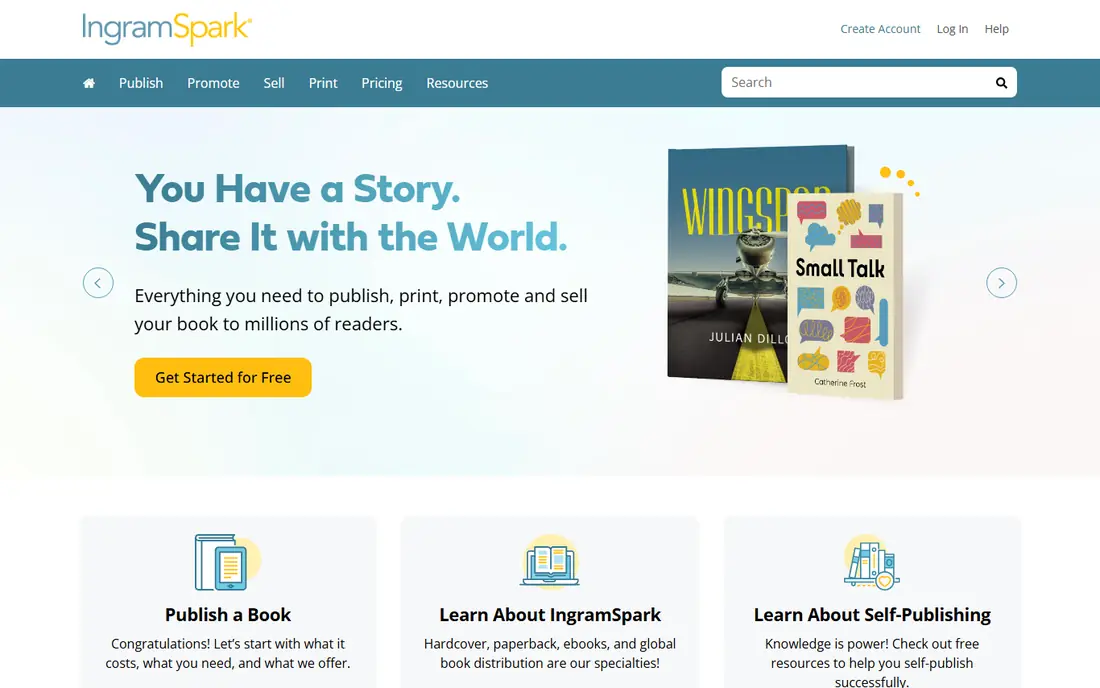
IngramSpark is the best route into bookstores, libraries, and schools, since it feeds the wholesale catalogs those buyers use. You can publish print and ebook titles, set a wholesale discount, and reach retailers beyond Amazon. For literary fiction, nonfiction, and children's books, that catalog presence matters.
The setup is stricter than KDP, with careful file and metadata rules, and you need your own ISBN for most titles. Print earnings also depend on the discount you set and a market access fee on distributed print sales, so run the calculator before you price. Pair it with KDP for the best mix of Amazon and trade reach.
- Wide bookstore and library distribution
- Print and ebook options
- Professional catalog presence
- Setup and file rules are stricter
- Print earnings depend on discount and market access fee
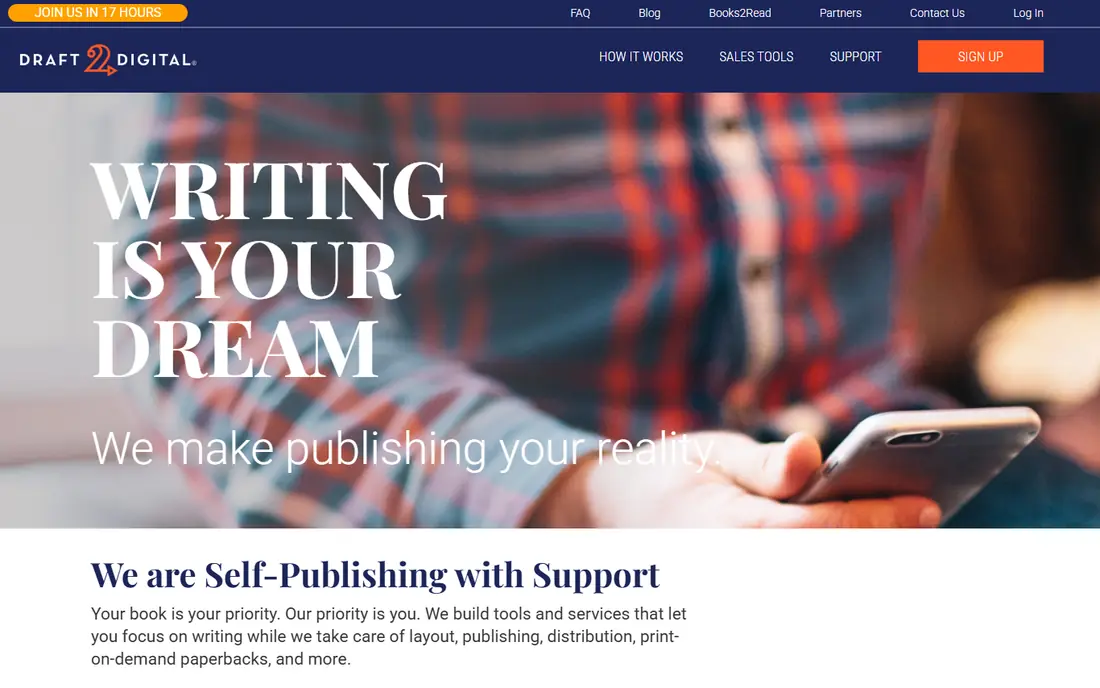
Draft2Digital, often shortened to D2D, lets you upload once and distribute to Apple Books, Kobo, Barnes and Noble, and other ebook retailers. It takes about 10 percent of the retail price as commission, on top of the retailer share, which is the price of saving time across many dashboards. Its formatting and universal link tools are genuinely helpful for new authors.
In 2026, new accounts pay a one-time activation fee, with a small yearly maintenance fee for low-earning accounts in some cases, so check the current terms. If you sell mostly on one store, going direct may pay more. If you want wide reach with little admin, D2D is a strong choice.
- One upload reaches many ebook stores
- Simple formatting tools
- Universal book links
- New accounts pay an activation fee
- Commission reduces per-sale earnings versus going direct
Lulu stands out for print variety, including hardcovers, coil bindings, and specialty formats that suit photo books, workbooks, and academic titles. You can sell direct through the Lulu bookstore and, for eligible titles, reach retail distribution. Account setup is free, and you pay print costs when books are ordered or when you buy copies.
Retail reach is not its strength, and a proof copy must be bought and approved for retail distribution. If the physical book matters most, Lulu is a strong printer and direct seller. If store sales matter most, pair it with IngramSpark or KDP for distribution.
- Broad print formats and bindings
- Direct sales through Lulu bookstore
- Global print options
- Retail discoverability is weaker than KDP or IngramSpark
- Proof copy needed for retail distribution
BookBaby suits authors who want production help and distribution from one provider. It sells ebook distribution, print distribution, cover design, ISBN services, and other help as separate services, so you can buy only what you need. Ebook distribution takes no commission on sales, which means you keep what the retailer pays.
The total cost can be hard to see at first, since each service is priced on its own. Print royalties also vary by channel, with the best rates on its own Bookshop and lower rates through other retailers after costs. Get a full quote before you commit, and compare it with doing formatting and cover design separately.
- Bundled editing, design, formatting, and distribution services
- Ebook distribution with no commission on sales
- Services are priced separately, so totals add up
- Print royalties vary sharply by sales channel
Barnes and Noble Press lets you publish ebooks for NOOK readers and print books for sale through Barnes and Noble, with no setup fee. Ebook royalties are competitive for US sales, and print books can reach store customers through the Barnes and Noble system. It is a useful direct channel alongside KDP and a wide distributor.
Its reach is narrower than Amazon, and it does not replace IngramSpark for broad bookstore distribution. Use it as a direct US channel, not as your only distributor. Check print costs in its calculator, since they vary by trim size, page count, and color.
- Free setup
- Ebook and print options
- Reach to Barnes and Noble customers
- Reach is mainly US-focused
- Smaller ebook market than Amazon or Kobo
Smashwords is a long-running ebook distributor with reach to many retailers and library systems. Authors keep a large share on sales through the Smashwords store, and a smaller share through other retailers after the retailer cut. Setup is free, which makes it easy to test wide distribution.
The platform feels older than newer rivals, and its formatting and metadata rules need care. Earnings also vary by retailer, so a single royalty figure does not tell the full story. For wide ebook reach at no setup cost, it remains a practical option, especially for backlist titles.
- Free setup
- Wide ebook and library distribution
- Author keeps a large share on direct sales
- Interface and formatting rules feel dated
- Earnings vary by retailer
PublishDrive covers ebooks, print, and audiobooks through one account, which suits authors with several titles or formats. Paid plans advertise no commission on sales, so the subscription replaces the per-sale cut used by commission distributors. Reporting and store coverage are broad, which helps authors who manage a catalog rather than a single book.
The subscription only makes sense if your sales cover it. A single low-selling title may cost more on a subscription than on a commission plan. Check the current plan prices, free entry limits, and which stores each plan covers before you choose.
- Ebook, print, and audiobook distribution in one account
- Subscription plans with no commission on paid tiers
- Subscription cost needs sales volume to justify
- Plan terms vary by format
Kobo Writing Life is the direct route to Kobo readers, with free setup and competitive ebook royalties. Kobo is stronger outside the US, including Canada and parts of Europe, so it is a useful direct channel for authors with international readers. It also reaches library systems through Kobo partners in some cases.
It does not cover print, so you still need KDP, IngramSpark, or Lulu for paperbacks. Use it direct for Kobo, rather than only through an aggregator, if Kobo sales matter to you. Going direct also gives you faster price and metadata control on that store.
- Free direct publishing to Kobo
- Competitive ebook royalties
- Strong outside the US
- Smaller US market than Amazon
- No print distribution on its own
How we picked these
We compared official setup fees, royalty structures, distribution reach, and ISBN and exclusivity rules. We favored platforms that are still open to new authors in 2026 and that cover the main sales channels: Amazon, other ebook stores, bookstores, libraries, and direct sales. We left out closed platforms and vanity-style services that charge large upfront packages without clear distribution.
We did not claim hands-on testing. Our comparison rests on vendor pricing and help pages, plus public royalty guides. Print costs and royalties vary by book specs and price, so run each platform calculator for your own title before you set a list price.
How to choose a self publishing platform
Decide where your readers buy books
If most readers use Kindle, start with KDP. If bookstores and libraries matter, add IngramSpark. If you want many ebook stores with one upload, use Draft2Digital or Smashwords. A hybrid plan, direct on your top two stores and aggregated elsewhere, often pays best over time.
Check ISBN, rights, and exclusivity
Some platforms offer a free ISBN with limits, while others require your own ISBN. A free ISBN may tie the edition to that platform, so buy your own ISBN if you want full control. Avoid exclusivity unless the benefit, such as Kindle Unlimited, is worth giving up other stores for that term.
Price with print costs in mind
Set your print price after printing costs, discount, and fees, not before. A low list price can leave almost nothing after costs, especially on distributed print. Use each platform calculator with your page count, size, and color settings, and test a few price points before you publish.
Frequently asked questions
What is the best self publishing platform for beginners?
Amazon KDP is the simplest start, since setup is free and the dashboard covers ebooks and print. Add Draft2Digital for wide ebook reach and IngramSpark for bookstores once you are comfortable with files and metadata. Start with one platform, learn its file rules, then expand.
What is the best self publishing company for print books?
IngramSpark is best for bookstore and library print reach, while KDP is best for Amazon print sales. Lulu is best for specialty print formats and direct sales. The right choice depends on where you expect print sales, and many authors use more than one print channel.
Do self publishing platforms take my rights?
Reputable platforms in this list do not take your book rights, but terms vary on exclusivity and ISBN use. KDP Select limits ebook exclusivity during its term, and a free ISBN may tie an edition to one platform. Read the rights and termination terms before you upload.
How much does self publishing cost?
You can publish an ebook and print book with no setup fee on KDP, IngramSpark, Lulu, and several other platforms, but print costs come out of each sale. Optional costs include your own ISBN, cover design, editing, and formatting help. Budget for those services separately from platform fees.
Is Draft2Digital better than IngramSpark for ebooks?
Draft2Digital is simpler for wide ebook distribution, with one upload and simple tools. IngramSpark adds bookstore and library print reach that Draft2Digital does not match. Many authors use both, with D2D for ebooks and IngramSpark for print.
Sources
See where you really rank - block by block
ProMapRanker scans Google Maps across a grid of your service area. Simple monthly plans from $19, white-label on every plan.
Start freeKeep reading
 zscaler alternatives
Best Zscaler Alternatives in 2026
Looking for zscaler alternatives? We compare 9 SASE and zero trust platforms on architecture, data protection, pricing, and fit for your network and team.
Read → zapier alternatives free
Best Zapier Alternatives Free in 2026
Nine automation tools for zapier alternatives free in 2026, all with genuinely free tiers, plus free plan limits, starting prices and upgrade paths explained.
Read → which platform is best for online reputation
Which Platform Is Best for Online Reputation in 2026
Wondering which platform is best for online reputation? We compare 8 review, listing, and response tools for small and multi-location businesses and agencies.
Read →