 ProMapRanker
Best Self Care Apps in 2026: 9 Apps Compared

Key takeaways
- Insight Timer gives the largest free meditation library, while Headspace gives the clearest structure for beginners.
- Calm is the strongest pick if sleep is the main problem, thanks to Sleep Stories and wind down content.
- Finch and Daylio suit people who want a light daily habit rather than long guided sessions.
- Most paid plans cost about the same per year, so try the free content first before you pay.
- These apps support general wellbeing only and do not replace professional care.
Quick comparison
| Pick | Great for | Pricing starts at | Free tier | |
|---|---|---|---|---|
 Headspace | Structured beginners | $12.99 per month | Free trial | Visit |
 Calm | Sleep and relaxation | $14.99 per month | Yes | Visit |
 Insight Timer | Free meditation library | Free | Yes | Visit |
 Finch | Gentle daily self care | Free | Yes | Visit |
 Daylio | Mood and habit tracking | Free | Yes | Visit |
 Happify | Science based activities | See website | Free trial | Visit |
 Sanvello | Mood and stress tools | See website | Free trial | Visit |
 Wysa | AI chat support | See website | Yes | Visit |
 Stoic | Journaling and reflection | See website | Yes | Visit |
The best self care apps
Self care means different things on different days, from a ten minute meditation to a quick mood check or a short journal entry. The nine apps below cover that range, so you can pick one main habit and add a second app only if the first one sticks.
Headspace is the easiest place to start if meditation feels vague or hard to stick with. Courses build one skill at a time, sessions are short, and the app tells you what to do next instead of leaving you to browse a huge library. That structure helps people who have tried meditation before and drifted away.
The limit is the free content. After the trial, most courses need a subscription, so test the free sessions and the trial fully before you pay. If you like guided structure and a calm voice leading each step, Headspace earns its price. If you want endless free choice, look at Insight Timer first.
- Clear progressive courses
- Short sessions for busy days
- Sleep and focus content
- Limited free content after the trial
- Less variety than Insight Timer
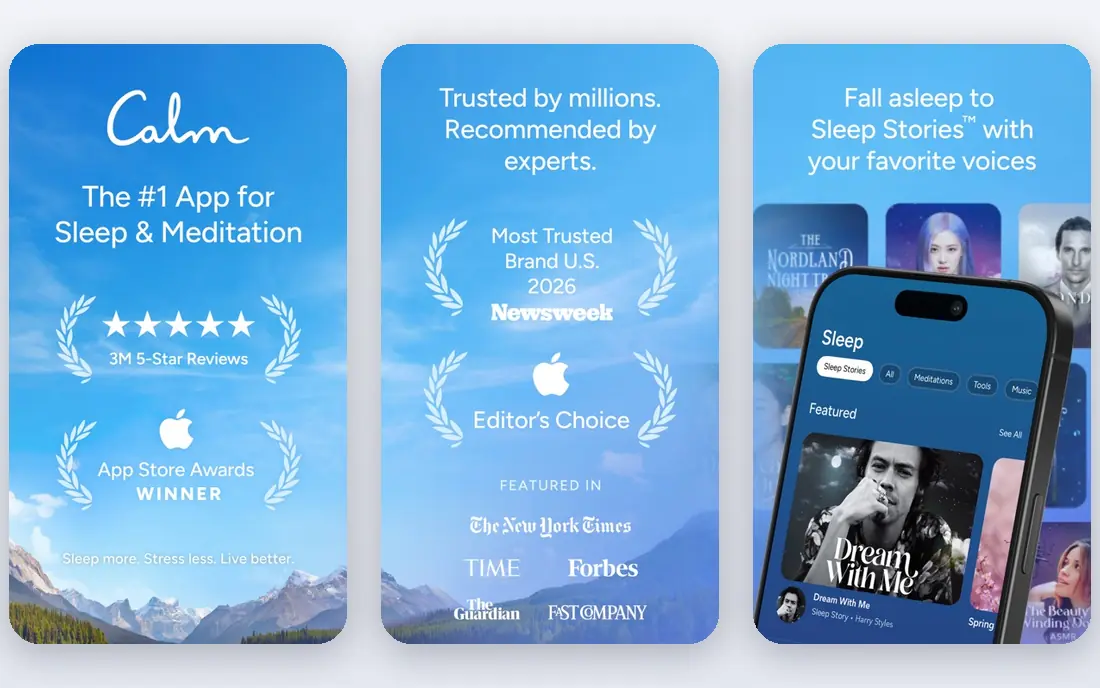
Calm stands out when sleep is the real issue. Sleep Stories, soundscapes, and wind down programs give you a clear bedtime routine, while daytime meditations cover stress and focus. The app feels polished, and the range of voices and music makes it easy to find a style that helps you switch off.
The trade off is focus. If you want a pure meditation course, Headspace is more direct, since Calm spreads its content across sleep, music, and stories. Try the free programs first, and pay attention to whether you actually use the sleep content, since that is where Calm justifies its cost.
- Large Sleep Stories library
- Breathing and music content
- Programs for stress
- Meditation can get lost among sleep content
- Annual price is similar to rivals

Insight Timer is our pick for anyone who wants to meditate without paying. The free library covers anxiety, sleep, grief, focus, and body scans, with a timer for unguided sessions and live events for a sense of community. You can build a solid daily practice here and never pay.
Choice is both the strength and the weakness. Some teachers suit you and some will not, so follow a few teachers you like and use beginner collections to narrow the search. Member Plus adds courses and offline downloads, but it is optional for most users. Start free, and only upgrade if you want structured courses.
- Very large free guided library
- Timer and live events
- No ads on free meditations in many cases
- Quality varies by teacher
- Sheer choice can feel overwhelming
Finch turns self care into a small daily routine with a virtual pet that grows as you complete check ins, breathing exercises, and goals. That light touch helps people who find meditation apps too serious or too long. A two minute check in can be enough to notice mood, energy, and what the day needs.
The playful style is not for everyone, and some users will want more depth than short prompts provide. Finch works best as a first habit, paired with a meditation app if you later want longer sessions. Try the free version for a week and see whether the daily nudge helps or starts to feel like a chore.
- Friendly pet companion approach
- Short daily check ins
- Habit and goal tracking
- Gamified style will not suit everyone
- Deeper tools need a paid plan
Daylio suits people who want to understand patterns rather than follow guided sessions. Logging a mood takes seconds, and you can add activities, sleep, and habits to see what tends to lift or lower your mood. Over weeks, those charts can show links you would miss from memory alone.
The catch is consistency. If you log only on bad days, the picture skews, so set a daily reminder and keep entries short. Daylio does not teach meditation or offer therapy, but as a tracking tool it is simple, private in feel, and easy to keep up. Use it to spot patterns, then choose other support for the issues it reveals.
- Fast mood logging without writing
- Charts show patterns over time
- Habit tracking
- No guided meditation
- Insights depend on regular logging
Happify offers short activities and games drawn from positive psychology, organised into tracks for stress, confidence, and resilience. Each activity takes only a few minutes, which suits people who want something active rather than passive listening. Progress tracking shows which tracks you return to most.
The app is not a treatment service, and its light tone will not suit everyone. Check current pricing on the vendor site, since plans and trial terms change. Happify works best as a daily micro habit for general wellbeing, alongside other support if you face ongoing mental health problems.
- Short activities based on psychology research
- Tracks for stress and confidence
- Game like tasks
- Pricing and full access need a subscription
- Style feels light for serious concerns
Sanvello combines mood tracking with guided journeys that use ideas from cognitive behavioural therapy, such as spotting unhelpful thoughts and building coping steps. That mix suits people who want a bit more structure than a simple mood log, without committing to a full meditation library.
Access varies by plan and employer or health plan partnerships, so check what is free for you before you judge the price. Sanvello is a self help tool, not a substitute for a clinician. If anxiety or low mood persists, use it alongside professional help, not instead of it.
- Tools based on cognitive behavioural ideas
- Mood tracking
- Guided journeys
- Full access needs payment or a partner plan
- Content range is narrower than Calm
Wysa offers a chat based companion that responds to what you type and suggests exercises for stress, sleep, and low mood. That format helps people who prefer writing to listening, or who want support late at night when no one else is around. Free tools cover a useful range of exercises.
Be clear about limits. Wysa is not a licensed therapist, and its chat support does not replace professional care. If you are in crisis, contact local emergency services or a crisis line at once. For everyday stress and habit building, the chat format can make self care feel more personal than a library of recordings.
- Chat based support any time
- Exercises for stress and sleep
- Human coach option in some plans
- Chat format is not therapy
- Human support costs extra where offered
Stoic centres on short morning and evening journaling, with prompts that ask what matters today and what went well. That rhythm suits people who think best by writing, and the mood and habit tracking adds context without turning the app into a full meditation library. The design stays calm and uncluttered.
If you dislike writing, Stoic will feel like homework, and a meditation app will suit you better. Try the free prompts for a week before paying, and keep entries short so the habit survives busy days. For reflection and gratitude, Stoic is a strong, focused pick.
- Morning and evening journal prompts
- Mood and habit tracking
- Clean design
- Journaling focus will not suit listeners
- Some features need a subscription
How we picked these
We compared official app pages, pricing, and app store listings, plus public reviews of free content and paid limits. We favoured apps that are still available in 2026, offer a free plan or trial, and cover a distinct self care habit, from meditation to mood tracking and journaling. We left out apps that had closed, lacked a clear homepage, or made medical claims beyond general wellbeing.
How to choose a self care app that sticks
Start with one habit, not five. If sleep is the problem, pick Calm or Insight Timer sleep content. If you forget to check in with yourself, pick Finch or Daylio. If you like writing, pick Stoic. A single habit done most days beats three apps opened once and then ignored.
Next, test the free version for at least a week. Notice when you open the app, how long sessions feel, and whether you look forward to it or avoid it. Set a reminder at a time you can keep, such as after breakfast or before bed, and keep sessions short at first. Five minutes done daily builds more than thirty minutes done once.
Finally, check privacy and cost before you pay. Read what data the app collects, whether mood entries are shared, and how to export or delete your data. Compare annual and monthly prices, and set a reminder before a trial ends. If low mood, anxiety, or sleep problems persist or worsen, speak to a clinician rather than relying on an app alone.
Frequently asked questions
What are the best self care apps that are free?
Insight Timer offers the largest free meditation library, while Finch, Daylio, and Stoic offer useful free plans for check ins, mood tracking, and journaling. Calm and Headspace offer some free content, but most of their libraries need a subscription. Start with the free apps and pay only for features you use weekly.
What is the best self help app for beginners?
Headspace is the clearest beginner pick for meditation, since courses build step by step. Finch is a gentler start if meditation feels too formal, since it uses short check ins and a companion pet. Pick the style you will actually open, not the one with the most content.
What is the best self care app for sleep?
Calm is the strongest sleep pick here, with Sleep Stories, soundscapes, and wind down programs. Insight Timer also offers free sleep meditations, and Wysa offers sleep exercises in chat form. If sleep problems last more than a few weeks, speak to a clinician.
Are self care apps a substitute for therapy?
No. These apps support general wellbeing, habits, and stress management, but they do not diagnose or treat mental health conditions. Sanvello and Wysa use self help ideas, but they are not therapy. Seek professional help for persistent anxiety, low mood, or any crisis.
What are the best psychology apps for daily habits?
Happify and Sanvello draw on psychology research for short activities and coping tools, while Daylio helps you track mood and habits over time. Combine a tracking app with an activity app if you want both insight and practice. Keep expectations modest and judge results over weeks, not days.
How much do self care apps cost?
Many offer a free plan, while paid plans for Headspace and Calm sit around $13 to $15 per month, or about $70 per year when billed annually. Other apps vary, so check the vendor site for current annual and monthly prices. Always test the free content before you commit to a year.
Sources
See where you really rank - block by block
ProMapRanker scans Google Maps across a grid of your service area. Simple monthly plans from $19, white-label on every plan.
Start freeKeep reading
 zscaler alternatives
Best Zscaler Alternatives in 2026
Looking for zscaler alternatives? We compare 9 SASE and zero trust platforms on architecture, data protection, pricing, and fit for your network and team.
Read → zapier alternatives free
Best Zapier Alternatives Free in 2026
Nine automation tools for zapier alternatives free in 2026, all with genuinely free tiers, plus free plan limits, starting prices and upgrade paths explained.
Read → which platform is best for online reputation
Which Platform Is Best for Online Reputation in 2026
Wondering which platform is best for online reputation? We compare 8 review, listing, and response tools for small and multi-location businesses and agencies.
Read →