 ProMapRanker
Best Seed Companies in 2026


All-round home and market gardens · Pricing starts at: See website
Key takeaways
- Johnny's Selected Seeds is our pick for most home gardeners, thanks to a broad, well-documented catalog and varieties tested for home and market gardens.
- Baker Creek and Seed Savers Exchange are the best choices for heirloom lovers who want rare varieties and seed saving.
- High Mowing Organic Seeds is the best fully organic option, with certified organic vegetable, flower, and herb seeds.
- Burpee is the best beginner-friendly company, with widely available varieties, clear growing notes, and retail availability.
- Match the company to your climate and goals, since regional companies such as Territorial and Southern Exposure offer varieties bred for specific conditions.
Quick comparison
| Pick | Great for | Pricing starts at | Free tier | |
|---|---|---|---|---|
| Johnny's Selected Seeds | All-round home and market gardens | See website | No | Visit |
 Burpee | Beginners and widely available varieties | See website | No | Visit |
 Baker Creek Heirloom Seeds | Rare heirloom varieties | See website | No | Visit |
 Seed Savers Exchange | Heirloom preservation and seed saving | See website | No | Visit |
 Territorial Seed Company | Pacific Northwest and regional varieties | See website | No | Visit |
 High Mowing Organic Seeds | Certified organic seeds | See website | No | Visit |
 Botanical Interests | Detailed packets for beginners | See website | No | Visit |
 Renee's Garden Seeds | Gourmet vegetables and cottage flowers | See website | No | Visit |
The best seed companies
The best seed company for you depends on what you grow, where you garden, and whether you want heirloom, hybrid, or organic seeds. Some companies focus on rare heirlooms you cannot find elsewhere, others on reliable varieties for short seasons or hot summers, and a few on organic certification and detailed growing help for beginners. The eight companies below are established US sellers with online ordering, and they cover vegetables, flowers, and herbs for home gardeners.
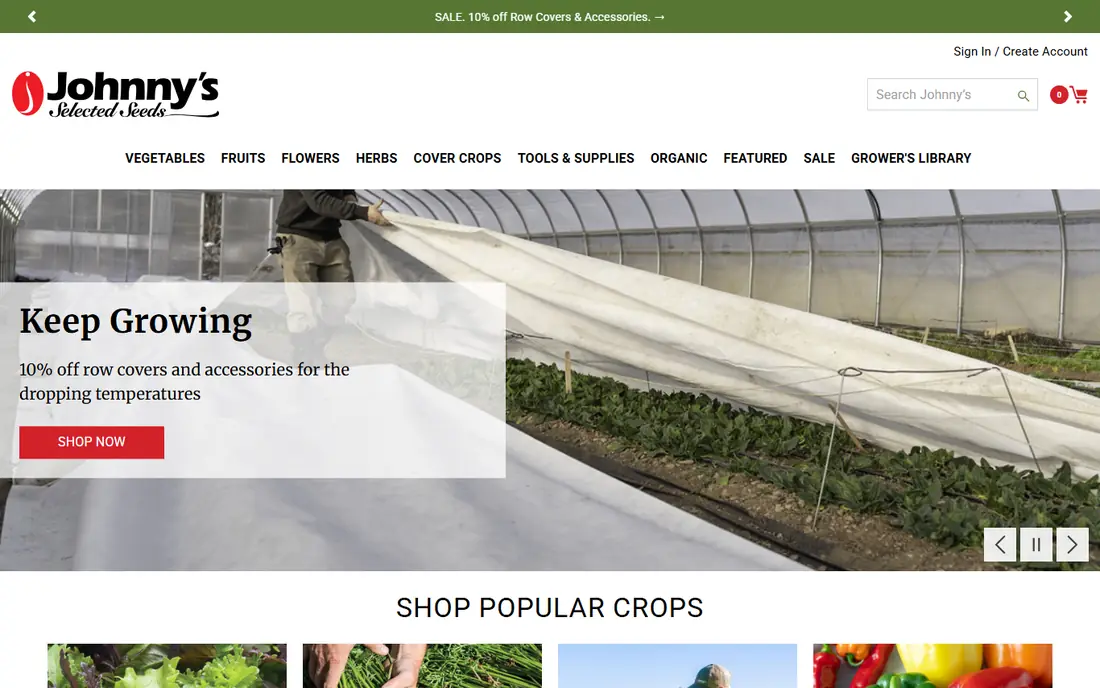
Johnny's Selected Seeds, based in Maine, is a favorite of both home gardeners and market growers because its catalog reads like a growing guide. Each variety listing includes days to maturity, spacing, disease notes, and growing tips, which helps you choose between similar tomatoes or lettuces with confidence. The company is employee-owned and offers organic, heirloom, and hybrid options, so you are not locked into one seed type.
The trade-off is price and choice. Johnny's packets and shipping can cost more than a big-box rack, and the sheer number of varieties can slow a first order. For gardeners who want reliable germination, clear data, and varieties tested in northern and varied climates, Johnny's is the most dependable all-round pick in this list.
- Broad catalog of vegetables, flowers, and herbs
- Detailed growing information and trial notes
- Employee-owned company with organic and non-GMO options
- Packet prices and shipping can be higher than mass-market sellers
- Catalog size can overwhelm beginners
- Some varieties sell out early in peak season
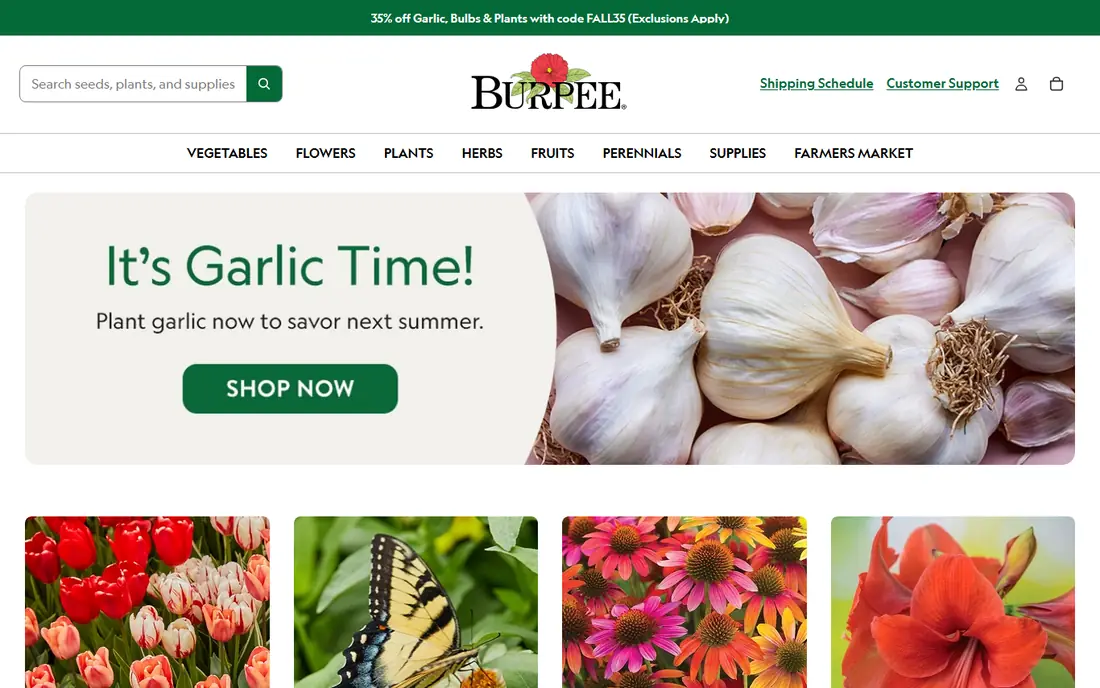
Burpee, formally W. Atlee Burpee and Company, has sold seeds to US gardeners since 1876, and that history shows in its beginner-friendly catalog. Varieties are chosen for reliable performance in home gardens, with growing notes that assume you are not a professional grower. Burpee seeds are also sold in many garden centers and big-box stores, so you can pick up a packet locally when an online order would arrive too late.
Burpee is less exciting for heirloom collectors who want rare varieties, since its strength is proven, widely grown types rather than obscure finds. Some guides also note mixed feedback on live plant orders, though seed orders are the focus here. For a first garden, or for dependable staples such as tomatoes, beans, and marigolds, Burpee is an easy, low-risk start.
- Long history since 1876
- Widely available in stores and online
- Easy-to-grow varieties with clear instructions
- Less focus on rare heirlooms than Baker Creek
- Some popular varieties sell out
- Plant orders have drawn mixed reviews in some guides

Baker Creek Heirloom Seeds, based in Missouri, specializes in heirloom and open-pollinated seeds, including many rare varieties from around the world. Its catalog is famous among gardeners for unusual tomatoes, peppers, squash, and flowers that you will not find on a standard store rack. For seed savers, heirlooms also breed true, so you can save seed from a good plant and grow a similar plant next year.
Heirlooms come with trade-offs. They can be less uniform and less disease resistant than modern hybrids, and they may need more attention in tough weather. Baker Creek also sells out of popular rare varieties early, so order early for spring planting. For gardeners who value flavor, history, and biodiversity over maximum uniformity, Baker Creek is unmatched.
- Very large heirloom collection
- Rare and international varieties
- Beautiful catalog and strong focus on biodiversity
- Heirloom varieties can be less uniform than hybrids
- Growing notes vary by variety
- Popular rare seeds sell out fast
Seed Savers Exchange, a nonprofit based in Decorah, Iowa, preserves heirloom seeds and shares them with gardeners through its catalog and member exchange. Buying from Seed Savers supports that preservation work, and the catalog includes varieties with stories, such as family heirlooms and regional favorites that might otherwise disappear. Seed saving guides help beginners learn to save seed correctly for open-pollinated varieties.
The catalog leans heirloom, so gardeners who want the latest disease-resistant hybrids may need a second source such as Johnny's or Burpee. Some varieties are available in limited quantities, and membership adds exchange benefits that casual buyers may not need. For heirloom gardeners who care about preservation as well as harvest, Seed Savers Exchange is a meaningful choice.
- Nonprofit focused on preserving heirloom varieties
- Seed saving resources and community
- Wide heirloom vegetable, flower, and herb selection
- Selection leans heirloom, with fewer modern hybrids
- Some varieties are in limited supply
- Shipping and membership options need checking
Territorial Seed Company
Great for: Pacific Northwest and regional varieties
Territorial Seed Company, based in Cottage Grove, Oregon, trials varieties in Pacific Northwest conditions and selects for cool, wet springs and shorter warm seasons. That regional testing matters, because a tomato that thrives in California may struggle in Oregon or Washington. Territorial also offers organic seeds, garlic sets, and plants, plus detailed growing guides for its varieties.
Gardeners in hot, humid southern climates should check variety notes carefully, since Territorial strength is northern and coastal adaptation. Small orders may also face higher shipping relative to packet price, so grouping an order helps. For Pacific Northwest gardeners, and for northern gardeners who want trialed varieties, Territorial is one of the best regional companies available.
- Varieties trialed in the Pacific Northwest
- Organic and heirloom options
- Strong growing guides and regional advice
- Regional focus may not suit hot southern gardens as well
- Shipping costs can be higher for small orders
- Catalog is smaller than Johnny's
High Mowing Organic Seeds, based in Vermont, sells only certified organic seeds, which makes it the clearest choice for gardeners who want organic certification without checking each packet. The catalog covers vegetables, flowers, and herbs, with heirloom, open-pollinated, and hybrid organic options. Growing information is clear, and the company focus on organic systems suits gardeners who also garden organically in soil care and pest control.
An organic-only catalog means you will not find every conventional hybrid here, and organic seed prices can run higher than conventional equivalents. For gardeners who prioritize organic certification, soil health, and a fully organic seed source, High Mowing removes the guesswork and remains the best organic pick.
- 100 percent organic seed catalog
- Vegetable, flower, and herb seeds
- Vermont-based company with clear organic certification
- Organic-only focus means fewer conventional hybrids
- Prices can be higher than conventional seed
- Some varieties sell out in peak season
Botanical Interests, based in Colorado, is known for packets that teach as well as sell. Inside each packet, you find detailed sowing, spacing, harvest, and companion notes, which helps beginners who do not want to search for growing instructions separately. The catalog covers vegetables, flowers, and herbs, with organic and non-GMO options, and packets are widely sold in garden centers as well as online.
Packet sizes are geared to home gardeners, so market growers who need bulk seed may prefer Johnny's or Territorial. Rare heirloom depth is also thinner than Baker Creek or Seed Savers Exchange. For a new gardener who wants a packet that doubles as a reference card through the season, Botanical Interests is an excellent choice.
- Seed packets with detailed growing notes printed inside
- Organic and non-GMO options
- Good selection for home gardeners
- Packet sizes are smaller than some bulk sellers
- Rare heirloom depth is thinner than Baker Creek
- Retail availability varies by store
Renee's Garden Seeds, based in California, curates varieties for flavor and kitchen use, including gourmet vegetables, herbs for cooking, and cottage garden flowers. Descriptions focus on taste, texture, and kitchen use, which helps cooks choose a lettuce mix, a pepper, or a flower that will actually get used, not just grown. Combo packets, such as mixed lettuce or squash varieties, are a popular way to try several types in one bed.
The catalog is curated rather than exhaustive, so gardeners who want every variety of a crop will need a larger catalog as well. Bulk and market-grower options are also limited. For home cooks and cottage gardeners who want flavorful, beautiful varieties with clear guidance, Renee's Garden is a delightful final pick.
- Curated gourmet vegetables, kitchen herbs, and cottage flowers
- Varieties sourced from around the world
- Clear, cook-friendly descriptions
- Smaller catalog than Johnny's or Burpee
- Fewer bulk or market-grower options
- Some varieties are seasonal and sell out
How we picked these
We compared established US seed company catalogs, growing guides, and gardener recommendations for companies that sell seeds online to home gardeners in October 2026. We required a real, operating company with a public catalog, not a marketplace listing alone, and we favored companies that cover different needs, including heirloom, organic, regional, beginner, and gourmet gardening. Seed prices vary by variety, packet size, and season, so we listed See website for starting price and focused on catalog strength, growing help, and regional fit.
How to choose the right seed company for your garden
Start with your climate and your last frost date, then check days to maturity for each variety you want. A tomato that needs 90 days may not ripen in a short northern season, while a cool-season lettuce may bolt quickly in a hot southern summer. Regional companies and variety notes help here, and your local cooperative extension service can confirm which crops suit your area.
Heirloom, hybrid, and organic explained
Heirloom seeds come from open-pollinated varieties passed down over generations, so saved seed usually grows true to the parent. Hybrid seeds are a cross of two parent lines for traits such as disease resistance or yield, but saved hybrid seed will not reliably repeat the parent plant. Organic refers to how the seed was produced under organic certification, not to whether a variety is heirloom or hybrid. Choose heirlooms for seed saving and unique flavor, hybrids for uniform performance, and organic seed when organic production matters to you.
Ordering and storing seeds
Order early for spring, since popular varieties sell out, and check shipping times before your indoor sowing date. Store leftover seed in a cool, dry, dark place in an airtight container, labeled with variety and year. Many vegetable seeds stay viable for two to five years when stored well, though onions and parsnips fade faster, so test older seed before relying on it for a full bed.
Frequently asked questions
What is the best seed company?
Johnny's Selected Seeds is the best all-round seed company for most home gardeners, thanks to its broad catalog and detailed growing information. Burpee is best for beginners, Baker Creek and Seed Savers Exchange are best for heirlooms, and High Mowing Organic Seeds is best for certified organic seed. The best company for you depends on climate, goals, and whether you want heirloom, hybrid, or organic varieties.
What is the best vegetable seed company?
Johnny's Selected Seeds, Burpee, and Territorial Seed Company are strong vegetable seed companies for home gardeners. Johnny's offers the broadest well-documented vegetable catalog, Burpee offers dependable staples for beginners, and Territorial offers varieties trialed for Pacific Northwest conditions. For organic vegetables, High Mowing Organic Seeds is the best dedicated choice.
What are the best seed companies for home gardeners?
The best seed companies for home gardeners include Johnny's Selected Seeds, Burpee, Baker Creek Heirloom Seeds, Seed Savers Exchange, Territorial Seed Company, High Mowing Organic Seeds, Botanical Interests, and Renee's Garden Seeds. Each suits a different need, from heirlooms and organics to regional varieties and beginner-friendly packets, so many gardeners order from two or three companies each season.
What is the best flower seed company?
Baker Creek, Renee's Garden Seeds, and Johnny's Selected Seeds all offer strong flower selections, with Baker Creek leading on rare heirloom flowers and Renee's Garden leading on cottage garden flowers. Botanical Interests also offers a good home-garden flower range with detailed packet notes. Choose based on whether you want cutting flowers, cottage flowers, pollinator plants, or rare varieties.
Are heirloom seeds better than hybrid seeds?
Neither type is better in all cases. Heirloom seeds offer unique flavor, history, and seed saving, since open-pollinated seed usually breeds true. Hybrid seeds offer uniform growth, higher yield in some crops, and disease resistance bred into the cross. Many gardeners grow both, using heirlooms for flavor favorites and hybrids for reliable staples.
When should I order seeds?
Order seeds in late winter or early spring for spring planting, since popular varieties sell out and indoor sowing dates arrive earlier than many gardeners expect. Fall ordering can also work for the next season, and for fall crops in mild climates. Check each company shipping times and your local last frost date before you place an order.
Sources
See where you really rank - block by block
ProMapRanker scans Google Maps across a grid of your service area. Simple monthly plans from $19, white-label on every plan.
Start freeKeep reading
 zendesk alternatives
Best Zendesk Alternatives in 2026
Compare the best Zendesk alternatives in 2026, from budget help desks to AI-first support tools, with current pricing, free plans, and honest trade-offs.
Read → wordpress alternatives
Best WordPress Alternatives in 2026
Looking for the best WordPress alternatives? We compare 8 free and paid options for blogs, business sites, stores, and developer-led projects in 2026.
Read → which real estate company has the best training
Best Real Estate Company Training in 2026
Compare which real estate company has the best training, from Keller Williams and eXp to Compass and Coldwell Banker, by program, mentor, and fit in 2026.
Read →