 ProMapRanker
Best Secure Access Service Edge Options in 2026

Key takeaways
- Secure access service edge, known as SASE, combines network and security controls in a cloud service, so users reach apps without routing all traffic through a central office.
- Zero trust network access, secure web gateway, cloud access security broker and firewall as a service are the core building blocks, and vendors differ in depth for each.
- Most enterprise SASE prices are quote-based, so compare total cost for users, bandwidth, modules and contract length, not a single published tier.
- Existing vendor fit often decides the shortlist, since a Palo Alto, Fortinet or Cisco shop gains policy consistency by staying with its current vendor.
- Run a proof of concept with real branches, remote users and SaaS apps, because latency, data controls and admin effort only show up in live use.
Quick comparison
| Pick | Great for | Pricing starts at | Free tier | |
|---|---|---|---|---|
 Zscaler | Large enterprises replacing VPN | See website | No | Visit |
 Netskope | Data protection and SaaS control | See website | No | Visit |
 Palo Alto Networks Prisma SASE | Palo Alto customers consolidating security | See website | No | Visit |
 Cato Networks | One vendor for network and security | See website | No | Visit |
 Fortinet FortiSASE | Fortinet customers extending to cloud | See website | No | Visit |
 Cisco Secure Access | Cisco networking customers | See website | No | Visit |
 Cloudflare One | Smaller teams wanting transparent pricing | $7 per user per month | Yes | Visit |
 Versa | Deployment flexibility for providers and enterprises | See website | No | Visit |
 Check Point Harmony SASE | Mid-size teams wanting unified access | See website | No | Visit |
The best secure access service edge options
Secure access service edge platforms deliver network access and security from cloud points of presence close to users, rather than backhauling traffic through a headquarters network. We compared official product pages, documentation, analyst coverage and public reviews for zero trust access, web security, data protection, SD-WAN and pricing. Enterprise prices that are quoted rather than published are listed as See website.
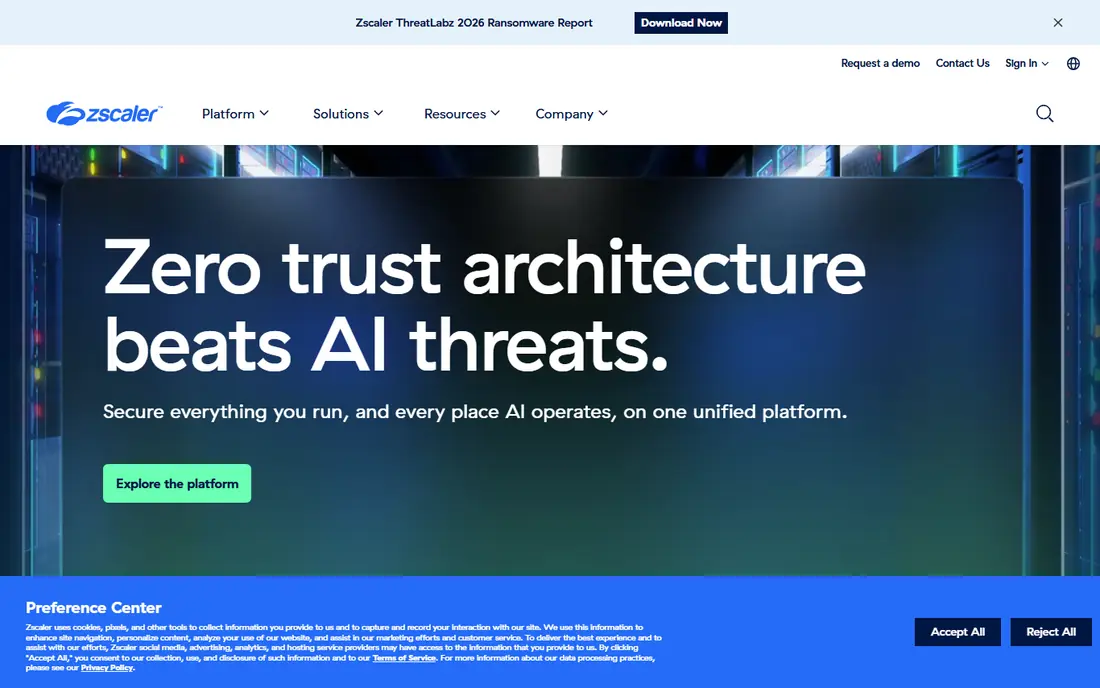
Zscaler is the name most enterprise buyers hear first for SASE, and scale is the reason. Its Zero Trust Exchange connects each user only to the apps they are authorized to reach, rather than placing them on a network the way a VPN does. Zscaler Private Access covers private apps, Zscaler Internet Access covers web security, and data loss prevention, cloud access security broker and browser isolation features sit on the same architecture.
The trade-offs are price and complexity. Pricing is quote-based and trends toward the high end, full capability requires several modules that add cost, and administration rewards teams willing to invest time in learning the platform. For a large enterprise committed to a zero trust model, Zscaler offers the deepest tested deployment history in this list, and it deserves a proof of concept slot for most large SASE buys.
- Large global cloud footprint
- Zero trust design that keeps users off the network
- Deep web and private access coverage
- Quote-based pricing that trends high
- Full capability needs multiple modules
- Admin learning curve
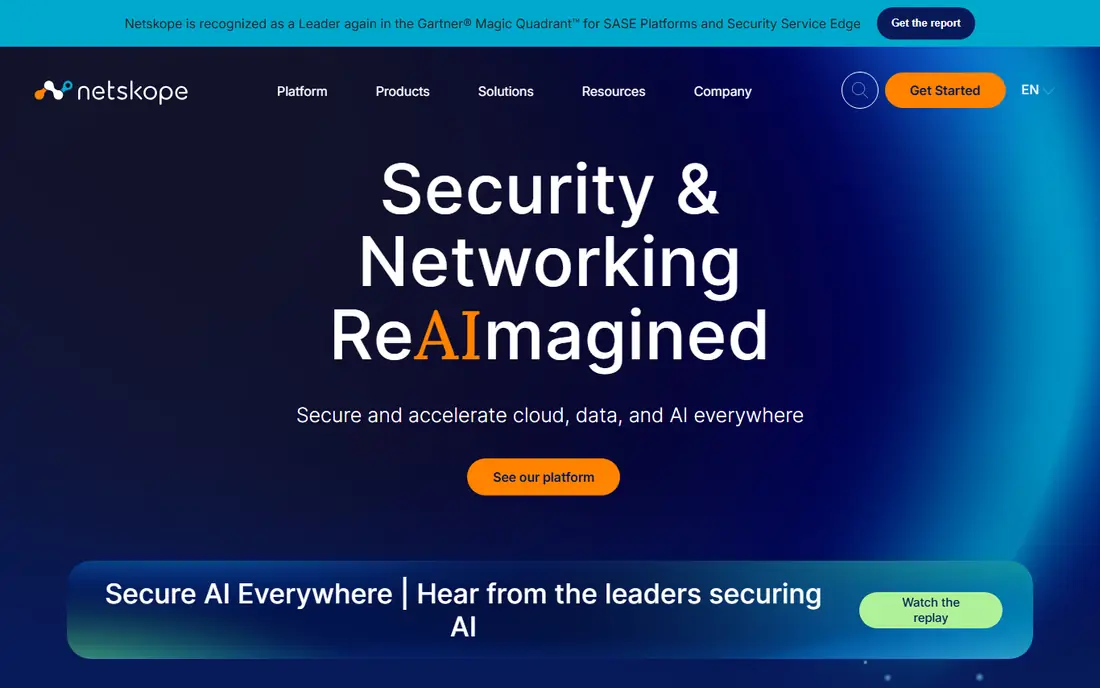
Netskope started as a cloud access security broker, and that history still shapes its strength: seeing what users do inside SaaS apps, telling personal and corporate accounts apart, and applying data loss prevention to data leaving through cloud and AI apps. Netskope One adds zero trust access, web security and native SD-WAN, so branches and remote users can run on one platform. Analyst coverage in 2026 places Netskope among the leaders for security service edge.
For a team whose main risk is data leaving through SaaS, Netskope is often the strongest fit, even against larger rivals. Pricing is quote-based, and the platform depth can lengthen evaluation for a smaller team that only needs basic web security and VPN replacement. Test data policies with your real SaaS apps in a proof of concept, since policy quality matters more than a feature list here.
- Deep SaaS and data controls from its CASB roots
- Strong data loss prevention
- Native SD-WAN in its platform
- Quote-based enterprise pricing
- Depth can mean a longer evaluation for smaller teams
Palo Alto Networks Prisma SASE
Great for: Palo Alto customers consolidating security
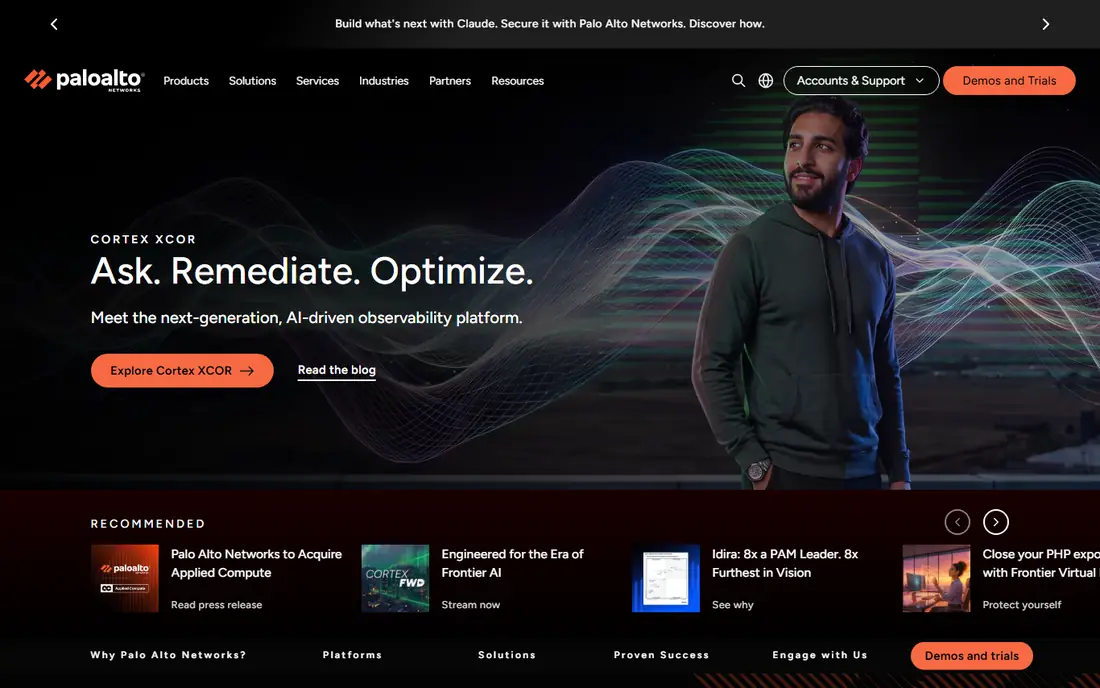
Prisma SASE, from Palo Alto Networks, suits a large enterprise that already runs Palo Alto firewalls and wants one vendor across network and cloud security. The platform combines zero trust access, web security, cloud access security broker, firewall as a service and SD-WAN, with deep inspection and threat prevention drawn from Palo Alto security research. Policy consistency between on-premises firewalls and cloud-delivered security is the main gain for an existing Palo Alto shop.
Pricing structure is complex relative to rivals, according to analyst commentary, and the platform needs a skilled team to run well. An organization without Palo Alto investments still gains deep inspection, but it pays the same implementation complexity without the policy-consistency benefit. For a Palo Alto shop, Prisma SASE is the default shortlist pick. For others, it still deserves evaluation against Zscaler and Netskope.
- Deep inspection and threat prevention
- SD-WAN and security in one platform
- Policy consistency with Palo Alto firewalls
- Quote-based pricing with a complex structure
- Needs a skilled network and security team
Cato Networks suits a mid-size to large enterprise that wants to replace MPLS and branch security appliances with one cloud service. SD-WAN, web security, cloud access security broker, zero trust access and threat prevention run as one service on a private backbone, managed from a single console. That simplicity helps a lean IT team that cannot staff separate network and security platforms, and branch rollout can move faster than a multi-vendor design.
Specialist security teams may find tuning less fine-grained than Palo Alto, and pricing is quote-based, so total cost needs a formal quote. For a lean team that values one vendor, one console and one backbone over deep custom policy work, Cato is a strong alternative to the largest SASE vendors.
- Fully cloud-native single-vendor platform
- Private backbone for branches
- Single console for network and security
- Quote-based pricing
- Less fine-grained tuning than Palo Alto for specialist security teams
FortiSASE suits an organization already invested in Fortinet firewalls, switches and endpoint tools that wants to extend that estate to cloud-delivered security. The platform covers secure web gateway, cloud access security broker, zero trust access, firewall as a service and SD-WAN, with policy and threat information shared across the Fortinet Security Fabric. Hybrid flexibility helps a team that keeps some on-premises security while moving remote and branch users to the cloud.
As with other vendor-led SASE options, the best value comes with existing investment. A team with no Fortinet estate can still evaluate FortiSASE, but it should compare admin effort and total cost against Zscaler, Netskope and Cato on equal terms. For a Fortinet shop, FortiSASE offers a coherent path to SASE without replacing the whole security stack.
- Ties into the Fortinet Security Fabric
- Web, CASB, zero trust and SD-WAN coverage
- Hybrid flexibility for existing Fortinet estates
- Quote-based pricing
- Best value is tied to existing Fortinet investment
Cisco Secure Access suits a Cisco networking customer that wants cloud-delivered security without leaving the Cisco ecosystem. The service covers zero trust access, web security and device posture checks, with policy that can reflect device health and user identity. For a team running Cisco switches, routers and SD-WAN, Secure Access adds security controls that fit existing network design and admin skills.
Pricing for larger deployments is sales-led, and the free or trial position varies by offer, so we list the free plan as No and advise confirming trial terms in a quote. A non-Cisco shop may find a vendor-neutral platform simpler to evaluate. For a Cisco-centric team, Secure Access is the natural SASE step, and it should be tested with real branch and remote-user traffic.
- Cloud-delivered security tied to Cisco networking
- Zero trust access and device posture checks
- Broad Cisco ecosystem fit
- Pricing and tier details are sales-led for larger deployments
- Evaluation needs Cisco networking context
Cloudflare One is the transparent-pricing pick in this list, and the only platform here with a published free tier for up to 50 users and a published per-user starting price. A small or mid-size team can start quickly, test zero trust access and web security, and compare results against a larger vendor without a sales process. That speed makes Cloudflare One a useful first proof of concept, even for a team that later buys an enterprise platform.
Enterprise depth is the honest limit. Cloudflare has a smaller large-enterprise SASE customer base than Zscaler or Palo Alto, and advanced data protection and CASB depth vary by tier. For teams under roughly 1,000 seats that do not need full CASB and data loss prevention depth, Cloudflare One often offers the best balance of price, speed and capability in this list.
- Published per-user pricing
- Free tier for up to 50 users
- Fast to start without a sales call
- Enterprise depth and large-enterprise customer base are smaller than Zscaler or Palo Alto
- Advanced data controls vary by tier
Versa suits service providers and enterprises that want deployment flexibility, with SASE delivered as a cloud service, as software, or through a managed service provider. The platform covers SD-WAN, web security, cloud access security broker, zero trust access and firewall as a service, with policy that can span branches, remote users and cloud workloads. That flexibility helps a provider that sells managed SASE, and an enterprise with mixed deployment rules.
Lower brand recognition among enterprise buyers can mean a longer internal case for Versa, and pricing is quote-based. A buyer should test Versa with the same branch and remote-user cases used for Zscaler or Cato, rather than judging it on market share alone. For flexible deployment and managed-service use, Versa is a credible platform to include in a shortlist.
- Flexible deployment across cloud, on-premises and service-provider models
- SD-WAN and security in one platform
- Strong for managed service use
- Quote-based pricing
- Brand recognition is lower than the largest SASE vendors among enterprise buyers
Check Point Harmony SASE suits a small to mid-size team that wants consolidated remote access and edge security from a vendor it may already know for endpoint or firewall products. The platform covers zero trust access, secure web gateway, firewall as a service and endpoint integrations, with deployment designed to be easier than a large enterprise SASE rollout. That balance helps a lean team that needs solid security without a long, specialist-led project.
Scale is the limit. Harmony SASE trails Zscaler, Netskope and Palo Alto in enterprise scale and analyst placement, and pricing is quote-based. For a mid-size team that values unified Check Point security and simpler deployment, Harmony SASE is a practical option, and it should be compared on live latency and policy effort, not on feature count alone.
- Unified security stack with endpoint integration
- Easy deployment for mid-size teams
- Zero trust, web and firewall coverage
- Quote-based pricing
- Enterprise scale and analyst placement trail the largest SASE leaders
How we picked these
We compared official product pages, documentation, analyst coverage and public reviews for SASE platforms operating in October 2026. We favored platforms that cover zero trust access, web security and SD-WAN or branch networking, with real enterprise or mid-market deployments. We left out VPN-only products and point tools that cover only one SASE building block, and we listed pricing as See website where vendors publish no public per-seat price.
How to run a SASE proof of concept
Start with your hardest traffic, not your easiest office. Include a branch with poor connectivity, remote users on home networks, a SaaS app with sensitive data, and a legacy private app that cannot move to the cloud. Measure latency, login success, data policy behavior and admin time for each vendor, using the same cases for every platform, so results compare fairly.
Next, model total cost at your real user count and contract length. Ask each vendor for pricing that includes users, bandwidth, modules, support and any per-connection or data charges, and check renewal terms before signing. Finally, plan migration in phases: pilot, branch rollout, remote-user rollout, then VPN retirement, with rollback steps for each phase. A phased plan with clear success measures beats a rushed cutover that leaves users locked out of a critical app.
Frequently asked questions
What does SASE stand for, and how is it different from a VPN?
SASE stands for secure access service edge. Unlike a traditional VPN, which routes traffic back through a central corporate network, SASE applies security policy at cloud points of presence close to the user, combining SD-WAN, zero trust access, web security, cloud access security and firewall controls in one cloud service.
Do I still need a firewall or VPN with SASE?
Many organizations retire most VPN use after SASE rollout, but some legacy apps, site-to-site flows or regulated systems may still need firewall or VPN controls during migration. Test those flows in a proof of concept before retiring any existing control.
How long does a SASE migration take?
Phased enterprise rollouts are often measured in months, not weeks, from pilot to full VPN retirement. Initial technical deployment can move faster than the full organizational rollout, which includes legacy app fixes, policy tuning and user training.
Is there a free way to try SASE before buying?
Cloudflare One offers a published free tier for up to 50 users in this list, while larger enterprise platforms usually require a sales conversation or sponsored proof of concept. Use the free tier to test basic zero trust access, then run a paid proof of concept for data and branch cases.
Which SASE platform is best for a small team?
Cloudflare One often suits smaller teams for transparent pricing and fast start, while Check Point Harmony SASE and Cato Networks suit mid-size teams that want more unified control. Large enterprise platforms can still fit a small team, but cost and admin effort should be weighed carefully.
Sources
See where you really rank - block by block
ProMapRanker scans Google Maps across a grid of your service area. Simple monthly plans from $19, white-label on every plan.
Start freeKeep reading
 worlds best local seo company
8 Worlds Best Local SEO Companies for Map Pack Growth in 2026
Compare the worlds best local seo company options for Google Business Profile work, citations, reviews, and multi-location rankings and reporting in 2026.
Read → world's best web hosting company
World's Best Web Hosting Company in 2026
Searching for the world's best web hosting company? We compared 10 hosts on price, renewal rates, speed, and support to help you choose well today in 2026.
Read → who's got the best nanny tax services
Who's Got the Best Nanny Tax Services in 2026
We answer who's got the best nanny tax services, comparing full filing, back taxes, software, and pricing so families can handle nanny taxes correctly.
Read →