 ProMapRanker
Best Search Visibility Software in 2026


all-in-one SEO and AI search tracking · Pricing starts at: $139.95 per month
Key takeaways
- Semrush and Ahrefs lead for broad coverage, and both now track brand presence in AI search results alongside classic rankings.
- Google Search Console remains the only free source of real clicks and impressions for your own site, so pair it with any paid tool you choose.
- Budget picks such as Mangools, Ubersuggest, and SpyFu cover keyword research and rank tracking well for a single site or a small portfolio.
- Entry prices rise fast with extra projects, tracked keywords, and users, so check limits before you commit to an annual plan.
- If AI visibility is the main job, shortlist Semrush and Ahrefs first, because several cheaper tools still lack that tracking.
Quick comparison
| Pick | Great for | Pricing starts at | Free tier | |
|---|---|---|---|---|
| Semrush | all-in-one SEO and AI search tracking | $139.95 per month | Free trial | Visit |
 Ahrefs | backlink and competitor research | $29 per month | Yes | Visit |
 Moz Pro | beginner friendly SEO fundamentals | $49 per month | Free trial | Visit |
 SE Ranking | agencies and client reporting | $129 per month | Free trial | Visit |
 Mangools | simple keyword research for bloggers | $49 per month | Free trial | Visit |
 Ubersuggest | low cost tracking for small sites | $29 per month | Yes | Visit |
 SpyFu | competitor keywords and paid search research | $39 per month | No | Visit |
 Serpstat | affordable all-in-one research | $50 per month | Free trial | Visit |
 Google Search Console | real performance data for your own site | Free | Yes | Visit |
The best search visibility software
Search visibility now means more than a blue link ranking. We compared tools that track classic rankings, show who links to you, and, where available, show how a brand appears in AI answers. The picks below cover solo site owners, small teams, and agencies.
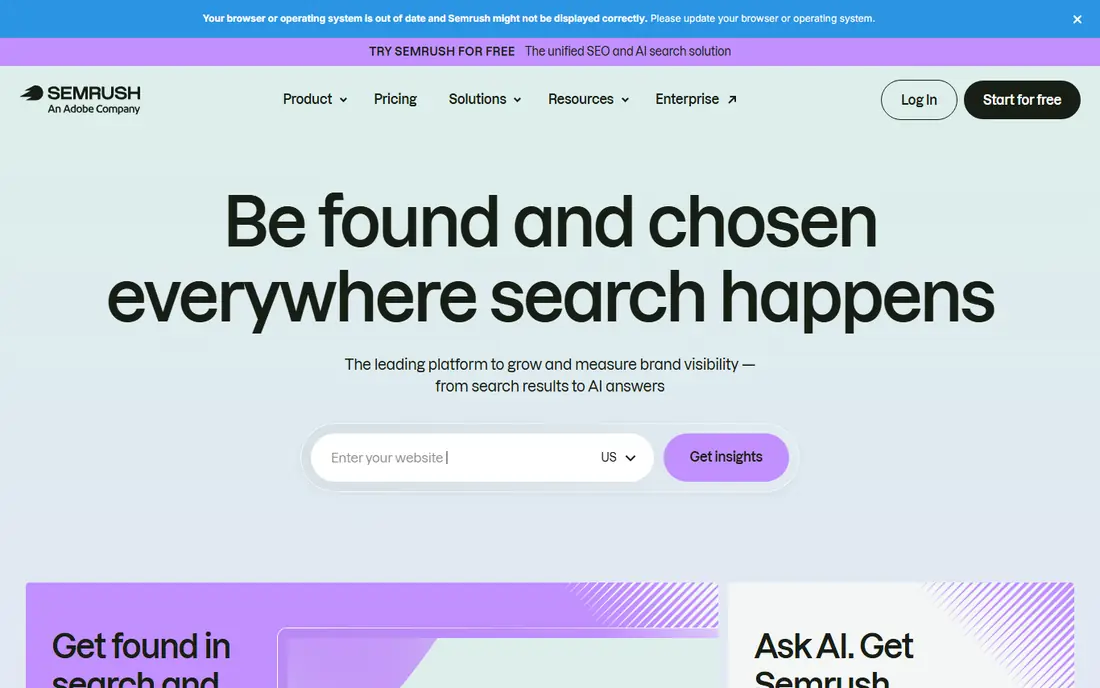
Semrush suits teams that run SEO, content, and paid search from one login. Keyword research, site audits, rank tracking, backlink analysis, and competitor paid search data sit in the same workspace, which cuts down on switching between tools. The newer AI visibility features add tracking across ChatGPT, Gemini, Perplexity, and Google AI Overviews, a useful extra as more answers come from AI summaries. The catch is cost and complexity. A business tracking one website and doing keyword research once a week may use only part of the platform. If that sounds familiar, a cheaper tool below will cover the core work. Semrush earns its price when several channels, several sites, or several clients are in play at once.
- Very broad keyword, audit, and competitor data
- AI search visibility tracking on newer plans
- Strong reporting for teams
- Entry price is high for one site
- Project and keyword limits can force an upgrade
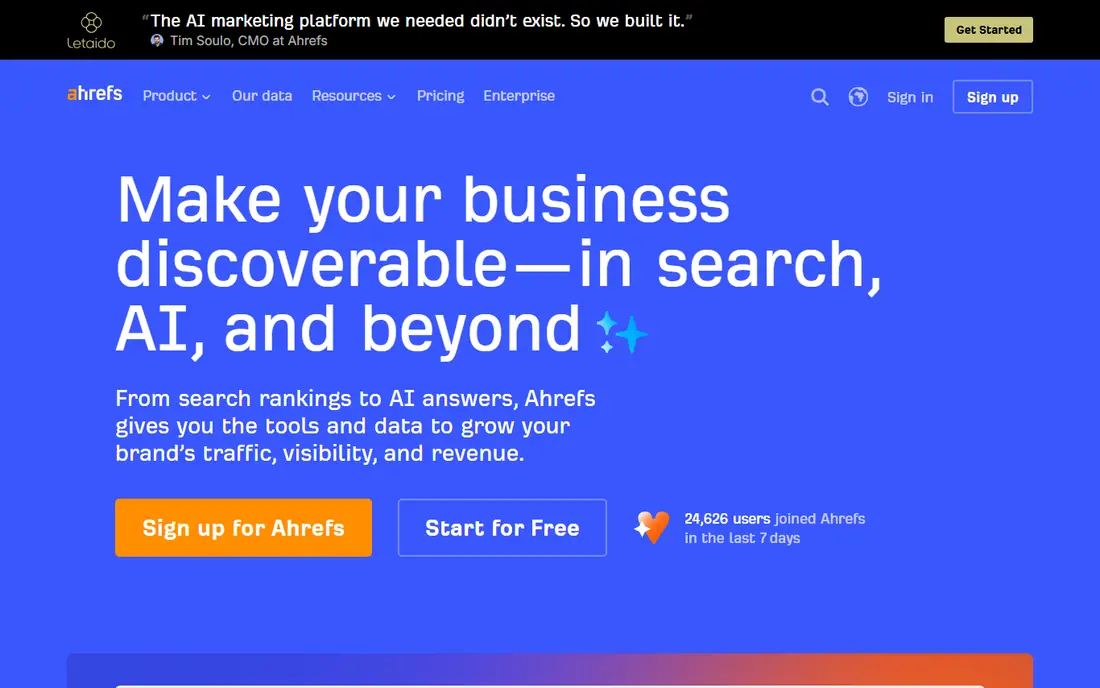
Ahrefs is the tool many SEOs open first when they want to know why a competitor ranks. Its backlink index and content gap views make it easy to see which pages earn links, which keywords rivals target, and where a site has room to grow. Brand Radar adds AI search monitoring, so teams can watch brand mentions and sentiment across AI platforms without buying a separate product. Starter at $29 per month is a limited entry point, and the fuller Lite plan costs more. That matters for buyers who expect the full research depth at the headline price. For link building and competitor work, though, few tools match the depth here, and the free Webmaster Tools tier gives site owners a useful starting point.
- Large backlink and keyword datasets
- Brand Radar for AI search mentions
- Clear competitor teardown workflows
- Main plans start higher than the Starter tier
- Rank refresh timing varies by plan
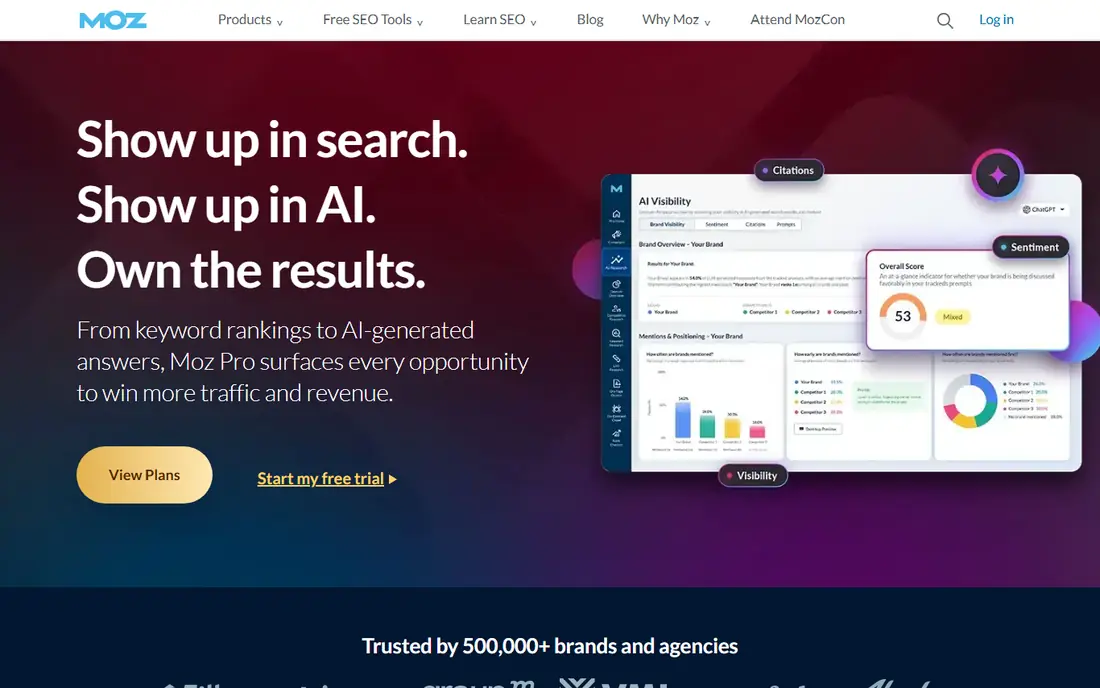
Moz Pro fits small teams that want solid SEO data without a steep learning curve. Keyword research, rank tracking, site audits, and link data are presented in plain language, and the training material helps newcomers understand what each metric means. Domain Authority remains a widely quoted shorthand, even though it is a third party score rather than a Google ranking factor. The trade-off is scope. Moz does not match Semrush or Ahrefs on AI visibility depth or on the sheer size of some datasets. Lower tiers also cap campaigns and tracked keywords. For a team that values guidance and clarity over maximum data, that balance often works well.
- Easy to learn interface
- Long established authority metrics
- Helpful learning resources for new SEOs
- Campaign and keyword limits on lower tiers
- Some related Moz products are priced separately
SE Ranking has grown into a strong agency choice because reporting is built in from the start. Daily tracking, site audits, backlink checks, and AI search prompt tracking can feed client reports without exporting data to another tool. White label options let agencies present results under their own brand, which saves time on monthly reporting. Buyers should read the plan limits closely. Projects, tracked keywords, and AI prompt allowances differ by tier, and a busy agency can hit them sooner than expected. For freelancers and small agencies with a defined client list, the combination of tracking and reporting at this price is hard to beat.
- Daily rank tracking with AI prompt tracking
- White label reporting for clients
- Good value for agencies
- Lower plans limit projects and AI checks
- Interface takes time to learn
Mangools is built around one idea, which is that keyword research should be quick. KWFinder surfaces keyword difficulty, search volume, and competing pages in a view that a blogger can read in seconds. SERPChecker and SERPWatcher add competitor and tracking views without turning the product into a complex suite. That focus is also its limit. Site audits are basic compared with Semrush or SE Ranking, and heavy technical work will need another tool. For writers and small site owners whose main question is what to write next and whether it ranks, Mangools keeps the workflow short and the price in reach.
- Clean and fast keyword tool
- Easy rank tracking
- Lower learning curve than full suites
- Technical auditing is limited
- Lower tier rank updates are weekly
Ubersuggest works best for a solo owner with one or two sites who checks rankings a few times a month. The free version covers basic keyword ideas and a limited audit, which is enough to spot obvious problems. Paid plans add more tracked keywords, more site audits, and AI related features on some tiers, without the price jump of a full suite. Serious competitor research will expose the gaps. Backlink data and historical trends are thinner, and weekly rank refreshes on lower tiers mean short term moves take longer to show. As a budget starting point, though, it is a sensible first paid tool.
- Low entry price
- Free limited version for occasional checks
- Simple site audit and keyword ideas
- Rank checks are less frequent on entry tiers
- Data depth is thinner than the leaders
SpyFu answers a different question from most tools on this list. Instead of starting with your own site, it starts with competitors, showing the keywords they rank for, the ads they have run, and how that mix has changed over time. That history helps a small team find gaps and estimate what rivals spend on paid search. It is less complete as a sole SEO suite. Site auditing and AI visibility tracking are not its strengths, and the Basic plan updates ranks weekly. Pair SpyFu with Google Search Console for your own performance data, and use it mainly where competitor insight drives the content and paid plan.
- Strong competitor keyword history
- Useful Google Ads research
- Unlimited searches on paid plans
- No AI brand monitoring on the Basic plan
- Rank refresh is weekly on Basic
Serpstat packs keyword research, rank tracking, site audits, and backlink checks into one platform at a price below Semrush and Ahrefs. For a small team that wants a single subscription rather than several single purpose tools, that breadth matters. The interface covers the standard SEO workflow without demanding a large monthly budget. Limits deserve attention. The entry plan excludes JavaScript rendering and API access, and tracking activity consumes checks, so large keyword lists need planning. Buyers who manage those limits will find a capable all-in-one tool, while very large portfolios may still prefer a leader.
- Broad research, tracking, and audit tools at a mid range price
- Useful for smaller budgets
- Entry plan excludes some advanced features
- Tracking consumes checks that need managing
Every site owner should set up Google Search Console, whatever else they buy. It is the only tool on this list that shows real search queries, clicks, impressions, and click through rates for your own pages, plus indexing and mobile usability problems flagged by Google itself. No paid estimate can replace that record. Its limits are clear. Search Console does not show competitor rankings, backlink profiles, or keyword difficulty for terms you do not already rank for. Treat it as the ground truth for your own site, and use a paid tool from this list for research, tracking, and competitor work.
- Free and direct from Google
- Shows real clicks, impressions, and indexing issues
- Pairs with every paid tool
- Only covers your own verified sites
- No competitor keyword or backlink research
How we picked these
We compared official feature pages, pricing pages, app and platform listings, privacy policies, and public reviews for tools that track search visibility in October 2026. We looked for classic rank tracking, keyword research, site audits, backlink data, and, where offered, AI search visibility tracking. We favoured tools with clear pricing, a working free tier or trial, and a track record of serving site owners and agencies. We did not claim hands-on testing for this list. Prices and limits change, so check the vendor pricing page before you buy, and treat third party scores as estimates rather than exact Google data.
What to check before you pay
Match the tool to the job
Start with the question you ask most often. If it is what to write next, a keyword led tool such as Mangools or Ubersuggest may be enough. If it is why a competitor outranks you, Ahrefs or SpyFu will answer faster. If it is how clients or stakeholders see progress, SE Ranking reporting will save hours each month.
Count keywords, projects, and users
Headline prices hide limits. Count the sites you track, the keywords per site, and the people who need access, then match that total to a plan. A cheap plan that forces an upgrade in month two costs more than a mid tier plan chosen correctly at the start.
Keep Search Console in the mix
Paid tools estimate visibility. Search Console reports what actually happened on your own site. Connect it wherever a tool allows, and use its query data to check whether paid estimates line up with real clicks.
Test AI tracking on your own brand
AI visibility features vary a lot. Some tools track prompts daily, others weekly, and some track brand mentions rather than specific prompts. Run a trial with your own brand terms and a few competitor names, and judge the output on accuracy before you pay for a year.
Frequently asked questions
What is the best search visibility software for a small business?
For most small businesses, Semrush or Moz Pro covers the core work, with Google Search Console added for free real data. If budget is tight, Mangools or Ubersuggest covers keyword research and tracking for one site at a lower price. The best choice depends on how many sites you track and whether AI search tracking matters to you.
What are the best search visibility tools for AI search?
Semrush and Ahrefs currently offer the most developed AI visibility tracking, covering major AI platforms and brand mentions. SE Ranking also offers AI prompt tracking, which suits agencies that want SEO and AI tracking in one plan. Cheaper tools may add this later, so check the current feature page before you buy.
What is the best tool for search visibility on a budget?
Mangools and Ubersuggest are strong budget options for keyword research and basic tracking. Ubersuggest has a free limited version, while Mangools offers a trial and a clean interface for bloggers. Both trade data depth for price, so they suit single site owners better than large agencies.
Is Google Search Console enough on its own?
Search Console is enough for monitoring your own site performance, indexing, and real queries, and it costs nothing. It is not enough for competitor research, keyword difficulty, or backlink analysis. Most site owners pair it with one paid tool for research and tracking.
How often should rank tracking update?
Daily tracking suits agencies and competitive niches where positions move fast. Weekly tracking is fine for small sites with stable rankings and a slower content pace. Check the refresh rate on the plan you choose, because entry tiers on several tools update weekly rather than daily.
Do I need a separate tool for backlinks?
If link building is a core activity, a tool with a large backlink index such as Ahrefs or Semrush is worth the cost. If you rarely build links, a general suite with basic backlink checks plus Search Console may be enough. Choose based on how often link data changes your decisions.
Sources
See where you really rank - block by block
ProMapRanker scans Google Maps across a grid of your service area. Simple monthly plans from $19, white-label on every plan.
Start freeKeep reading
 zendesk alternatives
Best Zendesk Alternatives in 2026
Compare the best Zendesk alternatives in 2026, from budget help desks to AI-first support tools, with current pricing, free plans, and honest trade-offs.
Read → wordpress alternatives
Best WordPress Alternatives in 2026
Looking for the best WordPress alternatives? We compare 8 free and paid options for blogs, business sites, stores, and developer-led projects in 2026.
Read → which real estate company has the best training
Best Real Estate Company Training in 2026
Compare which real estate company has the best training, from Keller Williams and eXp to Compass and Coldwell Banker, by program, mentor, and fit in 2026.
Read →