 ProMapRanker
Best SDR Software Definition in 2026

Key takeaways
- SDR stands for sales development representative: a role focused on finding, contacting, and qualifying prospects before passing them to account executives.
- SDR software is the set of tools that helps that role: prospect data, outreach sequences, dialling, email, social touches, and pipeline tracking.
- Apollo is our pick for small teams that want data plus outreach in one tool at a clear price.
- Outreach and Salesloft suit larger teams that need enterprise sequences, coaching, and Salesforce integration.
- No single tool covers the whole SDR job well: most teams combine a data tool, an outreach tool, and a CRM.
Quick comparison
| Pick | Great for | Pricing starts at | Free tier | |
|---|---|---|---|---|
 Outreach | Enterprise sequences | See website | No | Visit |
 Salesloft | Enterprise engagement | See website | No | Visit |
 Apollo.io | Data plus outreach | Free | Yes | Visit |
 ZoomInfo | Enterprise prospect data | See website | No | Visit |
 HubSpot Sales Hub | CRM plus sequences | Free | Yes | Visit |
 Reply.io | Multichannel outreach | $49 per user per month | Free trial | Visit |
 Lemlist | Personalised cold email | $55 per month | No | Visit |
 Cognism | Compliant B2B data | See website | No | Visit |
The best SDR software
SDR software helps sales development representatives do three jobs: find the right prospects, contact them across email, phone, and social channels, and qualify interest before handing a meeting to an account executive. The best stack depends on team size, data needs, and CRM. We compared the leading tools on those jobs, on price transparency, and on how well they fit into a real SDR workflow.
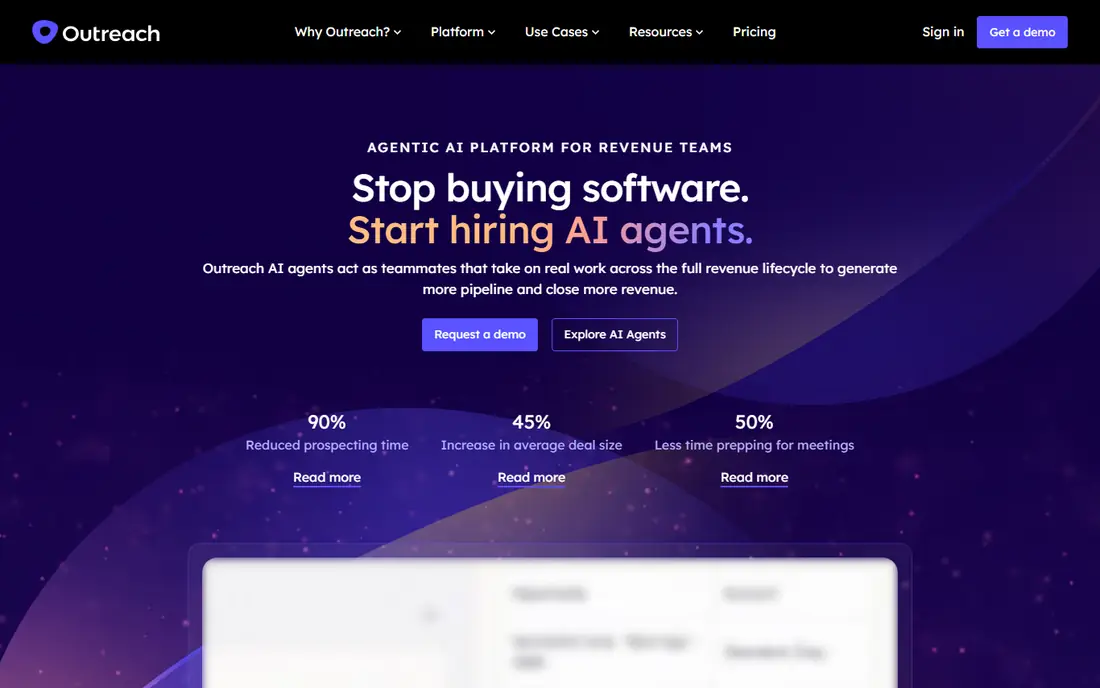
Outreach is the enterprise standard for sales engagement. SDRs build multi-channel sequences that combine email, phone, and social touches, with tasks, reminders, and reply handling in one workspace. Managers get reporting on sequence performance, rep activity, and pipeline, plus AI tools that summarise calls and suggest next steps. Salesforce integration is deep, which matters for teams that run their pipeline in Salesforce.
The downside is access. Outreach does not publish a starting price, and contracts are usually annual and enterprise-sized. Setup and training also take time, especially for teams that need custom sequences and reporting. For a larger SDR team with a clear outbound motion and Salesforce at the centre, Outreach is a leading choice. For a small team, a self-serve tool will be faster and cheaper.
- Multi-channel sequences at scale
- AI insights and coaching tools
- Deep Salesforce integration
- Pricing not published
- Enterprise setup takes time
- Smaller teams may find it heavy
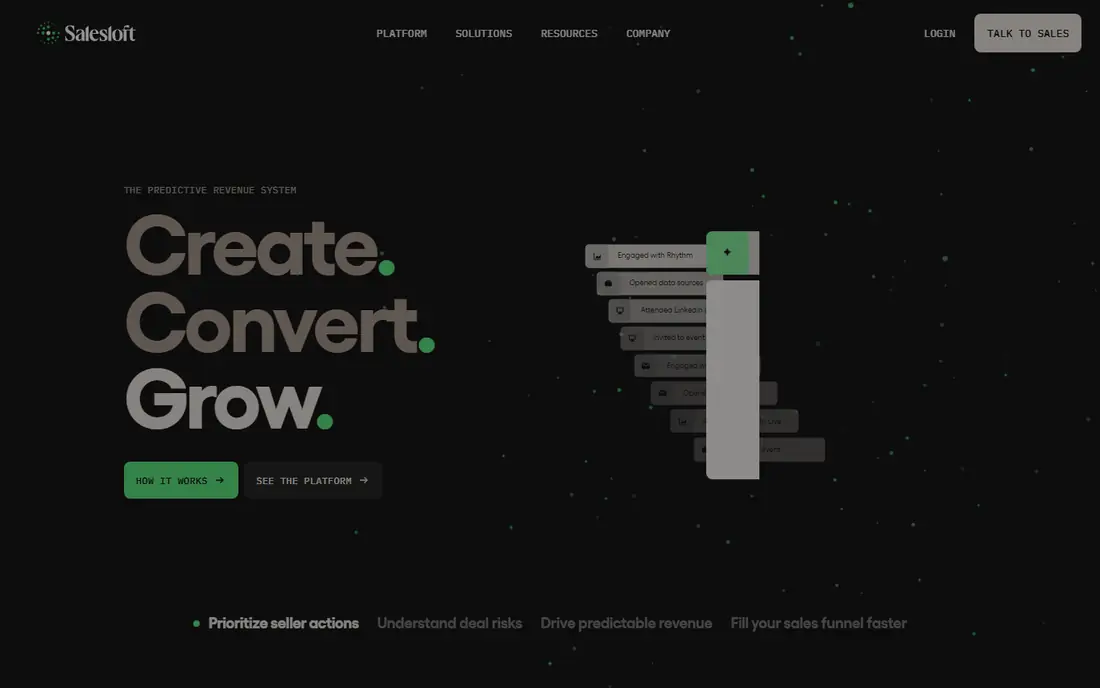
Salesloft is Outreach's main enterprise rival, and it covers a similar job: cadences across email, phone, and social, with a built-in dialler, conversation intelligence, and analytics. Its Rhythm AI tools help reps prioritise accounts and next steps based on signals, which can help a busy SDR focus on the prospects most likely to respond. Like Outreach, it integrates closely with Salesforce and other CRMs.
The limits are also similar: no published price, annual contracts, and extra costs for dialler and advanced features. Teams should get a full quote that includes seats, dialler, and any AI add-ons, rather than comparing a headline seat figure alone. For an enterprise SDR team that wants strong coaching and conversation tools alongside sequences, Salesloft is a strong contender.
- Strong cadences and dialler
- Conversation intelligence
- Rhythm AI for prioritisation
- Pricing not published
- Annual contracts common
- Dialler and extras add cost
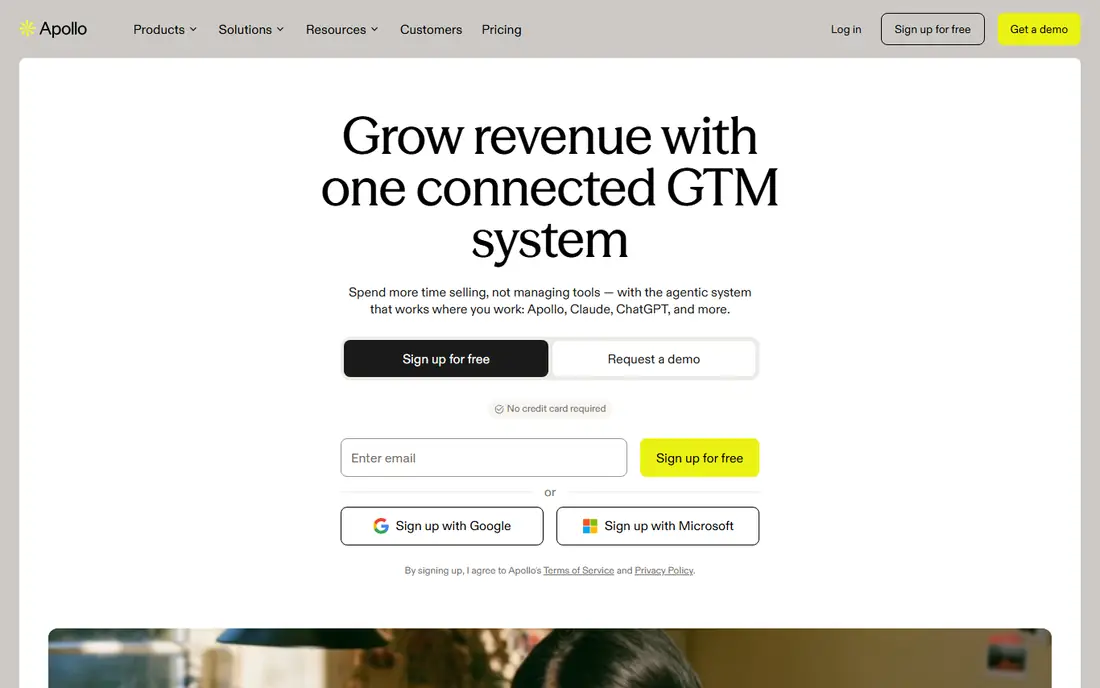
Apollo is the best all-in-one starting point for small and mid-size SDR teams. It combines a large B2B prospect database with email sequences, dialling, and CRM sync, so a small team does not need separate data and outreach tools. The free tier lets a solo SDR test prospecting and sequencing, and paid tiers add more credits, sequences, and integrations at published prices.
The trade-off is data quality. No database is perfect, and Apollo records vary in accuracy, so reps should verify key contacts before a high-value outreach. Credit limits also apply, and overage charges can add up if a team burns through credits quickly. For a lean team that wants data plus outreach in one place at a clear price, Apollo is our first pick.
- Prospect database plus sequences in one tool
- Free tier for small teams
- Clear paid pricing
- Data accuracy varies by record
- Credit limits apply
- Support depth below enterprise rivals
ZoomInfo is the enterprise data layer for many SDR teams. Its database covers companies and contacts at scale, with intent signals, technographics, and enrichment tools that help reps prioritise accounts. It integrates with Salesforce, Outreach, Salesloft, and other SDR tools, so it often sits underneath a sequencer rather than replacing one. For a large team that needs broad coverage and intent data, ZoomInfo is a powerful foundation.
The downside is cost and transparency. ZoomInfo does not publish a starting price, and contracts are often large and annual. Data freshness also varies, so reps should still verify key details for high-value accounts. For an enterprise team with a data budget and a separate outreach tool, ZoomInfo is worth evaluating. For a small team, Apollo or a smaller data tool will be far cheaper.
- Large B2B database
- Intent signals and enrichment
- Strong Salesforce integration
- Pricing not published and often high
- Annual contracts
- Data freshness varies by record
HubSpot Sales Hub is the best choice for teams already on HubSpot, and a good starting CRM for new SDR teams. The free tier covers contacts, deals, and basic email tools, while paid tiers add sequences, email tracking, meeting scheduling, and reporting. Because sales, marketing, and service data share one CRM, handoffs from SDR to account executive are cleaner than with separate tools.
The limit is prospect data. HubSpot does not include a large built-in prospect database, so teams still need a data tool such as Apollo or ZoomInfo for fresh contacts. Advanced sequence features also need paid tiers. For a HubSpot team that wants CRM plus sequences in one system, Sales Hub is a natural fit. For a team that needs data and outreach together, pair it with a data tool.
- Free CRM for small teams
- Sequences and email tracking
- Marketing and service data in one place
- Advanced sequences need paid tiers
- Prospect data is limited without add-ons
- Reporting depth grows with tier
Reply.io is a multichannel outreach tool for small and mid-size SDR teams. Sequences can combine email, LinkedIn touches, calls, and SMS, with AI help for drafting and handling replies. Pricing is published and monthly, which makes it easier to start and scale than an enterprise contract. That flexibility suits agencies, startups, and small SDR teams that want to test outbound quickly.
The trade-off is data. Reply.io includes some prospect finding tools, but it does not match Apollo or ZoomInfo for database depth, so many teams pair it with a separate data source. Deliverability also needs care: teams must set up domains, authentication, and warmup properly, as with any cold email tool. For a team that wants flexible multichannel sequences at a clear price, Reply.io is a strong option.
- Email, LinkedIn, calls, and SMS in sequences
- AI assistant for replies
- Clear pricing
- Data tools are lighter than Apollo or ZoomInfo
- Higher tiers needed for full features
- Deliverability needs care
Lemlist focuses on personalised cold outreach, especially email and LinkedIn, with tools for custom images, videos, and dynamic personalisation. Its deliverability tools, including email warmup and inbox placement checks, help small teams protect sender reputation. Setup is simple, and pricing is published, which makes Lemlist easy to try for a small SDR team or a founder doing outbound personally.
The limits are scale and scope. Lemlist is less suited to very large enterprise teams that need deep Salesforce workflows, coaching, and conversation intelligence, and its phone dialling is more limited than Salesloft or Outreach. Data tools are also basic, so teams need a separate prospect source. For a small team that wants personalised email outreach with good deliverability tools, Lemlist is a good pick.
- Personalised email and LinkedIn outreach
- Deliverability tools
- Simple setup for small teams
- Less suited to large enterprise teams
- Phone dialling is limited
- Data tools are basic
Cognism is a B2B data provider with a strong focus on compliance, especially for European markets. It offers contact and company data, phone numbers, intent signals, and enrichment tools, with controls designed to help teams meet GDPR requirements. That compliance focus matters for SDR teams prospecting in Europe, where data rules are stricter than in some other regions.
The downside is price transparency and scope. Cognism does not publish a starting price, and it is a data layer rather than a full outreach platform, so teams still need a sequencer such as Outreach, Salesloft, Apollo, or Reply.io. For a European-focused SDR team that needs compliant, high-quality data, Cognism is a strong choice. For a team that wants data plus outreach in one tool, Apollo is simpler.
- B2B contact and company data
- Compliance focus for Europe
- Intent and enrichment tools
- Pricing not published
- Annual contracts common
- Best as a data layer, not a sequencer
How we picked these
We compared official pricing and product pages, prospect data coverage, sequence and dialling tools, and CRM integrations for SDR tools live in October 2026. We defined SDR software broadly, as the tools that support the sales development role, rather than only sequencers, because most SDR teams need data, outreach, and CRM together. We did not claim hands-on testing, and where pricing was unpublished we wrote See website rather than presenting third-party estimates as vendor prices. Tools that had closed, that were only general CRMs without SDR sequencing, or that lacked a current product page were left out.
How to build an SDR stack that works
Start with the CRM, because it holds your pipeline and handoff records. Add one data source that covers your target market well, and one outreach tool that supports the channels your buyers actually use. Test data accuracy on a sample of your ideal accounts before buying a large contract, and check email deliverability setup, including domain authentication, warmup, and unsubscribe handling, before any cold outreach.
Keep sequences short, personal, and relevant. A good SDR sequence offers value, asks a clear question, and stops when a prospect replies or opts out. Track reply rate, meeting rate, and show rate, not only send volume, because high volume with low replies damages sender reputation and wastes rep time. Review sequences weekly at first, remove steps that never get replies, and coach reps on call quality as well as email copy.
A note on Clay and enrichment
Many SDR teams add Clay as an enrichment layer on top of a data tool and a sequencer. Clay pulls data from many sources, enriches prospect lists, and builds targeted lists for outreach, starting at around 149 dollars per month. It is not a sequencer or a CRM by itself, so it works best as a companion tool for teams that already have Outreach, Salesloft, Apollo, or Reply.io in place and want richer lists.
Frequently asked questions
What does SDR stand for?
SDR stands for sales development representative. An SDR finds and qualifies prospects, books meetings, and passes qualified opportunities to account executives who close deals.
What is SDR software?
SDR software is the set of tools that supports that role: prospect databases, enrichment tools, email and phone sequences, diallers, social outreach, and CRM tracking. Most teams use more than one tool together.
Do I need separate data and outreach tools?
Not always. Apollo combines data and outreach in one tool, which suits small teams. Larger teams often use a dedicated data tool such as ZoomInfo or Cognism plus a dedicated outreach tool such as Outreach or Salesloft for deeper features.
How much does SDR software cost?
It ranges from free tiers on Apollo and HubSpot to quote-based enterprise contracts on Outreach, Salesloft, ZoomInfo, and Cognism. Add data credits, dialler costs, and CRM seats for a true total.
Is cold email legal?
Cold business email is regulated, and rules vary by country and region, including GDPR in Europe and CAN-SPAM in the US. Use verified business contacts, include an unsubscribe option, honour opt-outs promptly, and seek legal advice for your market if you are unsure.
How do SDRs measure success?
Common measures are reply rate, positive reply rate, meetings booked, meetings held, and pipeline created. Send volume alone is a poor measure, because it rewards activity over results and can harm deliverability.
Sources
See where you really rank - block by block
ProMapRanker scans Google Maps across a grid of your service area. Simple monthly plans from $19, white-label on every plan.
Start freeKeep reading
 zoro.to alternatives
Best Zoro.to Alternatives in 2026
We compare the best zoro.to alternatives in 2026, listing only legal licensed anime streaming services, from Crunchyroll to free options for fans today.
Read → zip alternatives
Best Zip Alternatives in 2026
We compare the best zip alternatives for buy now, pay later in 2026, covering pay-in-4 plans, fees, spending limits, and credit reporting options today.
Read → yesware alternatives
Best Yesware Alternatives in 2026
Compare the best yesware alternatives for sales email tracking, templates, and sequences, with current pricing and honest tradeoffs for small sales teams.
Read →