 ProMapRanker
Best SCM Software in 2026


SAP-centered planning · Pricing starts at: See website
Key takeaways
- SCM software splits into planning, which decides what to make and stock, and execution, which runs warehouses, orders, and transport.
- Most enterprise suites are quote-based, so compare modules, users, data work, and implementation separately from license price.
- Kinaxis, o9, and Blue Yonder lead on planning depth, while Manhattan leads on warehouse and order execution.
- Our pick for SAP-centered teams is SAP Integrated Business Planning, and for Oracle-centered teams it is Oracle SCM Cloud, with a phased rollout in both cases.
Quick comparison
| Pick | Great for | Pricing starts at | Free tier | |
|---|---|---|---|---|
| SAP Integrated Business Planning | SAP-centered planning | See website | No | Visit |
 Oracle SCM Cloud | Oracle-centered suites | See website | No | Visit |
 Blue Yonder | Retail planning and fulfillment | See website | No | Visit |
 Kinaxis Maestro | Concurrent planning | See website | No | Visit |
 o9 Solutions | AI planning and digital twin | See website | No | Visit |
 Manhattan Active Supply Chain | Warehouse and order execution | See website | No | Visit |
 Infor SCM | Manufacturing and distribution suites | See website | No | Visit |
 E2open | Network visibility and collaboration | See website | No | Visit |
 Logility | Demand and inventory planning | See website | No | Visit |
The best scm software
We compared official product pages and public buyer guides, focusing on planning depth, execution coverage, and implementation effort. All enterprise suites here are quote-based, so prices are listed as See website and the buying guide explains what to ask in a quote.
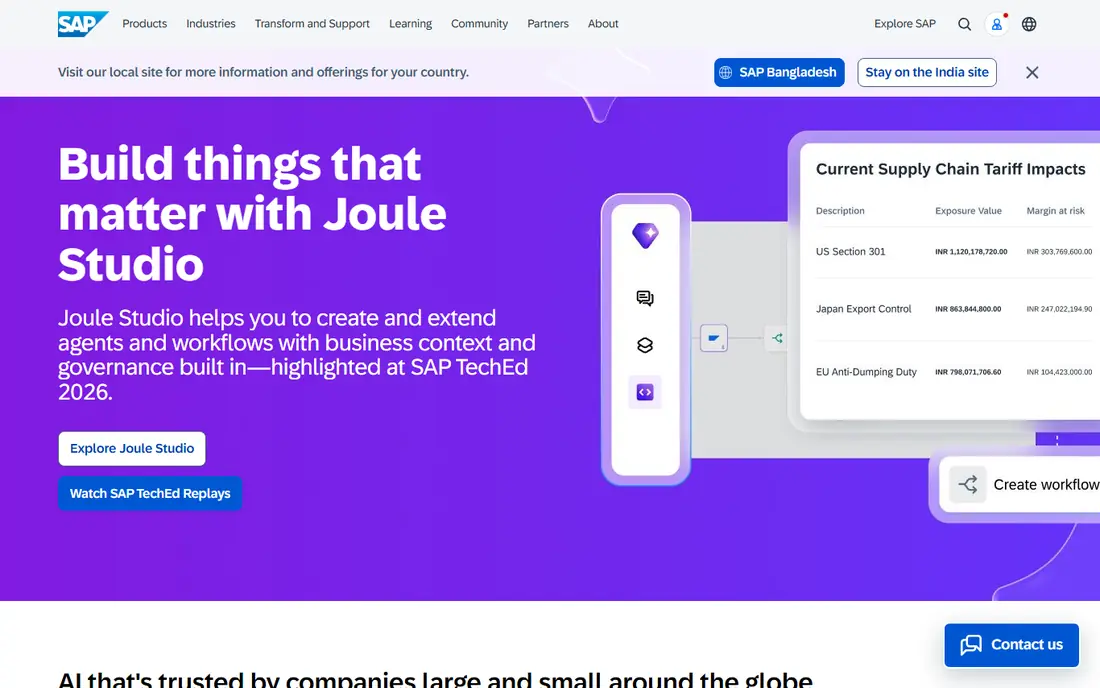
SAP Integrated Business Planning, often called SAP IBP, is the planning layer for teams already running SAP. It covers demand planning, supply planning, inventory optimization, and sales and operations planning in a unified model, which helps planners test scenarios without stitching spreadsheets together. Its fit with S/4HANA data is a real advantage for SAP shops.
The trade-off is complexity and cost. Licensing is quoted by modules and users, and implementation needs SAP skills plus clean master data. Smaller teams without SAP may find a best-of-breed planner simpler. For SAP-centered supply chains, though, it is the most coherent planning choice.
- Native fit with SAP S/4HANA
- Demand, supply, and inventory planning in one model
- Scenario planning tools
- Quote-only pricing
- Implementation needs SAP expertise
- Licensing depends on modules and users
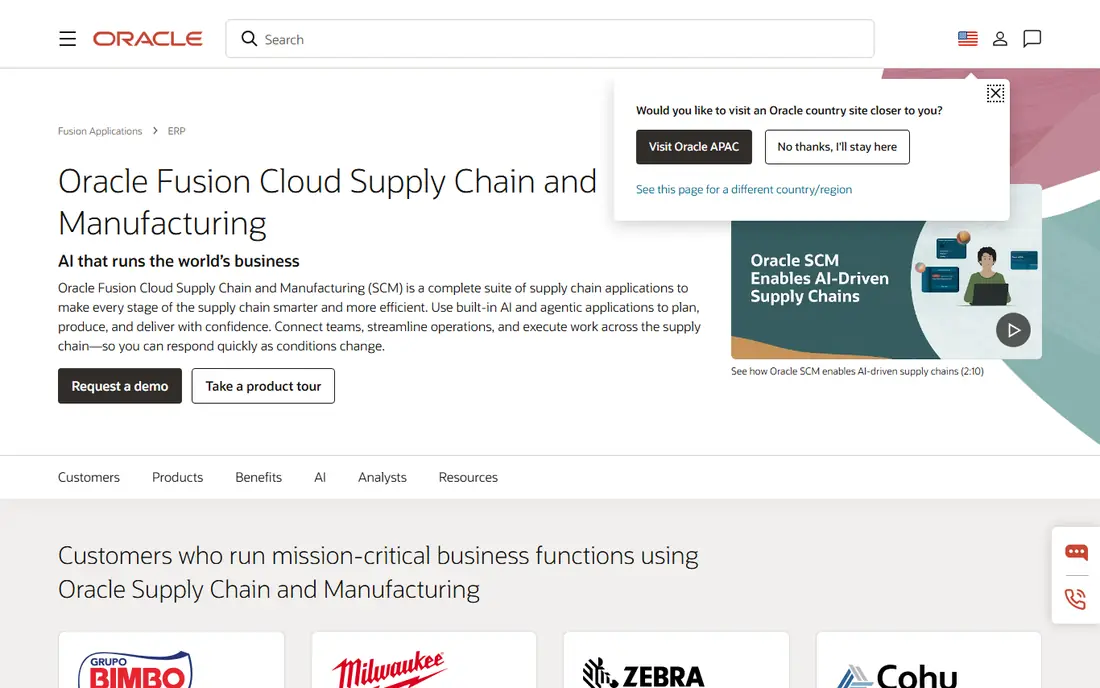
Oracle SCM Cloud covers procurement, inventory, order management, warehouse management, and transportation in one cloud suite. That breadth suits large enterprises that want planning and execution under one vendor, with global support for multiple currencies and languages. Its fit with Oracle ERP also simplifies data flow for Oracle shops.
Implementation can be long, and integration with non-Oracle systems needs specialist work. Users in public comparisons note a learning curve and limited reporting flexibility in some areas. If you already run Oracle, the suite story is strong. If not, compare a specialist planner plus a specialist execution tool.
- Broad suite from procurement to transport
- Native fit with Oracle ERP
- Global multi-currency and language support
- Quote-only pricing
- Integration work can be heavy
- Interface learning curve for new planners
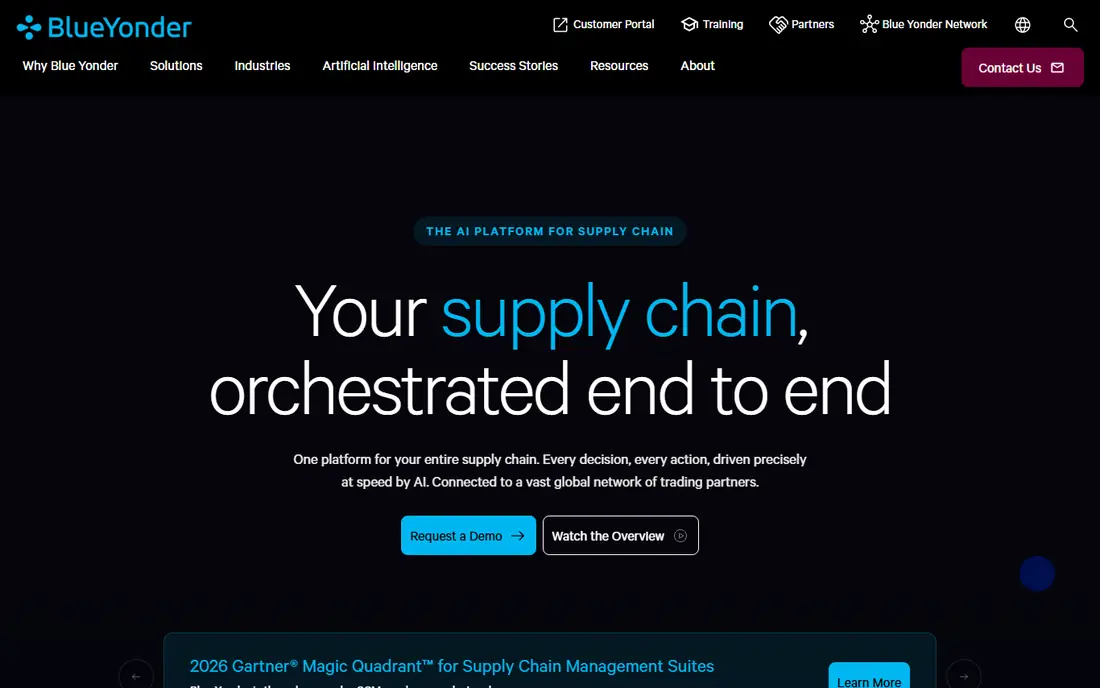
Blue Yonder, built on its Luminate Platform, is a strong pick for retail, consumer goods, and distribution teams that need demand planning tied to fulfillment. Its forecasting, assortment, and warehouse tools help teams link what customers will buy to what stores and warehouses should stock. Scenario modeling helps planners test disruptions before they hit.
The downside is implementation length and cost, with reviews noting a complex interface and a need for vendor support during rollout. Budget for that effort separately from licenses. For retail-style fulfillment at scale, its planning depth justifies the work.
- Strong retail and consumer goods planning
- Demand sensing and scenario tools
- Warehouse and transport options
- Quote-only pricing
- Lengthy implementation noted in reviews
- Interface can feel complex
Kinaxis Maestro, formerly RapidResponse, is built around concurrent planning, where demand, supply, and inventory plans update together rather than in separate steps. That design helps manufacturers answer disruption questions quickly, such as a supplier failure or a demand spike, without waiting for a batch planning run. Its scenario tools are a core strength.
It is a planning platform first, not a full warehouse and transport suite, so execution may need other tools. Model building also needs skilled planners and clean data. For manufacturers who live in scenarios, it is one of the best planning tools available.
- Concurrent planning across demand, supply, and inventory
- Fast scenario modeling
- Strong for manufacturing
- Quote-only pricing
- Model building needs skilled planners
- Smaller execution footprint than full suites
o9 Solutions offers an AI-powered planning platform built around a digital twin, which is a live model of suppliers, plants, inventory, lanes, and demand. Planners can run what-if scenarios on that model, test sourcing changes, and align commercial and supply plans. Its forecasting tools use machine learning to spot patterns in large data sets.
Like other enterprise planners, it needs data governance and implementation effort to reach full value. A digital twin is only as good as the data feeding it, so plan a data cleanup phase early. For large enterprises that want integrated planning with scenario depth, o9 is a strong contender.
- Digital twin modeling of the supply chain
- AI-assisted forecasting
- Integrated business planning
- Quote-only pricing
- Enterprise implementation effort
- Needs strong data governance
Manhattan Active Supply Chain leads on execution, especially warehouse management and order fulfillment. Its cloud-native design supports high-volume distribution, omnichannel orders, and complex warehouse flows, which matters for retailers and third-party logistics providers. Order and transport tools extend that execution story.
Planning is not its main strength compared with Kinaxis or o9, so teams that need deep forecasting may pair Manhattan execution with a specialist planner. Implementation still needs careful warehouse process design. For execution-led operations, it is the benchmark pick.
- Leading warehouse management
- Order management and transport options
- Cloud-native design
- Quote-only pricing
- Planning depth is narrower than specialist planners
- Implementation needs care
Infor SCM covers supply planning, warehouse management, transportation, and related execution tools, with industry editions tuned for manufacturing, distribution, and other sectors. That industry focus can shorten setup when the edition matches your processes, since workflows and data models are pre-tuned.
The breadth varies by edition, so check which modules your edition includes and which are add-ons. Implementation quality also varies by partner, so ask for reference customers in your industry. For mid-size to large manufacturers and distributors, Infor is a practical suite option.
- Industry-specific suites for manufacturing and distribution
- Planning, warehouse, and transport coverage
- Cloud options
- Quote-only pricing
- Product breadth varies by industry edition
- Implementation varies by partner
E2open is built around a multi-enterprise network, connecting buyers, suppliers, logistics providers, and other partners on one platform. That network view helps teams see orders, shipments, and inventory across partners, rather than only inside their own systems. Its planning and logistics tools build on that shared data.
The network only helps as much as your partners use it, so adoption planning matters. Pricing is quoted for most enterprise deals, though public guides note a lower entry tier in some cases. For supply chains with many external partners, its collaboration model is a distinct advantage.
- Multi-enterprise network visibility
- Supplier and partner collaboration
- Planning and logistics coverage
- Quote-only pricing for most deals
- Network value depends on partner adoption
Logility focuses on demand planning, inventory optimization, and supply planning, with tools that suit mid-size manufacturers, distributors, and retailers. Its focused scope can mean a faster rollout than a full suite, since you are not buying warehouse and transport modules you may not need. Inventory optimization helps teams balance service levels against stock costs.
Execution coverage is narrower than Oracle, Blue Yonder, or Manhattan, so warehouse-heavy teams will need other tools. Data work still matters, since forecasts depend on clean sales and inventory history. For planning-led teams, Logility is a focused and practical pick.
- Focused demand and inventory planning
- Supply planning tools
- Good for mid-size teams
- Quote-only pricing
- Execution coverage is narrower than full suites
- Implementation still needs data work
How we picked these
We compared planning depth, execution coverage, industry fit, and implementation effort, using vendor product pages and public buyer guides. We favored suites and specialists that are still offered in 2026 and that cover the core SCM areas: planning, procurement, inventory, warehousing, orders, and transport. We kept both suite vendors and planning specialists, since few teams need the same mix.
We did not claim hands-on testing. Our comparison rests on vendor documentation and public comparisons, not on a live deployment. Enterprise pricing is quoted, so treat any third-party price range as a rough guide only, and get a written vendor quote for your modules, users, and scope.
How to choose SCM software
Separate planning from execution
List whether your pain is forecasting and inventory, warehouse and order flow, transport, or all three. A planning specialist suits forecast pain, an execution suite suits warehouse pain, and a full suite suits teams that need both under one vendor. Buying a full suite for one problem often adds cost and time.
Ask for a quote breakdown
Ask what is included: licenses, modules, users, implementation, training, support, integrations, and renewal terms. Implementation often matches or exceeds first-year license cost on enterprise deals, so budget it separately. Ask for reference customers with a similar size, industry, and system mix.
Start with data and a pilot
Clean master data, sales history, and inventory records before rollout, and pilot one product family or one warehouse first. A pilot proves forecast accuracy, user adoption, and integration quality before a global rollout. Measure service levels, inventory, and planner time, not just go-live dates.
Frequently asked questions
What is the best SCM software?
The best SCM software depends on your need. SAP IBP and Oracle SCM Cloud lead for teams centered on those ERPs, Kinaxis and o9 lead on planning depth, and Manhattan leads on warehouse execution. Define whether planning or execution is your main gap before you shortlist.
What is the best supply planning software?
Kinaxis Maestro, o9 Solutions, and SAP Integrated Business Planning are strong supply planning picks, with Blue Yonder close behind for retail. Kinaxis excels at concurrent scenario planning, o9 at digital twin modeling, and SAP IBP at SAP-native planning. Test scenario speed on your own data.
How much does SCM software cost?
Enterprise SCM suites are quote-based, with annual costs that vary widely by modules, users, and scope. Public guides place many enterprise deals in the tens of thousands to millions per year, plus implementation. Get a written quote breakdown, and budget implementation separately.
What is the difference between SCM and ERP software?
ERP manages core business records such as finance, orders, and inventory transactions. SCM manages the flow of goods, including forecasting, sourcing, production planning, warehousing, and transport. Modern suites overlap, but SCM adds the planning and execution depth that ERP transaction systems lack.
How long does SCM implementation take?
Mid-size pilots can go live in months, while full enterprise rollouts often take nine to eighteen months, with global rollouts taking longer. Data migration, ERP integration, and change management drive the timeline more than software setup alone. Start data work early and phase the rollout.
Sources
See where you really rank - block by block
ProMapRanker scans Google Maps across a grid of your service area. Simple monthly plans from $19, white-label on every plan.
Start freeKeep reading
 zscaler alternatives
Best Zscaler Alternatives in 2026
Looking for zscaler alternatives? We compare 9 SASE and zero trust platforms on architecture, data protection, pricing, and fit for your network and team.
Read → zapier alternatives free
Best Zapier Alternatives Free in 2026
Nine automation tools for zapier alternatives free in 2026, all with genuinely free tiers, plus free plan limits, starting prices and upgrade paths explained.
Read → which platform is best for online reputation
Which Platform Is Best for Online Reputation in 2026
Wondering which platform is best for online reputation? We compare 8 review, listing, and response tools for small and multi-location businesses and agencies.
Read →