 ProMapRanker
Best Sales Performance Management Software in 2026


Flexible commission plans without code · Pricing starts at: See website
Key takeaways
- Most sales performance tools lead with commission calculation, while quota and territory planning vary far more between vendors.
- Salesforce Spiff and QuotaPath publish starting prices, while most enterprise platforms price by quote based on payees and plan complexity.
- Rep-facing visibility is a real dividing line: some tools show reps their earnings in real time, others keep that view with managers.
- No-code plan changes matter, since teams that depend on vendor help for every change move slower during a plan cycle.
- A trial or demo should test your hardest plan rule, not a simple flat commission, before you sign.
Quick comparison
| Pick | Great for | Pricing starts at | Free tier | |
|---|---|---|---|---|
| CaptivateIQ | Flexible commission plans without code | See website | No | Visit |
 Xactly | Large enterprises with strict compliance needs | See website | No | Visit |
 Varicent | Complex global compensation structures | See website | No | Visit |
 Salesforce Spiff | Salesforce-native commission visibility | $75 per user per month | No | Visit |
 Everstage | Fast time to value for mid-market teams | See website | No | Visit |
 Performio | Reliable commission tracking with clear audit trails | See website | No | Visit |
 QuotaPath | Small and growing teams leaving spreadsheets | $35 per user per month | Free trial | Visit |
 Forma.ai | AI-assisted incentive plan design | See website | No | Visit |
 Anaplan | Enterprise planning across sales and finance | See website | No | Visit |
The best sales performance management software
We compared platforms on commission flexibility, quota and territory coverage, rep visibility, and how much admin work your own team can do without vendor help.
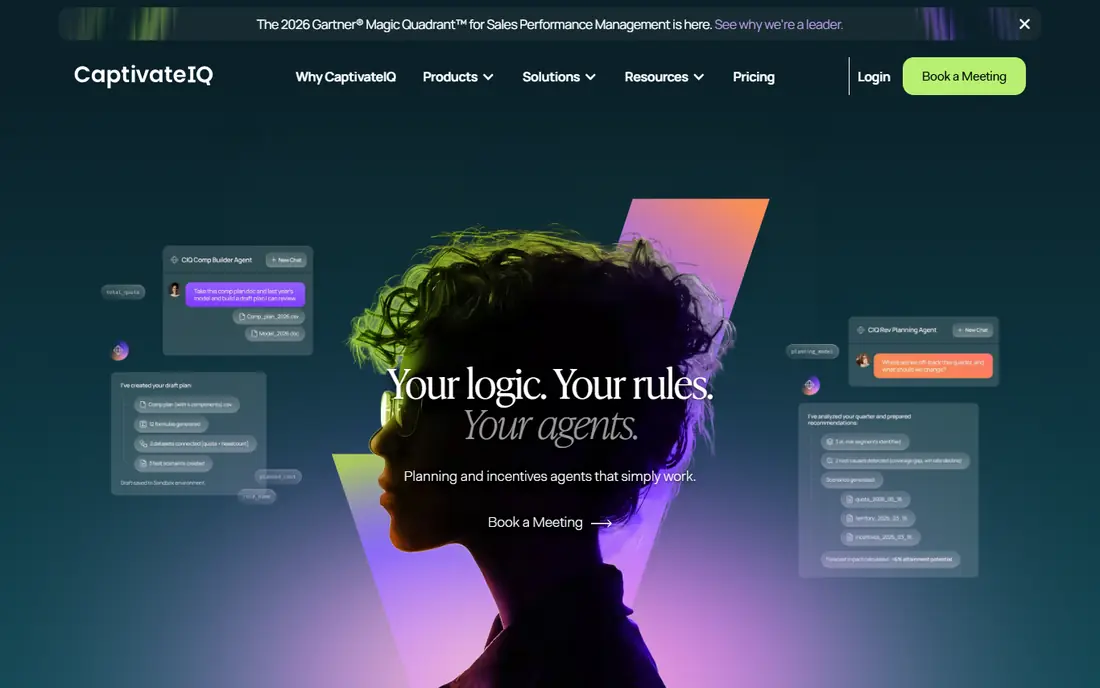
CaptivateIQ fits mid-market and enterprise teams that need flexible incentive compensation without handing every plan change to developers. Its commission engine uses a familiar spreadsheet-style approach, so compensation admins can build and adjust rules, test outcomes, and publish plans with less custom code. Reps get a clear view of earnings and attainment, which cuts down on the shadow spreadsheets and pay queries that eat up time at month end.
The platform also extends into territories, quotas, and planning, which helps teams that want one system for more of the sales performance job. Pricing is not published, so budget planning needs a quote based on payees, plan complexity, and integrations. For a team with layered plans and frequent changes, that flexibility is worth the sales conversation.
- Spreadsheet-like plan building
- Strong rep visibility
- Handles complex plans
- Pricing is quote based
- Enterprise depth can be more than a small team needs
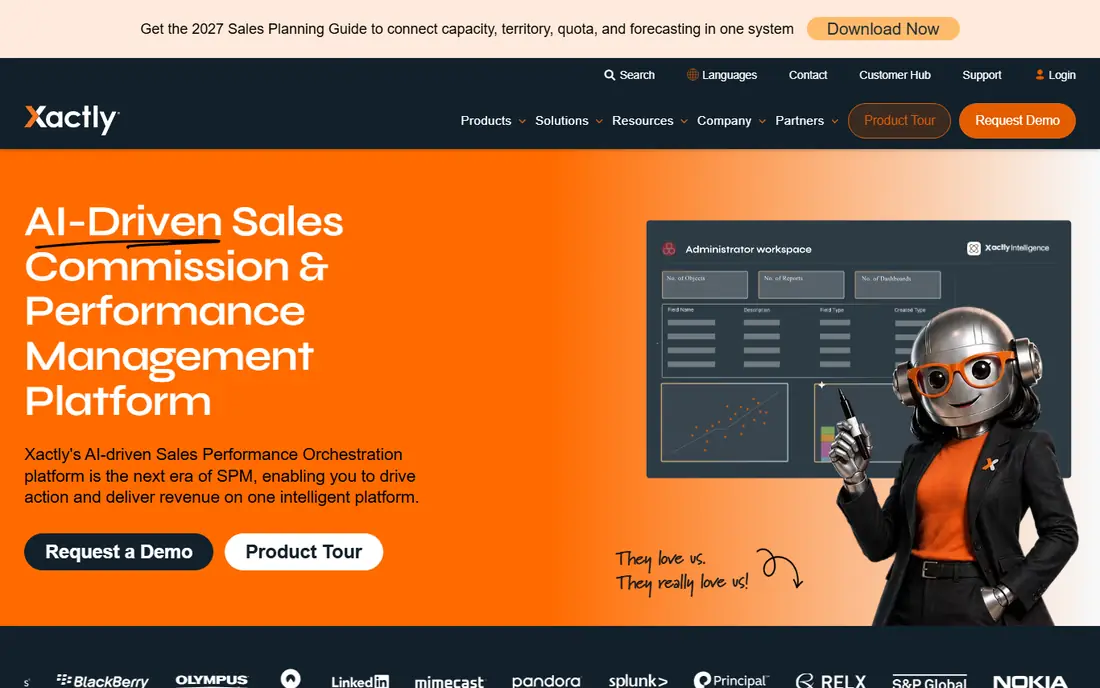
Xactly suits large enterprises that need a proven incentive compensation system with strict controls around pay calculation and audit. The platform handles complex, multi-layer plans and supports the reporting and compliance checks that finance teams expect when pay is tied to detailed rules. Its benchmark data also gives leaders a reference point when they review plan design against wider market practice.
The trade-off is admin effort. Plan changes often need a technical admin, and implementation can take longer than with newer, no-code tools. Smaller teams may find the depth unnecessary. For a large organisation where pay accuracy and audit trails matter more than speed of setup, Xactly remains a credible enterprise choice.
- Mature incentive engine
- Strong compliance and audit support
- Benchmark data
- Technical admin often needed
- Setup can be slower than newer rivals
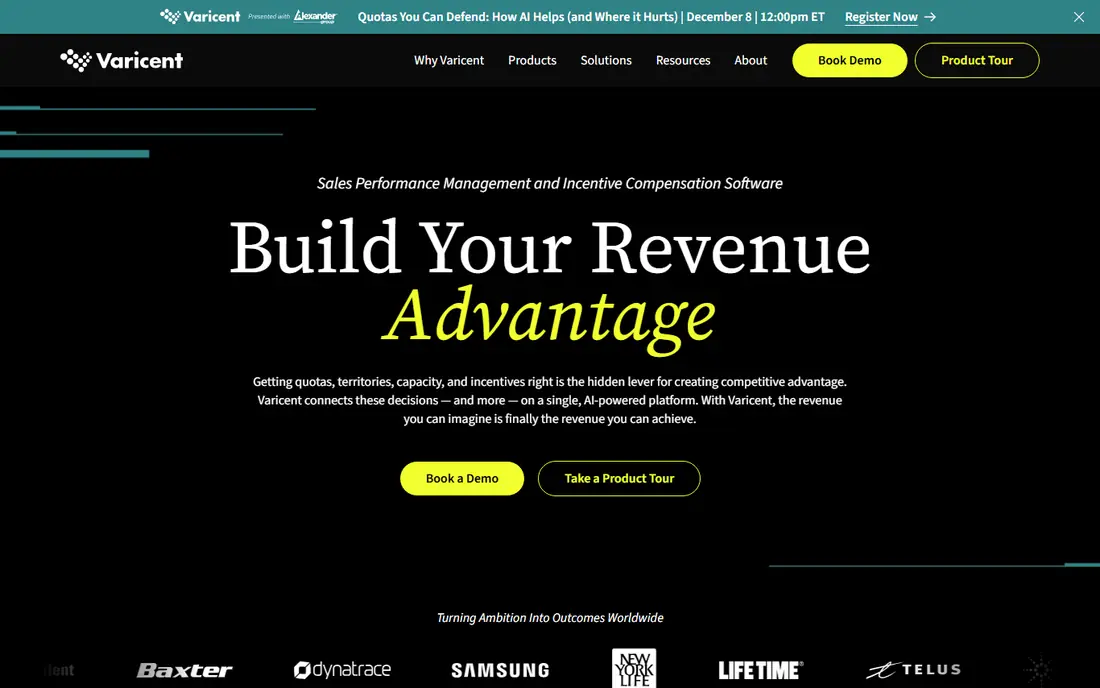
Varicent fits global organisations with highly complex compensation structures, multiple territories, and layered quota models. It brings territory, quota, and incentive compensation into one suite, so leaders can manage the full planning cycle without stitching together separate tools. Its analytics help teams test plan scenarios and review performance across regions, which matters when a single plan change affects many teams at once.
That power comes with admin cost. Configuration often needs technical skill, and the rep-facing experience is less polished than tools built around rep motivation. Varicent is best when the plan itself is the hard problem, and the team has the admin capacity to run a full suite properly.
- Deep customisation for complex plans
- Territory and quota coverage
- Strong analytics
- Technical admin often needed
- Rep-facing visibility is weaker than some rivals
Salesforce Spiff is the natural pick for teams already running sales on Salesforce. Commission data sits close to the deals and records reps already use, so reps can see what they have earned and what is still to close without waiting for a separate report. That visibility tends to reduce pay disputes and helps managers spot attainment gaps during the quarter, not after it ends.
The published starting price is $75 per user per month when billed annually, with extra connectors priced separately, so the total depends on your stack. Teams outside Salesforce can still use Spiff, but they will get less of the native benefit. For a Salesforce shop that wants commission clarity without a separate platform migration, Spiff is a straightforward choice.
- Real-time commission visibility
- Native Salesforce fit
- Published starting price
- Best value inside Salesforce
- Extra connectors cost more
Everstage suits mid-market teams that want to move off spreadsheets quickly and give reps a clear, motivating view of pay. Its no-code automation handles common commission structures without heavy technical work, and reps can track earnings and attainment in a dashboard built for them. That combination often shortens implementation compared with enterprise suites, which matters when the next pay run is already close.
The limit is that larger or more unusual plan changes may still need vendor assistance, so teams should test their hardest rule during evaluation. Pricing is quote based, so a demo should include a firm figure for your payee count and plan count. For a mid-market team that values speed and rep clarity, Everstage is a strong contender.
- No-code commission automation
- Strong rep visibility
- Fast implementation for many teams
- Pricing is quote based
- Material plan changes may need vendor help
Performio fits teams that need reliable commission tracking with a clear record of how each payment was calculated. Its component-based plan builder lets admins assemble plans from reusable parts, and the audit trail helps finance confirm results when a rep or auditor asks how a figure was reached. That reliability matters more than flashy features when pay accuracy is the top concern.
Performio is less of a full quota and territory suite than Varicent or Anaplan, so teams that need deep planning may pair it with other tools. Pricing is quote based. For a team whose main pain is accurate, explainable commission runs, Performio offers a calm, admin-friendly option.
- Component-based plan builder
- Strong audit trails
- Admin work without code for many plans
- Pricing is quote based
- Less focus on quota planning than full suites
QuotaPath is built for small and growing sales teams that have outgrown spreadsheets but do not need an enterprise suite. It automates commission calculations, shows reps their earnings and attainment, and publishes its pricing, with a Growth plan at $35 per user per month plus a monthly platform fee. That transparency makes budgeting easier than with quote-only rivals, and the learning curve is shorter for a small ops team.
Very complex, multi-layer enterprise plans may stretch QuotaPath, and the platform fee should be included in any cost comparison. For a team of ten to fifty reps with straightforward to moderately complex plans, QuotaPath gives a clear upgrade from manual tracking without enterprise overhead.
- Published pricing
- Simple commission automation
- Clear rep dashboards
- Platform fee on top of per-user price
- Less suited to very complex enterprise plans
Forma.ai fits enterprises that want help designing and optimising incentive plans, not just calculating them. It uses AI-assisted analysis to review plan effectiveness and suggest changes, and it operates as a managed service, so vendor experts stay involved in plan work. That model suits teams that want guidance on plan design and are comfortable letting the vendor carry part of the admin load.
The trade-off is control and cost. Pricing is quote based, and teams that want to change plans freely on their own may find the vendor-assisted model slower than a no-code tool. Forma.ai is best when plan design quality matters more than self-service speed, and the budget fits a managed enterprise service.
- AI-assisted plan optimisation
- Managed-service approach
- Strong enterprise focus
- Pricing is quote based
- Vendor-assisted by design, so self-service is limited
Anaplan suits enterprises that need sales performance planning connected to finance, operations, and wider business planning. Its modelling strength lets teams test quota scenarios, territory changes, and plan outcomes across the organisation, rather than treating sales planning as a standalone exercise. That connected view helps leaders see how a sales decision affects headcount, revenue, and cost in one model.
Anaplan is not primarily a rep-facing commission tool, so teams that need detailed rep dashboards may pair it with a commission specialist. Implementation also needs planning and skilled admins. For a large organisation where planning breadth matters most, Anaplan is a strong, if heavier, choice.
- Strong scenario modelling
- Connected planning across teams
- Enterprise scale
- Pricing is quote based
- Rep-facing commission views are weaker than specialists
How we picked these
We compared vendor feature and pricing pages with independent comparison guides, and we kept only platforms that are live in October 2026 and clearly cover incentive compensation or a wider sales performance job. We weighted commission flexibility, planning breadth, rep visibility, and how much plan work your own team can do without vendor help. Where a vendor does not publish a price, we wrote See website rather than repeating a third-party estimate as fact.
How to choose a sales performance platform
Start by naming the job you need done first. If commissions are the pain, test calculation accuracy and rep visibility with your hardest plan. If quotas are the pain, test territory carving and capacity modelling, since many commission tools treat quota as an afterthought. If governance is the pain, test audit trails, approval workflows, and who can change a plan once it is live.
Next, run a pilot with real data from one team and one pay cycle. Check how long a plan change takes, how reps react to the earnings view, and how finance validates the output. A tool that passes a slide demo but fails a real pay run will cost trust quickly. Price the pilot at your full payee count, including connectors and platform fees, so the first quote is not a surprise later.
Questions to ask on a demo
Ask who can change a plan, how long that change takes, and whether changes need vendor help. Ask how the tool handles splits, clawbacks, accelerators, and mid-quarter plan changes. Ask what reps see, when they see it, and how disputes are handled. Ask how data flows from your CRM and payroll system, and what happens when a deal changes after it was paid.
Frequently asked questions
What is the best sales performance management software for a mid-market team?
CaptivateIQ and Everstage both fit mid-market teams, with CaptivateIQ offering more plan flexibility and Everstage offering faster time to value for many teams. QuotaPath is a lower-cost step for smaller teams leaving spreadsheets. The right pick depends on plan complexity and how much admin help you want from the vendor.
What are the best sales performance management platforms for enterprises?
Xactly, Varicent, and Anaplan fit enterprises, with Xactly leading on compliance, Varicent on complex global plans, and Anaplan on connected planning. Salesforce Spiff fits enterprises already on Salesforce. Enterprise buyers should run a pilot on their hardest plan before committing.
What are the best sales performance management tools with published pricing?
Salesforce Spiff publishes a starting price of $75 per user per month when billed annually, and QuotaPath publishes a Growth price of $35 per user per month plus a platform fee. Most other platforms on this list price by quote, based on payees, plan complexity, and integrations. Always ask for a written quote at your exact payee count.
Do these tools show reps their commissions in real time?
Salesforce Spiff, CaptivateIQ, Everstage, and QuotaPath all emphasise rep-facing visibility, with reps able to track earnings and attainment without waiting for a manager report. Other platforms vary, and some keep detailed views with managers and finance. Test the rep view during a trial, since it drives trust in the whole system.
Can a small team use sales performance management software?
Yes, QuotaPath and Everstage both serve smaller teams, and QuotaPath offers a free trial for evaluation. A team with under ten reps and simple flat commissions may still be fine on spreadsheets, but once splits, tiers, or accelerators appear, a dedicated tool reduces errors and pay disputes.
Sources
See where you really rank - block by block
ProMapRanker scans Google Maps across a grid of your service area. Simple monthly plans from $19, white-label on every plan.
Start freeKeep reading
 zoho inventory alternatives
6 Alternatives to Zoho Inventory, Compared on Price and Fit
Zoho Inventory alternatives: 6 tools compared on price, free plans and fit. Katana leads the list for manufacturers. Fit and flaws are laid out for each entry.
Read → zoho crm alternatives
Best Zoho CRM Alternatives (2026)
Need Zoho CRM alternatives? We compare 7 tools on cost, free access and who each suits. Every pick gets a straight assessment. Built for quick decisions.
Read → zelle alternatives
Best Zelle Alternatives in 2026
Compare the best Zelle alternatives for sending money to friends, paying sellers and moving funds abroad, with honest notes on fees, speed and safety in 2026.
Read →