 ProMapRanker
Best Sales Coaching Software in 2026

Key takeaways
- Gong leads for coaching from real calls, while Mindtickle leads for structured onboarding, certification, and readiness at scale.
- Second Nature and Showpad are the strongest choices when AI role play and practice matter more than call scoring.
- Small teams can start far cheaper with Avoma or tl;dv, which publish entry prices while enterprise tools price by quote.
- Most enterprise tools in this list do not publish prices, so budget for a quote, implementation time, and a multi-year contract discussion.
Quick comparison
| Pick | Great for | Pricing starts at | Free tier | |
|---|---|---|---|---|
 Gong | Coaching from real calls | See website | No | Visit |
 Mindtickle | Onboarding and certification | See website | No | Visit |
 Allego | Video coaching at scale | See website | No | Visit |
 Showpad | Content plus coaching | See website | No | Visit |
 Second Nature | AI role play practice | See website | No | Visit |
 SalesHood | Mid-market enablement | See website | No | Visit |
 Avoma | Affordable conversation coaching | $19 per user per month | Free trial | Visit |
 tl;dv | Call recording and coaching | $18 per user per month | Yes | Visit |
 Jiminny | Small team call coaching | See website | Free trial | Visit |
The best sales coaching software
Sales coaching software records conversations, scores them against your playbook, or lets reps practice before a live call. The category spans enterprise revenue platforms, enablement suites, and lighter conversation tools. We compared official product pages and current 2026 comparisons, and we kept only tools that are live and clearly focused on coaching in October 2026.
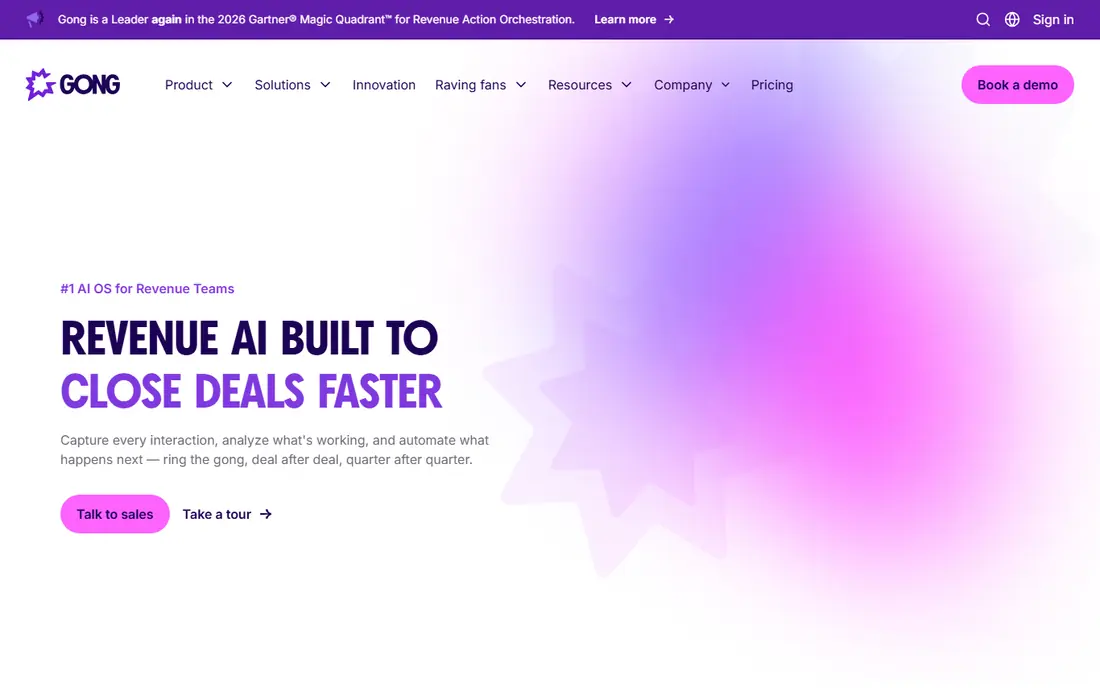
Gong records and analyzes sales conversations, then turns them into transcripts, summaries, and deal signals that managers can coach from. Instead of listening to full calls at random, a manager can jump to the moments that matter, such as pricing objections or competitor mentions, and use a scorecard tied to the team playbook. Its newer enablement features extend that coaching into content and guidance, but call intelligence remains the core.
The honest catch is price and scope. Gong does not publish pricing, third-party estimates place it in enterprise territory, and contracts are typically annual. Small teams will find it heavy, while larger teams with many reps and managers will get the most from its analytics. If your main problem is coaching from real customer conversations at scale, Gong is the benchmark other tools are measured against.
- Deep conversation intelligence
- Deal insights tied to calls
- Strong manager coaching workflows
- Quote-based enterprise pricing
- Implementation effort
- More than a small team needs
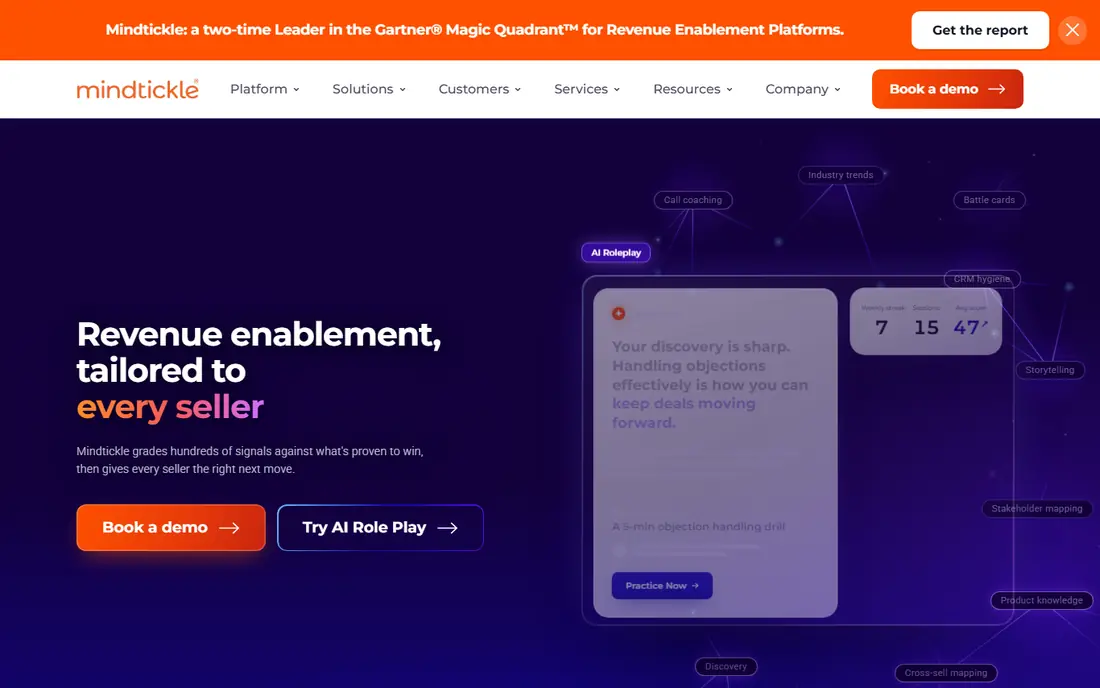
Mindtickle is built for teams that need to onboard, train, and certify a sales force in a consistent way. Managers can build learning paths, set readiness milestones, and use AI role play so reps practice objection handling before they face a customer. Scoring and certification give leaders a clear view of who is ready and who needs more practice, which matters most when headcount grows quickly.
That structure comes with a longer setup than a plug-and-play recorder. Expect a quote, an implementation period, and internal work to define your playbook and certification standards. For a company hiring in waves or selling a complex product, that investment pays back in consistent ramp times. For a team of five reps, a lighter tool will usually do.
- Structured readiness programs
- AI role play and scoring
- Certification at scale
- Quote-based pricing
- Setup takes weeks
- Heavier than a simple call recorder
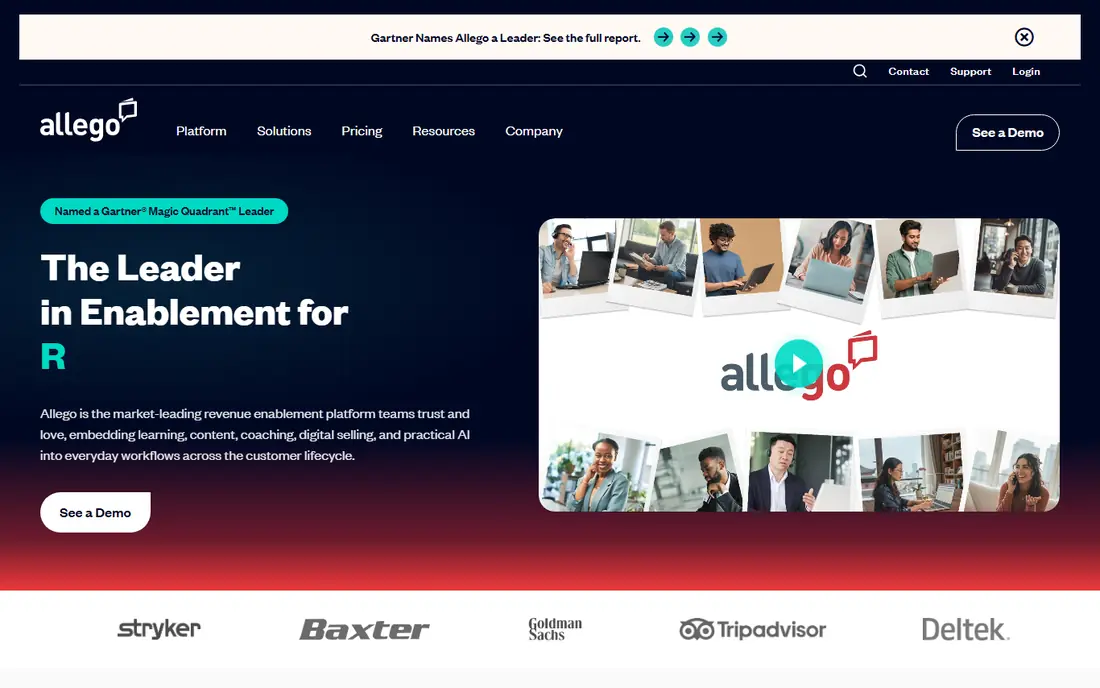
Allego centers coaching on video practice, content, and feedback, which suits large, distributed teams that cannot coach only through live shadowing. Reps record practice pitches, managers leave time-stamped feedback, and the best examples can be shared as learning content. That loop helps remote teams build a shared standard for how a pitch should sound.
Pricing is per user and quote-based, often on multiyear terms, so Allego is an enterprise purchase rather than a casual trial. Video practice also needs cultural buy-in: reps who dislike recording themselves will resist it at first. Teams that commit to video coaching, though, get a record of progress that call transcripts alone do not show.
- Video practice and feedback
- Content and coaching in one place
- Suits distributed teams
- Quote-based, often multiyear pricing
- Video-first approach needs rep buy-in
- Enterprise focus
Showpad combines sales content, training, and coaching, which helps field teams that present in person and need the right material at the right moment. Reps can find approved content, practice delivery, and receive coaching feedback inside the same platform, rather than switching between a content library and a separate training tool. That combination is its main advantage over a pure call recorder.
The platform is broad, so teams that only want call scoring may find it more than they need. Pricing is by quote, and getting value from the content side requires keeping the library current and well organized. For teams where content quality and presentation skill both matter, Showpad covers both jobs in one purchase.
- Sales content and coaching together
- Strong for field sales
- AI coaching support
- Quote-based pricing
- Broad platform can feel large
- Content setup takes effort
Second Nature lets reps practice with an AI buyer that plays a prospect, raises objections, and gives instant feedback. That matters because live calls are scarce practice: a rep may only handle a few tough objections per week, while an AI simulator can run the same scenario ten times in an afternoon. Managers can build scenarios around their actual products, competitors, and pricing objections.
AI practice complements, but does not replace, coaching from real calls. A simulator cannot fully capture a real buyer, and scenarios need care to stay realistic. Pair Second Nature with a call intelligence tool if you can, or use it as the practice layer inside a broader readiness program. For teams whose reps need repetition before live calls, it is one of the strongest tools here.
- Realistic AI buyer simulations
- Instant feedback on practice calls
- Repeatable practice at scale
- Quote-based pricing
- Practice is not a substitute for live-call coaching
- Needs scenario design
SalesHood aims at mid-market teams that want broad enablement coverage, including coaching, content, and readiness, without the overhead of a large enterprise suite. It is a practical middle option: more complete than a single-purpose recorder, but usually faster to adopt than the biggest platforms. Teams that need a bit of everything often find it a good fit.
The trade-off is depth in any single area. Its call analytics do not match Gong at scale, and its content tools do not match the largest enablement suites. Judge SalesHood on whether its breadth covers your actual gaps, and get a scoped quote before comparing it to cheaper single-purpose tools. For a growing mid-market team, that breadth is often the right call.
- Broad enablement coverage without enterprise overhead
- Coaching and content together
- Mid-market fit
- Quote-based pricing
- Less depth than Gong on call analytics
- Smaller ecosystem than top suites
Avoma is the budget-friendly entry point for teams that want conversation intelligence and coaching without enterprise pricing. Its Startup plan starts at $19 per user per month, and it covers recording, transcription, AI notes, and coaching workflows that help managers review calls efficiently. For a small or mid-size team, that price makes real-call coaching an easy first step.
Higher-tier coaching and analytics features sit on more expensive plans, so check which tier includes the scorecards and insights you need before buying. Avoma also lacks the enterprise depth of Gong or Mindtickle, but that is not the point: it gives a small team a working coaching system at a published price. If budget is the main constraint, start here.
- Published entry price
- Transcription and AI notes
- Coaching scorecards
- Coaching features vary by tier
- Smaller brand than Gong
- Advanced analytics cost more
tl;dv records meetings, produces AI summaries, and adds coaching features that help managers review sales calls without listening to every minute. Its free plan includes recordings, which makes it easy to try, and the Pro plan at $18 per seat per month billed annually adds deeper coaching and CRM updates. That combination suits single sales teams and growing companies that want a low-friction start.
Because tl;dv is a general meeting tool as well as a sales tool, its coaching features are not as sales-specific as Gong or Mindtickle at the top end. Enterprise pricing is custom or usage-based. For teams that want fast adoption, a free starting point, and solid AI call summaries, tl;dv is a strong, low-risk choice.
- Free plan with recordings
- Pro plan at $18 per seat per month
- AI coaching and CRM updates
- Coaching depth varies by plan
- Enterprise features cost more
- Broader meeting tool, not sales-only
Jiminny focuses on conversation intelligence and coaching for teams that want playbook-based scoring without buying a full enablement suite. Managers can build scorecards, review key call moments, and track coaching activity across reps. That focus makes it easier to adopt than a broad platform, especially for teams that already have content tools elsewhere.
Pricing is not published, so you will need a quote, and its feature set is narrower than Gong, Mindtickle, or Showpad. For a small or mid-size team that wants to coach from real calls and does not need a full training platform, that narrower focus is a benefit. Shortlist Jiminny alongside Avoma and tl;dv if you want coaching first and enablement second.
- Focused call coaching
- Playbook scoring
- Simpler than enterprise suites
- Pricing not published
- Smaller scale than Gong
- Fewer enablement features
How we picked these
We compared official vendor pages and current 2026 sales coaching comparisons, and we kept only tools that are live and clearly used for sales coaching in October 2026. We covered the main coaching jobs, real-call scoring, AI role play, video practice, and structured readiness, rather than listing nine tools that do the same thing. Where a vendor does not publish a price, we wrote See website rather than presenting a third-party estimate as a vendor price.
How to choose the right coaching tool
Start by naming the gap. If managers rarely listen to calls, you need conversation intelligence and scorecards. If new hires ramp slowly, you need readiness, certification, and role play. If reps fumble the same objections, you need AI practice scenarios built around those objections. Buying the wrong tool for the gap wastes money even when the tool itself is good.
Questions to ask before you buy
Ask which plans include the coaching features you need, how long implementation takes, and how managers will actually run a weekly coaching routine in the tool. Run a trial with real calls and real scorecards, and measure whether managers coach more often, not just whether the software looks impressive. A tool that managers open weekly beats a powerful platform they open monthly.
Frequently asked questions
What is the best sales coaching software?
Gong is the benchmark for coaching from real calls, while Mindtickle leads for structured onboarding and certification. Second Nature leads for AI role play, and Avoma or tl;dv lead for small teams on a budget. The best choice depends on whether your gap is live-call coaching, readiness, or practice.
What is the best free sales coaching software?
tl;dv offers a free plan with recordings, which is the most generous free starting point in this list. Avoma and Jiminny offer free trials rather than free plans, and enterprise tools such as Gong and Mindtickle are quote-based. Free plans work for trying call recording, but serious coaching scorecards usually sit on paid tiers.
What is the best sales coaching software for small teams?
Avoma at $19 per user per month and tl;dv Pro at $18 per seat per month are the clearest small-team options, thanks to published pricing and fast setup. Jiminny is another focused option for small teams that want playbook scoring. Below about five reps, a shared scorecard and a manager who listens to calls can still work, but automation helps as the team grows.
What is the difference between AI role play and call scoring?
Call scoring analyzes real customer conversations after they happen, using transcripts, summaries, and scorecards. AI role play lets reps practice before they happen, with an AI buyer running an objection scenario and giving instant feedback. Mature programs use both, since practice builds skill and scoring shows how that skill holds up live.
How much does sales coaching software cost?
Published prices in this list start at $18 to $19 per user per month for tl;dv and Avoma. Enterprise tools such as Gong, Mindtickle, Allego, and Showpad price by quote and typically require annual contracts. Budget for implementation time on top of licenses, since a platform that takes weeks to deploy has a real cost even when the license looks reasonable.
Do I need conversation intelligence if I already record calls?
Recording without scoring is an archive, not coaching, since few managers re-listen to full calls at scale. Conversation intelligence adds transcripts, summaries, scorecards, and flagged moments that let a manager coach several reps in the time it once took to coach one. If managers already review calls consistently, you may not need it, but most teams do not.
Sources
See where you really rank - block by block
ProMapRanker scans Google Maps across a grid of your service area. Simple monthly plans from $19, white-label on every plan.
Start freeKeep reading
 zoho inventory alternatives
6 Alternatives to Zoho Inventory, Compared on Price and Fit
Zoho Inventory alternatives: 6 tools compared on price, free plans and fit. Katana leads the list for manufacturers. Fit and flaws are laid out for each entry.
Read → zoho crm alternatives
Best Zoho CRM Alternatives (2026)
Need Zoho CRM alternatives? We compare 7 tools on cost, free access and who each suits. Every pick gets a straight assessment. Built for quick decisions.
Read → zelle alternatives
Best Zelle Alternatives in 2026
Compare the best Zelle alternatives for sending money to friends, paying sellers and moving funds abroad, with honest notes on fees, speed and safety in 2026.
Read →