 ProMapRanker
Best Sales Automation Tools in 2026

Teams that want CRM plus automation in one place · Pricing starts at: $20 per seat per month
Key takeaways
- HubSpot Sales Hub is the best all in one starting point for small teams, because it combines CRM, sequences, and reporting in one system.
- Apollo is the best value for outbound teams that need contact data plus sequences, with a free plan and paid plans from $49 per user per month.
- Outreach and Salesloft suit larger teams on Salesforce, but both require a sales conversation for pricing and a longer setup.
- Instantly and lemlist suit high volume cold email, while Clay suits teams that want to enrich and route data before outreach starts.
- Data quality matters more than sequence features. A verified list will outperform a larger unverified list in almost every case.
Quick comparison
| Pick | Great for | Pricing starts at | Free tier | |
|---|---|---|---|---|
| HubSpot Sales Hub | Teams that want CRM plus automation in one place | $20 per seat per month | Yes | Visit |
 Apollo | Outbound teams that need data plus sequences | $49 per user per month | Yes | Visit |
 Outreach | Large sales teams on Salesforce | See website | No | Visit |
 Salesloft | Mid market and enterprise revenue teams | See website | No | Visit |
 lemlist | Personalized multichannel outbound | $63 per user per month | No | Visit |
 Instantly | High volume cold email | See website | No | Visit |
 Clay | Enrichment and workflow automation | $167 per month | Yes | Visit |
 Close | Small teams that want CRM with calling built in | $9 per seat per month | Free trial | Visit |
The best sales automation tools
We grouped these tools by job, not just by price. Some are CRMs with automation built in, some are engagement platforms for sequences, some are cold email tools, and one is a data enrichment platform. The best choice depends on team size, CRM, and whether prospecting or pipeline management is the bottleneck.
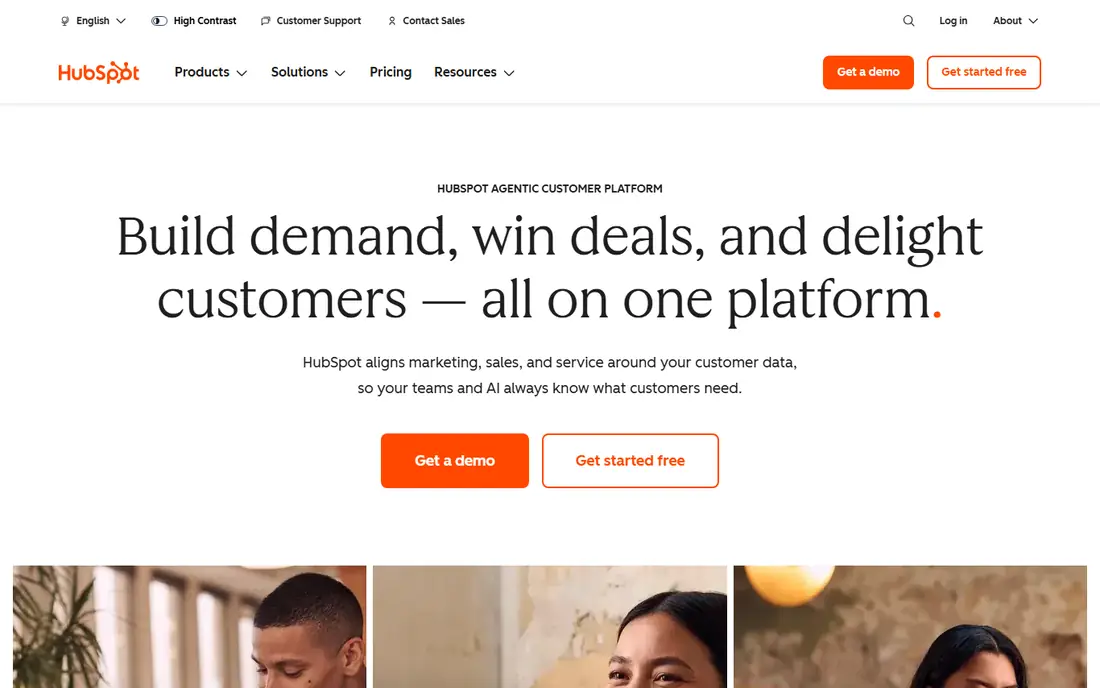
HubSpot Sales Hub appeals to small and mid sized teams because it removes tool sprawl. Contacts, deals, emails, calls, and sequences live in the same CRM, so a rep does not need to sync data between three systems. The free CRM covers contacts, deals, and basic tracking, while Starter from $20 per seat per month adds more automation and reporting.
The catch is tier creep. Sequences are more complete on Professional plans, and forecasting, custom reporting, and advanced automation also sit higher. Teams should map the features they actually need to a tier before assuming Starter covers everything, and check HubSpot's current pricing page for seat costs.
- Free CRM to start
- Sequences, email tracking, and reporting in one system
- Many integrations
- Advanced sequences and forecasting need higher tiers
- Costs rise with seats and hubs
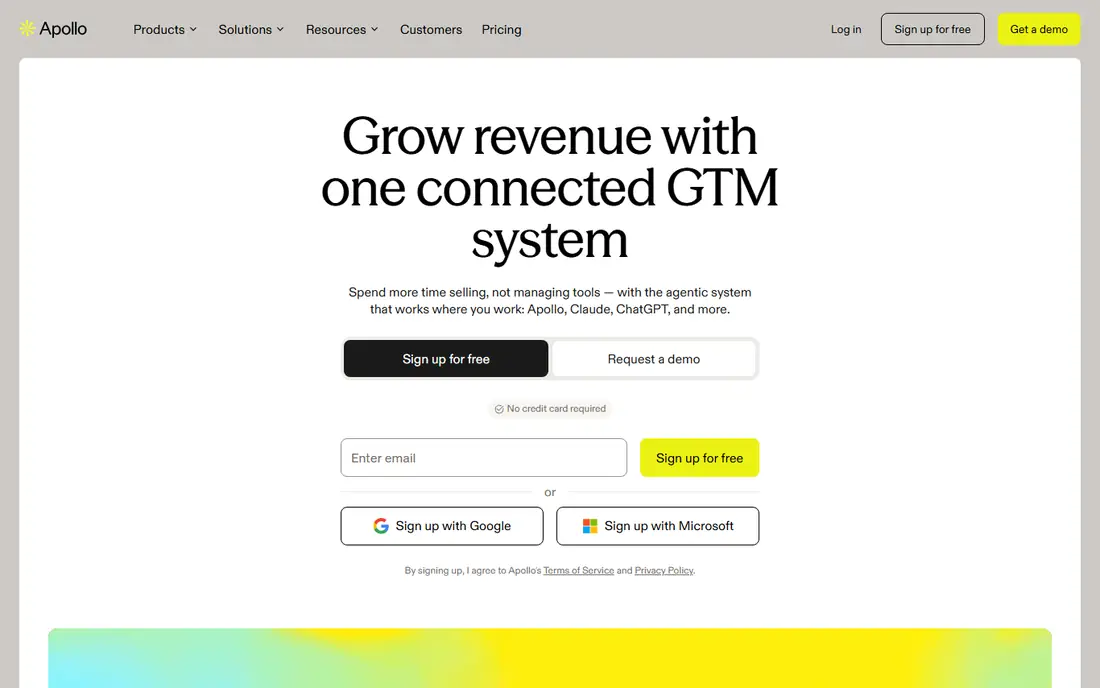
Apollo combines a prospecting database with sequences, email, and calling, which makes it a strong single purchase for outbound teams. Reps can find contacts, verify emails, build lists, and run sequences without buying a separate data tool. The free plan gives limited credits, while Basic starts at $49 per user per month on annual billing.
Data is the honest limit. No database is perfect, and accuracy varies by role, company size, and region. Teams should verify key contacts, watch bounce rates, and budget for credit overages if they prospect heavily. For small to mid sized outbound teams, Apollo still offers the best balance of data and execution in one price.
- Large contact database plus sequences and dialer
- Free plan to test
- CRM features for small teams
- Data accuracy varies by industry
- Credit limits matter on lower plans
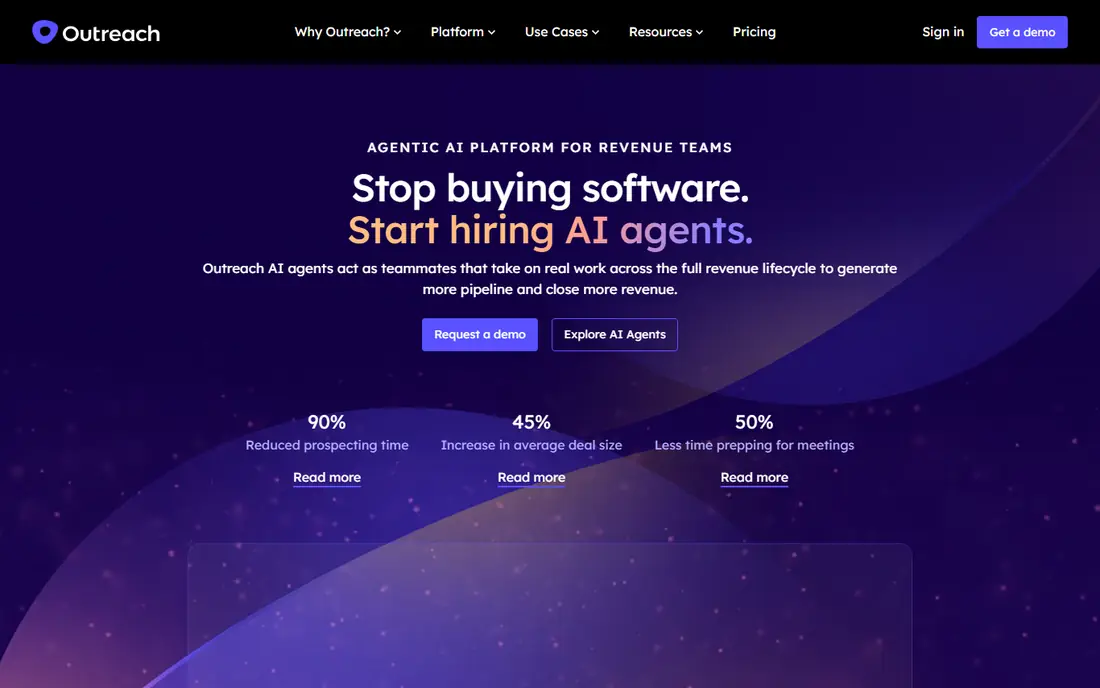
Outreach is built for revenue teams with many reps, a dedicated operations team, and a Salesforce CRM. Its sequences cover email, phone, and social touches, with automation rules, task management, and reporting that suit managers who need visibility across a large team. AI features help with prioritization and follow up timing.
The price and setup reflect that enterprise focus. Outreach does not publish pricing, contracts are typically annual, and implementation can take weeks. Small teams should not buy Outreach for features they will not use. Large teams that already run Salesforce and need standardized engagement will get the most value.
- Deep sequence automation
- Strong Salesforce integration
- Advanced analytics and AI features
- No public pricing
- Annual contracts and implementation time
- Overkill for small teams
Salesloft, now part of a wider revenue platform, competes directly with Outreach for mid market and enterprise teams. It offers multichannel sequences, calling, email, and social steps, plus coaching, conversation intelligence, and forecasting in higher plans. Its interface is often praised for ease of use compared with other enterprise tools.
Like Outreach, Salesloft requires a sales conversation for pricing, and negotiated rates vary widely by team size and contract length. Teams should budget for implementation and for add ons such as dialer capacity. For Salesforce heavy teams that want a polished engagement platform, Salesloft is a serious alternative to Outreach.
- Strong sequencing and coaching tools
- Forecasting and conversation features
- Salesforce depth
- No public pricing
- Annual contracts
- Dialer and some features are add ons
lemlist stands out for personalization. Reps can add personalized images, videos, and text to cold emails at scale, and run sequences across email, LinkedIn, and calls. That helps messages stand out in crowded inboxes, especially for agencies and small outbound teams that rely on reply rates rather than volume alone.
The entry price, listed at $63 per user per month on annual billing for Email Pro in recent comparisons, is higher than Instantly or Close. Teams that send very high volumes of simple emails may get better value elsewhere. Teams that win on tailored outreach will find lemlist's personalization tools worth the premium.
- Personalized images and videos in emails
- Multichannel sequences
- Email warm up and deliverability tools
- Higher entry price than some cold email rivals
- CRM features are limited
Instantly is built for cold email infrastructure. It supports multiple sending inboxes, warm up, inbox rotation, and campaign management, which helps teams send at volume without damaging a single domain. Setup is faster than an enterprise engagement platform, and monthly billing suits smaller teams.
It is not a CRM replacement. Teams still need a CRM like HubSpot or Close to track deals, and they need verified data to avoid bounces. Pricing has been listed around $30 to $47 per month in different 2026 comparisons, so we list it as See website and advise checking the current pricing page before budgeting.
- Built for many inboxes and campaigns
- Warm up and inbox rotation
- Simple setup for cold email teams
- Not a full CRM
- Pricing varies by plan and has changed often, so check current page
Clay is not a sequencer. It is a data and workflow platform that lets revenue operations teams enrich leads, research companies, score prospects, and route clean data into a CRM or outreach tool. It connects to many data providers, so teams can combine sources instead of relying on one database.
That power comes with complexity. Building good Clay workflows takes time and a clear data model, and the Launch plan at $167 per month on annual billing is a workspace price, not a single user price. Clay suits teams that already have outreach tools and want better data underneath them, rather than teams looking for a simple sequence tool.
- Connects many data providers in one workflow
- AI research and enrichment
- Flexible routing to CRM and outreach tools
- Steep learning curve
- Price is per workspace, not per user, so small teams must budget carefully
Close is a CRM built for inside sales teams, with calling, email, and SMS included rather than bolted on. Reps can call, email, and log activity from one screen, which suits small teams that live on the phone. The entry plan, listed at $9 per seat per month on annual billing in recent comparisons, is among the lowest in this list.
It does not match Outreach or Salesloft for large team orchestration, forecasting, or AI coaching. For a team under 25 reps that needs a simple, fast CRM with automation for follow ups, Close is a strong and affordable choice, especially when paired with Apollo for data or Instantly for cold email volume.
- CRM with email, calling, and SMS in one place
- Low entry price
- Fast setup for small teams
- Fewer enterprise engagement features than Outreach or Salesloft
- Reporting depth grows with higher plans
How we picked these
We compared official pricing pages and recent sales automation comparisons from 2026, focusing on tools that are still actively sold and that automate a real sales job: prospecting, sequencing, calling, CRM updates, or data enrichment. We favored tools with clear pricing where available, and we used See website for enterprise tools that do not publish prices. We did not claim hands on testing.
How to choose a sales automation tool
Start with your CRM. If you already run HubSpot or Salesforce, a native tool or a tool with deep integration will save sync problems. If you have no CRM, start with HubSpot Free or Close, then add a prospecting or email tool only when pipeline volume justifies it.
Next, fix data before buying sequences. Verify emails, clean duplicates, and define your ideal customer before scaling outreach. A tool like Clay or Apollo helps here, but even a simple verified list will outperform a large bought list. Watch deliverability too: warm up domains, limit daily sends per inbox, and monitor bounce and spam complaint rates.
Finally, match the tool to team size. Solo reps and small teams do well with HubSpot, Apollo, Close, or Instantly. Mid market teams may need Salesloft or Outreach for governance and reporting. Buying an enterprise platform too early adds cost, setup time, and admin work without improving reply rates.
Questions to ask on a demo
Ask whether pricing is per user, per seat, or per workspace, and what counts as a billable user. Ask about credit limits, dialer costs, implementation fees, and contract length. Ask how the tool handles unsubscribes, bounces, and CRM sync errors, since those details affect deliverability and reporting.
Frequently asked questions
What is the best sales automation platform?
For most small to mid sized teams, HubSpot Sales Hub is the best all in one platform because it combines CRM and automation. Apollo is best for outbound teams that need data plus sequences, while Outreach and Salesloft lead for large enterprise teams.
Which sales automation platform is best for small teams?
HubSpot Free or Close suit very small teams, with Apollo as a strong add on for prospecting. Instantly suits small cold email teams, while lemlist suits teams that win on personalized outreach rather than volume.
What is the best all in one sales automation software?
Apollo is the closest to all in one for outbound, since it covers data, sequences, and calling. HubSpot is the closest to all in one for pipeline management, since it covers CRM, sequences, reporting, and marketing tools in one system.
Do sales automation tools replace a CRM?
No, in most cases. Engagement tools like Outreach and Salesloft need a CRM such as Salesforce or HubSpot to store deals and customer records. HubSpot and Close are CRMs with automation built in, so they can replace a separate CRM for smaller teams.
How much do sales automation tools cost?
Costs range from free CRM plans to $9 to $63 per user per month for small team tools, $167 per month for Clay, and quote only pricing for Outreach and Salesloft. Add data credits, dialer fees, and implementation costs to get the true annual total.
Sources
See where you really rank - block by block
ProMapRanker scans Google Maps across a grid of your service area. Simple monthly plans from $19, white-label on every plan.
Start freeKeep reading
 surfer seo alternatives
Surfer SEO Alternatives in 2026
We compared surfer seo alternatives for content optimisation, briefs, and scoring, covering Frase, Clearscope, NeuronWriter, MarketMuse, and more tools.
Read → best accounting software for accountants
Best Accounting Software for Accountants in 2026
We compare the best accounting software for accountants and CPA firms, from practice management to ledgers and tax prep, for firms of all sizes in 2026.
Read → best web hosting services for small business
Best Web Hosting Services for Small Business in 2026
We compared the best web hosting services for small business on price, speed, support and renewals, from budget shared hosting to managed WordPress in 2026.
Read →